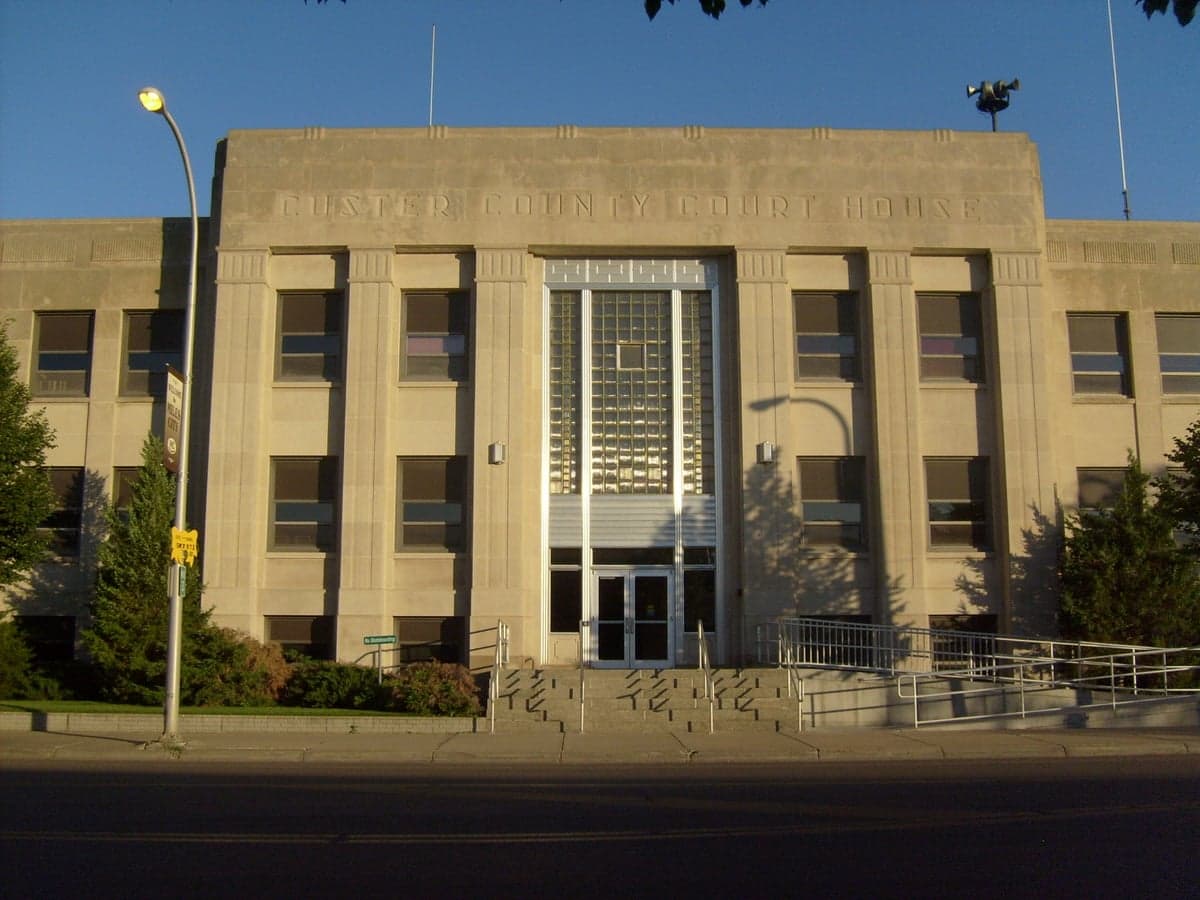
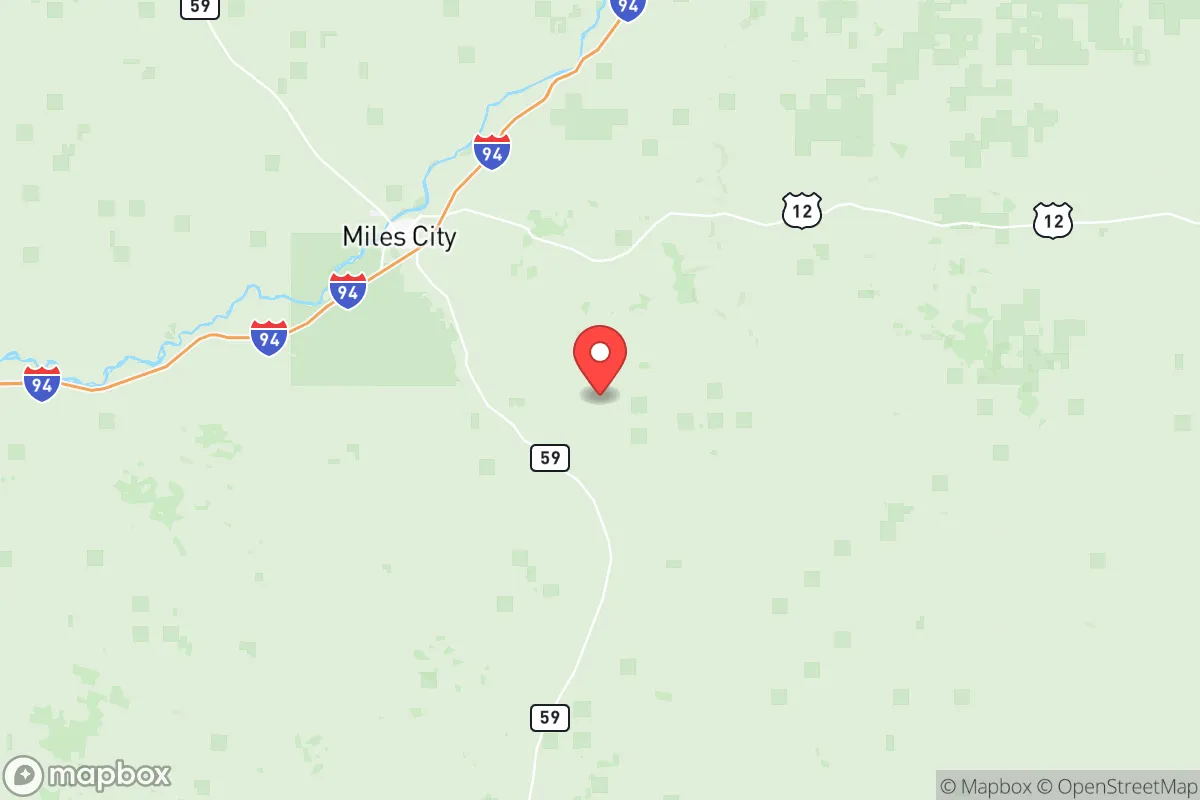
Photo: Wikipedia
Demographics of Custer County
Affluence Level in Custer County
A middle-class area roughly in line with national averages across income, home values, education, and employment.
People of Custer County
Custer County, Montana, is home to roughly 11,938 residents, making it one of the state's more sparsely populated regions, with a population density of just over two people per square mile. The county is overwhelmingly White (89.5%) and native-born (foreign-born residents account for only 0.6% of the population), with a small Hispanic community (3.3%) and negligible Black, East/Southeast Asian, and Indian subcontinent populations. The people here carry a distinct identity shaped by generations of ranching, railroad work, and resource extraction, centered on the county seat of Miles City, which anchors the region's economy and social life. This is a place where family roots run deep, and the population is older and more homogenous than the national average, with a college attainment rate of 29.8%.
Settlement & growth (pre-1960)
Long before European settlement, the area that is now Custer County was part of the vast hunting grounds of the Lakota, Cheyenne, and Crow nations. The Yellowstone River valley provided a corridor for bison herds and seasonal travel, and the confluence of the Tongue and Yellowstone Rivers—where Miles City now sits—was a known gathering point. The U.S. government's Fort Keogh was established at this confluence in 1876, following the Battle of the Little Bighorn, as a military post to control Native resistance. The fort drew traders, freighters, and soldiers, and the civilian settlement that grew around it was officially named Miles City in 1877.
The first major wave of non-Native settlers arrived in the late 1870s and 1880s, drawn by the promise of open range cattle ranching. These were predominantly Anglo-American stock raisers from Texas and the Midwest, who drove herds north to fatten on the free grass of the Yellowstone Valley. The completion of the Northern Pacific Railway through Miles City in 1881 transformed the town into a major shipping point for cattle and wool, and the population boomed. By 1890, Miles City was the largest city in eastern Montana, with a population of over 3,000. The railroad also brought a secondary wave of European immigrants, primarily German and Scandinavian farmers, who took up homesteads along the Powder River and Tongue River drainages in the 1900s and 1910s. These families established small communities like Ismay, Volborg, and Kinsey, many of which have since dwindled to ghost towns or tiny crossroads.
The early 20th century saw the rise of the "Miles City Roundup," a major regional rodeo and livestock show that cemented the county's cowboy identity. The Dust Bowl and Great Depression hit the area hard, but the county's economy stabilized around irrigated agriculture and the continued presence of the railroad. By 1950, the population had peaked at roughly 12,000, with Miles City serving as a trade and medical hub for a vast rural hinterland. The construction of the Fort Peck Dam (1933-1940) and later the Yellowtail Dam (1960s) brought some construction workers and federal employees, but these projects were located outside the county and had limited impact on its demographic makeup.
Modern era (post-1965)
The post-1965 period in Custer County is defined not by immigration-driven change, but by a slow, steady out-migration of young adults and a gradual aging of the population. The 1965 Hart-Cellar Act, which reshaped U.S. immigration patterns nationally, had almost no effect here: the foreign-born share has remained below 1% for decades. The county's population peaked at 13,992 in 1980 and has since declined by roughly 15%, driven by the consolidation of family ranches, the closure of railroad yards, and the departure of young people seeking education and jobs in Montana's larger cities (Billings, Bozeman) or out of state.
The Hispanic population, while small at 3.3%, has grown modestly since the 1990s, largely through the arrival of Mexican-American families working in the region's feedlots, meatpacking plants, and seasonal agriculture. These families tend to settle in Miles City itself, where they form a small but visible community centered on the local Catholic church. The Black and East/Southeast Asian populations remain tiny (0.4% each), consisting mostly of professionals (teachers, medical staff) at the county's hospital and schools, or military-affiliated personnel at the nearby Montana Army National Guard facility. There is no measurable Indian subcontinent population.
Suburbanization has been limited. Miles City has seen some new housing subdivisions on its eastern and southern edges, but the county remains overwhelmingly rural. The decline of the railroad as a major employer (the Burlington Northern Santa Fe yard downsized significantly in the 1980s) was partially offset by the growth of the Miles City VA Medical Center and the Montana State University Billings satellite campus. The county's economy now leans heavily on healthcare, education, and government services, alongside traditional ranching and energy extraction (coal-bed methane and oil from the nearby Bakken formation brought a brief boom in the 2010s, but that has since cooled).
The future
The demographic trajectory of Custer County points toward continued slow decline and homogenization. The population is older than the state median (median age is roughly 44, compared to Montana's 40), and the county's birth rate has fallen below replacement level. Without significant in-migration, the population is projected to drop to around 10,500 by 2040. The small Hispanic community is likely to grow slowly as families already in the area have children, but it will remain a small minority. There is no sign of significant new immigrant settlement, and the county's cultural identity—rooted in ranching, rodeo, and rural self-reliance—is likely to persist largely unchanged.
One potential wildcard is climate-driven migration. As the Northern Plains become warmer and wetter, some analysts predict a slow movement of people from the arid Southwest into Montana's river valleys. Custer County, with its Yellowstone River water rights and relatively affordable land, could see a modest influx of remote workers, retirees, or small-scale farmers over the next 20 years. However, this would likely be a trickle, not a flood, and would consist primarily of domestic migrants rather than international arrivals. The county's housing stock is limited, and its distance from major airports and urban amenities will deter all but the most determined.
For someone moving in now, Custer County offers a stable, culturally homogeneous community where neighbors know each other and the pace of life is slow. The trade-off is limited economic opportunity, a shrinking tax base, and a social environment that can feel insular to newcomers. The county is not becoming more diverse or more urban; it is becoming more of what it already is: a quiet, aging, deeply rural corner of the American West where the past still shapes the present.

* Values derived from national, state, county, city and local statistics and may differ in a specific area. Last updated: 2026-06-02T14:49:56.000Z
Narrative content on this page is AI-generated and may contain mistakes. Verify any details that matter before acting on them.
ReloMaps may earn a commission from affiliate links at no extra cost to you.

