Photo: Wikipedia
Political ClimatePolitical Climate in Johnson County
Showing district-level results — no local-only data available.
Local Political AnalysisPolitical Analysis of Johnson County
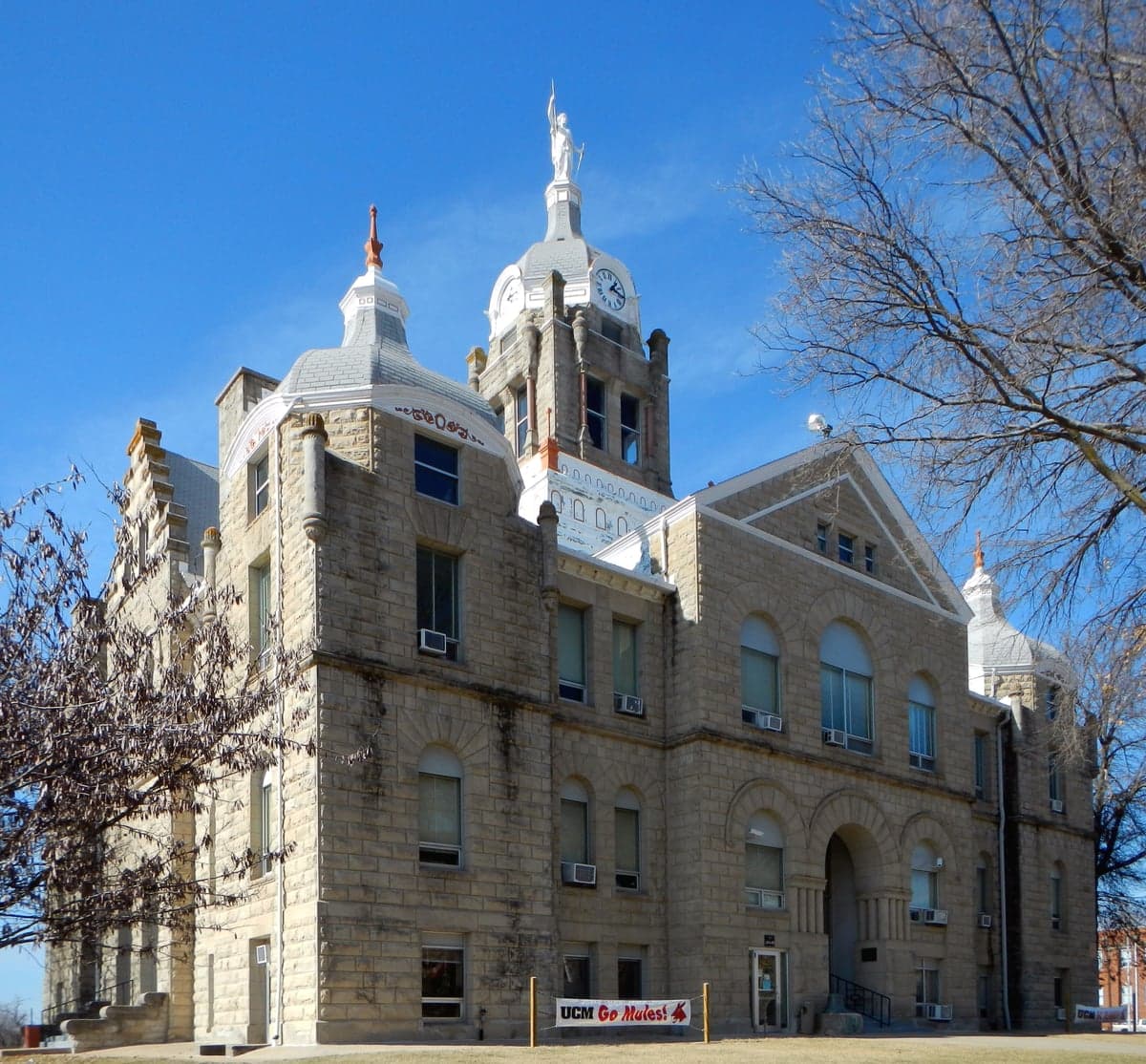
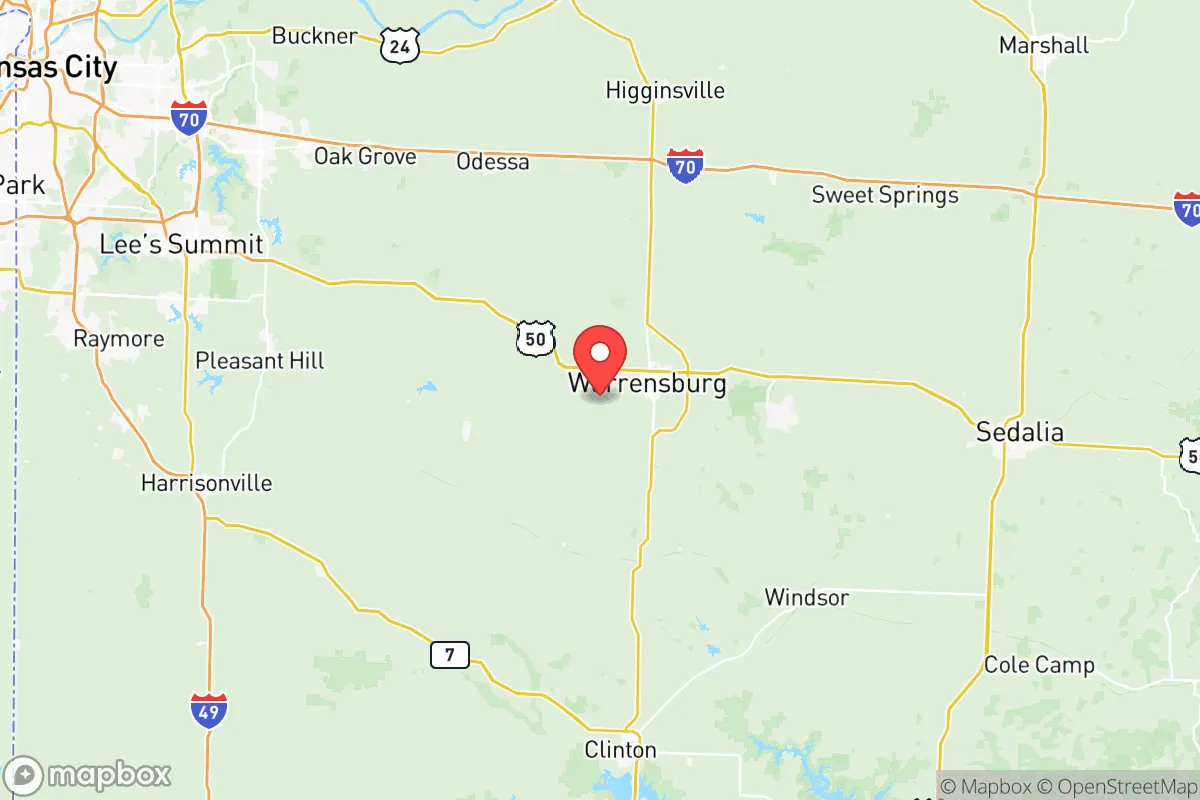
Johnson County, Missouri, is a reliably Republican stronghold with a Cook Partisan Voting Index (PVI) of R+21, meaning it votes about 21 points more Republican than the national average. This is significantly more conservative than the state of Missouri as a whole, which sits at R+8. The county has been trending redder over the past decade, driven by population growth in its more rural and exurban areas, though the college town of Warrensburg provides a consistent blue-leaning counterweight. If you’re moving here, expect a political environment where conservative values dominate local policy and elections, but with a noticeable progressive pocket that keeps things interesting.
How it compares
The gap between Johnson County and Missouri’s statewide PVI is substantial—a 13-point difference. To put that in perspective, while Missouri is already a solidly red state, Johnson County is deep crimson. The county’s Republican tilt is most pronounced in its smaller towns like Holden, Kingsville, and Leeton, where precincts routinely deliver 70-80% of the vote to GOP candidates. In contrast, Warrensburg, home to the University of Central Missouri, is the county’s lone blue dot. Precincts around the university campus and downtown core often vote Democratic by 10-15 points, making it a swing area in local races. The rural precincts in the county’s western and southern reaches, such as those near Chilhowee and Centerview, are among the most conservative, often exceeding 80% Republican. This urban-rural split mirrors the state’s broader divide between metro Kansas City and rural Missouri, but Johnson County lacks a major urban center to offset its rural weight.
What this means for residents
For conservative residents, Johnson County is a comfortable fit. Local offices—county commission, sheriff, school boards—are reliably held by Republicans, and policy decisions on taxes, land use, and law enforcement tend to align with small-government principles. The county’s R+21 lean means that in statewide primaries, Johnson County voters often help push the GOP nominee further right. For liberal residents, the reality is more about finding community in Warrensburg, where the university provides a social and political haven. You’ll see Democratic campaign signs concentrated near campus, and local progressive groups are active but often outmatched in countywide elections. The practical effect is that liberal residents may feel their votes are less impactful in county races, but they can still influence Warrensburg city council and school board contests. The county’s trajectory suggests it will stay red for the foreseeable future, as new housing developments in the exurbs of Warrensburg and the I-70 corridor tend to attract families seeking lower taxes and more space—demographics that lean conservative.
Cultural and policy distinctions
Johnson County’s political climate shapes its culture in tangible ways. Gun rights are strongly supported—you’ll see “2A” signs in many storefronts, and the county has a constitutional sheriff who publicly opposes any state or federal gun restrictions. Religious conservatism is also prominent, with churches in Warrensburg, Holden, and Knob Noster playing a central role in community life and local politics. On the flip side, the university presence in Warrensburg brings a more secular, diverse influence, with events like the annual Diversity Conference and a visible LGBTQ+ student group. This creates a subtle cultural tension: the county’s rural areas are deeply traditional, while the college town is more progressive. Policy-wise, Johnson County has not adopted any local ordinances on issues like sanctuary city status or mask mandates—it generally defers to state law, which is itself conservative. For newcomers, the key takeaway is that your experience will vary dramatically depending on whether you settle in Warrensburg or one of the smaller towns. If you’re conservative, you’ll find a welcoming, like-minded community almost anywhere. If you’re liberal, you’ll want to focus on Warrensburg, where you can still find your people and make a difference in local elections.

State Political ClimatePolitical Climate in Missouri
State Political AnalysisPolitical Environment in the State
Missouri is a solidly Republican state with a Cook PVI of R+8, meaning it typically votes about eight points more Republican than the national average. Over the past 20 years, the state has shifted from a competitive purple state—where it backed the winner in every presidential election from 1904 to 2004 except 1956—to a reliably red one, driven by the exodus of rural and suburban voters from the Democratic coalition and the consolidation of conservative voters in the western and southern parts of the state. The last Democrat to win Missouri statewide was Governor Jay Nixon in 2012, and since then, every statewide office has flipped to Republican control, with the GOP now holding supermajorities in both chambers of the legislature.
Urban vs. rural divide
The political map of Missouri is a textbook case of the urban-rural split. The two major metros—St. Louis and Kansas City—are deep blue islands in a sea of red. St. Louis City and County, along with Jackson County (Kansas City), consistently deliver 60-70% of their votes to Democrats. In 2020, St. Louis City gave Joe Biden 85% of the vote, while rural counties like Texas County and Wright County gave Donald Trump over 80%. The suburbs are where the real action is: St. Charles County, just west of St. Louis, was a classic swing suburb that has moved decisively right since 2016, now voting +20 R. Meanwhile, Clay County (north of Kansas City) and Boone County (home to Columbia and the University of Missouri) are more competitive, with Boone trending left as the university population grows. The Ozarks region, anchored by Springfield and Branson, is the state’s most reliably conservative region, with Greene County voting +25 R in 2024. The Bootheel—southeastern Missouri—was historically Democratic but has flipped hard red, mirroring the realignment of the rural South.
Policy environment
Missouri’s policy environment is defined by low taxes and a light regulatory touch. The state has a flat income tax rate of 4.95% (scheduled to drop to 4.8% in 2025), no estate tax, and a sales tax cap of 8.5% in most areas. Property taxes are among the lowest in the nation, averaging about 0.9% of assessed value. The state is a right-to-work state (though the law was repealed by ballot measure in 2018, then effectively reinstated via a 2021 legislative maneuver), and it has no state-level minimum wage above the federal $7.25. Education policy is a hot topic: Missouri has a robust charter school system in St. Louis and Kansas City, and a school choice program (the MOScholars tax-credit scholarship) that expanded in 2023. The state’s abortion ban, triggered by the Dobbs decision, prohibits nearly all abortions with no exceptions for rape or incest, only medical emergencies. Election laws are moderately restrictive: voter ID is required, and the state has a 12-day early voting window (no-excuse absentee) that was expanded in 2022. Missouri also has a strong initiative petition process, which has been used to legalize medical marijuana (2018) and recreational marijuana (2022), as well as to expand Medicaid (2020) over the legislature’s objections.
Recent policy direction
Since 2020, Missouri’s legislature has moved aggressively on a conservative agenda. In 2021, it passed a sweeping Second Amendment Preservation Act (SAPA) that declared federal gun laws unenforceable in the state—a law that has been partially blocked by federal courts but remains a symbol of the state’s gun-rights posture. In 2023, the legislature passed a ban on gender-affirming care for minors, overriding a gubernatorial veto. On education, the state enacted a “Parents’ Bill of Rights” in 2022, requiring schools to notify parents about curriculum changes and allowing them to opt their children out of certain materials. Property rights were strengthened with a 2023 law limiting eminent domain for carbon capture pipelines. On taxes, the legislature passed a series of income tax rate cuts, with a goal of reaching 4.0% by 2027. Voting access saw a tightening: in 2022, the state banned ballot drop boxes and shortened the absentee ballot application window. On the other hand, the state’s initiative process remains a wild card—voters legalized recreational marijuana in 2022 and expanded Medicaid in 2020, both against the legislature’s wishes. This tension between the conservative legislature and the more moderate initiative process is a defining feature of Missouri politics.
Civil unrest & political movements
Missouri has a history of civil unrest, most notably the 2014 Ferguson protests in the St. Louis suburb of Ferguson, which sparked the Black Lives Matter movement nationally. Since then, protests have been less frequent but still visible: in 2020, St. Louis and Kansas City saw large George Floyd protests, and there were smaller demonstrations in Columbia and Springfield. On the right, the state has a strong gun-rights movement, with open-carry rallies at the state capitol in Jefferson City and a vocal Second Amendment sanctuary movement that passed SAPA. Immigration politics are relatively low-key compared to border states, but there have been flashpoints: in 2023, the legislature considered a bill to ban sanctuary cities (though none exist in Missouri), and the state’s attorney general, Andrew Bailey, has sued the Biden administration over border policies. Election integrity remains a live issue: the 2020 election saw Trump win Missouri by 15 points, but conservative activists have pushed for audits and tighter laws, leading to the 2022 voting restrictions. A new resident in St. Louis or Kansas City might notice occasional protest activity downtown, but in most of the state, political life is quiet and dominated by local church and community events.
Projection
Over the next 5-10 years, Missouri is likely to become even more Republican, but with important caveats. The state’s population is aging and rural areas are shrinking, while the St. Louis and Kansas City metros are growing slowly. The key demographic wildcard is the Springfield and Branson corridor, which is attracting retirees and remote workers from California and Illinois—most of whom lean conservative. The University of Missouri in Columbia is a blue dot that may grow as the state’s economy diversifies, but it’s unlikely to flip the state. The biggest political fight will be over the initiative process: the legislature has tried to raise the threshold for passing constitutional amendments (currently a simple majority) to a supermajority, which would lock in conservative policies and make it harder for voters to legalize things like abortion rights or expand Medicaid. If that passes, Missouri will become even more solidly red. If it fails, the state may see periodic liberal ballot wins that create a patchwork of policies. For a new resident, expect the state to remain a low-tax, gun-friendly, culturally conservative place, with the major metros offering pockets of blue politics and the rest of the state staying deeply red.
Bottom line for a new resident: If you’re a conservative, you’ll find Missouri’s political climate welcoming—low taxes, strong gun rights, and a legislature that shares your values. If you’re a liberal, you’ll find the state’s politics frustrating, but the major cities offer a supportive community and the initiative process gives you a chance to push back on the legislature. Either way, the state’s politics are stable and predictable, with no major upheavals on the horizon. Just be aware that the urban-rural divide is real: your experience in St. Louis will be very different from life in Poplar Bluff or Maryville. Choose your county wisely.
* Values derived from national, state, county, city and local statistics and may differ in a specific area. Last updated: 2026-06-29T07:31:34.000Z
Narrative content on this page is AI-generated and may contain mistakes. Verify any details that matter before acting on them.
ReloMaps may earn a commission from affiliate links at no extra cost to you.

