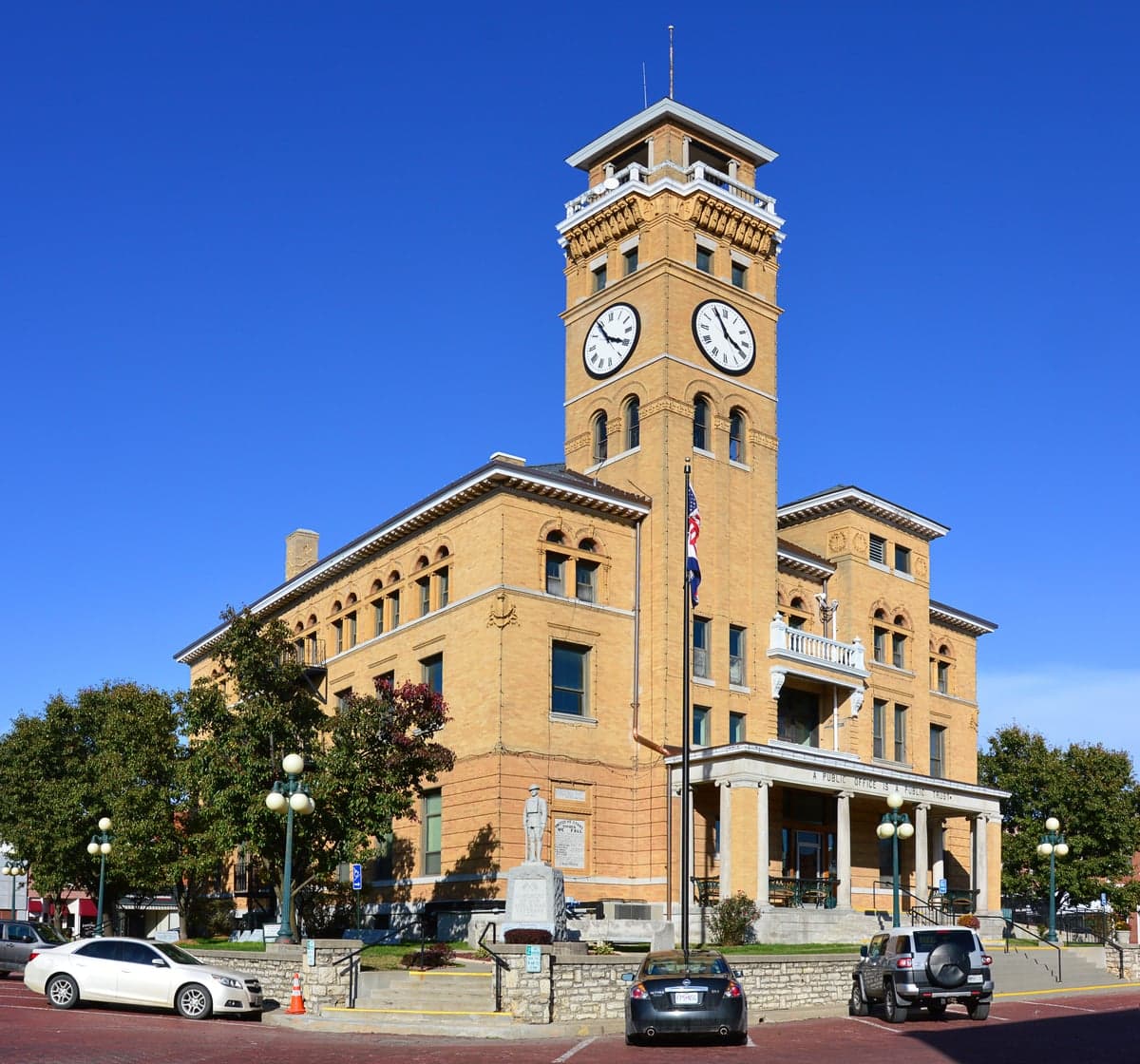
Photo: Wikipedia
Political ClimatePolitical Climate in Cass County
Showing district-level results — no local-only data available.
Local Political AnalysisPolitical Analysis of Cass County
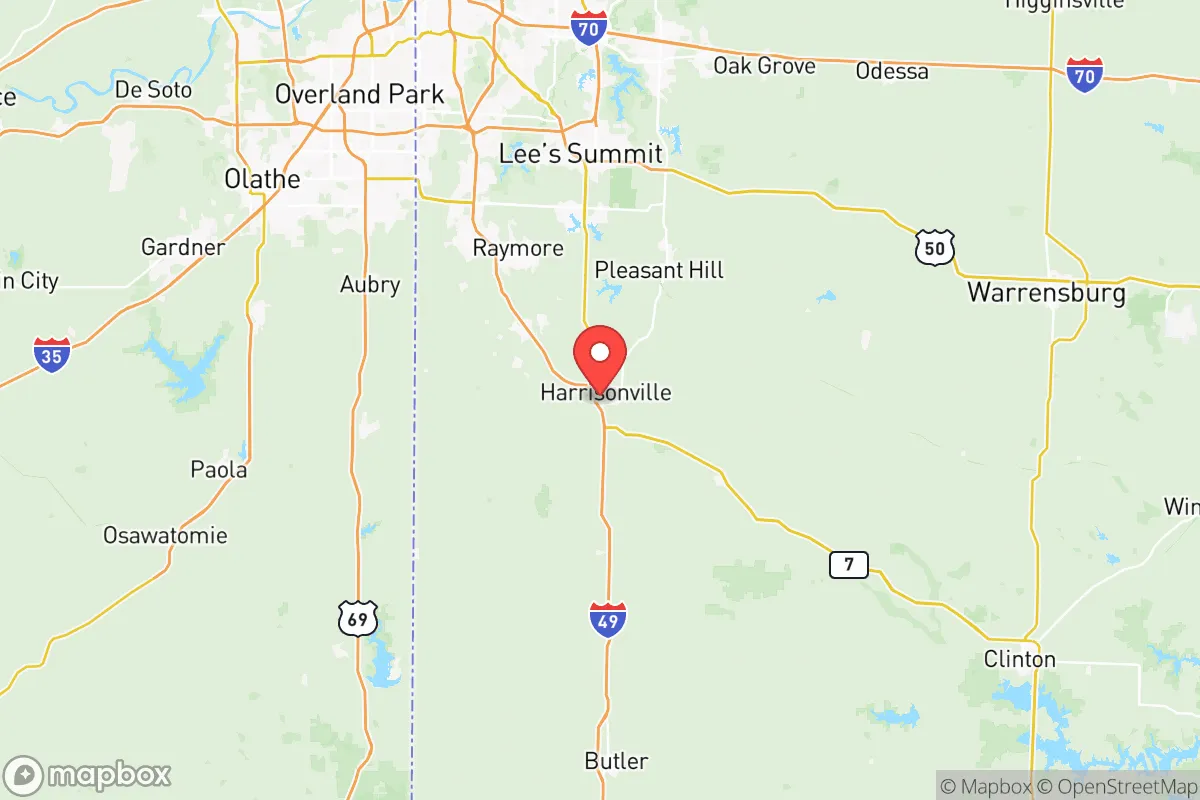
Cass County, Missouri, is a reliably conservative area with a Cook PVI of R+21, making it significantly more Republican than the state of Missouri as a whole, which sits at R+8. This isn't a new development; the county has been trending red for decades, but the shift has accelerated noticeably since the 2010s. While the county as a whole is solidly Republican, there are real pockets of variation, particularly in the northern suburbs that bleed into the Kansas City metro area. Places like Belton and Raymore have a more moderate, sometimes even slightly blue-leaning character in local races, while the southern half of the county—towns like Harrisonville, Pleasant Hill, and Archie—are deeply conservative. The swing precincts are almost always in the unincorporated areas around the county's midsection, where growth from the north meets the established rural south.
How it compares
The gap between Cass County's R+21 and Missouri's R+8 is not just a number; it reflects a fundamental difference in political culture. The state's R+8 rating is driven by the deep-red rural areas balanced against the deep-blue urban cores of St. Louis and Kansas City. Cass County, however, lacks that kind of urban counterweight. The county's largest city, Harrisonville, has a population under 10,000, and even the more suburban Belton and Raymore are still small enough that local politics are dominated by land-use issues, school board races, and tax levies rather than the kind of partisan polarization you see in the state legislature. In practice, this means a Republican primary in Cass County is often the real election, especially in the southern precincts. The county's GOP lean is about 13 points stronger than the state's, which puts it in the same league as the most conservative counties in the Ozarks, not the more competitive suburbs of St. Louis County.
What this means for residents
For conservative residents, Cass County is a comfortable place to live politically. Local offices, from the county commission to the sheriff, are reliably held by Republicans, and policy debates tend to center on keeping taxes low and managing growth rather than on ideological battles. For liberal residents, the reality is more nuanced. You won't find many overtly progressive candidates on the ballot, but you will find a functional local government that generally avoids the kind of culture-war fights that dominate state politics. The county's Democratic voters are concentrated in Belton and a few precincts in Raymore, and they tend to be more pragmatic than ideological. If you're a liberal moving here, you'll likely find that local issues—like road maintenance, school funding, and zoning—are handled competently regardless of party affiliation. The political climate is less about daily friction and more about a general cultural alignment that leans conservative, but it's not hostile to dissent in the way some deeply red rural counties can be.
The cultural and policy distinctions in Cass County are subtle but real. The county has a strong tradition of fiscal conservatism, which means property taxes are relatively low compared to neighboring Jackson County, but so are public services. There's no county-wide public transportation, and the school districts are funded primarily through local levies, which can create disparities between wealthier northern suburbs and the poorer southern towns. The county also has a notable independent streak; while it votes overwhelmingly Republican in national elections, local ballot measures on issues like marijuana legalization or minimum wage increases have sometimes passed, reflecting a libertarian bent that doesn't always align with the national GOP platform. This is a place where people value their independence and are skeptical of both big government and corporate overreach, which gives the political climate a distinct flavor that's more about local control than party loyalty.

State Political ClimatePolitical Climate in Missouri
State Political AnalysisPolitical Environment in the State
Missouri is a solidly Republican state with a Cook PVI of R+8, meaning it typically votes about eight points more Republican than the national average. Over the last 10-20 years, the state has shifted rightward, driven by the exodus of rural and suburban voters from the Democratic coalition and the collapse of the party's once-dominant position in the Bootheel and the Ozarks. However, this is not a uniformly red state — the urban cores of St. Louis and Kansas City remain deeply blue, and the suburbs are increasingly competitive, creating a sharp internal divide that defines every statewide election.
Urban vs. rural divide
The political map of Missouri is a study in contrasts. The two major metro areas — St. Louis (St. Louis City and County) and Kansas City (Jackson County) — are Democratic strongholds, delivering margins of 60-80% for statewide Democratic candidates. In 2024, St. Louis City voted over 80% for the Democratic presidential nominee, while Jackson County came in around 65%. These two regions alone account for roughly a third of the state's vote. Meanwhile, the vast rural and exurban areas — places like Springfield, Joplin, Cape Girardeau, and the Lake of the Ozarks region — vote Republican by margins of 70-80%. The suburbs have been the real battleground: St. Charles County, once a swing area, has moved decisively right, while Clay County (north of Kansas City) and Greene County (Springfield) have become reliably red. The only notable exception is Boone County (Columbia), home to the University of Missouri, which has trended blue and now leans Democratic. The result is a state where Democrats win the cities, Republicans dominate everywhere else, and the rural vote overwhelms the urban base in statewide races.
Policy environment
Missouri's policy environment is conservative but pragmatic. The state has a flat income tax rate of 4.8% (as of 2025), with a phase-down trigger that could reduce it further. Sales taxes are relatively high, averaging around 8-9% in many areas due to local add-ons. Property taxes are low by national standards, which is a major draw for families. The state is a right-to-work state (though a 2018 ballot measure repealed the law, the legislature has since passed other restrictions on union power). Missouri is also a "stand your ground" state with permitless carry for firearms, and it has some of the most permissive gun laws in the country. On education, the state has a robust charter school sector in Kansas City and St. Louis, and a growing school choice movement, though rural districts remain traditional. Healthcare policy is mixed: Missouri expanded Medicaid under the 2020 ballot measure (Amendment 2), but the legislature has resisted further expansion and has imposed work requirements. Election laws have tightened: the state now requires photo ID to vote, has restricted absentee voting, and banned ballot drop boxes except in limited circumstances. Overall, the policy mix is designed to appeal to conservative families and businesses, but with enough moderation on issues like Medicaid to maintain some cross-party appeal.
Recent policy direction
Missouri's recent legislative sessions have been dominated by cultural and liberty-focused issues. In 2023 and 2024, the legislature passed a near-total abortion ban (triggered by the Dobbs decision), with exceptions only for medical emergencies. A 2024 ballot initiative to restore abortion access failed, but the issue remains active. On gun rights, the state passed a "Second Amendment Preservation Act" (SAPA) in 2021, which purports to nullify federal gun laws — a move that has led to legal battles with the DOJ. Parental rights have been a major theme: the state passed a "Parents' Bill of Rights" in 2022, requiring schools to notify parents about curriculum and medical decisions. On speech and privacy, Missouri has banned TikTok on state devices and passed a law restricting social media platforms from "censoring" political speech (though it's been challenged in court). Property rights are strong: the state has limited eminent domain and no statewide rent control. On taxation, the legislature has been steadily cutting income tax rates, with a goal of reaching 4% or lower. The overall direction is toward more individual liberty in the conservative sense — less regulation, lower taxes, and more parental and gun rights — while restricting abortion and limiting local control on issues like minimum wage and paid leave.
Civil unrest & political movements
Missouri has a history of high-profile civil unrest, most notably the 2014 Ferguson protests following the shooting of Michael Brown, which sparked a national movement. Since then, protest activity has been more localized but persistent, particularly in St. Louis and Kansas City around police reform and racial justice. On the right, the state has seen a strong "constitutional sheriff" movement and active Second Amendment sanctuary counties — over half of Missouri's counties have declared themselves Second Amendment sanctuaries. Immigration politics are less heated than in border states, but there have been flashpoints: in 2023, the legislature considered a bill to ban "sanctuary cities" (though none exist in Missouri), and there have been controversies over refugee resettlement in Springfield and St. Louis. Election integrity has been a major theme since 2020, with Republican lawmakers pushing for stricter voter ID laws and audits, though no widespread fraud has been found. The state also saw a brief secession/nullification push in 2021 around the SAPA law, but it has not gained mainstream traction. For a new resident, the most visible political expression is likely to be yard signs and bumper stickers — Missourians are not shy about displaying their politics, especially in rural areas.
Projection
Over the next 5-10 years, Missouri is likely to remain solidly Republican at the state level, but the margin may narrow slightly as the suburbs of St. Louis and Kansas City continue to diversify and as college-educated voters trend left. The biggest demographic shift is the growth of the Springfield and Branson areas, which are reliably red, and the continued population loss in rural counties like the Bootheel and northern Missouri. In-migration is modest but growing, with people moving from Illinois and California to places like St. Charles County and the Lake of the Ozarks — these newcomers tend to be conservative-leaning. The wild card is the abortion issue: if a future ballot measure restores access, it could drive higher turnout among suburban women and shift the state slightly toward the center. But for the foreseeable future, Missouri will be a state where Republicans control the governorship, both chambers of the legislature, and the congressional delegation, with Democrats holding only a few urban seats and the occasional statewide office (like the 2024 election for attorney general, which was competitive).
For a new resident, the bottom line is this: if you are conservative, you will find a state that largely aligns with your values on taxes, guns, education, and regulation. If you are liberal, you will find strong communities in St. Louis, Kansas City, and Columbia where your views are the norm, but you will be in the minority at the state level. The political climate is polarized but not hostile — most Missourians are civil in daily life, and the state's politics are more about policy than personal conflict. The key practical takeaway is to choose your location carefully: the political experience of living in St. Louis City is radically different from living in Springfield or Cape Girardeau, and the state's policies will affect you differently depending on where you land.
* Values derived from national, state, county, city and local statistics and may differ in a specific area. Last updated: 2026-07-30T20:50:18.000Z
Narrative content on this page is AI-generated and may contain mistakes. Verify any details that matter before acting on them.
ReloMaps may earn a commission from affiliate links at no extra cost to you.

