Photo: Wikipedia
Demographics of Cass County
Affluence Level in Cass County
A middle-class area roughly in line with national averages across income, home values, education, and employment.
People of Cass County
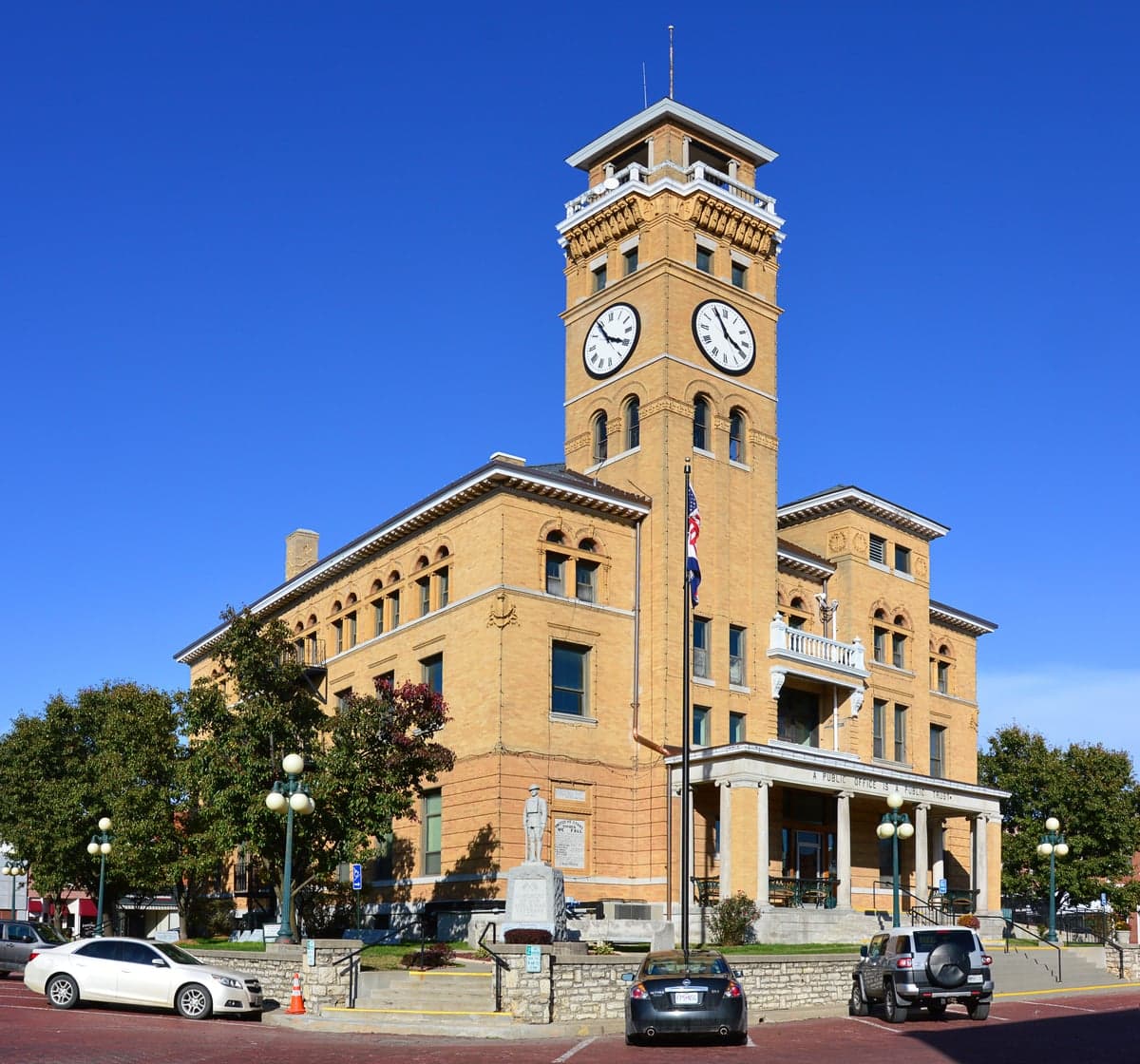
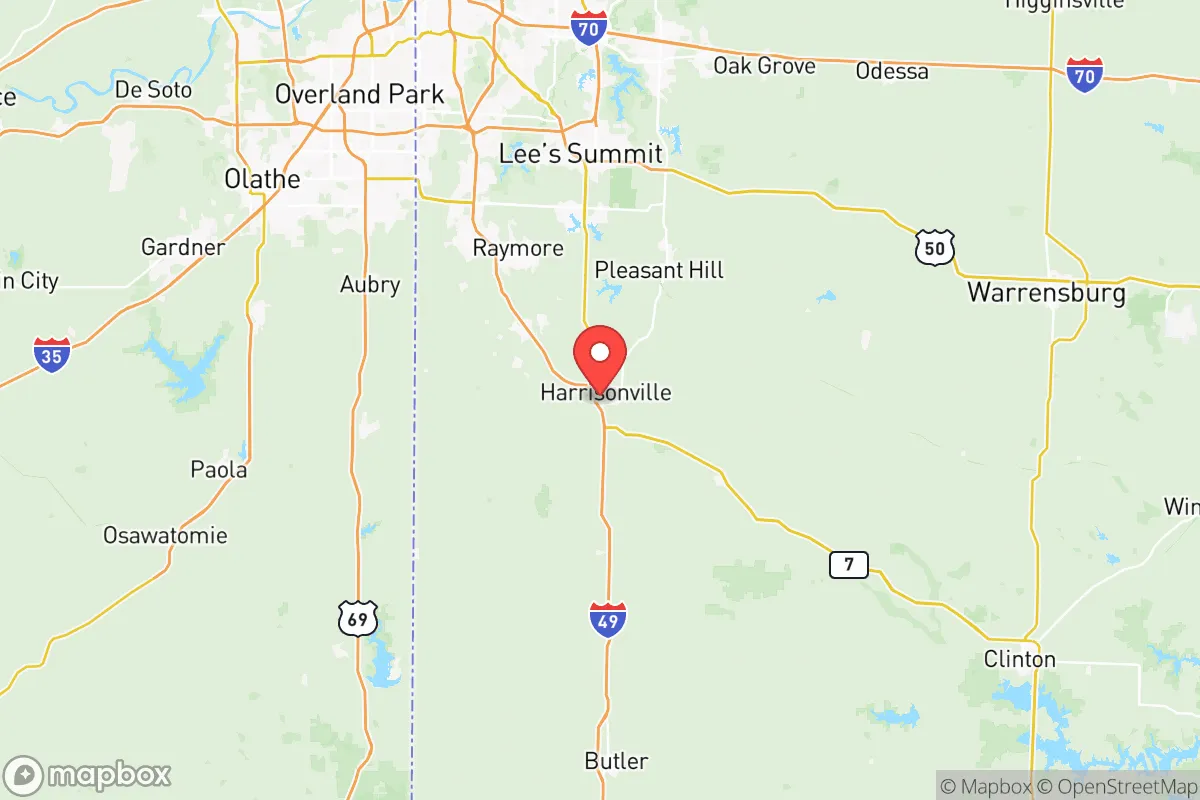
Today, Cass County, Missouri, is a predominantly white, family-oriented suburban and exurban area with a population of 109,393 that leans conservative and values its agricultural roots while absorbing the outward growth of the Kansas City metro. The county is notably less diverse than the national average, with a foreign-born population of just 0.6% and a population that is 84.4% white, creating a cultural atmosphere that is more homogeneous than the nearby urban core. Residents are concentrated in the county seat of Harrisonville, the rapidly growing suburb of Raymore, and smaller towns like Pleasant Hill, Belton, and Peculiar, where a sense of local community and low crime rates are primary draws for families.
Settlement & growth (pre-1960)
Before American settlement, the land that is now Cass County was home to the Osage Nation, who controlled a vast territory in present-day Missouri and Arkansas. The Osage were forcibly removed through a series of treaties in the early 1800s, opening the area to Euro-American settlement after the Missouri Compromise of 1820. The first wave of settlers were primarily of Scots-Irish and English descent, moving west from Kentucky, Tennessee, and Virginia in the 1830s and 1840s, drawn by the promise of cheap, fertile prairie land for farming.
The county was officially organized in 1835 and named after Lewis Cass, a pro-slavery Democratic senator from Michigan. These early settlers established small agricultural communities, with Harrisonville becoming the county seat in 1837. The town of Pleasant Hill was founded shortly after, serving as a key stop on the Missouri Pacific Railroad. The region was deeply divided during the Civil War, with guerrilla warfare between pro-Union and pro-Confederate factions, particularly along the border with Kansas, leaving a legacy of independent, rural conservatism that persists today.
Following the Civil War and Reconstruction, the population grew steadily through the late 1800s as the railroad expanded. Towns like Belton and Raymore emerged as agricultural shipping points. The population remained overwhelmingly white and native-born, with very little immigration from Europe compared to the industrial cities of St. Louis or Kansas City. A small number of African American families settled in the area after the Civil War, working as sharecroppers and laborers, but their numbers remained low. By 1900, the county's economy was firmly based in corn, wheat, and livestock, and its character was defined by small, tight-knit farming communities like Garden City and Archie.
The Dust Bowl and Great Depression of the 1930s hit the agricultural economy hard, but Cass County did not experience the mass out-migration seen in the Oklahoma and Texas panhandles. Instead, the post-World War II era brought the first wave of suburbanization. The expansion of U.S. Highway 71 and the rise of automobile commuting allowed residents to live in Cass County and work in Kansas City. Towns like Belton and Raymore began to see modest growth as bedroom communities, though the county remained predominantly rural through the 1950s.
Modern era (post-1965)
The 1965 Hart-Cellar Act had a negligible direct impact on Cass County, as the area attracted almost none of the post-1965 immigrant waves that transformed urban America. The county's foreign-born population remains at just 0.6% today, one of the lowest rates in the Kansas City metropolitan area. Instead, the major demographic force since 1965 has been domestic migration: white families moving south and east from Kansas City's urban core, seeking larger lots, lower taxes, and better schools.
This suburban exodus accelerated dramatically after 1990. Raymore became the county's fastest-growing city, its population surging from roughly 2,500 in 1990 to over 22,000 by 2020, as new subdivisions replaced farmland. Belton and Pleasant Hill also saw steady growth, while Harrisonville retained its role as the commercial and governmental center. The Hispanic population, while small at 5.3%, has grown modestly since 2000, primarily concentrated in Belton and Harrisonville, where workers found jobs in construction, warehousing, and the poultry processing industry. The Black population sits at 4.4%, with a notable concentration in Belton, which has become the most diverse community in the county. East and Southeast Asian residents (0.6%) and Indian subcontinent residents (0.1%) are present in very small numbers, mostly in newer subdivisions in Raymore.
The county's college-educated population is 28.8%, below the national average, reflecting its blue-collar and agricultural heritage. However, this figure is rising as professionals from the Kansas City metro move into communities like Raymore and Peculiar, drawn by new housing stock and the perception of safer, more conservative communities. The county has voted reliably Republican in every presidential election since 2000, with margins often exceeding 30 points, reinforcing its identity as a culturally conservative stronghold within the metro area.
The future
Cass County is projected to continue growing at a steady pace, driven by the ongoing suburban expansion of the Kansas City metro area. The population is expected to approach 130,000 by 2040, with most new development concentrated along the Interstate 49 and Highway 71 corridors in Raymore, Belton, and southern Peculiar. The county is likely to become slightly more diverse, with the Hispanic and Black shares of the population increasing gradually, but it will remain far less diverse than the national average or the Kansas City urban core.
The cultural identity of Cass County is evolving from a purely agricultural community to a hybrid of exurban commuters and long-time rural residents. This creates some tension between newcomers seeking amenities and infrastructure and locals who value the county's open spaces and low density. The political character is expected to remain strongly conservative, though the growing professional class in Raymore may introduce more moderate Republican and independent voters over time. New housing developments are likely to be concentrated in the northern half of the county, closer to the Kansas City line, while the southern towns like Archie and Garden City will retain their small-town, agricultural character.
For someone moving in now, Cass County offers a stable, safe, and culturally conservative environment with strong schools in Raymore and Belton, affordable housing compared to Johnson County, Kansas, and easy access to Kansas City's employment base. The trade-off is a lack of ethnic diversity, limited public transportation, and a social scene that revolves around churches, schools, and family life rather than urban amenities. It is a place where the population is growing but the character is changing slowly, appealing most to families who prioritize space, safety, and traditional values over diversity and urban convenience.

* Values derived from national, state, county, city and local statistics and may differ in a specific area. Last updated: 2026-07-30T20:50:18.000Z
Narrative content on this page is AI-generated and may contain mistakes. Verify any details that matter before acting on them.
ReloMaps may earn a commission from affiliate links at no extra cost to you.

