
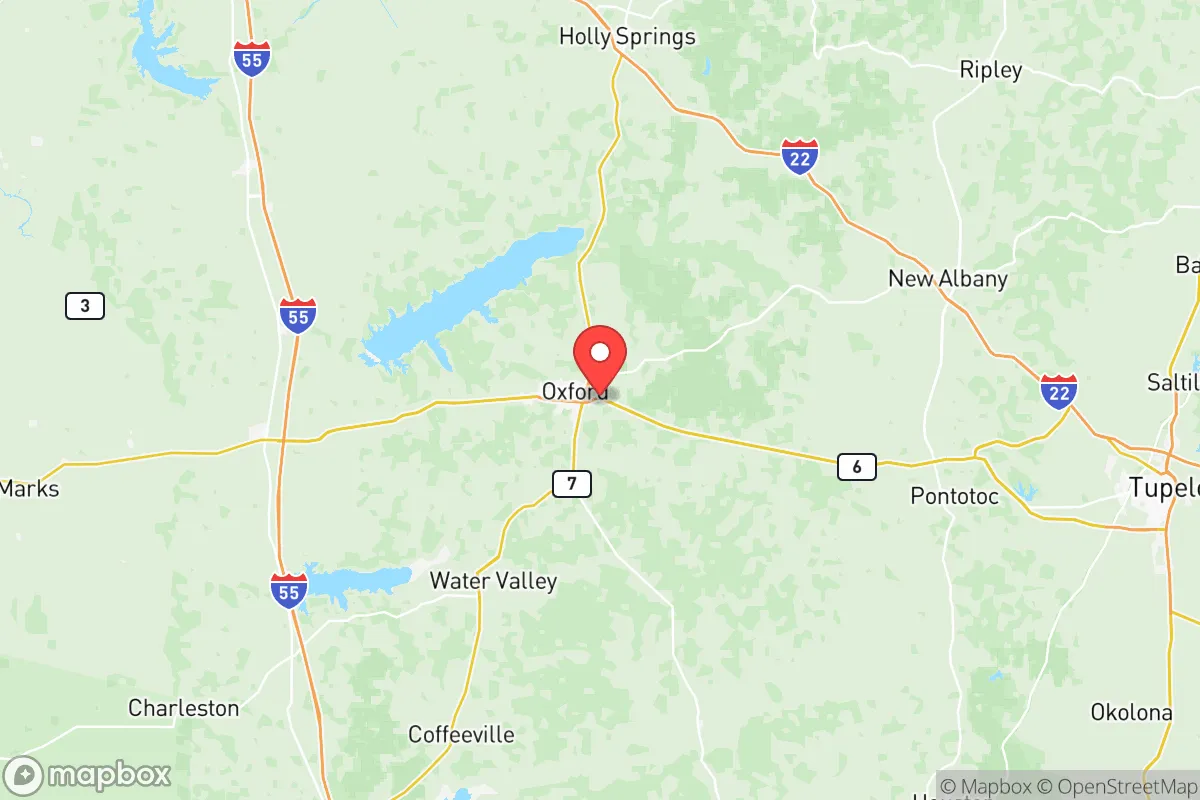
Photo: Wikipedia
Quality of Life in Lafayette County
A livable area that tracks near national norms for affordability, walkability, and neighborhood health.
What does Quality of Life tell us?
Quality of Life measures an area by evaluating factors like cost of living, nearby amenities, country club access, airport proximity, socioeconomic signals and neighborhood character. For large states, this is a general average — quality of life can vary dramatically between metro areas, suburbs, and rural communities within the same state.
What does this tell us?
Quality of Life measures an area by evaluating factors like cost of living, nearby amenities, country club access, airport proximity, socioeconomic signals and neighborhood character. For large states, this is a general average — quality of life can vary dramatically between metro areas, suburbs, and rural communities within the same state.
Cost of Living
7% below national average
86%
The Real Cost of Living in Lafayette County for 2026
| Tier | Individual | Family (4) |
|---|---|---|
| Survival | $17k | $33k |
| Comfortable | $51k | $74k |
| Luxury | $116k+ | $180k+ |
| Elite (Top 5%) | $180k+ | $280k+ |
Quality-of-Life Analysis
Lafayette County, Mississippi, offers a distinct quality-of-life spectrum anchored by the college town of Oxford and stretching into quiet, unincorporated rural communities. The county’s character is largely defined by the University of Mississippi, drawing students, academics, and professionals to its walkable, amenity-rich core, while the surrounding countryside appeals to those seeking land, privacy, and a slower pace. With a cost-of-living index of 93 (100 is the U.S. average), the county provides a notable value proposition compared to national averages, though housing costs vary significantly between its urban and rural pockets.
Largest town(s) & population centers
Oxford is the county’s undisputed hub and the only incorporated city of significant size, home to roughly 25,000 residents (and swelling to over 30,000 during the academic year). Daily life here revolves around the University of Mississippi campus, the historic Oxford Square with its independent bookstores and restaurants, and a calendar packed with cultural events, SEC football, and live music. The median home value in Lafayette County is $260,500, a figure driven upward by Oxford’s desirable historic districts like the Old Taylor Road corridor and newer subdivisions near Highway 6. Median rent sits at $1,091, reflecting demand from the student and young professional population. The average commute of 22.3 minutes is manageable, though traffic on West Jackson Avenue and around the Square can spike during game weekends. Oxford offers walkable neighborhoods, a strong public school system (Oxford School District), and a dense concentration of healthcare, retail, and dining options that are absent elsewhere in the county.
Smaller towns & rural pockets
Outside Oxford, the county’s smaller communities provide a markedly different lifestyle. Taylor, a tiny unincorporated hamlet about 10 miles south of Oxford, is known for its historic general store and a handful of artist studios, attracting a creative, off-grid crowd. Abbeville, a small town of roughly 400 residents on the county’s northern edge, offers a quiet, rural setting with its own volunteer fire department and a single convenience store. Further east, the unincorporated area around Paris (not to be confused with the French capital) consists of scattered homes, farmland, and wooded tracts along County Road 200. These communities lack the retail and dining infrastructure of Oxford; residents typically commute into the city for groceries, medical care, and employment. The trade-off is significantly lower land prices, larger lots, and a sense of seclusion that appeals to retirees, remote workers, and families wanting acreage without suburban subdivision rules.
Cost & lifestyle range
The cost-of-living spread across Lafayette County is wide. At the high end, Oxford’s historic districts and newer developments near the Oxford-University Golf Course command home prices well above the county median, often exceeding $400,000 for a three-bedroom house. Rentals near campus can push $1,500 for a two-bedroom apartment. At the low end, rural properties in the Paris or Taylor areas can be found for under $200,000, and older mobile homes on land in the Abbeville vicinity may sell for under $100,000. Rent in these outlying areas is scarce but typically runs $800–$950 for a small house or duplex. Utility costs are comparable across the county, but rural residents often face higher propane and well-water maintenance expenses. Property taxes in Lafayette County are relatively low (roughly 0.7% of assessed value), which benefits homeowners in all areas but is especially advantageous for those with larger land holdings.
Lafayette County best suits people who value a clear trade-off: the cultural and professional energy of a university town versus the privacy and space of rural Mississippi. Young professionals and academics thrive in Oxford’s walkable, amenity-rich environment, while families, retirees, and remote workers often gravitate toward the quieter, more affordable pockets of Taylor, Abbeville, or Paris. The county’s low cost of living, combined with its strong sense of place and access to both urban and rural lifestyles, makes it a compelling option for those who can navigate the seasonal crowds and limited rural infrastructure.

Crime in Lafayette County
Generally safer than 61% of comparable U.S. locations.
Violent CrimeViolent Crime Analysis
Property CrimeProperty Crime Analysis
Crime Analysis
Lafayette County, Mississippi, reports a violent crime rate of 187 per 100,000 residents and a property crime rate of 1,065.3 per 100,000, placing it below the national average for violent offenses but above the national average for property crime. The county's overall safety picture is shaped by a sharp contrast between the university-centered city of Oxford and the more rural, unincorporated areas, with most criminal activity concentrated in specific corridors. Residents and prospective movers should weigh the relatively low violent crime rate against a property crime problem that demands vigilance, particularly in neighborhoods near the University of Mississippi campus.
Crime in context
Lafayette County's violent crime rate of 187 per 100,000 is roughly 35% lower than the national average of 287 per 100,000 and significantly below the Mississippi state average of 245 per 100,000. This places the county among the safer jurisdictions in the state for violent offenses, though the property crime rate of 1,065.3 per 100,000 exceeds the national average of 1,954 per 100,000 by a narrower margin. The county's crime statistics are heavily influenced by Oxford, which accounts for the majority of reported incidents, while outlying communities such as Taylor and Abbeville report far fewer crimes per capita. The Lafayette County Sheriff's Office and the Oxford Police Department share jurisdiction, with the sheriff's office covering the unincorporated areas and the smaller towns.
What residents experience
Property crime, particularly theft from vehicles and burglary, is the most common public safety concern in Lafayette County. The University of Mississippi campus and the surrounding Oxford neighborhoods—especially areas near the Square and along Lamar Boulevard—see the highest volume of reported property crimes, often targeting student housing and parked cars. Violent crime is less frequent but not absent; incidents typically involve domestic disputes or arguments that escalate, rather than random stranger attacks. The county's judicial system, overseen by the Lafayette County Circuit Court, has seen a shift in recent years toward more progressive prosecutorial policies, which critics argue has led to shorter sentences and higher recidivism for property offenders. Residents in Oxford frequently report that repeat offenders cycle through the system quickly, undermining deterrence. In contrast, the rural communities of Paris and College Hill experience very few violent crimes, though property theft remains a nuisance.
Neighborhood-level variation
Safety in Lafayette County varies dramatically by location. The most crime-prone areas are concentrated in Oxford's student-heavy districts, particularly around the University of Mississippi campus and the apartment complexes on West Jackson Avenue. These areas see elevated rates of theft, vandalism, and alcohol-related incidents. The historic Oxford Square, while generally safe during the day, experiences occasional late-night disturbances, especially during football weekends and holiday events. Safer neighborhoods include the established residential areas of North Lamar and Bramlett, where crime rates are significantly lower. The unincorporated community of Tula, located in the county's northern reaches, reports almost no violent crime and minimal property crime, making it attractive for those seeking a rural setting. Prospective residents should consult the Oxford Police Department's crime mapping tool and consider that homes within a half-mile of the campus core face property crime rates roughly double the county average. The progressive lean of the local judiciary, particularly in Oxford's municipal court, has been cited by law enforcement as a factor that reduces the deterrent effect for property crimes, a concern that buyers in the county should factor into their decision.
* Values derived from national, state, county, city and local statistics and may differ in a specific area. Last updated: 2026-07-10T09:51:24.000Z
Narrative content on this page is AI-generated and may contain mistakes. Verify any details that matter before acting on them.
ReloMaps may earn a commission from affiliate links at no extra cost to you.

