Photo: Wikipedia
Political ClimatePolitical Climate in Lafayette County
Showing district-level results — no local-only data available.
Local Political AnalysisPolitical Analysis of Lafayette County
Lafayette County, Mississippi, is a reliably Republican stronghold with a Cook PVI of R+18, making it significantly more conservative than the state of Mississippi as a whole, which sits at R+11. This isn't just a matter of party registration; it's baked into the county's voting patterns, where Republican candidates routinely win by double-digit margins. However, the political reality is far from monolithic, with a sharp urban-rural divide that creates a fascinating, and sometimes tense, local dynamic.
How it compares
The R+18 rating means Lafayette County is about seven points more Republican-leaning than the state average. To put that in perspective, while Mississippi statewide is solidly red, Lafayette County is deep crimson. The key driver of this difference is the outsized influence of the University of Mississippi (Ole Miss) in Oxford. The city of Oxford itself is a blue dot in a red sea. Precincts around the university and in the historic downtown core, like the 1st and 2nd wards, often vote Democratic, sometimes by narrow margins. In contrast, the rural precincts outside the city limits—places like Taylor, Abbeville, and the unincorporated areas along Highway 7 and Highway 30—are overwhelmingly Republican, often delivering 70-80% of their votes for GOP candidates. The county's overall R+18 number is a weighted average of these two very different worlds. The state's R+11 rating, by comparison, reflects a broader mix of rural, suburban, and small-city conservatism, with fewer concentrated pockets of liberal influence like Oxford.
What this means for residents
For a conservative resident, living in Lafayette County feels like being in the political mainstream. Local elected officials—from the Board of Supervisors to the Chancery Clerk—are almost uniformly Republican. The county's tax policies, gun laws, and approach to development reflect a small-government, pro-business ethos. For a liberal resident, the experience is more complex. You can find a vibrant, like-minded community in Oxford, especially around the university, but you'll be a clear minority in county-wide elections. State-level representation, like that from State Senator Lydia Chassaniol (R), is deeply conservative. The practical effect is that progressive policy goals—on issues like local minimum wage ordinances or non-discrimination protections—face an uphill battle at the county level, though they can find traction within the city of Oxford's more progressive city council.
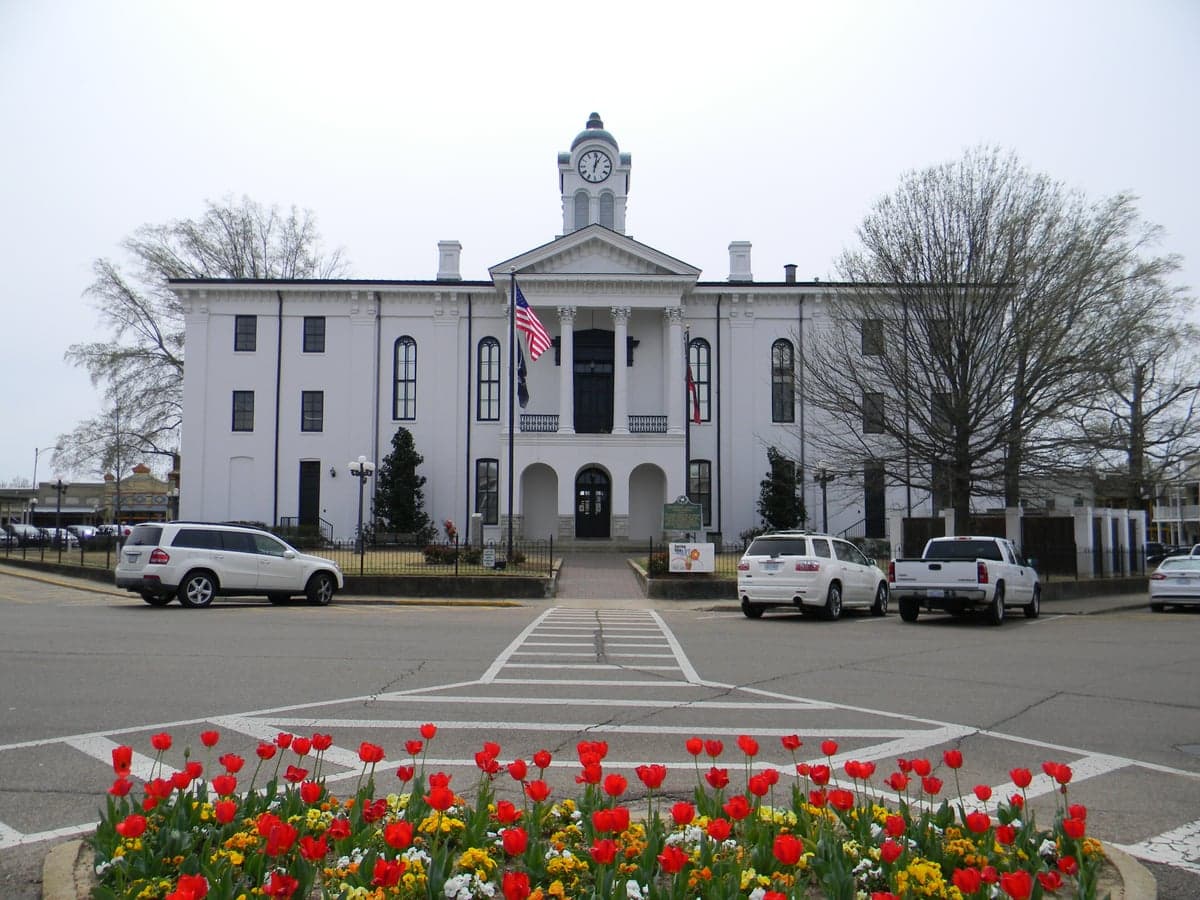
Culturally, the county is a study in contrasts. Oxford is a nationally recognized literary and arts hub, home to Square Books and the annual Oxford Film Festival, and it has a distinctly college-town, cosmopolitan feel. Drive ten miles outside the city, and you're in a world of hunting clubs, Baptist churches, and family farms. This cultural split is the most defining feature of the county's political climate. It's not a place of open hostility, but of two parallel communities that often vote in opposite directions. The long-term trajectory suggests this divide will persist, with Oxford's growth as a destination for retirees and remote workers potentially adding more blue-leaning voters, while the rural areas remain deeply conservative. The result is a county that is politically red, but culturally purple, and that's the real inside scoop.

State Political ClimatePolitical Climate in Mississippi
State Political AnalysisPolitical Environment in the State
Mississippi is one of the most reliably Republican states in the country, with a Cook Partisan Voting Index of R+11, meaning it votes about 11 points more Republican than the nation as a whole. The state hasn’t voted for a Democratic presidential candidate since 1976, and every statewide elected office is held by a Republican. Over the last 10-20 years, the shift has been dramatic: the old “Blue Dog” Democratic tradition that once dominated local courthouses and the state legislature has all but collapsed, replaced by a solid, culturally conservative GOP majority that controls roughly two-thirds of both legislative chambers. For a relocator, this means you’re moving into a state where conservative values are the baseline assumption in law and culture, but the political reality is more layered than the raw numbers suggest.
Urban vs. rural divide
The political map of Mississippi is a textbook case of the urban-rural split. The state’s only reliably Democratic stronghold is the Jackson metro area (Hinds County), which anchors the Delta region’s Black-majority vote. Jackson itself votes about 80% Democratic, but it’s surrounded by a sea of deep-red counties. The Gulf Coast, including cities like Biloxi and Gulfport, leans Republican but is more moderate on economic issues due to the tourism and casino industries. The northeastern corner, anchored by Tupelo (Elvis’s birthplace and a manufacturing hub), is solidly conservative but pragmatic — think Chamber of Commerce Republicans. The Mississippi Delta, stretching from Greenville to Clarksdale, is the poorest region and votes overwhelmingly Democratic, but its population has been declining for decades, reducing its electoral weight. The fastest-growing areas — the suburbs of Desoto County (just south of Memphis) and the Madison/Ridgeland corridor north of Jackson — are where the GOP’s margins are swelling fastest. These are places where families move for good schools and lower taxes, and they vote accordingly.
Policy environment
Mississippi’s policy environment is among the most conservative in the nation. There is no state income tax on wages — the state phased it out starting in 2022, with the rate dropping to 0% by 2026. Sales tax is around 7%, and property taxes are very low by national standards (median effective rate around 0.8%). The regulatory posture is light-touch: no state-level minimum wage above the federal $7.25, no paid family leave mandate, and a “right-to-work” law that keeps union power weak. Education policy leans heavily toward school choice: Mississippi has a robust charter school law, a voucher-like Education Scholarship Account program for special-needs students, and a new “school choice” expansion in 2024 that lets state funds follow students to private schools. Healthcare is a mixed bag: the state did not expand Medicaid under the ACA, leaving roughly 70,000 working poor in a coverage gap, but it has a strong network of community health centers. Election laws are restrictive by national standards: voter ID is required, early voting is limited (no-excuse absentee voting only), and same-day registration is not allowed. The state also has a lifetime ban on voting for people with certain felony convictions, though a 2023 law restored voting rights to some nonviolent offenders after they complete their sentences.
Recent policy direction
The last three years have seen a flurry of legislation that signals where Mississippi is heading. On gun rights, the state passed constitutional carry in 2016 and has repeatedly rejected any red-flag law proposals; in 2024, it expanded the “stand your ground” doctrine to include vehicles. On parental rights and education, the 2022 “Parents’ Bill of Rights” (HB 1309) gives parents explicit authority over their child’s medical decisions and curriculum objections, and a 2023 law banned instruction on sexual orientation and gender identity in K-3 classrooms. On speech and privacy, the state passed a law in 2023 prohibiting government mandates for COVID-19 vaccines and masks, and it has a strong shield law protecting journalists from revealing sources. Medical and bodily autonomy is sharply restricted: Mississippi’s trigger law banned abortion at conception in 2022, with no exceptions for rape or incest (only to save the mother’s life). The state also passed a 2024 law banning gender-affirming care for minors, which is currently being litigated. Property rights are strong: the state has a “right to farm” law protecting agricultural operations from nuisance lawsuits, and it does not have a statewide zoning mandate — local control is the norm. On voting, the 2023 law restoring voting rights to some felons was a modest liberalization, but the overall trend remains toward tightening access, with a 2024 law requiring proof of citizenship to register.
Civil unrest & political movements
Mississippi has a quieter political landscape than many states, but there are flashpoints. The Jackson water crisis in 2022-2023 — where the capital city’s water system failed for weeks — became a national story and a local political battleground, with state Republicans pushing for a state takeover of Jackson’s water utility (which happened in 2023) and local Democrats decrying it as a power grab. Immigration politics are less heated here than in border states, but the 2024 law requiring local law enforcement to cooperate with ICE (HB 1480) passed with bipartisan support. There is no sanctuary city movement to speak of; the state preempted such policies in 2015. Election integrity controversies have been minimal compared to other states, though the 2020 election saw a small protest in Jackson from Trump supporters. The most visible organized movements are on the right: the Mississippi Republican Party is dominated by the “Mississippi Conservative Coalition,” a group that pushes for school choice, tax cuts, and anti-abortion legislation. On the left, the Mississippi Poor People’s Campaign and the NAACP are active, but they have limited legislative success. Secession or nullification rhetoric is virtually nonexistent — Mississippi is culturally conservative but institutionally stable.
Projection
Over the next 5-10 years, Mississippi is likely to become even more Republican, but with a twist. The population is aging and slowly declining overall, but the suburbs of Desoto County and Madison County are growing as families move from Memphis and other higher-cost areas. These new arrivals are typically conservative but more focused on economic issues than social ones — they want low taxes, good schools, and safe neighborhoods. The Delta will continue to lose population, reducing the Democratic base. The wild card is the state’s Black population, which is about 38% of the total. If Black voter turnout increases — as it did in the 2023 gubernatorial election, where Democrat Brandon Presley came within 5 points of the Republican incumbent — the state could become more competitive at the margins, but a Democratic win in a statewide race is still a long shot. The policy direction will likely continue: more tax cuts, more school choice expansion, and further restrictions on abortion and transgender rights. A relocator moving in now should expect a state that is stable, conservative, and unlikely to shift dramatically in the next decade.
For a new resident, the bottom line is this: Mississippi offers a low-tax, low-regulation environment where conservative values are the norm in law and daily life. If you’re a conservative, you’ll find your views reflected in state policy and most local communities. If you’re a liberal, you’ll find a small but active community in Jackson and the college towns (Oxford, Starkville, Hattiesburg), but you’ll be swimming against the current. The state is safe, affordable, and politically predictable — which is exactly what many relocators are looking for. Just know that the political culture is deeply rooted, and change comes slowly here, if it comes at all.
* Values derived from national, state, county, city and local statistics and may differ in a specific area. Last updated: 2026-07-10T09:51:24.000Z
Narrative content on this page is AI-generated and may contain mistakes. Verify any details that matter before acting on them.
ReloMaps may earn a commission from affiliate links at no extra cost to you.

