
Photo: Wikipedia
Quality of Life in Jones County
A livable area that tracks near national norms for affordability, walkability, and neighborhood health.
What does Quality of Life tell us?
Quality of Life measures an area by evaluating factors like cost of living, nearby amenities, country club access, airport proximity, socioeconomic signals and neighborhood character. For large states, this is a general average — quality of life can vary dramatically between metro areas, suburbs, and rural communities within the same state.
What does this tell us?
Quality of Life measures an area by evaluating factors like cost of living, nearby amenities, country club access, airport proximity, socioeconomic signals and neighborhood character. For large states, this is a general average — quality of life can vary dramatically between metro areas, suburbs, and rural communities within the same state.
Cost of Living
40% below national average
141%
The Real Cost of Living in Jones County for 2026
| Tier | Individual | Family (4) |
|---|---|---|
| Survival | $13k | $24k |
| Comfortable | $25k | $36k |
| Luxury | $92k+ | $143k+ |
| Elite (Top 5%) | $123k+ | $190k+ |
Quality-of-Life Analysis
Jones County, Mississippi, offers a spectrum of living environments that range from the commercial and industrial hub of Laurel to quiet, unincorporated crossroads communities, all within a county where the cost of living sits at a striking 60 on the national index (100 = US average). This affordability, paired with a median home value of $126,800 and a median rent of $810, attracts a mix of workers commuting to regional employers, retirees seeking low property taxes, and families looking for acreage without a long drive. The county’s character shifts noticeably from the brick-paved streets of its largest town to the pine-shaded lanes of its rural pockets, offering distinct trade-offs in convenience, privacy, and community feel.
Largest town(s) & population centers
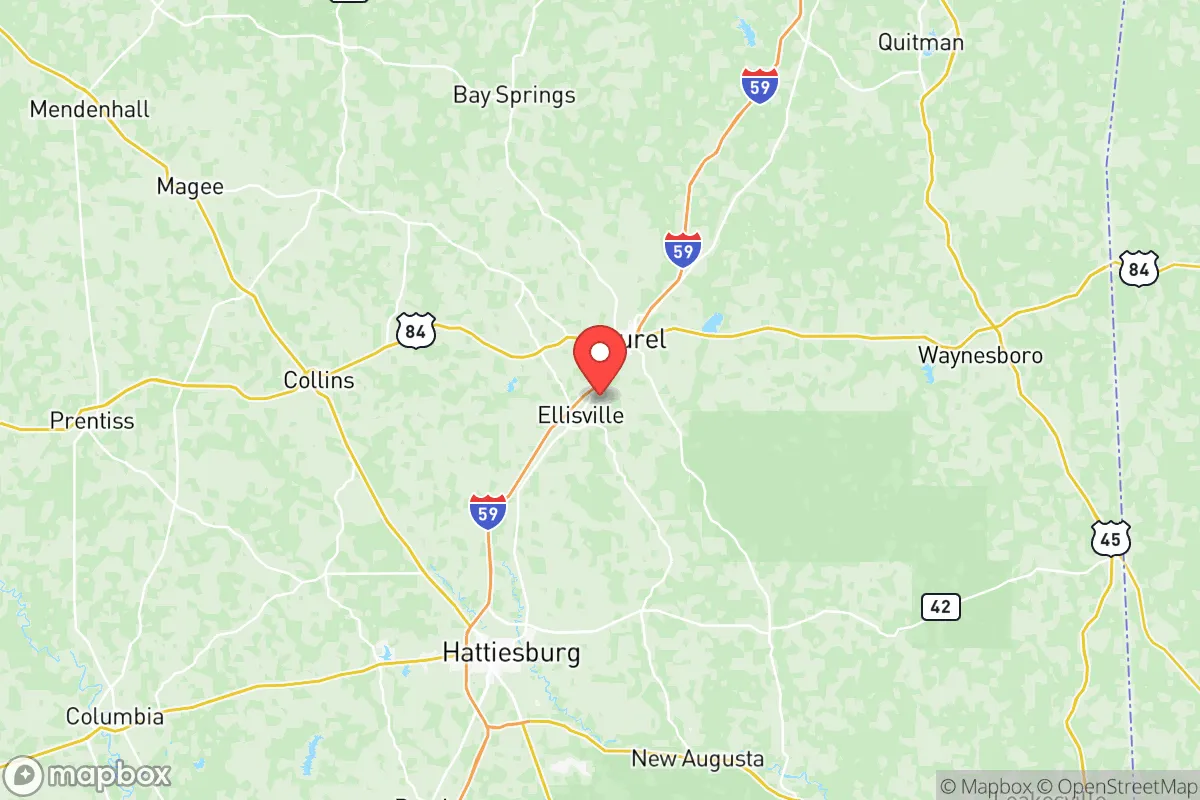
Laurel is the county seat and by far the largest population center, home to roughly 19,000 residents. Daily life here centers on a revitalized historic downtown, anchored by the Lauren Rogers Museum of Art and a growing number of locally owned restaurants and boutiques. The city also hosts major industrial employers like Howard Industries and Sanderson Farms, which drive a significant portion of the local job market. For families, the Laurel School District and the presence of South Central Regional Medical Center provide essential services within walking distance of many neighborhoods. The average commute in the county is just over 25 minutes, and for Laurel residents, that often means a short drive to work or to nearby Ellisville for additional shopping. While Laurel offers the most diverse housing stock—from historic Craftsman bungalows near downtown to newer subdivisions on the city’s north side—its property taxes and home prices are slightly higher than the county average, though still well below national norms.
Smaller towns & rural pockets
Outside Laurel, the county’s smaller communities offer a quieter, more land-oriented lifestyle. Ellisville, the second-largest town with about 4,500 residents, serves as a practical alternative with its own school system and a more relaxed pace, yet it remains only a 10-minute drive from Laurel’s amenities. Further south, Sandersville (population under 700) is a classic rural crossroads town where life revolves around the local church, the volunteer fire department, and the surrounding timber and cattle farms. Unincorporated areas like Moseley and Sharon consist largely of scattered homes on one- to five-acre lots, with no municipal services—residents rely on well water and septic systems. These pockets are ideal for those who prioritize privacy and space over walkability, and they represent the most affordable end of the county’s housing market, where a move-in-ready home can often be found for under $100,000.
Cost & lifestyle range
The cost-of-living spread across Jones County is narrow in absolute terms but meaningful in lifestyle. At the higher end, Laurel’s established neighborhoods—such as the West 5th Street historic district or the North Laurel area near the country club—see median home values closer to $160,000, with rents occasionally exceeding $1,000 for a three-bedroom house. These areas offer sidewalks, city water, and proximity to the county’s best dining and healthcare. At the lower end, rural properties in southern Jones County near the Wayne County line or in the Runnelstown area can be had for $70,000 to $90,000, with rents for mobile homes or small houses often falling below $700. The trade-off is clear: lower cost means longer drives to grocery stores (often 15–20 minutes to the nearest Piggly Wiggly or Walmart) and reliance on private utilities. For renters, the county’s median rent of $810 is a bargain compared to the national average, but available units are concentrated in Laurel and Ellisville, with very few rental options in the rural areas.
Jones County is best suited for people who value affordability and space over urban density and who are comfortable with a car-dependent lifestyle. Families and retirees on fixed incomes will find the low cost of living especially attractive, while remote workers can leverage the short commute times and relatively reliable broadband in Laurel and Ellisville. Those seeking a true rural retreat will find solitude and low taxes in the county’s unincorporated corners, but should be prepared for limited services and longer drives for everyday needs. The county’s strength lies in offering a clear choice: the convenience and community of a small city, or the quiet and freedom of the Mississippi Pine Belt.

Crime in Jones County
Generally safer than 61% of comparable U.S. locations.
Violent CrimeViolent Crime Analysis
Property CrimeProperty Crime Analysis
Crime Analysis
Jones County, Mississippi, presents a mixed safety profile where property crime rates significantly exceed national averages while violent crime remains below the U.S. median. The county's overall crime picture is heavily influenced by conditions in its largest city, Laurel, which accounts for a disproportionate share of reported incidents. Residents in outlying communities like Ellisville, Sandersville, and Soso generally experience lower crime rates, though property crime remains a concern countywide.
Crime in context
Jones County's violent crime rate of 187 incidents per 100,000 residents sits roughly 35% below the national average, placing it among the safer rural counties in Mississippi for violent offenses. However, the property crime rate of 1,065.3 per 100,000 is approximately 30% higher than the U.S. median and notably above the Mississippi state average. This disparity means residents face a heightened risk of burglary, theft, and motor vehicle theft compared to both state and national benchmarks. The county's proximity to the Hattiesburg metropolitan area (about 20 miles west) introduces some spillover crime from the larger urban center, though the effect is modest compared to counties directly adjacent to Jackson or the Gulf Coast.
What residents experience
Daily life in Jones County involves navigating a property crime environment that is more active than many rural Mississippians expect. Laurel, the county seat and largest city (population ~18,500), concentrates the majority of reported thefts and burglaries, particularly in older neighborhoods near downtown and along the Highway 84 corridor. Residents in Ellisville (population ~4,500) report fewer incidents, though the city's smaller police force means response times can be longer. The unincorporated communities of Sandersville and Soso see the lowest crime rates in the county, with many residents describing them as quiet and family-oriented. The Jones County Sheriff's Department covers unincorporated areas, and its proactive patrol strategy has helped keep violent crime low outside city limits. However, property crime—especially theft from vehicles and unlocked outbuildings—remains a persistent nuisance across all areas.
The judicial environment in Jones County is a critical factor for residents concerned about public safety. The county falls within the 12th Chancery Court District and the 12th Circuit Court District, which covers Jones and neighboring counties. Circuit Court Judge Dal Williamson and District Attorney Lin Carter (12th Circuit) have maintained a generally conservative approach to sentencing, with relatively low rates of pretrial release for violent offenders compared to more progressive jurisdictions in Mississippi's larger metro areas. This judicial posture is a meaningful positive for residents, as it reduces the likelihood of repeat offenders cycling back onto the streets quickly—a problem that plagues counties with liberal-leaning prosecutors. The contrast is sharp: while Hattiesburg and Jackson have seen rising crime linked to progressive bail reform and diversion programs, Jones County's courts have prioritized victim rights and public safety over offender rehabilitation in sentencing decisions.
Neighborhood-level variation is pronounced. In Laurel, the historic downtown district and the areas around the Lauren Rogers Museum of Art are generally safer, while the neighborhoods east of Interstate 59 and south of Highway 84 experience higher property crime rates. Ellisville's newer subdivisions near the Jones County Junior College campus report very low crime, while older rental-heavy blocks near the railroad tracks see more frequent police calls. For prospective residents, the safest housing choices are in the rural western portions of the county (near Soso) or in the northern areas around Sandersville, where property crime rates drop to roughly half the county average. Overall, Jones County offers a reasonable safety environment for those who choose their specific neighborhood carefully and take standard precautions against property crime.
* Values derived from national, state, county, city and local statistics and may differ in a specific area. Last updated: 2026-06-16T05:10:42.000Z
Narrative content on this page is AI-generated and may contain mistakes. Verify any details that matter before acting on them.
ReloMaps may earn a commission from affiliate links at no extra cost to you.

