
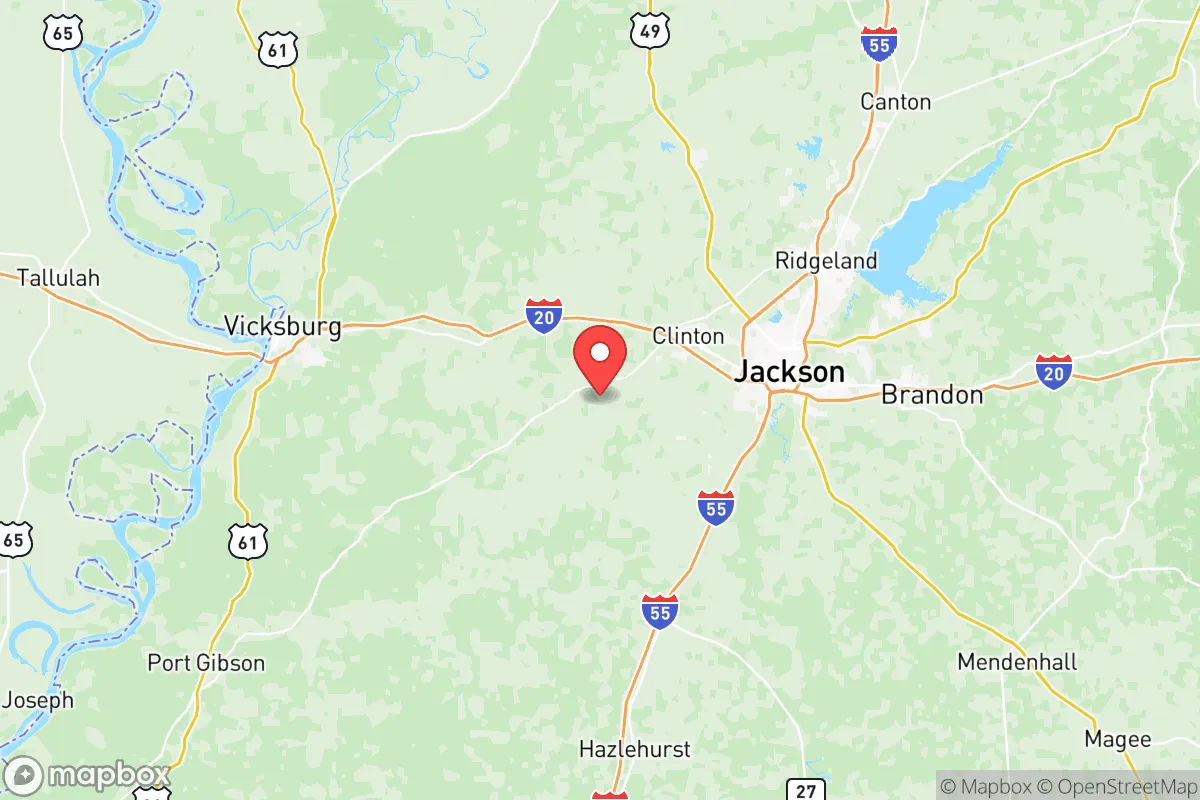
Photo: Wikipedia
Quality of Life in Hinds County
A livable area that tracks near national norms for affordability, walkability, and neighborhood health.
What does Quality of Life tell us?
Quality of Life measures an area by evaluating factors like cost of living, nearby amenities, country club access, airport proximity, socioeconomic signals and neighborhood character. For large states, this is a general average — quality of life can vary dramatically between metro areas, suburbs, and rural communities within the same state.
What does this tell us?
Quality of Life measures an area by evaluating factors like cost of living, nearby amenities, country club access, airport proximity, socioeconomic signals and neighborhood character. For large states, this is a general average — quality of life can vary dramatically between metro areas, suburbs, and rural communities within the same state.
Cost of Living
25% below national average
116%
The Real Cost of Living in Hinds County for 2026
| Tier | Individual | Family (4) |
|---|---|---|
| Survival | $16k | $31k |
| Comfortable | $29k | $43k |
| Luxury | $90k+ | $140k+ |
| Elite (Top 5%) | $120k+ | $185k+ |
Quality-of-Life Analysis
Hinds County, Mississippi, offers a broad quality-of-life spectrum that ranges from the urban energy of Mississippi’s capital city to quiet, unincorporated crossroads and farmland. The county’s character shifts dramatically depending on where you land: professionals and students gravitate toward the job and cultural hubs of Jackson and Clinton, while families seeking lower taxes and larger lots often settle in smaller communities like Raymond or Utica. Retirees and rural homesteaders are drawn to the far-flung pockets near the Pearl River, where land is affordable and the pace is slow.
Largest town(s) & population centers
Jackson is the county seat and the state’s capital, anchoring the western half of Hinds County with a population of roughly 145,000. Daily life here is urban by Mississippi standards: residents commute an average of 22.9 minutes to work, often to government offices, the University of Mississippi Medical Center, or regional headquarters for companies like C Spire and Entergy. The city offers a dense network of restaurants, museums, and music venues, but also faces challenges with property crime and aging infrastructure. Clinton, just west of Jackson, is a distinct population center of about 25,000. Home to Mississippi College, Clinton has a walkable historic downtown, strong public schools, and a lower crime rate than the capital, making it a magnet for families and university faculty. The town’s median home value of $151,200 and median rent of $1,032 are in line with the county average, but Clinton’s housing stock tends to be newer and better maintained than Jackson’s older inventory.
Smaller towns & rural pockets
Raymond, the county’s second-oldest town, sits about 15 miles southwest of Jackson and is home to Hinds Community College’s main campus. With a population under 2,000, Raymond offers a small-town feel with a historic square, a few local eateries, and easy access to the Natchez Trace Parkway. Utica, further south near the Claiborne County line, is even smaller—roughly 800 residents—and functions as a rural service center with a post office, a couple of churches, and a gas station. Unincorporated areas like Brownsville and Learned are true rural pockets, where homes sit on acreage and the nearest grocery store may be a 20-minute drive. These areas lack municipal services like public water and sewer in many spots, but land prices can be 30–40% below the county median home value, appealing to buyers willing to drill a well and install a septic system.
Cost & lifestyle range
The county’s overall cost of living index of 75 (100 is the U.S. average) masks significant internal variation. At the low end, rural areas near the Pearl River in eastern Hinds County—such as the unincorporated community of Terry—offer home prices frequently under $100,000 and property taxes among the lowest in the state. A household earning $40,000 can afford a modest home here with room to spare. At the higher end, the historic Belhaven neighborhood in Jackson and the newer subdivisions in Clinton’s Northside area push median home values above $200,000, with some properties exceeding $350,000. Rent follows a similar spread: a one-bedroom apartment in Clinton or Jackson’s Fondren district averages $1,100–$1,300, while a similar unit in Raymond or Utica might rent for $700–$850. Amenities also diverge: Jackson and Clinton have multiple grocery chains, hospitals, and entertainment options, while rural residents typically drive 15–25 minutes for a full-service supermarket or urgent care clinic.
Hinds County works best for people who value choice and are willing to trade off between urban access and rural quiet. Young professionals and students thrive in Jackson and Clinton, where jobs and social scenes are concentrated. Families with school-age children often prefer Clinton or the smaller towns with strong school districts like Raymond. Retirees and remote workers who want the lowest possible cost of living find the rural eastern and southern edges of the county appealing, provided they are comfortable with longer drives for errands and fewer nearby services. The county’s 22.9-minute average commute is manageable even for those living in the far reaches, as most employment remains clustered in the Jackson metro core.

Crime in Hinds County
Generally safer than 61% of comparable U.S. locations.
Violent CrimeViolent Crime Analysis
Property CrimeProperty Crime Analysis
Crime Analysis
Hinds County, Mississippi, presents a complex safety picture shaped by the sharp contrast between its urban core, Jackson, and its more suburban and rural communities. The county’s overall violent crime rate of 187 per 100,000 residents and property crime rate of 1,065.3 per 100,000 place it above national averages, but these figures mask significant variation between neighborhoods and municipalities. Understanding where crime concentrates and how local justice policies affect public safety is essential for anyone considering relocation to the area.
Crime in context
Hinds County’s violent crime rate of 187 per 100,000 is roughly 30% higher than the national average of about 144 per 100,000, while its property crime rate of 1,065.3 per 100,000 exceeds the U.S. average of approximately 1,050 per 100,000. Compared to Mississippi as a whole, which reports a statewide violent crime rate near 220 per 100,000, Hinds County sits slightly below the state average—but this is largely because rural counties with very low populations can skew the state figure. The county’s property crime rate is significantly higher than the Mississippi average of roughly 850 per 100,000, driven primarily by theft and vehicle break-ins in Jackson and its immediate suburbs. Crime data from the Mississippi Department of Public Safety and the FBI’s Uniform Crime Reporting program consistently show that Hinds County accounts for a disproportionate share of the state’s violent crime, with Jackson alone contributing over 60% of the county’s reported incidents.
What residents experience
Daily life in Hinds County varies dramatically by location. In Jackson, residents frequently report concerns about carjackings, armed robberies, and property crimes, particularly in areas near Interstate 55 and Highway 49 corridors. The city’s progressive district attorney, Jody Owens, has implemented policies emphasizing diversion programs and reduced bond amounts for nonviolent offenders, which critics argue has contributed to a revolving-door justice system that emboldens repeat offenders. Suburban communities like Clinton and Byram experience far lower crime rates, with Clinton’s violent crime rate estimated at roughly 120 per 100,000 and Byram’s even lower, thanks to more conservative local policing and judicial approaches. The unincorporated areas of Raymond and Bolton see minimal violent crime but still contend with property theft, particularly from unlocked vehicles. Residents in Jackson’s safer neighborhoods, such as Fondren and Belhaven, often rely on neighborhood watch programs and private security patrols to supplement overstretched police resources.
Neighborhood-level variation and what to watch
The most significant safety divide in Hinds County is between Jackson and its surrounding suburbs. Jackson’s violent crime rate is estimated at over 600 per 100,000—more than three times the county average—while Clinton, Byram, and Terry all report rates below 150 per 100,000. Property crime follows a similar pattern: Jackson’s rate exceeds 2,500 per 100,000, while suburban rates hover around 600-800 per 100,000. The county’s judicial district structure compounds these disparities: Jackson’s municipal court and Hinds County Circuit Court, both overseen by elected officials with progressive leanings, have drawn criticism for low bond amounts and lenient sentencing for repeat property offenders. In contrast, the smaller towns within the county maintain their own police departments and municipal courts that tend to take a harder line on crime. For prospective residents, choosing a suburb like Clinton or Byram over Jackson can mean a 70-80% reduction in both violent and property crime risk, though even these safer areas require standard precautions like locking vehicles and securing homes.
* Values derived from national, state, county, city and local statistics and may differ in a specific area. Last updated: 2026-06-24T12:07:23.000Z
Narrative content on this page is AI-generated and may contain mistakes. Verify any details that matter before acting on them.
ReloMaps may earn a commission from affiliate links at no extra cost to you.

