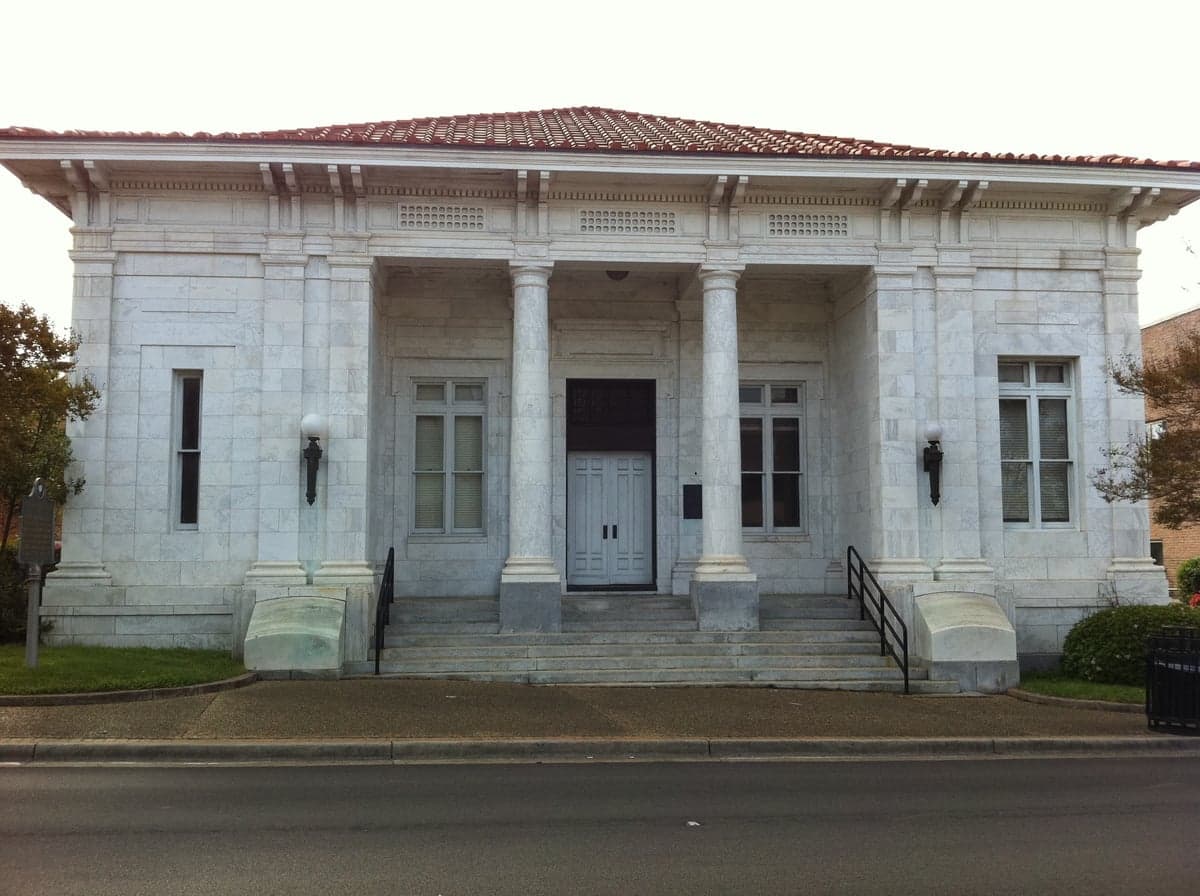
Photo: Wikipedia
Personal Sovereignty in Forrest County
Viable for self-reliance. Generally workable, though some barriers may limit total independence.
What does Personal Sovereignty tell us?
Personal Sovereignty measures your capacity for self-reliance and independence with minimal government friction. Higher scores mean fewer barriers between you and the way you want to live... but it assumes you have the space you need and good neighbors.
What does this tell us?
Personal Sovereignty measures your capacity for self-reliance and independence with minimal government friction. Higher scores mean fewer barriers between you and the way you want to live... but it assumes you have the space you need and good neighbors.
State Policy
Energy independence: Importer (50% of energy produced in-state)
Personal Liberty
Homesteading

Personal Liberty Analysis
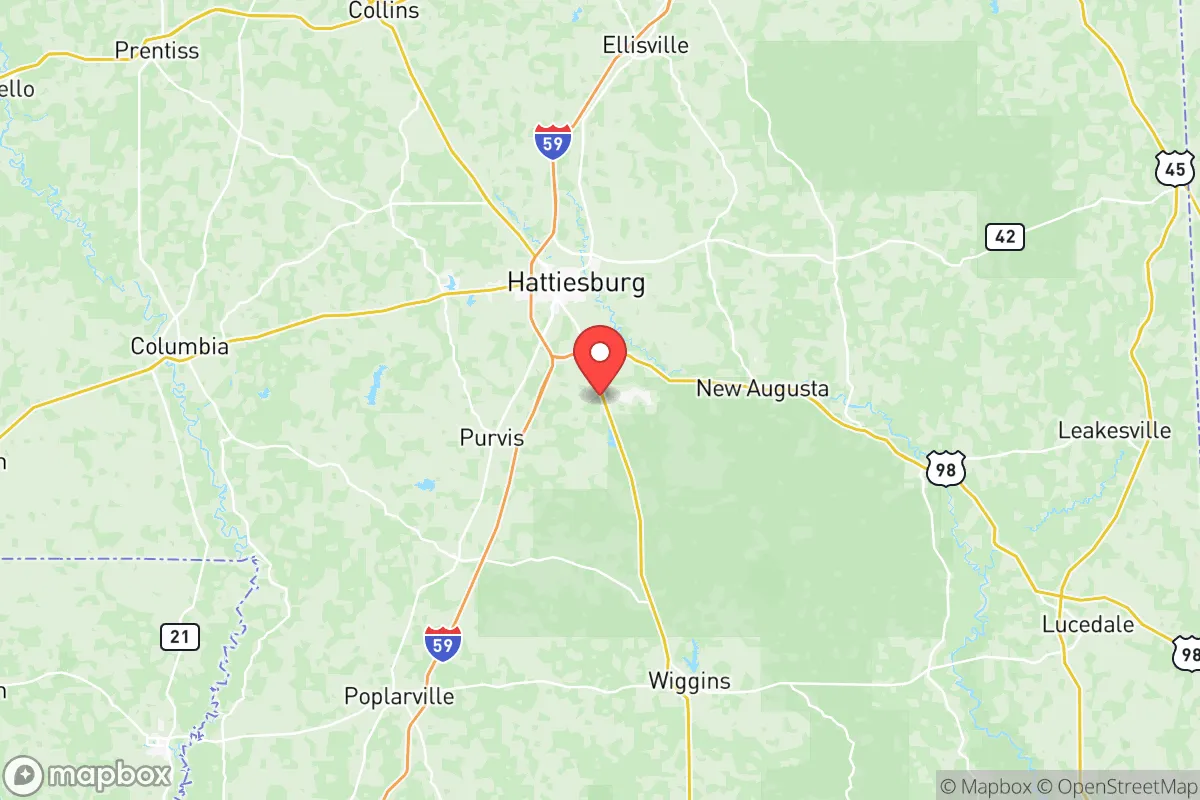
Forrest County, Mississippi, offers a personal sovereignty environment that is distinctly aligned with a hands-off, low-regulation approach to governance, particularly when contrasted with urban centers to the north or coastal areas. Residents in the county seat of Hattiesburg and surrounding communities like Petal and Brooklyn experience a legal and cultural framework that prioritizes individual decision-making, from property rights to self-defense, under the broader umbrella of Mississippi’s state-level preemption laws. The area’s autonomy profile is defined by a light tax burden, permissive gun laws, and a regulatory posture that generally defers to personal responsibility, though specific zoning and development rules vary between the city of Hattiesburg and the unincorporated areas.
Tax burden and regulatory posture for individuals and families
Mississippi’s state tax structure directly supports personal sovereignty by keeping government demands on income and property comparatively low. The state levies a flat 4.0% income tax on most income (with a 4.4% rate on the highest bracket), and residents in Forrest County see no local income tax. Property taxes are among the lowest in the nation, with the average effective rate in Forrest County hovering around 0.67% of assessed home value — roughly half the national average. A home valued at $200,000 in Hattiesburg or Petal would incur about $1,340 annually in property taxes, significantly less than in Texas or Florida. The regulatory posture is similarly light: Mississippi is a right-to-work state, there are no state-level occupational licensing requirements for many trades beyond basic safety, and the county’s planning and zoning code is relatively sparse compared to metro areas. However, inside Hattiesburg city limits, building permits and zoning restrictions are more active — for example, new construction must meet city stormwater and lot setback ordinances. In contrast, unincorporated areas like McLain and West Hattiesburg operate under minimal county oversight, with no formal zoning in many rural pockets, allowing homeowners greater freedom to build, renovate, or use their land without bureaucratic delays.
Self-defense and gun law specifics in Forrest County
Forrest County’s gun laws are among the most permissive in the United States, reflecting Mississippi’s strong constitutional carry stance. Since 2016, the state allows permitless carry for any law-abiding adult (21 or older) — open or concealed — without a license, background check, or training requirement. Forrest County has not passed any local firearms ordinances that contradict state preemption, meaning the legal framework is uniform across Hattiesburg, Petal, and all rural areas. Stand-your-ground laws are codified, with no duty to retreat in any place where a person has a legal right to be. The county’s culture strongly reinforces this: gun ownership is high, and firearms training courses are widely available through local ranges like the Forrest County Gun Club and pawn shops in Petal. For families, this means a legal environment that trusts individual judgment on self-defense, though advocates note that the lack of a permit requirement also removes any state-level mental health or criminal background check for private sales. Courts in Forrest County have historically deferred to gun owners in self-defense claims, with the 12th Circuit District rarely prosecuting lawful defensive shootings. For those prioritizing the right to armed self-defense without government gatekeeping, Forrest County ranks as one of the most accommodating jurisdictions nationwide.
Self-reliance and homesteading viability: lot sizes, zoning, off-grid feasibility
Homesteading and off-grid living are viable in Forrest County, but feasibility depends heavily on location. In unincorporated areas like rural Brooklyn (north of Hattiesburg) and the sparsely populated southwestern tracts near the Lamar County line, lot sizes commonly start at 1 to 5 acres, with many parcels exceeding 10 acres. There is no countywide zoning ordinance — development is governed by a minimal subdivision regulation that only kicks in for lots under 5 acres. This means building a home, starting a garden, or keeping livestock (including chickens, goats, and pigs) is generally unrestricted. Off-grid utilities are legally permissible: Mississippi has no state law requiring connection to municipal water or sewer, and the county does not enforce a mandatory grid tie for electricity. Solar panels, rainwater collection, and composting toilets are all allowed, though the city of Hattiesburg requires connection to city sewer and water where available, and any new structure must pass a well and septic inspection. Petal, a separate municipality, has somewhat stricter setback and building standards but still permits off-grid septic systems. The county’s agricultural exemption for property taxes further supports self-reliance: land used for farming or timber can qualify for reduced assessments, cutting annual tax liability by 30-50% on larger parcels. For those seeking to pair low taxes with real freedom to live without utility bills, the unincorporated areas of Forrest County — particularly the rural portions of Beat 2 east of Hattiesburg — offer a regulatory path that is far simpler than in neighboring Louisiana or coastal Alabama.
Personal liberties: parental rights, medical autonomy, speech, property
Personal liberties in Forrest County are bolstered by Mississippi’s state-level protections. Parental rights are strongly emphasized: the state has a “Parental Bill of Rights” law (HB 1309, 2023) that affirms parents’ authority over their children’s education, healthcare, and moral upbringing, including the right to opt out of any school curriculum or activity. This is actively enforced by the Forrest County School District and Petal School District, both of which have policies allowing parents to review instructional materials and withdraw children from lessons they find objectionable. Medical autonomy is more limited — Mississippi has not expanded Medicaid, and the state imposes tight regulations on abortions (effectively banned after 6 weeks, with no exceptions for rape), but routine healthcare decisions (vaccinations, treatments) remain at the parents’ discretion. Freedom of speech and assembly are constitutionally protected, with Hattiesburg being a notably open venue for all political viewpoints, from conservative Second Amendment rallies to local activist groups. Property rights are robust: Mississippi is a “Dillon’s Rule” state generally deferring to local government, but Forrest County has avoided onerous condemnation or eminent domain abuse — the county’s last major takings case was in 2014 for a drainage project, with full market compensation. The area’s strong tradition of private property ownership, backed by Mississippi’s “right to farm” law that limits nuisance lawsuits against agricultural operations, creates a legal environment where individual control over land and family decisions is the default, not the exception.
Overall, Forrest County stands out for personal sovereignty relative to other regions of the South. Compared to urbanized counties in Georgia or Florida, the regulatory burden is dramatically lower, and key liberties — self-defense, property use, parental control — are codified in state law with local enforcement that rarely interferes. The tax burden is among the lowest in the nation for middle-income households, and the off-grid and homesteading culture is genuinely accessible in rural areas like Brooklyn, McLain, and the northern Beat 3. While Hattiesburg city limits introduce moderate zoning and utility requirements, the county as a whole provides an environment where an individual or family seeking to minimize government oversight while maximizing personal independence can do so without navigating complex permits or legal challenges. For those weighing relocation options with personal freedom as a priority, Forrest County offers a pragmatic, culture-tested balance of low governance and high liberty.

* Values derived from national, state, county, city and local statistics and may differ in a specific area. Last updated: 2026-06-22T03:26:47.000Z
Narrative content on this page is AI-generated and may contain mistakes. Verify any details that matter before acting on them.
ReloMaps may earn a commission from affiliate links at no extra cost to you.

