Photo: Wikipedia
Quality of Life in Claiborne County
A livable area that tracks near national norms for affordability, walkability, and neighborhood health.
What does Quality of Life tell us?
Quality of Life measures an area by evaluating factors like cost of living, nearby amenities, country club access, airport proximity, socioeconomic signals and neighborhood character. For large states, this is a general average — quality of life can vary dramatically between metro areas, suburbs, and rural communities within the same state.
What does this tell us?
Quality of Life measures an area by evaluating factors like cost of living, nearby amenities, country club access, airport proximity, socioeconomic signals and neighborhood character. For large states, this is a general average — quality of life can vary dramatically between metro areas, suburbs, and rural communities within the same state.
Cost of Living
55% below national average
127%
The Real Cost of Living in Claiborne County for 2026
| Tier | Individual | Family (4) |
|---|---|---|
| Survival | $10k | $20k |
| Comfortable | $18k | $27k |
| Luxury | $62k+ | $96k+ |
| Elite (Top 5%) | $97k+ | $150k+ |
Quality-of-Life Analysis
Claiborne County, Mississippi, offers a quality-of-life spectrum that ranges from the historic river town of Port Gibson to deeply rural, unincorporated communities, all within a county that is one of the most affordable in the state. With a cost of living index of 45—less than half the national average—the county primarily attracts retirees, remote workers seeking land, and families priced out of larger Mississippi metros like Jackson or Vicksburg. The character of daily life shifts noticeably depending on whether one lives in the county’s sole incorporated town, a crossroads community, or on a rural homestead.
Largest town(s) & population centers
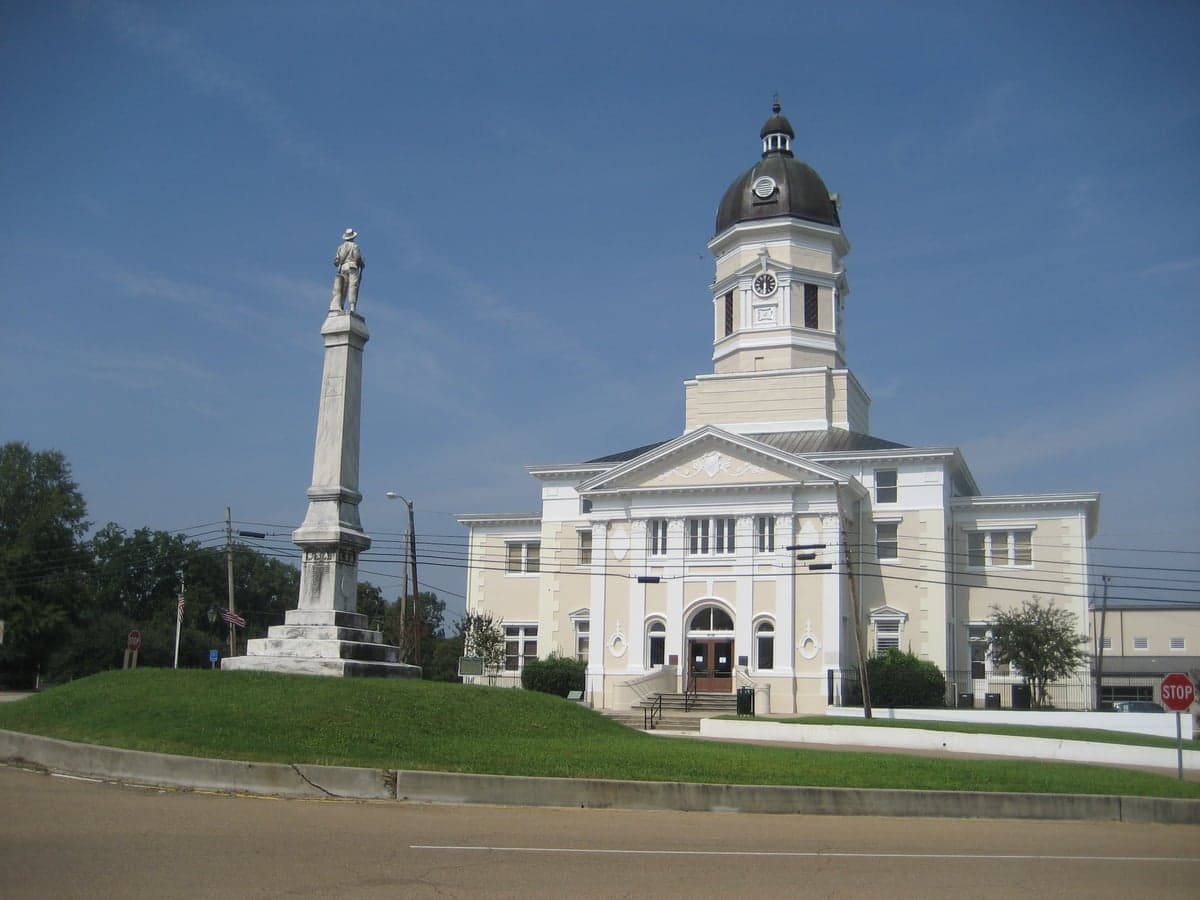
Port Gibson is Claiborne County’s only incorporated city and its undisputed population and commercial center, home to roughly 1,500 residents. Daily life here revolves around the compact historic downtown, which features a handful of local eateries, a grocery store, and the county courthouse. The town is famous for its well-preserved antebellum architecture, including the First Presbyterian Church with its iconic hand pointing skyward, and it serves as a gateway for tourists visiting the nearby Grand Gulf Military State Park. Employment is concentrated in local government, the school system, and the nearby Grand Gulf Nuclear Station (just across the county line in Port Gibson). For most residents, the 28-minute average commute is a reality, with many driving west to Vicksburg or south to Natchez for work and major shopping. Port Gibson offers a quiet, walkable core for those who want a small-town feel, but its housing stock is older and often requires renovation; the median home value of $80,800 reflects this mix of affordability and deferred maintenance.
Smaller towns & rural pockets
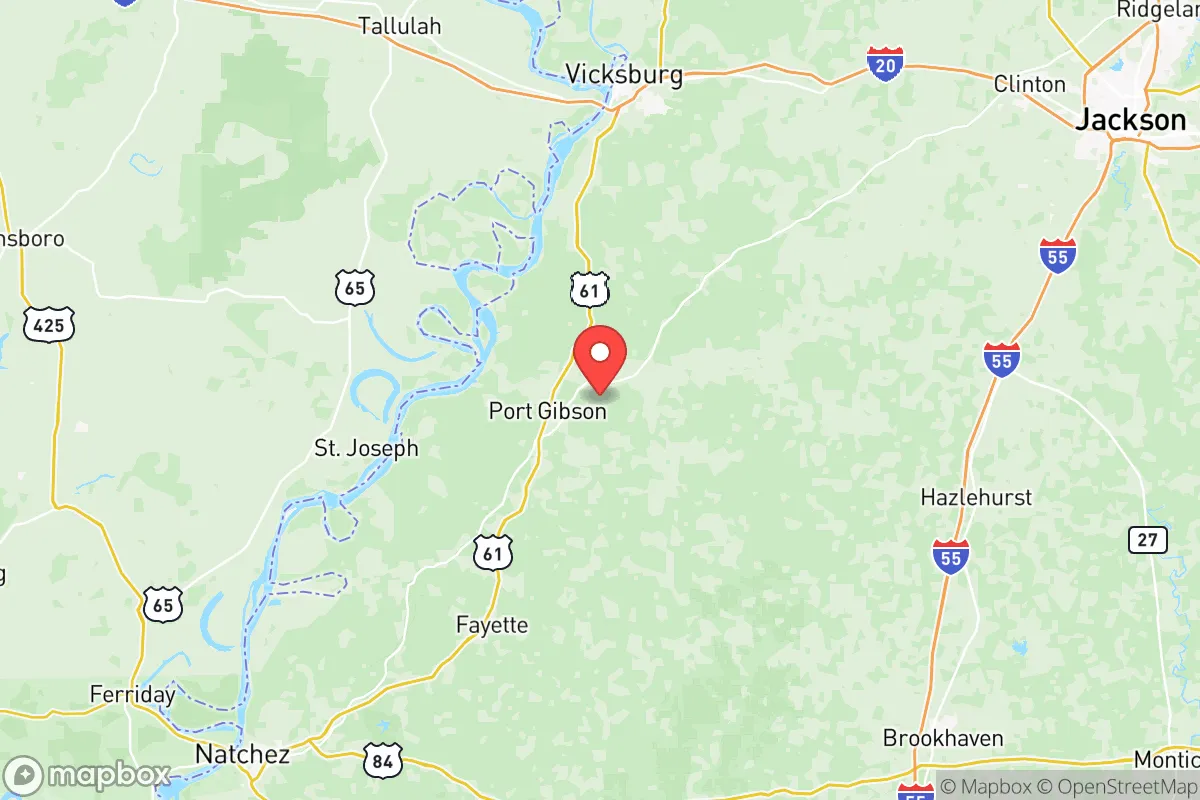
Beyond Port Gibson, the county is defined by unincorporated communities and sparsely populated crossroads. Alcorn, Pattison, and Hermanville are the most notable of these, each consisting of a few dozen homes, a church or two, and little else in the way of services. Alcorn, located near the county’s northern edge, is a historic railroad stop that now offers only a post office and a scattering of residences. Pattison, just south of Port Gibson, is a tiny cluster of homes near the Big Black River. Hermanville, in the county’s southeast, is similarly quiet, with a population well under 100. These areas are almost entirely residential and agricultural, with no retail or dining options. Residents here rely on Port Gibson or Vicksburg for all errands, making a vehicle essential. The appeal is total privacy, very low land prices, and a connection to the region’s deep agricultural roots—cotton and soybean fields dominate the landscape.
Cost & lifestyle range
The cost-of-life spread across Claiborne County is narrow in absolute dollars but wide in lifestyle implications. At the low end, rural properties in communities like Hermanville or Alcorn can be purchased for well under $50,000, with some older mobile homes and fixer-upper houses selling for $30,000–$50,000. Median rent countywide is just $651, but rental options are extremely scarce outside Port Gibson. At the higher end, well-maintained historic homes in Port Gibson’s central district—especially those on or near Church Street—can reach $120,000–$150,000, still a fraction of national averages. The trade-off is clear: the lowest-cost areas offer maximum seclusion and minimal amenities, while Port Gibson provides sidewalks, a post office, a library, and a sense of community. Utilities and property taxes are uniformly low across the county, but transportation costs are higher for rural residents due to longer drives. For example, a family living in Pattison might spend 15–20 minutes just reaching Port Gibson for milk, while a Port Gibson resident can walk to the courthouse square.
Claiborne County is best suited for those who prioritize extreme affordability, space, and quiet over employment diversity, nightlife, or convenience. Retirees on fixed incomes, remote workers with reliable vehicles, and families willing to commute to Vicksburg or Natchez for jobs and shopping will find the county’s low cost of living and unhurried pace appealing. Those who need walkable amenities, a robust rental market, or proximity to urban healthcare and retail should look to larger towns in neighboring counties. For the right person, Claiborne County offers a rare combination of historic character and rural freedom at a price point nearly unmatched in the United States.

Crime in Claiborne County
Generally safer than 62% of comparable U.S. locations.
Violent CrimeViolent Crime Analysis
Property CrimeProperty Crime Analysis
Crime Analysis
Claiborne County, Mississippi, presents a mixed safety picture: its violent crime rate of 179.5 per 100,000 residents is notably lower than both the Mississippi state average and the national figure, but its property crime rate of 1,071 per 100,000 runs significantly higher than the U.S. norm. The county is overwhelmingly rural, anchored by the small towns of Port Gibson, Hermanville, and Pattison, with no large metropolitan center to skew the statistics. For prospective residents, the practical takeaway is that violent crime is not a dominant concern here, but property crime—particularly theft and burglary—demands routine precautions.
Crime in context
To understand Claiborne County’s numbers, context is essential. Mississippi’s statewide violent crime rate hovers near 280 per 100,000, and the national average sits around 380 per 100,000, meaning Claiborne County’s 179.5 figure is roughly 36% below the state average and 53% below the national average. The county’s property crime rate of 1,071 per 100,000, however, is about 30% higher than the national average of roughly 820 per 100,000. This divergence is typical of rural Mississippi counties: fewer aggravated assaults and robberies, but more opportunistic thefts tied to economic hardship and sparse law enforcement coverage. The county seat of Port Gibson, with a population under 1,500, generates a disproportionate share of reported incidents simply because it is the commercial hub where most retail and foot traffic occurs.
What residents experience
Daily life in Claiborne County is shaped more by property crime than by violent encounters. Residents in Port Gibson and the unincorporated areas around Hermanville and Pattison commonly report thefts from vehicles, shed break-ins, and occasional burglaries of unoccupied rural homes. The county’s proximity to the Natchez Trace Parkway and U.S. Highway 61 means transient traffic passes through regularly, and law enforcement officials note that a portion of property crimes are linked to individuals passing through rather than long-term residents. The county is served by the Claiborne County Sheriff’s Department and the Port Gibson Police Department, with cases prosecuted by the Sixth District Attorney’s Office, which also covers Copiah and Lincoln counties. Response times in remote areas can exceed 20 minutes, so residents often rely on neighborhood watch networks and private security measures. Violent crime, when it does occur, is typically domestic in nature rather than random, and the county has not seen a pattern of stranger-on-stranger violence in recent years.
Judicial philosophy matters here. The Sixth District Attorney’s Office operates in a conservative, rural legal environment where plea bargaining is common but sentences for repeat property offenders tend to be more consistent than in urban Mississippi jurisdictions. Claiborne County does not have a progressive prosecutor pushing diversion-first policies, which is a meaningful factor for residents concerned about recidivism. In contrast, larger metro areas in Mississippi—such as Jackson in Hinds County—have seen more lenient bail and charging practices criticized by public safety advocates, and those policies have been linked to higher repeat-offender rates. For Claiborne County residents, the practical effect is that convicted burglars and thieves are more likely to serve actual jail time, reducing the immediate risk of repeat victimization.
Neighborhood-level variation is modest but real. The most concentrated activity is in Port Gibson’s historic downtown and along the Church Street corridor, where commercial properties attract occasional break-ins. The outlying communities of Alcorn and Grand Gulf, near the Grand Gulf Nuclear Station, are among the safest areas, with very low reported crime and a strong presence of security personnel tied to the energy facility. Areas along the Mississippi River levee, particularly near the former riverboat landing sites, see slightly higher incidents of trespassing and theft, likely due to remoteness and limited patrol coverage. Overall, residents who secure outbuildings, maintain good lighting, and participate in community watch efforts report feeling safe, and the county’s violent crime rate supports that perception.
* Values derived from national, state, county, city and local statistics and may differ in a specific area. Last updated: 2026-11-13T05:24:57.000Z
Narrative content on this page is AI-generated and may contain mistakes. Verify any details that matter before acting on them.
ReloMaps may earn a commission from affiliate links at no extra cost to you.

