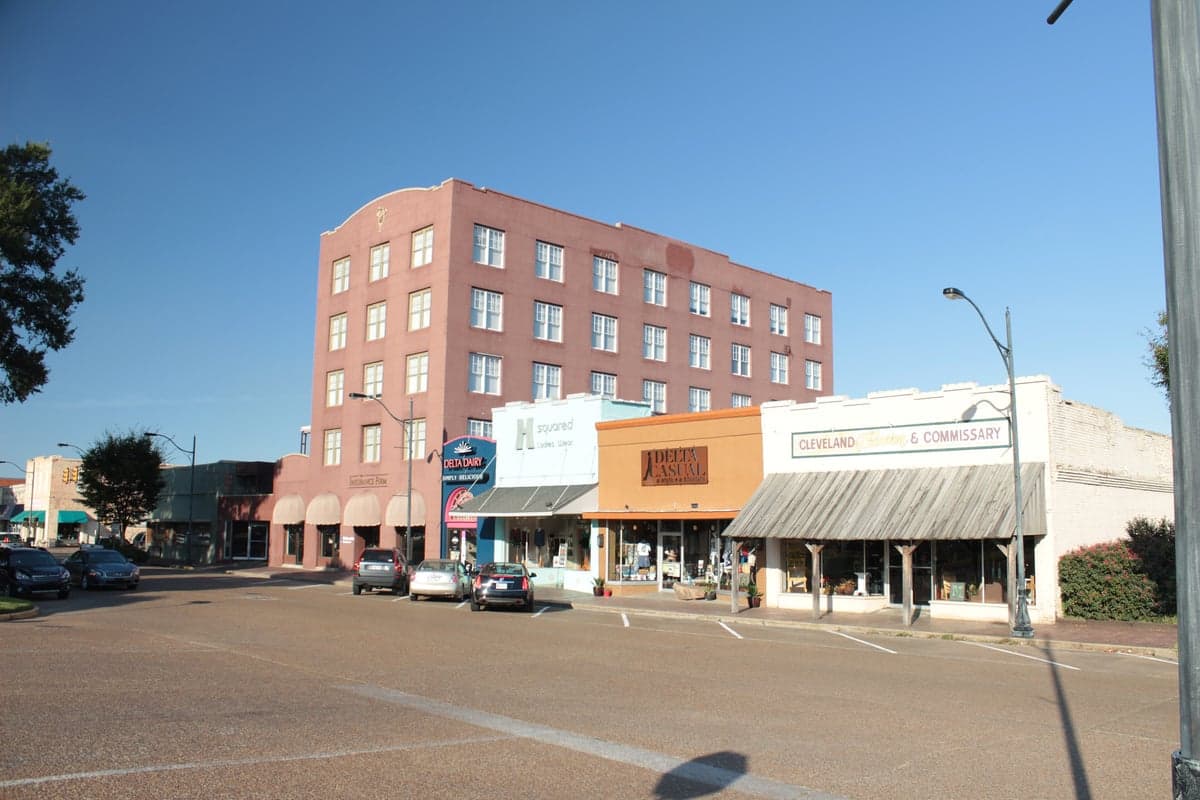
Photo: Wikipedia
Strategic Assessment of Bolivar County
Workable tactical position. Some exposure to population density or targets, but generally defensible in a crisis.
What does the Strategic Assessment tell us?
Our Strategic Assessment grades tactical survivability of an area. Major population centers, military targets, fallout zones, natural disasters, and border exposure all drive risk — lower exposure means a more defensible position in a crisis.
This is heavily inspired by Joel Skousen's Strategic Relocation book. Highly recommended you checkout the book ($)What does this tell us?
Our Strategic Assessment grades tactical survivability of an area. Major population centers, military targets, fallout zones, natural disasters, and border exposure all drive risk — lower exposure means a more defensible position in a crisis.
This is heavily inspired by Joel Skousen's Strategic Relocation book. Highly recommended you checkout the book ($)Strategic Pillars

Key Distances
Strategic Assessment Analysis
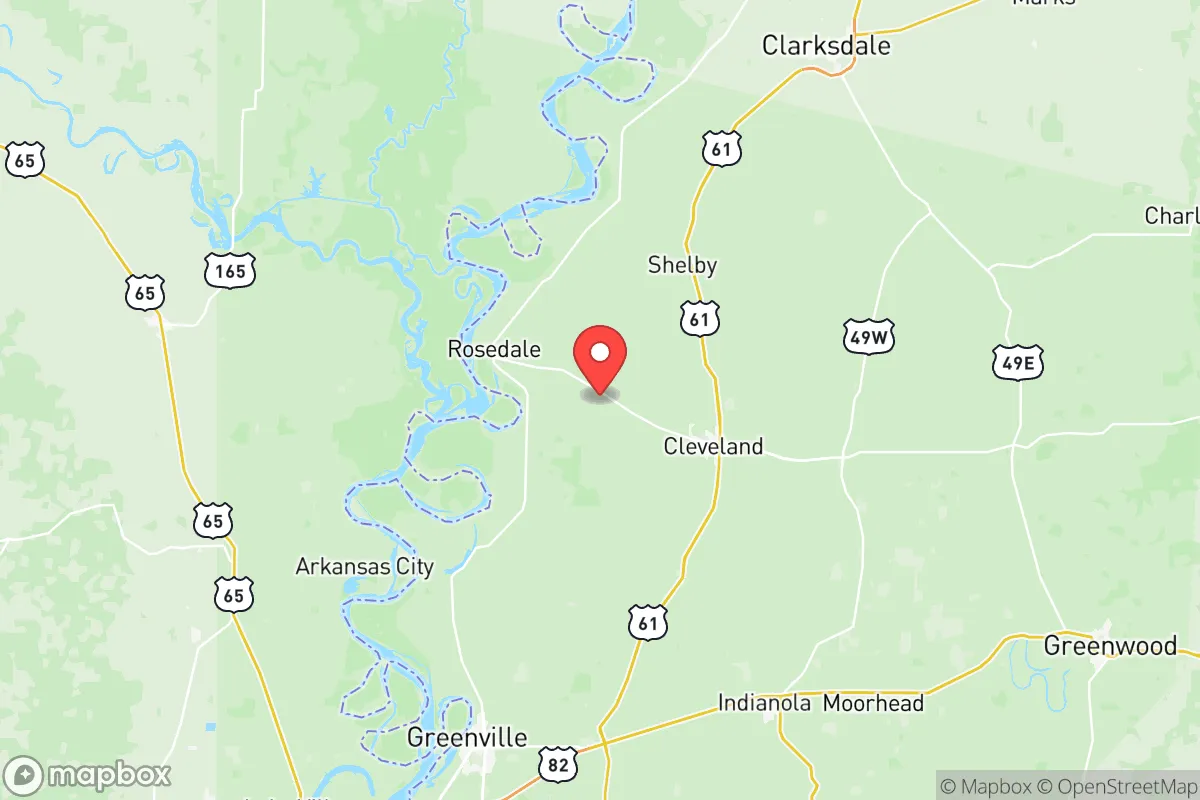
Bolivar County, Mississippi, offers a distinctive strategic proposition for those prioritizing resilience and self-sufficiency, anchored by its position in the Mississippi Delta along the Mississippi River and its distance from major metropolitan targets. The county, with its county seat in Cleveland and significant communities like Rosedale and Greenville (the latter just across the river in Washington County), benefits from a low population density—roughly 38 people per square mile in the county and around 35,000 residents total—which inherently reduces exposure to cascading failures common in dense urban areas. Its location, roughly 80 miles from Memphis, Tennessee, and over 140 miles from Jackson, Mississippi, places it outside the most severe concentric risk zones of those larger cities, while its agricultural economy and access to the Mississippi River provide a baseline of local resource availability that many suburban and exurban areas lack. For a reader thinking seriously about disaster readiness, Bolivar County represents a balance of accessible isolation and practical resources, though its position in a floodplain and its proximity to major transportation corridors require honest assessment.
Geographic position and natural advantages for long-term resilience
Bolivar County’s geography is defined by its location on the eastern bank of the Mississippi River, a feature that cuts both ways. The river provides a near-infinite water source, critical for any extended disruption of municipal supply, but also imposes flood risk—the county has experienced multiple historic floods, including the 2011 and 2019 events that inundated thousands of acres of farmland. The terrain is flat Delta bottomland, with elevations ranging from roughly 100 to 150 feet above sea level; this offers little natural defensibility in a tactical sense but simplifies construction and well-drilling. The county is part of the Mississippi Alluvial Plain, one of the most productive agricultural regions in the United States, meaning that locally grown food—particularly soybeans, rice, and corn—is abundant. This agricultural base is a genuine resilience asset: in a protracted crisis, food supply chains are less likely to completely fail in a region that grows staple crops. The county’s position also places it within a two-hour drive of Memphis International Airport and Port of Memphis, a major inland logistics hub, but far enough away to avoid the worst of any disruption originating there. For a relocator, the natural advantages boil down to three things: abundant surface water, rich soil for subsistence or small-scale farming, and a buffer from immediate metropolitan collapse dynamics.
Risks, exposures, and proximity to fallout-relevant landmarks
The same infrastructure that makes the Delta economically viable also creates risk exposure for Bolivar County. The most significant strategic concern is the Mississippi River as a transportation corridor—barges carrying chemicals, fertilizer, and petroleum products pass daily, and a spill, accident, or intentional disruption could affect water quality for miles downstream. The county itself has no major refineries or nuclear sites, but Cleveland is roughly 30 miles from the Tennessee Valley Authority’s Allen Gas Plant in Memphis, a large natural gas facility that processes significant volumes of methane. In a widespread crisis, the river makes the area a potential secondary target or chokepoint—major bridges and locks, like the Greenville Bridge (US-82) and the Great River Bridge (US-278), are logical bottlenecks. More immediately, the county sits in a flood hazard zone that FEMA designates as high-risk for most of its unincorporated land; flood insurance is effectively mandatory for any property near the river, and relocators should strictly avoid building or buying in the 100-year floodplain. The tornado risk is also real—Mississippi averages over 40 tornadoes annually, and the flat Delta terrain offers no natural windbreaks. For those thinking about “fallout” in the nuclear sense, Bolivar County’s distance from major strategic targets like Fort Campbell (Kentucky/Tennessee) or the Port of South Louisiana is a modest advantage, but the river and the chemical plants along it remain a non-trivial secondary concern. Also worth noting: the county is roughly 120 miles from Yazoo City, which hosts a major petroleum storage terminal, and about 180 miles from the Vicksburg National Military Park area, which includes locks and dams that, in a worst-case scenario, could become targets.
Practical resilience for a relocator: food, water, energy, and defensibility
For a relocator focused on day-to-day self-sufficiency, Bolivar County delivers on the basics but requires deliberate preparation. Water is the strongest asset: the Mississippi River is a massive, reliable source, but it requires filtration—the river carries silt, agricultural runoff, and potential industrial contaminants. The majority of county water supplies come from the Mississippi River Valley Alluvial Aquifer, which is shallow and accessible to private wells averaging 80–150 feet in depth; drilling costs in the Delta are typically lower than in rocky terrain, often $3,000–$6,000 for a complete setup. Food production is excellent: the county has dozens of small farms, farmers’ markets in Cleveland and Rosedale, and a tradition of backyard gardening. For a family wanting to produce a significant portion of their own calories, the Delta’s growing season (roughly April through October) and fertile soil are hard to beat in the continental US. Energy is less favorable: Entergy Mississippi runs the grid, which is prone to outages during storms, and there is limited natural gas infrastructure outside of Cleveland and Rosedale—many rural properties rely on propane or electric heat. Solar potential is moderate, with roughly 4.5 average peak sun hours per day, but net metering policies in Mississippi are less favorable than in many states. Defensibility is the weakest point—the flat, open terrain offers no concealment and makes any property visible from afar. A rural farmhouse with a good perimeter (fencing, sight lines, and a well-sited structure) is the best you can do. For a single individual or family willing to invest in a generator, a well, and a root cellar, the Delta offers a solid foundation, but it is not a bug-out location—it requires active participation in the local community and an understanding of the area’s social and economic realities.
The overall strategic picture for Bolivar County is one of moderate resilience with clear trade-offs. Its agricultural abundance and river access provide a genuine advantage over drier or less fertile regions, and its distance from major targets is a net positive for those prioritizing fallout avoidance. However, the flood risk, tornado exposure, and lack of natural defensibility mean that resilience here is a function of preparation—elevated structures, diversified water sources, and redundant energy systems are not optional but essential. For a relocator who understands that no location is perfect and who is willing to invest in hardening a property, Bolivar County offers a defensible, resource-rich base of operations at a cost of living significantly lower than the national average. It is not a place for those seeking immediate escape from all risk, but for those who want a viable long-term position in a region that grows its own food and sits away from the most obvious crisis magnets, it warrants a serious look.

* Values derived from national, state, county, city and local statistics and may differ in a specific area. Last updated: 2026-06-22T10:46:25.000Z
Narrative content on this page is AI-generated and may contain mistakes. Verify any details that matter before acting on them.
ReloMaps may earn a commission from affiliate links at no extra cost to you.

