Photo: Wikipedia
Political ClimatePolitical Climate in Bolivar County
Showing district-level results — no local-only data available.
Local Political AnalysisPolitical Analysis of Bolivar County
Bolivar County, Mississippi, is a Democratic stronghold in an otherwise deeply Republican state, with a Cook PVI of D+11 while the state of Mississippi as a whole is rated R+11. This 22-point partisan gap makes the county a striking political outlier in the Delta region. Voter registration data from the Mississippi Secretary of State shows that around 75% of Bolivar County's active registered voters are Democrats, a legacy of the area's large African American population and its history as a center of civil rights activism. However, the county's Democratic lean is not monolithic — the white, rural precincts in the northern and eastern parts of the county, particularly around Rosedale and Benoit, consistently vote Republican by wide margins. Turnout is the real wild card: in odd-year local elections, participation often dips below 30%, meaning primaries and low-turnout school board races can produce results that surprise party leaders in Cleveland and Mound Bayou.
How it compares
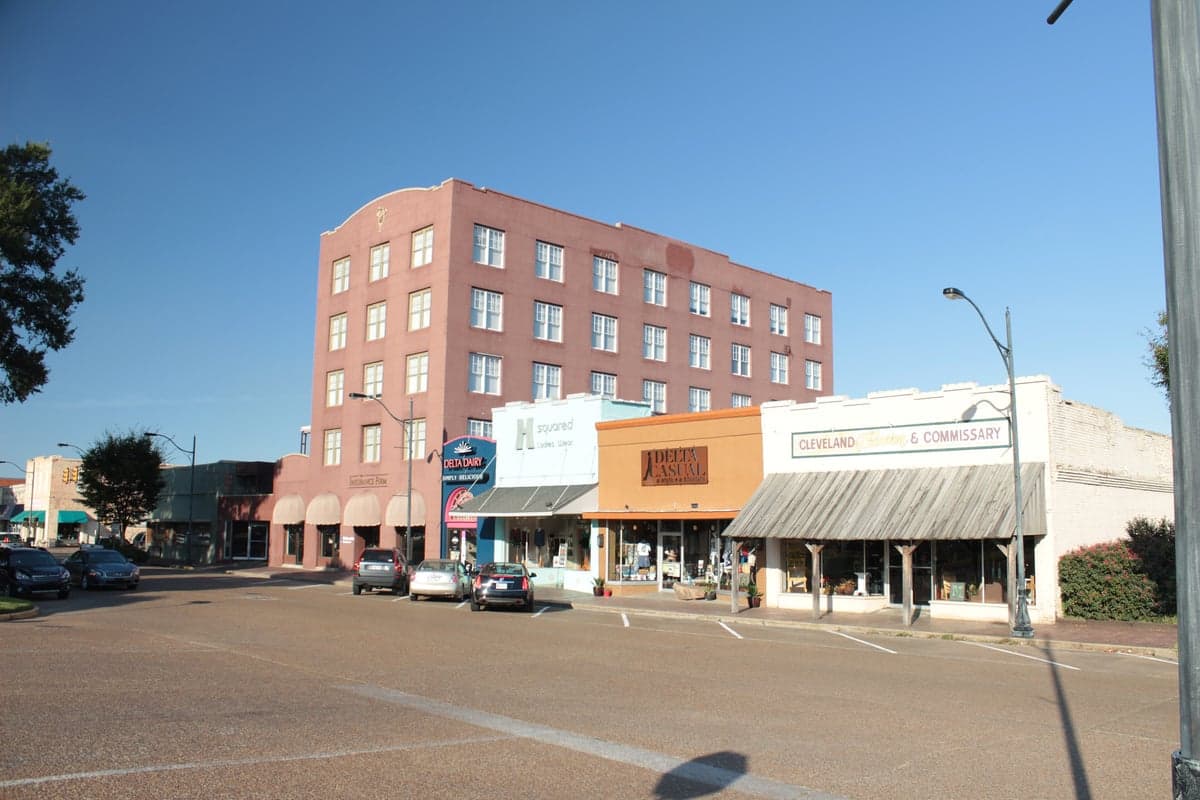
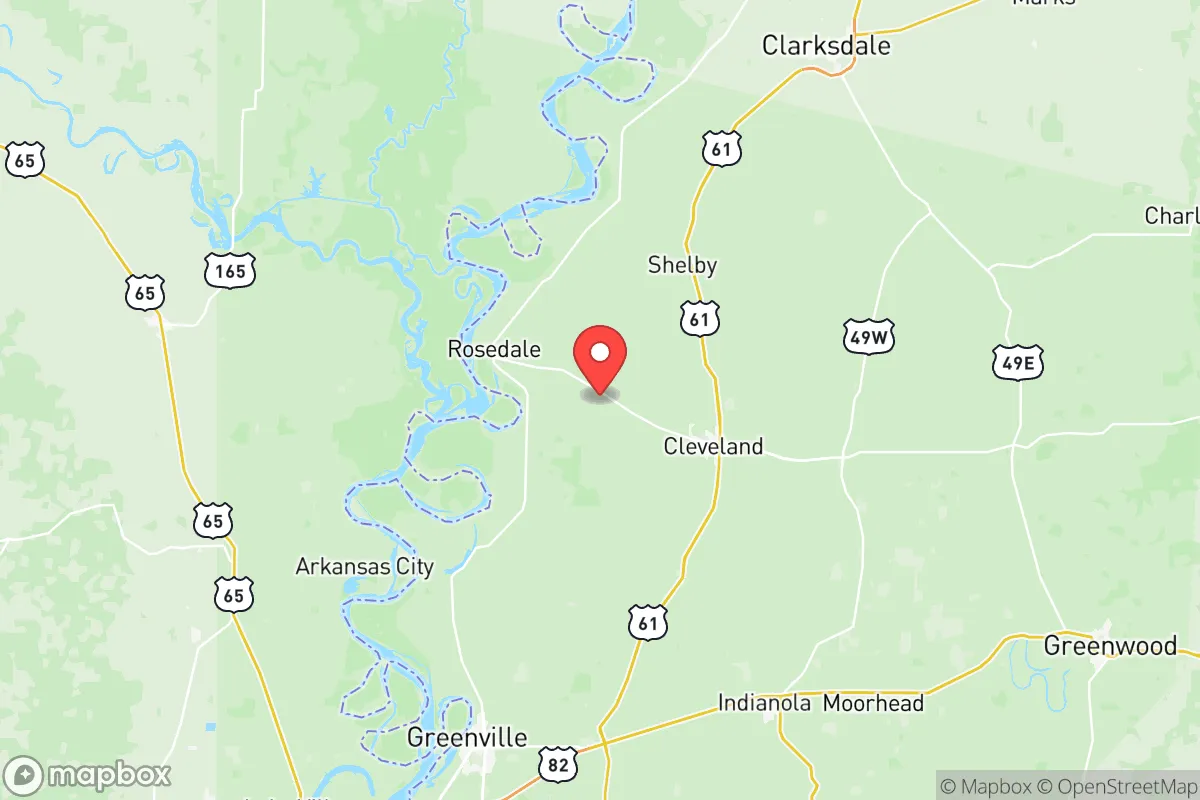
Compared to the state's overall R+11 lean, Bolivar County is essentially a blue island in a red river. In the 2024 presidential election, Bolivar County went for Kamala Harris by roughly 15 points, while Mississippi voted for Donald Trump by 17 points. That’s a 32-point swing from county to state — one of the widest gaps in the entire state. The contrast is most visible on the ground: drive down Highway 61 from Cleveland to Rosedale, and you’ll see Biden-Harris yard signs mixed with a few Trump signs near the levee. In Cleveland, home to Delta State University, the politics are more progressive, with the city council often debating issues like renaming streets and LGBTQ+ nondiscrimination ordinances. Meanwhile, in Mound Bayou, the historic all-Black town founded by freedmen, the Democratic loyalty is generational and cultural, but turnout is often concentrated in the older demographic. The county’s precinct in Shaw can be a swing precinct, flipping between moderate Democrats and Republicans depending on who runs, because it’s a smaller, mixed-race community outside the university bubble.
What this means for residents
For liberal residents, Bolivar County offers a political environment where Democratic candidates regularly win local offices, from chancery clerk to sheriff. That means policies like expanded Medicaid, rural broadband investment, and public education funding are generally championed by the local board of supervisors. You’ll find more discussion about union support and agricultural subsidies than national culture wars. For conservative residents, it can feel like being in a red pocket inside a blue county — your vote may not decide the general election, but you can still influence primaries and school board races. Property taxes tend to be lower than in neighboring Washington County (Greenville), partly because Bolivar’s tax base has shrunk with population decline. But politically, the county leans into a pragmatic, deal-making style: the same supervisors who vote Democratic often cut red tape for farmers and small businesses, regardless of party.
One cultural distinction that shapes everyday politics here is the county’s relationship with its own past. Bolivar County has a deep civil rights heritage, especially in Mound Bayou and Cleveland, where the Emmett Till memorial trail runs. This history makes the local Democratic Party more focused on economic justice and rural poverty than on national progressive agenda items. You won’t see the same level of grassroots activism for gun control or immigration reform that you might in a more urban Democratic area. Instead, the biggest debates on county commission agendas tend to revolve around road paving, hospital funding (Bolivar Medical Center in Cleveland is a constant topic), and whether to extend water lines to unincorporated communities like Skene and Alligator. For anyone moving in, the takeaway is simple: your vote matters a lot in local races, the university town of Cleveland is the progressive center, and the further you get from the Delta State campus, the more the politics shifts to a quieter, deal-based conservatism.

State Political ClimatePolitical Climate in Mississippi
State Political AnalysisPolitical Environment in the State
Mississippi is one of the most reliably Republican states in the nation, with a Cook PVI of R+11, meaning it votes about eleven points more conservative than the country as a whole. The lean is driven by a deeply entrenched coalition of evangelical white voters in rural and suburban areas, combined with a smaller but loyal base of business-oriented conservatives in the larger metro areas. Over the past two decades, what was once a purple-trending state with several Democratic holdouts in state offices has hardened into solid GOP control—the last time a Democrat won a statewide federal race was Barack Obama in 2008 (he lost the state by 13 points), and the state legislature has been firmly under Republican supermajorities since 2012.
Urban vs. rural divide
The political map breaks down almost perfectly by population density. The Mississippi Delta, a historically poor and majority-Black region, consistently votes heavily Democratic—places like Greenville and Clarksdale are deep blue, but they’re massively outvoted by the rest of the state. Jackson, the capital and largest city, is a solidly Democratic stronghold (Hinds County went +59 for Biden in 2020), but its influence is limited by low voter turnout and the fact that it’s surrounded by heavily Republican suburbs like Madison and Rankin counties. On the Gulf Coast, cities like Biloxi and Gulfport are more moderate—leaning Republican but with a significant tourist-service and military vote that can split tickets. The real engine of GOP dominance is the rapidly growing suburban areas around the Memphis suburbs like Southaven and Olive Branch in DeSoto County, which is now the state’s largest and most reliably Republican county, and the bedroom communities of the Jackson exurbs like Flowood and Brandon. The northeastern hill country around Tupelo and Oxford is a mix—Lafayette County (Oxford, home to Ole Miss) is a purple outlier thanks to the university population, while the rest is solidly red. The rural southeastern “Pine Belt” around Hattiesburg is also reliably GOP, though Hattiesburg itself has a small but vocal progressive student and academic population.
Policy environment
Mississippi’s state-level policies reflect its R+11 lean, but with a distinctly Southern-pragmatic flavor. The state has no personal income tax on most earners—the top rate is 4.0% and was cut from 5.0% in 2022, with a phaseout to zero over the next few years. The corporate tax rate is a flat 3.0% on the first $5,000 of income, and 4.0% on everything above. Sales tax is 7.0% on most goods, but groceries are taxed at a reduced rate of 4.0%. Property taxes are relatively low, with a median effective rate of about 0.77%, though local school district taxes vary widely. The state is a “right-to-work” state and does not require union dues for employment. Education policy is dominated by school choice—Mississippi has a robust charter school law (enacted 2013, expanded in 2016) and a tax-credit scholarship program for low-income students. However, public school funding per student is among the lowest in the nation, and the state’s K-12 NAEP scores have improved but remain below the national average. Healthcare is a flashpoint: Mississippi refused the Medicaid expansion under the Affordable Care Act, leaving about 100,000 low-income adults in a coverage gap. The state’s abortion ban is one of the strictest in the country, with no exceptions for rape or incest, only for the life of the mother. Election laws are moderately restrictive—early voting is limited to absentee ballots requiring an excuse, and voter ID is required. There is no online voter registration, and the deadline to register is 30 days before an election.
Recent policy direction
The last two years have seen a sharp rightward turn on multiple fronts. In 2023, the legislature passed a near-total ban on gender-affirming care for minors, overriding a veto from Governor Tate Reeves. On guns, Mississippi is a permitless carry state (since 2016), and in 2024 a law was passed allowing firearms on college campuses with a permit. Property rights were strengthened with a 2023 law limiting the use of eminent domain for private economic development. On parental rights, the state passed the “Parental Bill of Rights” in 2023, giving parents the explicit right to review curriculum and opt their children out of certain materials. Voter access tightened slightly: in 2021, the legislature passed a law requiring “reasonable identification” for absentee ballot applications, and in 2024 a bill was introduced (but not passed) to end all Sunday voting. On taxes, the 2022 income tax cut is being phased in, and there’s a looming push to eliminate the personal income tax entirely by 2028. Medical marijuana was legalized by voter initiative in 2020 (after years of legislative resistance), but the program is heavily restricted—only 22 qualifying conditions, high registration fees, and a limited number of dispensaries. There is no state-level hate crime law protecting sexual orientation or gender identity, and the “religious freedom” law (HB 1523, passed in 2016) allows private businesses and government employees to refuse service based on sincerely held religious beliefs about marriage and family.
Civil unrest & political movements
The most visible flashpoint in recent years has been the Jackson water crisis of 2022-2023, which turned into a running political confrontation between the majority-Black city government and the Republican-controlled state legislature. The state took over much of Jackson’s water system and appointed a third-party manager, leading to massive protests and accusations of state-sanctioned environmental racism. This has become a national symbol of the rural-urban and racial divide in the state. On the right, the Mississippi Freedom Caucus, a hardline group of state legislators, has been highly active since 2021, pushing bills on election integrity, critical race theory bans in schools, and anti-immigration measures. There was a brief “nullification” push in 2021 when a few counties passed resolutions declaring they would not enforce federal gun laws, though these were symbolic. Immigration politics are less intense here than in border states—about 2% of the population is foreign-born. However, in 2023, the legislature passed a law requiring employers to use E-Verify, and there’s been a steady drumbeat of anti-sanctuary city legislation, though no city in Mississippi has actually declared itself a sanctuary. The 2020 election did not produce any major fraud controversies in Mississippi—the state’s results were never seriously disputed, even after the national “stop the steal” movement. Activists on the left are concentrated around university towns like Oxford and Hattiesburg, where you’ll find small but vocal groups working on racial justice and LGBTQ+ issues. Confederate monument controversies have flared in several towns, but only a handful of monuments have been moved or removed.
Projection
Over the next 5-10 years, Mississippi’s political trajectory is likely to remain strongly Republican, but the internal dynamics are shifting. The state is seeing modest in-migration from California and other high-cost states, mostly retirees and remote workers drawn to the low cost of living—this group tends to vote Republican but may be less culturally conservative on issues like marijuana or religious exemptions. The growth of DeSoto County (Memphis suburbs) and the Gulf Coast will continue to anchor the GOP. Meanwhile, the Black population, which is roughly 37% of the state, is slowly shrinking as younger people leave for better job opportunities elsewhere, which could further reduce Democratic vote share. The state’s income tax phaseout will likely be completed, making Mississippi one of the few states with no personal income tax, which will attract more conservative migrants. However, the education funding gap and chronic health issues (Mississippi has the highest obesity rate and one of the highest infant mortality rates in the nation) could become harder to ignore, and there will be periodic pressure from business groups to accept Medicaid expansion. On social issues, expect continued battles over LGBTQ+ rights, abortion, and curriculum—the legislature is likely to pass more restrictions on public drag shows and library materials in the coming years. The biggest wild card is whether the federal courts will strike down the state’s abortion ban or any part of the religious freedom law, which could trigger a new round of legislative activism.
For a new resident, the bottom line is this: if you are conservative, especially on taxes and Second Amendment issues, Mississippi is about as aligned with your values as any state in the country, and you’ll find a welcoming culture in most suburbs and small towns. If you are liberal, you can find a community in metro Jackson, Oxford, or parts of the Coast, but you will live under a state government that is working actively to limit access to abortion, restrict certain medical treatments, and preserve religious exemptions that may affect services. Your daily life will not be disrupted by political drama unless you live in a highly contested area like Jackson proper, but you should be aware that the state’s social safety net is thin and its public services are underfunded. In practice, most people just go to work, go to church, and don’t think about state politics much—but the policy environment is undeniably one of the most conservative in the nation.
* Values derived from national, state, county, city and local statistics and may differ in a specific area. Last updated: 2026-06-22T10:46:25.000Z
Narrative content on this page is AI-generated and may contain mistakes. Verify any details that matter before acting on them.
ReloMaps may earn a commission from affiliate links at no extra cost to you.

