Photo: Wikipedia
Quality of Life in Bolivar County
A livable area that tracks near national norms for affordability, walkability, and neighborhood health.
What does Quality of Life tell us?
Quality of Life measures an area by evaluating factors like cost of living, nearby amenities, country club access, airport proximity, socioeconomic signals and neighborhood character. For large states, this is a general average — quality of life can vary dramatically between metro areas, suburbs, and rural communities within the same state.
What does this tell us?
Quality of Life measures an area by evaluating factors like cost of living, nearby amenities, country club access, airport proximity, socioeconomic signals and neighborhood character. For large states, this is a general average — quality of life can vary dramatically between metro areas, suburbs, and rural communities within the same state.
Cost of Living
48% below national average
106%
The Real Cost of Living in Bolivar County for 2026
| Tier | Individual | Family (4) |
|---|---|---|
| Survival | $11k | $20k |
| Comfortable | $24k | $35k |
| Luxury | $67k+ | $104k+ |
| Elite (Top 5%) | $116k+ | $180k+ |
Quality-of-Life Analysis
Bolivar County offers a broad spectrum of quality-of-life options, ranging from the college-town energy of Cleveland to the quiet, agricultural rhythms of small communities like Rosedale and Merigold. The county’s character shifts noticeably as you travel between the Mississippi River levee towns and the inland county seat, attracting families, retirees, and students to different corners of the Delta. With a cost of living index of 52 — nearly half the national average — and a median home value of $123,600, the tradeoffs typically involve fewer urban amenities in exchange for significant financial breathing room.
Largest town(s) & population centers
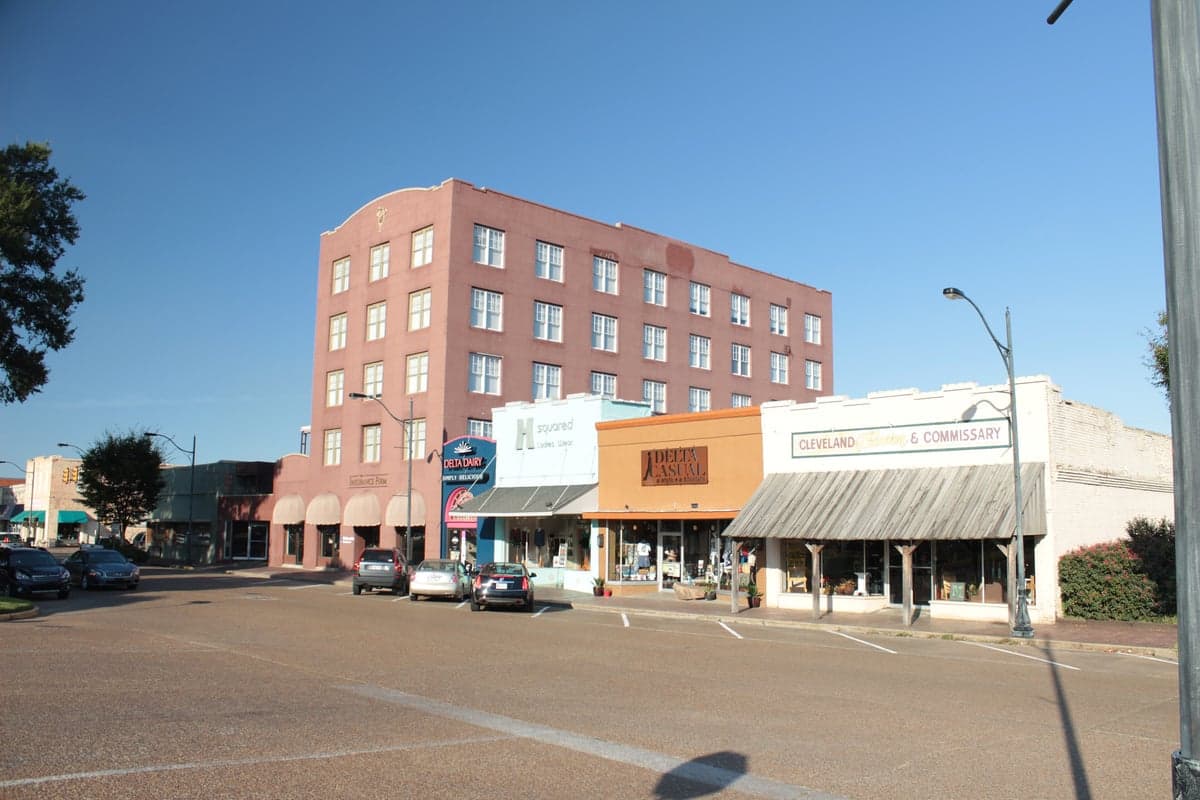
Cleveland, the county’s largest town and home to Delta State University, functions as the economic and cultural hub. Daily life here revolves around the university calendar, with Main Street eateries, the Bologna Performing Arts Center, and a walkable historic square. The town offers the widest range of amenities in the county, including a Walmart Supercenter, multiple grocery stores, and the Bolivar Medical Center. Cleveland’s residential areas vary from older homes near the university to newer subdivisions on the north side; the median home value of $123,600 goes further here than in most Mississippi towns of comparable size. Rosedale, the second-largest incorporated town, sits directly on the Mississippi River levee and presents a more industrial and agricultural character. Life in Rosedale is quieter and more blue-collar, with the Rosedale Riverfront Park and catfish-processing plants anchoring the local economy. The average commute across Bolivar County is 19.8 minutes, one of the shortest in the state, making even longer drives across the county’s 900 square miles manageable.
Smaller towns & rural pockets
Beyond the two largest towns, Bolivar County is dotted with communities that each carry distinct identities. Merigold, a tiny town of roughly 500 residents just south of Cleveland, is known for its well-preserved historic homes and the international-caliber art gallery at Poets' Inn. Shaw, straddling the Bolivar-Sunflower county line, is a deeply rural farming community with a single main street and a strong local church presence. Benoit, west of Cleveland, offers little beyond a post office and a handful of homes but provides immediate access to catfish ponds and soybean fields. Pace and Mound City are unincorporated areas along US-61 where residents live on large lots or family farms, often commuting to Cleveland or Greenville for work. These smaller places tend to lack retail and dining entirely, meaning residents drive 15-30 minutes for groceries. Property taxes in these unincorporated areas are often lower than in Cleveland, though services like fire protection and garbage pickup may be minimal or volunteer-based.
Cost & lifestyle range
The cost spread across Bolivar County is relatively narrow compared to urban areas, but the difference in lifestyle is stark. At the upper end, Cleveland’s newer subdivisions — such as those near the Delta State campus — see home values between $150,000 and $250,000, while rental rates average $671 per month for a two-bedroom. Living here means access to the Cleveland School District, the Delta State multipurpose trail, and the county’s best selection of doctors and dentists. At the lower end, rural communities like Benoit or Pace offer homes below $80,000 and lot sizes often exceeding an acre, with annual property taxes sometimes under $500. However, these homes may be older stock with deferred maintenance, and internet access can be limited to satellite or slower DSL. Rosedale falls between the two: home prices are moderate, but the town lacks a full-service grocery store since its Save-A-Lot closed. For renters, the $671 median rent is remarkably low by national standards — roughly equal to a one-bedroom apartment in many midsized Southern cities — but inventory in the smaller towns is extremely limited, with most rental properties concentrated in Cleveland.
Who thrives in Bolivar County is largely a question of expectations. College students and university faculty gravitate to Cleveland for its walkable campus and cultural events. Retirees on fixed incomes find the low property taxes and median home value of $123,600 create a secure, debt-free retirement. Farm workers and agricultural families value the short commutes and the ability to own land near towns like Shaw or Merigold. The county does not suit those seeking nightlife, high-end retail, or rapid internet; but for anyone prioritizing affordability and a slower pace, the spectrum from Cleveland’s small-city offerings to the levee communities’ quiet self-sufficiency provides real choices within a tight budget.

Crime in Bolivar County
Generally safer than 61% of comparable U.S. locations.
Violent CrimeViolent Crime Analysis
Property CrimeProperty Crime Analysis
Crime Analysis
Bolivar County, Mississippi, with a violent crime rate of 187 per 100,000 residents and a property crime rate of 1065.3 per 100,000, presents a safety picture that is starkly defined by its urban-rural divide and the progressive policies of local district attorneys. The county's overall crime statistics mask significant disparities: the Mississippi Delta's historic towns like Cleveland and Rosedale experience elevated crime, while smaller, more conservative communities such as Shaw and Gunnison report lower incident rates. The 4th Circuit Court District, which covers Bolivar County, has seen controversial prosecutorial decisions that many residents believe prioritize offender rehabilitation over public safety.
Crime in context
At 187 per 100,000, Bolivar County's violent crime rate is slightly below the Mississippi state average of 205 per 100,000 but remains significantly higher than the national median of roughly 150 per 100,000. Property crime at 1065.3 per 100,000 is markedly elevated, exceeding both the state average (940 per 100,000) and the national figure (approximately 750 per 100,000). The county's crime problems are concentrated in its most populous municipalities. Cleveland, home to Delta State University, sees a disproportionate share of property thefts and aggravated assaults—often linked to transient populations and bars near campus. Rosedale, a river town with high poverty rates, records a violent crime rate estimated at nearly double the county average, driven by drug trafficking along Highway 61. Mound Bayou, the historic all-Black town, was the site of a notorious 2021 triple homicide, highlighting how gang disputes and retaliatory violence infect even tightly-knit communities. In contrast, Shelby and Benoit—smaller, more rural settlements—report fewer serious incidents annually.
What residents experience
The lived reality for Bolivar County residents is one of property crime as a persistent nuisance and violent crime as an episodic, location-dependent threat. Homeowners in Cleveland's older neighborhoods near the university report regular car break-ins and package thefts, while businesses in the downtown commercial corridor chain their dumpsters to prevent copper-wire stripping. The progressive leanings of the district attorney for the 4th Circuit District, Brenda Mitchell (a Democrat first elected in 2018), have been a flashpoint in local safety discussions. Critics point to her office's frequent use of pretrial diversion for burglary and drug-possession defendants, arguing this has led to repeat offenders cycling through the system without meaningful consequences. The county's jail population dropped 30% between 2019 and 2024, a statistic supporters hail as reform—but which opponents argue correlates with rising property crime. A 2023 WAPT investigation found that 45% of felony arrestees in Bolivar County had prior deferred-adjudication cases, compared to 28% in neighboring Washington County, which elects a more conservative prosecutor.
Neighborhood-level variation
The safety landscape in Bolivar County is not uniform. Safer pockets exist in the outlying, unincorporated areas around Alligator and Lyon, where deputy response times average 12-15 minutes but property crime is rare. The most dangerous neighborhoods cluster in Cleveland's 'North Side' (east of Highway 61) and along Rosedale's riverfront—both areas with high rental turnover and weak street lighting. In Mound Bayou, the blocks surrounding the historic Aron Street district see occasional gang-related shootings, while the residential areas west of the Sunflower River feel safer. For anyone relocating, property values—which range from $45,000 in troubled Rosedale to $125,000 in Cleveland's quieter South Side—reflect these security gradients. Proximity to the progressive DA's authority means that even a first-offense shoplifting charge in Cleveland can result in a diversion program, while a similar crime in more conservative Boyle (which also falls under the same district) might still draw the same lenient treatment, frustrating residents who feel the system fails to deter. The key takeaway: choose a neighborhood carefully, as the county's overall numbers obscure dramatically different daily experiences.
* Values derived from national, state, county, city and local statistics and may differ in a specific area. Last updated: 2026-06-22T10:46:25.000Z
Narrative content on this page is AI-generated and may contain mistakes. Verify any details that matter before acting on them.
ReloMaps may earn a commission from affiliate links at no extra cost to you.

