Photo: Wikipedia
Political ClimatePolitical Climate in Steele County
Showing district-level results — no local-only data available.
Local Political AnalysisPolitical Analysis of Steele County
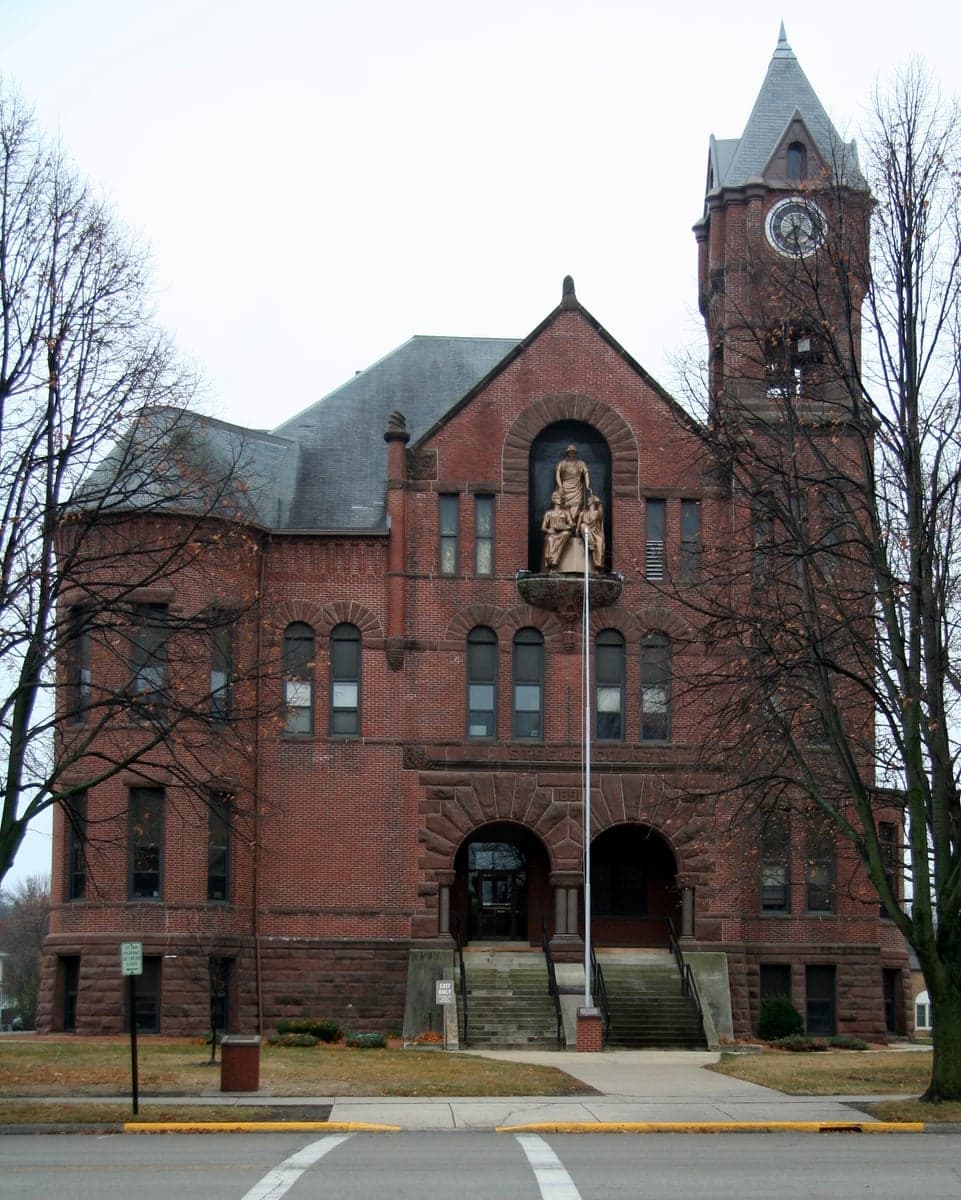
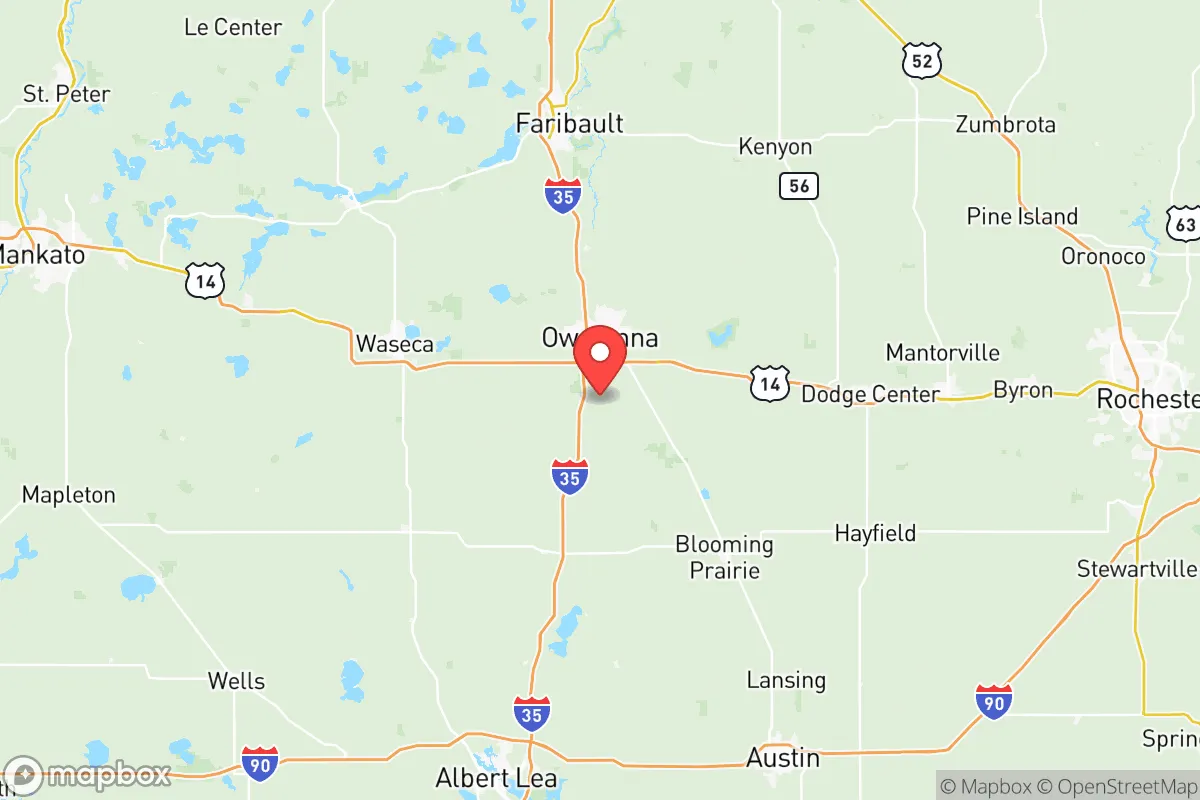
Steele County, Minnesota, carries a solid Republican lean with a Cook PVI of R+6, meaning it votes about six points more conservative than the nation as a whole. In practice, this translates to a reliably red county in most statewide and federal elections, though the margins have tightened slightly in recent cycles as suburban and exurban areas around Owatonna have become more competitive. The county’s political center of gravity is Owatonna, the largest city and county seat, which leans moderately Republican but contains several precincts that have trended toward Democrats in the last two presidential elections—especially around the downtown core and the Medford area. In contrast, the smaller towns of Blooming Prairie, Ellendale, and Hope remain deeply conservative, often voting Republican by 30 points or more. The rural townships, like Havana and Aurora, are even more reliably red, with precinct-level results frequently exceeding a 40-point GOP margin. This creates a clear urban-rural split within the county, with Owatonna acting as the swing zone where elections are decided.
How it compares
Compared to Minnesota as a whole, Steele County is noticeably more conservative. The state’s overall Cook PVI is not publicly available in the same format, but Minnesota has voted Democratic in every presidential election since 1976 except for 2016 and 2024, making it a lean-blue state overall. Steele County’s R+6 rating places it roughly in line with other southern Minnesota counties like Freeborn (R+5) and Rice (R+4), but it is less conservative than counties farther west like Martin (R+12) or Nobles (R+10). The key difference is that Steele County’s Republican lean is more moderate than its rural neighbors, thanks to Owatonna’s manufacturing and healthcare sectors, which attract a more diverse workforce. In state legislative races, Steele County has sent Republicans to the Minnesota House and Senate consistently since the 1990s, though the margins have narrowed in some districts—for example, in 2022, the GOP candidate won the Owatonna-area House seat by only 8 points, down from 15 points a decade earlier. This suggests a slow but real drift toward competitiveness, driven by younger residents moving in for jobs at companies like Federated Insurance and Viracon.
What this means for residents
For conservative residents, Steele County offers a political environment where their views are the norm. Local government, school boards, and county commissions are dominated by Republicans, and policy decisions—such as tax levies, zoning, and school funding—tend to reflect conservative priorities. Conservative voters can expect their representatives to align with their values on issues like gun rights, property taxes, and agricultural policy. For liberal residents, the reality is more nuanced. While they are in the minority, they are not isolated; Owatonna has a visible Democratic presence, with active local groups and a handful of elected officials in city council and school board positions. The county’s political climate means liberal residents may need to work harder to find like-minded community, but they are not shut out of local discourse. The key practical impact is on policy: property taxes in Steele County are among the lowest in the state, reflecting a preference for limited government, while social services and public transit funding are more constrained than in the Twin Cities metro.
Culturally, Steele County’s political lean shapes everyday life in subtle but real ways. The county’s strong agricultural and manufacturing base means that issues like ethanol mandates, trade policy, and right-to-work laws are front and center in local conversations. The local newspaper, the Owatonna People’s Press, covers politics with a neutral tone, but letters to the editor skew heavily conservative. Gun rights are widely supported, and the county has a high rate of hunting and shooting sports participation. On the other hand, Owatonna’s growing diversity—driven by a rising Hispanic population employed in food processing and construction—has introduced new political dynamics, with some precincts showing increased Democratic turnout among Latino voters. Looking ahead, the county’s trajectory is likely to remain Republican-leaning but with a slowly shrinking margin, as Owatonna’s suburbanization continues and younger, more moderate voters replace older, deeply conservative ones. For anyone moving here, the political climate is stable and predictable, but not static—it’s a place where the old guard still holds sway, but the ground is shifting under their feet.

State Political ClimatePolitical Climate in Minnesota
State Political AnalysisPolitical Environment in the State
Minnesota has shifted from a classic purple battleground to a reliably blue state in presidential elections, voting Democratic in every cycle since 1976 — the longest such streak in the nation. The state’s political center of gravity is driven by the Twin Cities metro, which now casts over 55% of the statewide vote and leans heavily Democratic. Over the past 20 years, the rural-to-urban population shift has deepened this divide, with the DFL (Democratic-Farmer-Labor Party) consolidating power in the metro while Republicans hold most of greater Minnesota. For a conservative relocator, this means living in a state where state government is firmly controlled by Democrats, but where local politics vary dramatically depending on which county or suburb you choose.
Urban vs. rural divide
The political map of Minnesota is essentially two states. The Twin Cities metro — Hennepin, Ramsey, and Washington counties — delivers massive Democratic margins. Minneapolis and St. Paul are among the most liberal cities in the Midwest, with progressive policies on housing, policing, and taxes. In contrast, the Iron Range (St. Louis, Itasca counties) has trended Republican after decades as a DFL stronghold, driven by frustration with environmental regulations on mining and cultural shifts. Outstate counties like Stearns (St. Cloud), Olmsted (Rochester), and Dakota (southern suburbs) are more competitive. In 2020, Donald Trump won 87 of Minnesota’s 87 counties by vote share, but lost the state by 7 points because Hennepin County alone gave Joe Biden a 400,000-vote margin. The suburbs are the real battleground: Anoka County, once a bellwether, has moved left, while Wright and Sherburne counties north of the metro have become reliably red. For a conservative family, living in a place like Lakeville or Woodbury means a purple-to-red local environment within a blue state.
Policy environment
Minnesota’s policy environment is shaped by a progressive tax structure and active state government. The state has a graduated income tax with a top rate of 9.85% on income over $190,000 (single filers), one of the highest in the nation. Sales tax is 6.875% statewide, but localities add up to 2%, and groceries are exempt. Property taxes are moderate but vary widely — a $400,000 home in Edina might carry $5,500 in annual property tax, while the same home in rural Otter Tail County might be under $3,000. The state has a strong regulatory posture on environmental issues, including a 2040 carbon-free electricity mandate. Education is a priority: Minnesota spends over $16,000 per pupil, among the top 10 nationally, and has robust school choice options including charter schools and open enrollment. Healthcare is heavily regulated, with a state-based insurance exchange and a provider tax that funds expanded Medicaid. Election laws are among the most accessible in the country: no-excuse absentee voting, same-day voter registration, and automatic voter registration at DMVs. For a conservative, the tax burden and regulatory environment are significant, but the quality of schools and healthcare infrastructure are tangible benefits.
Recent policy direction
Since the DFL took full control of state government in 2023, Minnesota has enacted a sweeping progressive agenda. The 2023 legislative session passed a $1.8 billion tax increase on corporations and high earners, legalized recreational marijuana, created a paid family and medical leave program funded by payroll taxes, and restored voting rights for felons upon release from prison. On gun policy, the state passed universal background checks and a red-flag law (extreme risk protection orders) in 2023, making it one of the stricter states in the Midwest. Parental rights in education have been a flashpoint: the state banned book banning in schools and passed a law requiring schools to adopt policies on transgender student participation in sports and bathroom access, overriding local control. On privacy and surveillance, Minnesota has a strong data privacy law (the Minnesota Consumer Data Privacy Act) and limits on police use of facial recognition. Medical autonomy is broad: the state codified abortion rights in 2023 with the Protect Reproductive Options Act, and gender-affirming care for minors is protected by law. Property rights are relatively strong, with no statewide rent control and limited eminent domain use, though environmental regulations can constrain development. For a conservative, the recent direction is clearly leftward, but the state still offers local control in many areas — a family in Rochester or Duluth will experience a different regulatory reality than one in Minneapolis.
Civil unrest & political movements
Minnesota has been a national flashpoint for civil unrest. The 2020 murder of George Floyd in Minneapolis triggered the largest protests in state history, with over $500 million in property damage and a lasting shift in police-community relations. The city of Minneapolis has since debated a failed ballot measure to replace the police department, and the state legislature passed sweeping police reform in 2023, including a ban on chokeholds and a duty to intervene. On the right, the "Back the Blue" movement remains strong in suburban and rural areas, and the state has seen a rise in Second Amendment sanctuary resolutions in over 30 counties. Immigration politics are active: Minnesota is a sanctuary state in practice, with a 2023 law limiting local law enforcement cooperation with ICE. The city of St. Cloud has been a particular flashpoint, with a growing Somali population and tensions over refugee resettlement. Election integrity controversies have been muted compared to other states, but the 2020 election saw Trump’s campaign challenge the results in court, and a 2024 audit found no systemic fraud. For a new resident, the political temperature varies by location — a conservative in Bemidji will see little visible activism, while one in Minneapolis will encounter it daily.
Projection
Over the next 5-10 years, Minnesota is likely to become more Democratic at the state level, driven by continued urbanization and in-migration of younger, more diverse populations to the Twin Cities. The state’s population is growing slowly (about 0.5% annually), with most growth in the metro and in college towns like Northfield and Winona. Rural areas will continue to lose population and political influence. The DFL’s trifecta is likely to persist, though Republicans could win back the state House in 2026 if turnout drops. The biggest wildcard is the Iron Range: if mining and manufacturing decline further, that region could become even more Republican, but it won’t offset metro growth. For a conservative moving in now, expect a state government that continues to pass progressive legislation on taxes, guns, and social issues. However, local control remains strong — a family in Albert Lea or Mankato will find a more conservative local culture and lower taxes than one in St. Paul.
For a conservative relocator, Minnesota offers a trade-off: high taxes and a progressive state government, but excellent schools, strong healthcare, and a high quality of life in many communities. The key is choosing the right location — the suburbs and smaller cities offer a more conservative environment within a blue state. If you value local control and are willing to pay for public services, Minnesota can work. If you want a low-tax, low-regulation environment, you’ll be frustrated. The state is not changing its political trajectory anytime soon, but it remains a place where your vote matters more than in deep-blue or deep-red states — and where your daily life is shaped more by your county than by St. Paul.
* Values derived from national, state, county, city and local statistics and may differ in a specific area. Last updated: 2026-06-16T10:57:55.000Z
Narrative content on this page is AI-generated and may contain mistakes. Verify any details that matter before acting on them.
ReloMaps may earn a commission from affiliate links at no extra cost to you.

