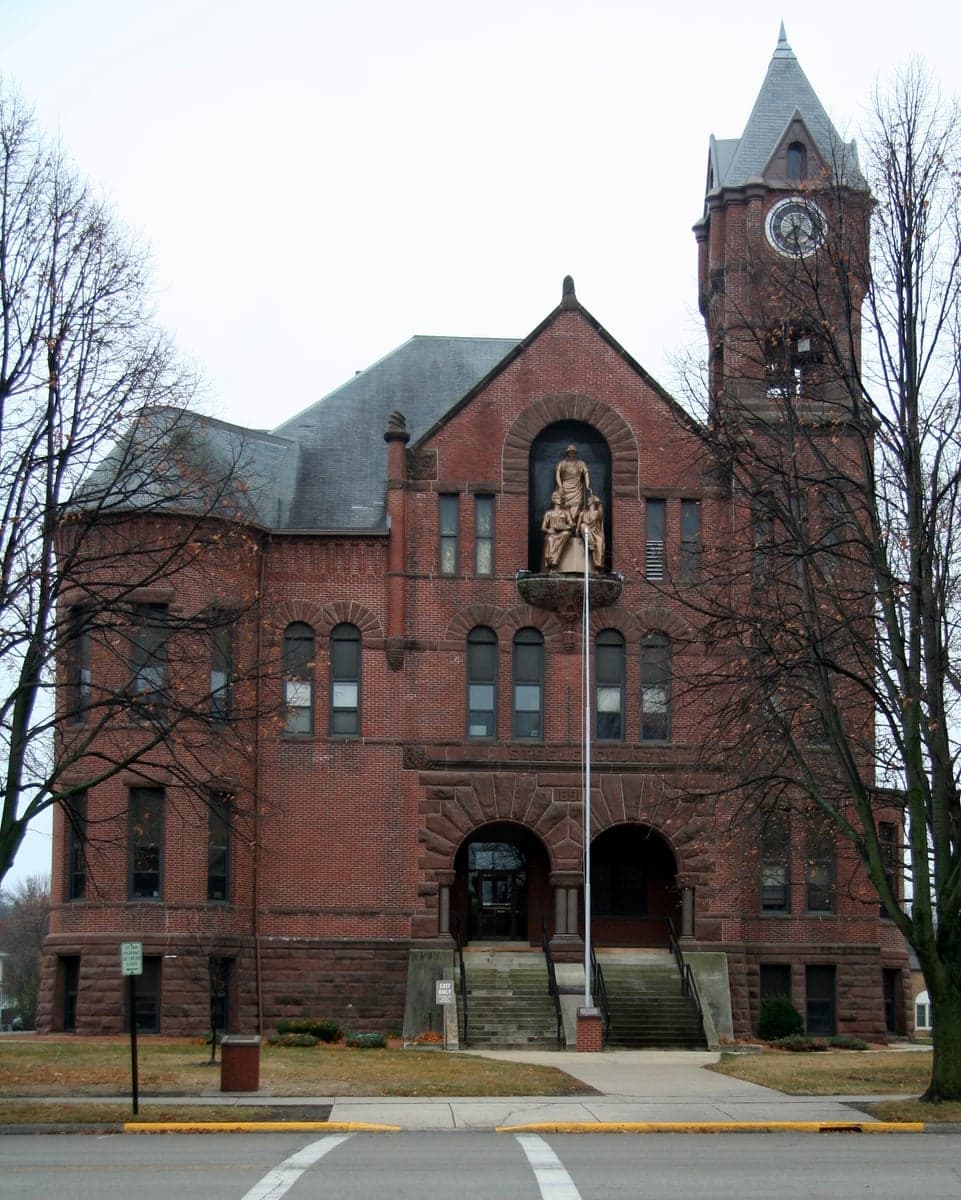
Photo: Wikipedia
Personal Sovereignty in Steele County
Viable for self-reliance. Generally workable, though some barriers may limit total independence.
What does Personal Sovereignty tell us?
Personal Sovereignty measures your capacity for self-reliance and independence with minimal government friction. Higher scores mean fewer barriers between you and the way you want to live... but it assumes you have the space you need and good neighbors.
What does this tell us?
Personal Sovereignty measures your capacity for self-reliance and independence with minimal government friction. Higher scores mean fewer barriers between you and the way you want to live... but it assumes you have the space you need and good neighbors.
State Policy
Energy independence: Importer (20% of energy produced in-state)
Personal Liberty
Homesteading

Personal Liberty Analysis
Steele County, Minnesota, offers a notably high degree of personal sovereignty relative to the Twin Cities metro, with a regulatory environment that leans toward individual discretion in areas like taxation, self-defense, and property use. While Minnesota as a state imposes a moderately progressive income tax and a statewide preemption on certain local ordinances, Steele County’s local governance—particularly in cities like Owatonna, Blooming Prairie, and Medford—tends to favor light-touch administration and deference to personal choice. For a relocation audience prioritizing autonomy, the county presents a balanced trade-off: state-level constraints are present but not oppressive, and local culture strongly supports self-reliance and minimal bureaucratic interference.
Tax burden and regulatory posture in Steele County
Steele County’s overall tax burden is moderate by Minnesota standards, with property taxes that are competitive compared to the metro area. The county’s effective property tax rate on median-valued homes hovers around 1.1% to 1.3%, which is lower than in Hennepin or Ramsey counties but slightly above rural averages. Minnesota’s state income tax is progressive, with rates from 5.35% to 9.85%, which is a consideration for higher earners, but the county itself imposes no additional local income tax. Regulatory posture is notably permissive in areas like land use and business licensing. Owatonna, the county seat, operates with a streamlined permitting process for home-based businesses and small-scale commercial ventures, and the city’s zoning code allows accessory dwelling units (ADUs) by right in most residential zones. In contrast, Ellendale and Clarks Grove have even fewer zoning restrictions, with minimal building permit fees and no local business license requirements beyond state basics. The county’s approach to environmental regulation is also light: there are no county-level wetland or shoreline buffer ordinances beyond state mandates, and agricultural operations—common in the area—face few local hurdles. This creates an environment where individuals can start a business, build a workshop, or modify their property with less red tape than in more urbanized counties.
Self-defense and gun law specifics in Steele County
Minnesota is a shall-issue state for concealed carry permits, and Steele County’s sheriff’s office processes permits efficiently, typically within the statutory 30-day window. The county has no local ordinances restricting firearm possession beyond state law, meaning no additional waiting periods, magazine capacity limits, or storage requirements. Open carry is legal without a permit for individuals 18 and older, and concealed carry requires a permit that is issued to any applicant who meets state criteria—no subjective “good cause” requirement. The county’s gun culture is robust, with multiple shooting ranges and gun shops in Owatonna, including the Steele County Sportsmen’s Club, which hosts regular events. Blooming Prairie and Medford also have active firearm communities, and there are no local restrictions on carrying in parks, public buildings (unless posted), or on private property. Stand-your-ground laws do not exist in Minnesota; the state follows a duty-to-retreat standard in public spaces, though the castle doctrine applies in one’s home. For a reader prioritizing self-defense autonomy, Steele County offers a permissive environment relative to the national average, with the main limitation being state-level preemption on certain local gun control measures—a feature that actually protects uniformity and prevents patchwork restrictions across the county.
Self-reliance and homesteading viability in Steele County
Homesteading and off-grid living are highly viable in Steele County, particularly outside the city limits of Owatonna. Agricultural zoning in unincorporated areas allows for minimum lot sizes of 2 to 5 acres, with many parcels available at prices well below $10,000 per acre. In townships like Meriden and Merton, there are no county-level restrictions on rainwater collection, composting toilets, or solar panel installation, though state plumbing codes apply to permanent dwellings. Off-grid feasibility is strong: the county does not mandate connection to municipal water or sewer in rural zones, and private wells and septic systems are standard. Raising livestock—including chickens, goats, and cattle—is permitted by right on parcels over 2 acres in most townships, with no need for a conditional use permit. Ellendale and Clarks Grove are particularly homestead-friendly, with minimal building inspection requirements for non-habitable structures like barns or sheds. The county’s soil quality is excellent for gardening, and the growing season (approximately 140 frost-free days) supports a wide range of crops. For those seeking energy independence, net metering is available through local cooperatives like Steele-Waseca Cooperative Electric, and there are no county-level barriers to installing wind turbines on residential property. This makes Steele County a strong candidate for individuals or families aiming to reduce reliance on municipal infrastructure and live more self-sufficiently.
Personal liberties in Steele County: parental rights, medical autonomy, speech, and property
Steele County’s culture and governance support a broad interpretation of personal liberties, particularly in areas of parental rights and property use. Parental rights are strongly respected: the county’s school districts, including Owatonna Public Schools and Blooming Prairie Public Schools, have policies that allow parents to opt children out of specific curriculum components (e.g., sex education) without penalty, and there are no local mandates requiring parental notification for student activities beyond state law. Medical autonomy is generally respected, with no county-level vaccine mandates or public health orders that exceed state guidance. During the COVID-19 pandemic, Steele County’s public health department took a notably less restrictive approach than metro counties, with no local mask or business closure mandates. Free speech is protected under standard First Amendment jurisprudence, and there are no local ordinances restricting political signage, leafleting, or public assembly beyond reasonable time-place-manner rules. Property rights are robust: the county has no rent control, no inclusionary zoning requirements, and no local historic preservation ordinances that restrict modifications to private homes. Medford and Blooming Prairie have particularly permissive sign ordinances, allowing political and commercial signage without permit fees. The county’s approach to short-term rentals (e.g., Airbnb) is also light: Owatonna requires a simple registration, while rural townships have no regulations at all. This creates an environment where individuals can use their property as they see fit, with minimal government oversight.
Overall, Steele County offers a level of personal sovereignty that is significantly higher than the Twin Cities metro and competitive with many rural Minnesota counties. The combination of low property taxes, permissive gun laws, strong homesteading viability, and broad personal liberties makes it an attractive destination for those prioritizing independence. While state-level constraints like progressive income tax and duty-to-retreat law are present, the county’s local governance consistently favors individual discretion over bureaucratic control. For a relocation audience seeking a balance between rural autonomy and access to amenities (Owatonna’s population of 25,000 provides healthcare, retail, and schools), Steele County stands out as a pragmatic choice where personal freedom is both culturally valued and legally protected.

* Values derived from national, state, county, city and local statistics and may differ in a specific area. Last updated: 2026-06-16T10:57:55.000Z
Narrative content on this page is AI-generated and may contain mistakes. Verify any details that matter before acting on them.
ReloMaps may earn a commission from affiliate links at no extra cost to you.

