Photo: Wikipedia
Demographics of Steele County
Affluence Level in Steele County
A middle-class area roughly in line with national averages across income, home values, education, and employment.
People of Steele County
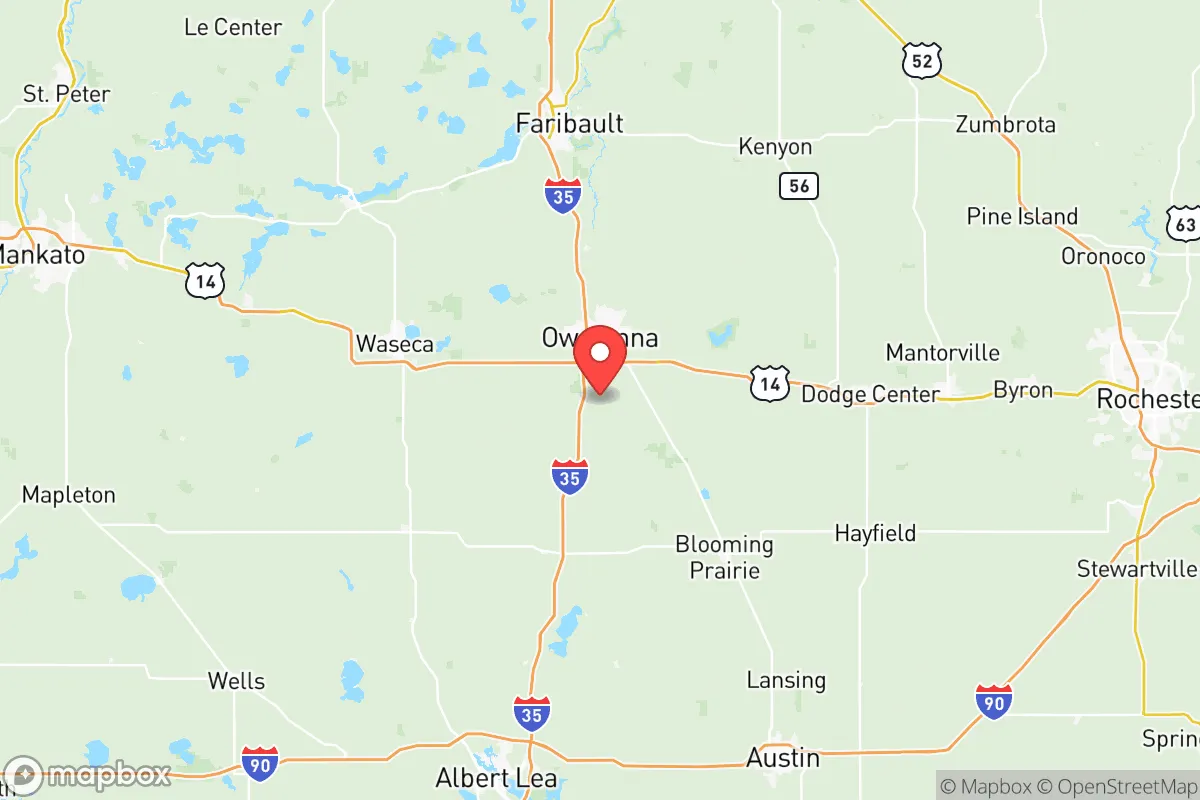
Steele County, Minnesota, is home to 37,413 residents who reflect a predominantly white, rural-rooted population with a growing Hispanic presence and a small but established Black community. The county’s character is shaped by its agricultural and manufacturing heritage, anchored by the city of Owatonna—the county seat and economic hub—along with smaller towns like Blooming Prairie, Medford, and Ellendale. With a foreign-born share of just 2.6% and a college attainment rate of 29.7%, Steele County remains less diverse and less educated than the state average, but its population is slowly diversifying through both domestic migration and immigrant settlement.
Settlement & growth (pre-1960)
Before European settlement, the area now known as Steele County was part of the traditional homeland of the Dakota people, specifically the Mdewakanton and Wahpekute bands. The Dakota used the region for seasonal hunting and gathering, with key sites along the Straight River and Maple Creek. The United States forcibly removed the Dakota after the U.S.-Dakota War of 1862, opening the land to Euro-American homesteaders under the Homestead Act of 1862 and subsequent railroad land grants.
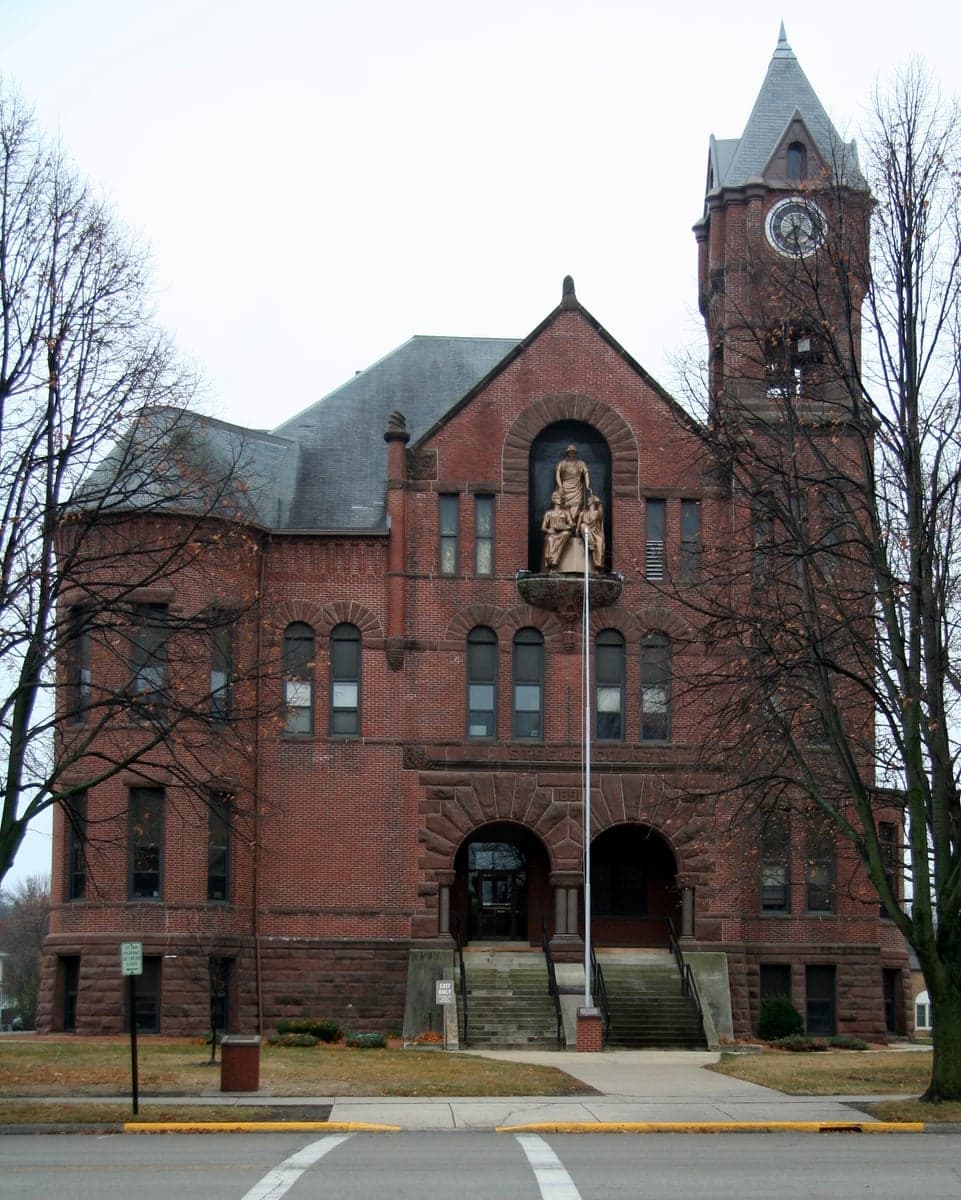
The first major wave of settlers arrived in the 1850s and 1860s, primarily Yankees from New England and New York, who established the county’s earliest towns. Owatonna, founded in 1854 along the Straight River, became the county seat in 1855 and grew as a milling and trading center. These early settlers brought a strong tradition of civic institutions, including schools, churches, and the Steele County Courthouse, built in 1891. A second wave of German immigrants arrived in the 1870s and 1880s, drawn by cheap land and the promise of farming in the fertile prairies. They concentrated in the townships around Blooming Prairie and Medford, where German Lutheran and Catholic churches still stand as markers of their heritage. Norwegian immigrants also settled in smaller numbers, particularly in the northern part of the county near Ellendale and Clarks Grove, establishing dairy farms and creameries.
By 1900, Steele County’s population had reached roughly 16,000, with agriculture—especially corn, oats, and livestock—as the economic backbone. The arrival of the Chicago, Milwaukee, St. Paul and Pacific Railroad in the 1870s spurred growth in Owatonna, which became a regional shipping point for grain and cattle. The early 20th century saw the rise of manufacturing, with Owatonna’s Owatonna Tool Company (OTC) founded in 1925, providing industrial jobs that attracted a small wave of Swedish and Danish immigrants. The Great Depression and Dust Bowl of the 1930s had limited direct impact on Steele County, as its farms were less affected than those in the Plains states, but the population stagnated during this period. After World War II, returning veterans and their families fueled a modest suburban expansion around Owatonna, with new housing developments along Highway 14 and Interstate 35, which was completed through the county in the 1960s.
Modern era (post-1965)
The 1965 Hart-Cellar Act had a muted effect on Steele County compared to urban areas, but it did open the door for new immigrant groups. The most significant post-1965 change has been the growth of the Hispanic population, which now stands at 8.6% of the county’s residents. This wave began in the 1990s, driven by labor demand in the county’s meatpacking and food-processing industries. Owatonna became the primary destination, with Hispanic families settling in the city’s south side and near the Owatonna Foods processing plant. A smaller Hispanic community also formed in Blooming Prairie, where a turkey-processing plant operated for decades. These immigrants, primarily from Mexico and Central America, have established Spanish-language churches, tiendas, and a growing presence in the local school system.
The Black population, at 3.4%, is a more recent addition, largely arriving after 2000. This group includes both African American families moving from the Twin Cities metro area—drawn by lower housing costs and jobs in manufacturing and logistics—and a smaller number of African immigrants, particularly from Somalia and Ethiopia, who have settled in Owatonna. The East/Southeast Asian population remains tiny at 0.6%, with a few families of Hmong and Vietnamese descent living in Owatonna, many of whom arrived as secondary migrants from the Twin Cities. The Indian-subcontinent population is effectively zero (0.0%), reflecting the county’s lack of high-tech or professional service jobs that typically attract that group.
Domestic migration has also reshaped Steele County since the 1990s. The completion of Interstate 35 made Owatonna a bedroom community for commuters working in the Twin Cities, about 60 miles north. This has brought a steady stream of white, middle-class families from the metro area, seeking larger lots, lower taxes, and a slower pace of life. New subdivisions have sprouted on the north and east sides of Owatonna, while Medford and Ellendale have seen slower growth, retaining their small-town character. The county’s white population has declined from over 95% in 1990 to 84.3% today, driven both by the arrival of minorities and by the out-migration of young white adults to the Twin Cities for college and careers.
The future
Steele County’s population is projected to grow slowly, reaching roughly 39,000 by 2040, according to Minnesota State Demographic Center estimates. The Hispanic share is expected to rise to 12-15% over the next two decades, driven by both natural increase and continued labor migration to food-processing and manufacturing jobs. The Black population will likely grow more modestly, to 4-5%, as the county’s affordable housing and proximity to the Twin Cities attract more African American families. The East/Southeast Asian and Indian populations are expected to remain negligible, as the county lacks the professional job base and ethnic enclaves that draw those groups to larger cities.
The county’s cultural identity is evolving from a homogeneous, German-Scandinavian farming community to a more diverse, suburban-rural hybrid. This shift is most visible in Owatonna, where the school district now reports that 15% of students are Hispanic and 5% are Black. Tensions around this change are mild compared to larger cities, but they surface in debates over housing density, bilingual education, and the pace of development. The outlying towns—Blooming Prairie, Medford, and Ellendale—remain overwhelmingly white and older, with median ages above 40, and are likely to see population declines as young people leave for urban opportunities.
For a family or individual moving to Steele County now, the bottom line is this: you are joining a place that is still predominantly white and rural in character, but is slowly becoming more diverse, especially in Owatonna. The county offers affordable housing, good schools in the Owatonna district, and a strong sense of community rooted in its agricultural and manufacturing past. If you value a quiet, family-oriented lifestyle with access to Twin Cities amenities via I-35, Steele County is a stable choice—but don’t expect the rapid growth or cultural dynamism of a suburban boomtown. The future here is one of gradual, modest change, not transformation.

* Values derived from national, state, county, city and local statistics and may differ in a specific area. Last updated: 2026-06-16T10:57:55.000Z
Narrative content on this page is AI-generated and may contain mistakes. Verify any details that matter before acting on them.
ReloMaps may earn a commission from affiliate links at no extra cost to you.

