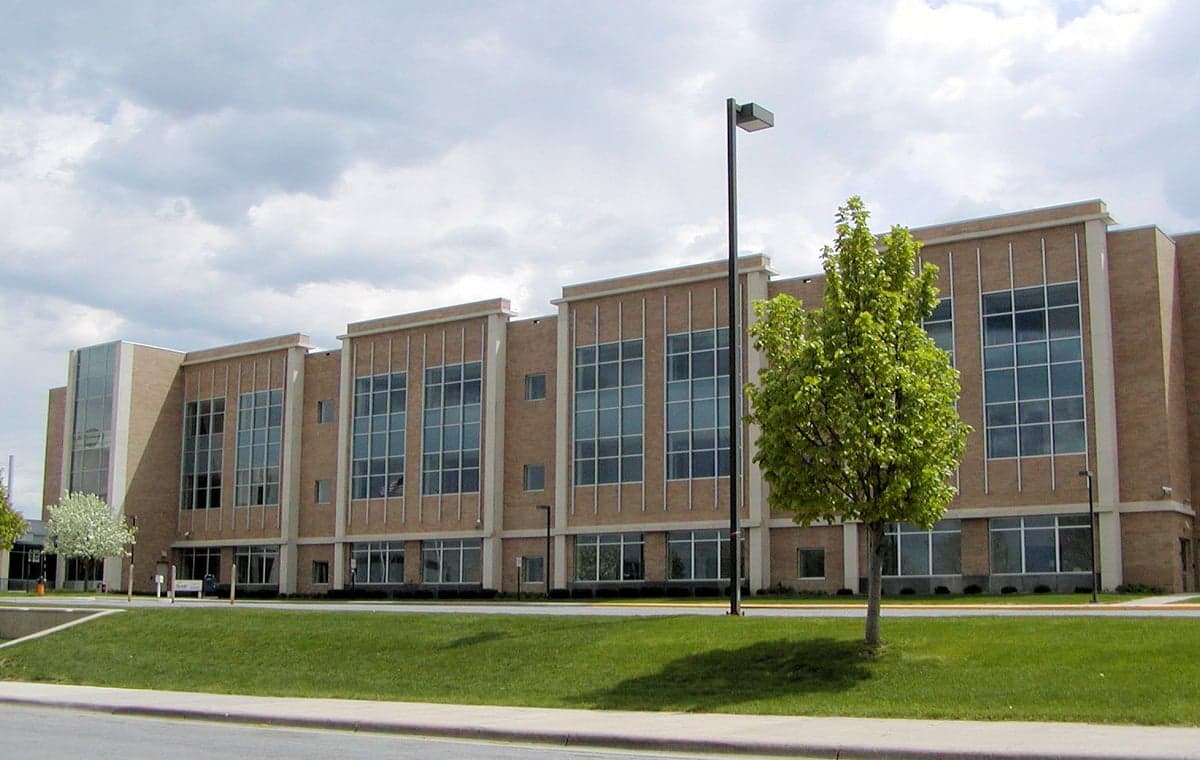
Photo: Wikipedia
Personal Sovereignty in Scott County
Viable for self-reliance. Generally workable, though some barriers may limit total independence.
What does Personal Sovereignty tell us?
Personal Sovereignty measures your capacity for self-reliance and independence with minimal government friction. Higher scores mean fewer barriers between you and the way you want to live... but it assumes you have the space you need and good neighbors.
What does this tell us?
Personal Sovereignty measures your capacity for self-reliance and independence with minimal government friction. Higher scores mean fewer barriers between you and the way you want to live... but it assumes you have the space you need and good neighbors.
State Policy
Energy independence: Importer (20% of energy produced in-state)
Personal Liberty
Homesteading

Personal Liberty Analysis
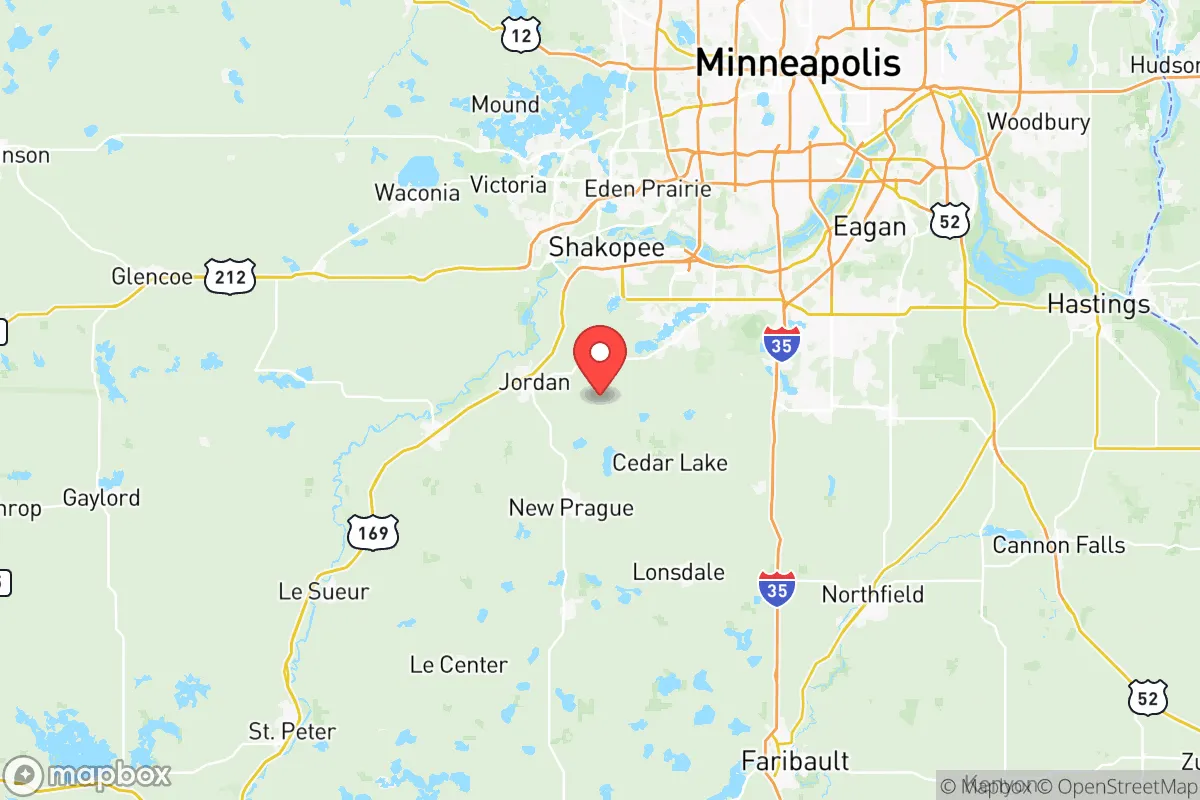
Scott County, Minnesota offers a notably high degree of personal sovereignty relative to the Twin Cities metro area, with a regulatory environment that leans toward individual autonomy in taxation, self-defense, and property use. Located just southwest of Minneapolis–Saint Paul, the county balances proximity to urban employment with a distinctly more permissive posture on personal freedoms, particularly in its smaller towns and rural townships. For single individuals and families prioritizing independence, Scott County presents a strategic middle ground—neither as restrictive as Hennepin or Ramsey counties nor as laissez-faire as more remote rural areas like northern Minnesota.
Tax burden and regulatory posture in Scott County
Scott County’s tax burden is moderate by Minnesota standards, with property tax rates generally lower than those in neighboring Hennepin and Dakota counties. The county’s effective property tax rate averages around 1.1% of assessed home value, compared to roughly 1.3% in Minneapolis and Saint Paul. Minnesota’s state income tax is progressive, with rates from 5.35% to 9.85%, which applies uniformly across the county. However, the regulatory posture in Scott County is notably lighter than in the core metro: zoning ordinances in cities like Shakopee and Prior Lake are more business-friendly, with streamlined permitting for home-based enterprises and fewer restrictions on accessory dwelling units. The county’s comprehensive plan emphasizes managed growth rather than heavy-handed control, allowing for more flexibility in land use compared to the stricter urban growth boundaries seen in Portland or Seattle. For a conservative-leaning reader, the key takeaway is that Scott County avoids the most aggressive tax-and-regulate approaches of the inner ring suburbs while still funding essential services like roads and schools.
Self-defense and gun law specifics in Scott County
Minnesota is a shall-issue state for concealed carry permits, and Scott County’s sheriff’s office processes permits efficiently, typically within 30 days. The county has no additional local restrictions beyond state law, meaning no magazine capacity limits, no assault weapon bans, and no waiting periods beyond the state’s 30-day permit processing. Open carry is legal with a permit, and private property owners can set their own rules. In towns like Jordan and Belle Plaine, gun culture is robust, with multiple shooting ranges and gun shops within a 20-minute drive. The state’s preemption law prevents cities like Shakopee or Prior Lake from enacting stricter local ordinances, ensuring uniformity across the county. Stand-your-ground laws do not exist in Minnesota; the state follows a duty-to-retreat standard in public spaces, though the Castle Doctrine applies inside one’s home. For families, this means self-defense rights are solid but not as expansive as in Texas or Florida. The practical effect is that Scott County residents enjoy a high degree of firearm freedom without the friction of local patchwork regulations common in coastal states.
Self-reliance and homesteading viability in Scott County
Homesteading and off-grid living are viable in Scott County’s rural townships, though feasibility varies significantly by location. In unincorporated areas like New Market Township and Spring Lake Township, minimum lot sizes are typically 2.5 to 5 acres, allowing for substantial gardens, small livestock, and rainwater collection. Zoning in these areas permits accessory structures like barns and workshops without the bureaucratic hurdles found in suburban subdivisions. Off-grid solar is legal, though net metering with Xcel Energy is the standard; full disconnection from the grid requires a variance and is rarely pursued. In contrast, cities like Savage and Shakopee have standard suburban lot sizes of 0.25 to 0.5 acres, with homeowners’ associations often restricting chickens, beekeeping, and front-yard gardens. For those seeking maximum self-reliance, the rural townships east of Belle Plaine and south of Jordan offer the best conditions, with well and septic systems common and no municipal water mandates. The county’s soil quality is excellent for gardening, and the growing season (roughly 150 frost-free days) supports a wide range of vegetables and fruits. Overall, Scott County provides a realistic path to semi-self-sufficiency for those willing to locate outside the denser suburbs.
Personal liberties in Scott County: parental rights, medical autonomy, speech, and property
Parental rights in Scott County are strong, with school districts like Shakopee Public Schools and Prior Lake-Savage Area Schools offering opt-out options for sex education and library materials, though these are subject to state curriculum mandates. Medical autonomy is limited by Minnesota’s broader regulatory environment: vaccine mandates for school attendance exist, and the state has a medical cannabis program but no recreational marijuana. However, Scott County’s local governments do not impose additional health mandates beyond state law, and mask or vaccine requirements during public health emergencies have been minimal compared to Hennepin County. Free speech protections are robust, with no local hate speech ordinances or permit requirements for public gatherings beyond standard parade permits. Property rights are well-protected: eminent domain is rarely used, and the county’s comprehensive plan respects existing agricultural and rural uses. In Elko New Market, for example, residents successfully resisted a proposed high-density development in 2023, preserving the town’s small-town character. The overall environment is one where individual choice is respected, provided it does not conflict with state-level mandates—a balance that appeals to those who value personal freedom but accept some baseline regulation.
Compared to other Minnesota counties, Scott County offers a superior sovereignty profile for those seeking a blend of suburban convenience and rural autonomy. It is less restrictive than the urban core counties (Hennepin, Ramsey) but more developed than truly remote areas like Aitkin or Itasca counties, which offer cheaper land but fewer services. For a conservative-leaning individual or family, the county’s tax burden is manageable, its gun laws are permissive, its homesteading potential is real in the right locations, and its personal liberties are well-protected at the local level. The key strategic choice is location: rural townships for maximum self-reliance, or towns like Shakopee and Prior Lake for access to jobs and schools with fewer regulatory headaches than the inner ring. Scott County is not a libertarian utopia—state taxes and some mandates remain—but it is one of the most freedom-friendly options within commuting distance of the Twin Cities.

* Values derived from national, state, county, city and local statistics and may differ in a specific area. Last updated: 2026-07-05T15:36:50.000Z
Narrative content on this page is AI-generated and may contain mistakes. Verify any details that matter before acting on them.
ReloMaps may earn a commission from affiliate links at no extra cost to you.

