Photo: Wikipedia
Political ClimatePolitical Climate in Scott County
Showing district-level results — no local-only data available.
Local Political AnalysisPolitical Analysis of Scott County
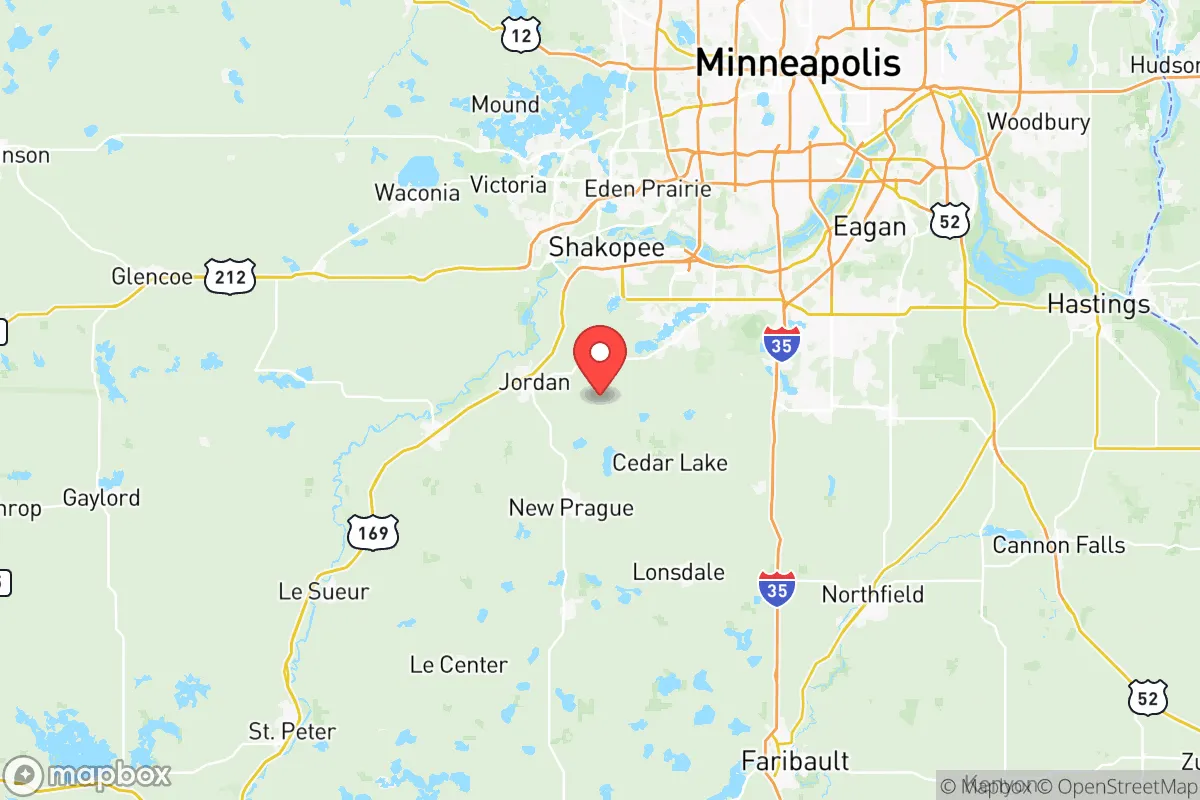
Scott County, Minnesota, sits in a politically interesting spot: it’s a D+3 district by Cook PVI, meaning it leans slightly Democratic compared to the nation, but that number masks a real shift under the surface. The county has been trending rightward over the past decade, especially in its fast-growing outer-ring suburbs and exurbs, while the older, more established towns like Shakopee still anchor the Democratic vote. If you’d asked me ten years ago, I’d have called it a safe blue county—now, it’s a genuine battleground where every election feels tighter, and the local dynamics are a microcosm of Minnesota’s broader urban-rural split.
How it compares
Compared to Minnesota as a whole, Scott County is more conservative than the state’s average, even though the state’s Cook PVI isn’t publicly calculated the same way. The state leans Democratic overall, driven by the Twin Cities metro, but Scott County’s D+3 rating actually understates its Republican strength in local races. For example, in the 2020 presidential election, Scott County voted for Joe Biden by a slim margin—about 50.5% to 47.5%—while Minnesota overall went for Biden by about 7 points. That gap has been narrowing: in 2012, Obama won Scott County by nearly 10 points; by 2020, it was a nail-biter. The county’s growth is pulling it right, as new residents from more conservative areas of the state and country settle in places like Prior Lake and Jordan, which lean red, while Shakopee and Savage remain more blue-leaning, especially in their older neighborhoods near the river. The swing precincts are in the unincorporated areas and newer subdivisions around Elko New Market and New Prague, where independent voters often decide races by a few hundred votes.
What this means for residents
For conservative residents, Scott County feels increasingly welcoming. Local school board races and city council elections in Prior Lake and Jordan often tilt right, and you’ll find a strong network of Republican-leaning civic groups. For liberal residents, Shakopee and Savage still offer a solid base, with progressive candidates regularly winning seats there, and the county’s overall Democratic lean means statewide policies—like the 2023 paid family leave law or the push for clean energy—still have local champions. The practical effect is that both sides feel they have a shot, which keeps turnout high and local politics lively. You’ll see more yard signs per block here than in many parts of the metro, and the county board often splits 3-2 on big issues like development or tax levies.
Culturally, Scott County is distinct from the rest of Minnesota in a few ways. It’s more suburban and exurban than the state’s rural north or the dense urban core of Minneapolis, so you get a mix of newer housing developments and working farms, especially as you head south toward Belle Plaine. Policy-wise, the county has been slower to adopt some progressive measures—like stricter rent control or transit expansion—compared to Hennepin or Ramsey counties. But it’s also not as resistant as some rural counties; for instance, Scott County has embraced some renewable energy projects, like the solar farm near Credit River. The bottom line: if you’re moving here, expect a place where your vote really counts, and where the political conversation is still being written by the people showing up to town hall meetings.

State Political ClimatePolitical Climate in Minnesota
State Political AnalysisPolitical Environment in the State
Minnesota has shifted from a classic purple battleground to a reliably blue state over the past two decades, but the picture is far more complicated than a simple partisan label. The state hasn't voted for a Republican presidential candidate since 1972, yet it regularly elects moderate Republicans to statewide office and has a state legislature that has flipped multiple times in recent cycles. The real story is a growing urban-rural chasm: the Twin Cities metro area, home to about 60% of the state's population, has become increasingly Democratic, while greater Minnesota has swung hard to the right, creating one of the most politically polarized landscapes in the Midwest.
Urban vs. rural divide
The political map of Minnesota is essentially a story of two states. The Twin Cities metro — including Minneapolis, St. Paul, and inner-ring suburbs like Edina and Bloomington — is the engine of the state's Democratic-Farmer-Labor (DFL) Party dominance. In 2024, Hennepin and Ramsey counties alone delivered a margin of over 400,000 votes for Kamala Harris, effectively deciding the statewide result before rural votes were even counted. Meanwhile, outstate counties like Otter Tail, Stearns (home to St. Cloud), and Blue Earth (home to Mankato) have trended sharply Republican. The Iron Range in northeastern Minnesota, once a DFL stronghold built on union mining labor, has been a notable bellwether: counties like St. Louis (Duluth) still lean blue, but surrounding rural areas have flipped hard red. Suburbs like Lakeville and Woodbury have become competitive swing territory, while exurbs such as Elk River and St. Michael are now reliably conservative. The result is a state where a few metro counties decide statewide elections, but vast rural expanses feel increasingly disenfranchised.
Policy environment
Minnesota's policy landscape is a mixed bag that reflects its divided nature. The state has a progressive income tax system with rates ranging from 5.35% to 9.85%, one of the highest top marginal rates in the nation. Property taxes are moderate but vary significantly by locality — expect higher rates in the metro and lower in rural areas. The regulatory environment leans left on environmental issues, with a stringent Renewable Energy Standard targeting 100% carbon-free electricity by 2040. Education policy is a bright spot for many conservatives: Minnesota has robust school choice options, including charter schools (the first in the nation, established in 1991) and an open enrollment system that allows students to attend any public school in the state. Healthcare is dominated by large systems like Mayo Clinic in Rochester and Allina Health in the metro, and the state expanded Medicaid under the Affordable Care Act. Election laws are relatively accessible: same-day voter registration, no-excuse absentee voting, and automatic voter registration at DMVs are all in place. There is no voter ID requirement, which remains a flashpoint for conservative critics.
Recent policy direction
The 2023-2024 legislative session, with the DFL holding a trifecta (governor, House, Senate) for the first time in a decade, produced a flurry of progressive legislation that has reshaped the state's policy direction. On gun policy, Minnesota passed universal background checks and a "red flag" law (Extreme Risk Protection Order) in 2023, making it the first state in the Upper Midwest to do so. On education, the state enacted a universal free school meals program and increased per-pupil funding significantly. Abortion rights were codified into state law via the PRO Act, removing nearly all restrictions and positioning Minnesota as a regional safe haven for abortion access. Transgender rights were expanded, including protections for gender-affirming care. On the economic front, the state enacted a paid family and medical leave program funded by payroll taxes, set to begin in 2026. Property rights saw a notable shift with the repeal of a 2021 law that had restricted new housing development in certain areas, part of a broader push to address the state's housing shortage. Voting access was expanded with automatic voter registration and pre-registration for 16- and 17-year-olds. For conservatives, the 2023 session represented a sharp leftward turn on social issues, while libertarian-leaning residents may appreciate the state's relatively low crime rates and strong property rights protections outside of environmental regulations.
Civil unrest & political movements
Minnesota has been a flashpoint for national political movements. The 2020 murder of George Floyd in Minneapolis sparked the largest protests in the state's history and a global reckoning on policing. The aftermath included the failed 2021 ballot measure to replace the Minneapolis Police Department with a new public safety agency, which was defeated by voters. The state has seen organized activist movements on both sides: the Minnesota Freedom Fund and other bail funds gained national prominence, while the "Back the Blue" movement has been particularly strong in suburban and exurban areas. Immigration politics are a live issue: Minnesota has a "sanctuary state" law (the Minnesota Driver's License for All Act, 2023) that allows undocumented immigrants to obtain driver's licenses, and Minneapolis and St. Paul have "welcoming city" ordinances that limit cooperation with federal immigration enforcement. Election integrity remains a hot-button topic: the 2020 election in Minnesota was widely considered secure, but Republican-led audits in several counties found no evidence of widespread fraud. The state has seen a rise in "constitutional sheriff" movements in rural counties, and there have been calls for county-level secession from the metro, though none have gained serious legislative traction.
Projection
Over the next 5-10 years, Minnesota is likely to remain a blue-leaning state, but the margin could narrow. Demographic trends favor the DFL: the Twin Cities metro is growing, attracting younger, more diverse residents, while rural areas are aging and losing population. However, the state's in-migration patterns are shifting: Minnesota has seen net domestic out-migration for several years, with many leavers heading to Florida, Texas, and Arizona — states with lower taxes and warmer climates. The newcomers who do arrive tend to be more educated and progressive, reinforcing the metro's blue tilt. The state's political future hinges on whether the DFL can maintain its coalition of urban liberals, suburban moderates, and union households, or whether the GOP can make inroads with the growing Asian and Hispanic populations in the metro. The 2026 gubernatorial election will be a key test: if a Republican can win the governor's mansion, it would signal a potential realignment. For now, expect continued gridlock on major issues, with the state's policy direction swinging with each election cycle.
For a conservative relocator, Minnesota offers a mixed bag: low crime rates, good schools, and a strong economy, but high taxes and a progressive social agenda that is likely to continue. For a liberal relocator, the state provides a policy environment that aligns with their values, particularly on healthcare, education, and civil rights, but at a higher cost of living than many neighboring states. The bottom line: Minnesota is a state where your experience will be heavily shaped by where you live — the metro is a blue bubble, the exurbs are purple battlegrounds, and rural areas are deep red. Pick your county carefully, and you can find a community that fits your politics, but you'll still be subject to state-level policies that may not align with your views.
* Values derived from national, state, county, city and local statistics and may differ in a specific area. Last updated: 2026-07-05T15:36:50.000Z
Narrative content on this page is AI-generated and may contain mistakes. Verify any details that matter before acting on them.
ReloMaps may earn a commission from affiliate links at no extra cost to you.

