Photo: Wikipedia
Political ClimatePolitical Climate in Carver County
Showing district-level results — no local-only data available.
Local Political AnalysisPolitical Analysis of Carver County
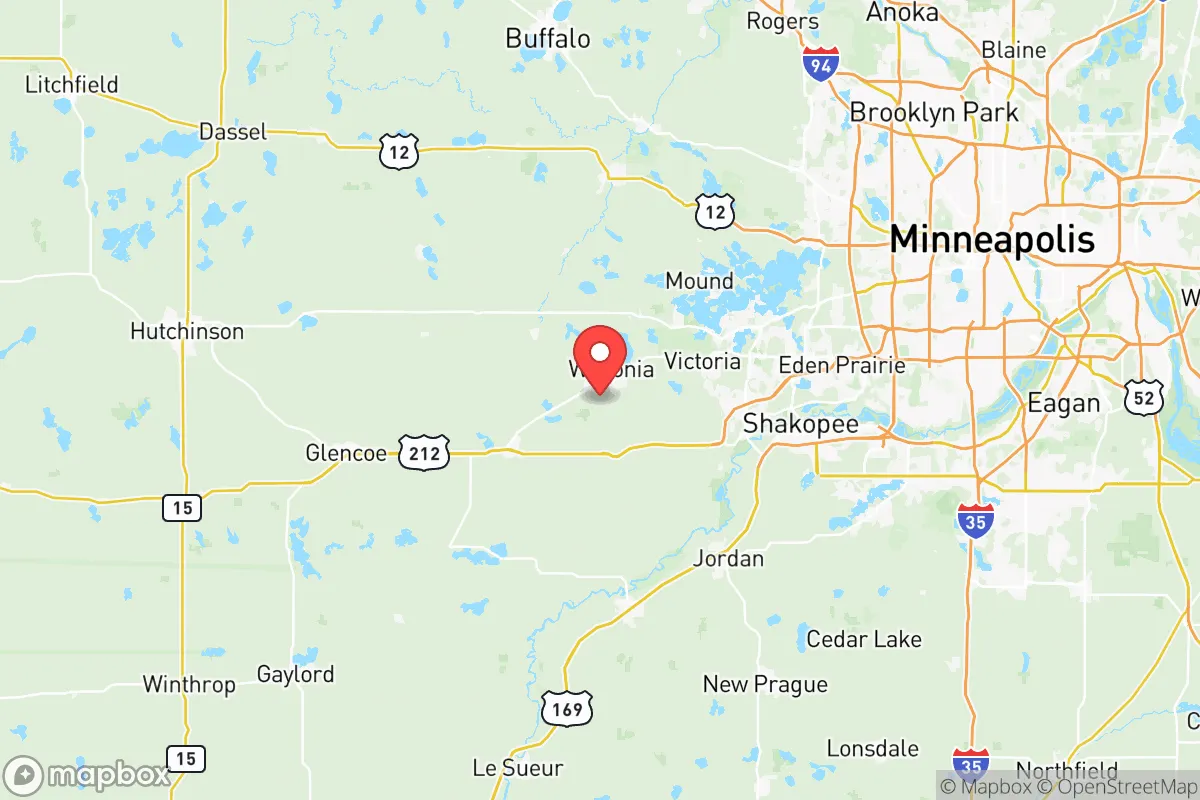
Carver County has long been one of the most reliably Republican-leaning counties in the Twin Cities metro area, with a Cook Partisan Voting Index (PVI) of R+10. That means the county votes about 10 points more Republican than the national average, a stark contrast to Minnesota’s statewide reputation as a blue-leaning swing state. But if you’ve lived here for a while, you’ve seen the shift: the old-guard GOP dominance is still real, but it’s getting squeezed by newcomers from Hennepin County and a growing suburban professional class. The county went for Trump by about 12 points in 2020, down from a 20-point margin for Romney in 2012, and that trajectory is something locals talk about over coffee in Waconia and Chaska alike.
How it compares
Compared to Minnesota as a whole, Carver County is a deep-red outlier. The state’s Cook PVI is not publicly calculated at the state level, but Minnesota has voted Democratic in every presidential election since 1976 except for 2016 and 2024, making it a competitive purple state. Carver County, by contrast, hasn’t gone blue in a presidential race since 1964. The real story is the internal variation: the county seat of Chaska has become a genuine swing town, with precincts near the historic downtown and newer developments like Clover Ridge often splitting 50-50 or even leaning slightly Democratic in local races. Waconia, further west, remains reliably red, driven by its strong agricultural and small-business base. Victoria and Chanhasen are the battlegrounds—fast-growing suburbs where transplants from Minneapolis and St. Paul have brought more moderate or liberal views, especially on education funding and environmental issues. Meanwhile, Norwood Young America and Hamburg in the western part of the county still vote like rural Minnesota, with margins often exceeding 30 points for Republican candidates. The county’s overall R+10 PVI masks this internal tug-of-war.
What this means for residents
For conservative residents, Carver County remains a comfortable place to live politically. Local government, school boards, and county commissions are still majority Republican, and the tax climate reflects that—property taxes are relatively low compared to neighboring Hennepin County, and there’s a strong emphasis on limited government and local control. For liberal residents, the picture is more mixed. You’ll find plenty of like-minded neighbors in Chaska and Victoria, but you’re still in the minority countywide. That said, the political shift is real: the county’s Democratic-Farmer-Labor (DFL) party has become more organized, and in 2022, a DFL candidate for county commissioner came within 3 points of winning in a district covering Chaska and Chanhassen. The practical effect is that both sides feel they have a voice, but the conservative majority still sets the agenda on issues like land use, school funding, and public safety.
Culturally, Carver County is more traditional than the rest of the metro, with a strong emphasis on agriculture, outdoor recreation, and family-owned businesses. The county’s policy distinctions are most visible in its approach to growth: it has been slower to adopt transit-oriented development and affordable housing mandates compared to Hennepin or Ramsey counties. The local school districts—especially Eastern Carver County Schools and Waconia Public Schools—are well-funded and highly rated, but debates over curriculum and library materials have become more heated in recent years, mirroring national trends. If you’re moving here, expect a community that values its rural roots but is wrestling with suburbanization. The politics are real, but so is the civility—most people, regardless of party, still wave at each other on the back roads.

State Political ClimatePolitical Climate in Minnesota
State Political AnalysisPolitical Environment in the State
Minnesota has undergone a striking political transformation over the past decade, shifting from a classic purple battleground to a reliably blue state in presidential elections, though with a deeply entrenched urban-rural split that keeps it competitive down-ballot. The Democratic-Farmer-Labor Party (DFL) now holds a full trifecta in state government, and the state has voted for the Democratic presidential candidate in every election since 1976 — the longest such streak in the nation. However, that statewide lean masks a volatile interior: the 2020 election saw Donald Trump lose Minnesota by just 7 points, while down-ballot races in greater Minnesota remain fiercely contested, and the state’s legislative majorities have flipped multiple times in the last decade.
Urban vs. rural divide
The political map of Minnesota is a textbook study in geographic polarization. The Twin Cities metro area — Hennepin, Ramsey, and Washington counties — drives the state’s blue lean, with Minneapolis and St. Paul delivering massive Democratic margins. In 2020, Hennepin County alone gave Joe Biden a 400,000-vote cushion, effectively deciding the state before the rest of the results came in. Meanwhile, greater Minnesota is overwhelmingly Republican. The Iron Range, once a DFL stronghold, has shifted hard right: counties like St. Louis (Duluth) still vote blue, but surrounding rural counties like Itasca and Lake have trended Republican. Outstate farming communities — Worthington, Marshall, and the Red River Valley — vote reliably red. The suburbs tell a more nuanced story: the inner-ring suburbs of St. Paul (Roseville, Maplewood) are solidly blue, while exurbs like Lakeville and Prior Lake lean conservative. The 2nd Congressional District, covering the southern Twin Cities suburbs, flipped from Republican to DFL in 2018 and has stayed competitive.
Policy environment
Minnesota’s policy environment is defined by a progressive tax structure and a robust public sector. The state has a graduated income tax with a top rate of 9.85%, one of the highest in the nation, and a statewide sales tax of 6.875% (local add-ons push it higher in some cities). Property taxes are moderate but vary widely by county. The state funds education generously — per-pupil spending ranks in the top 10 nationally — and offers a robust public healthcare system through MinnesotaCare and expanded Medicaid. Election laws are among the most accessible in the country: same-day voter registration, no-excuse absentee voting, and automatic voter registration are all in place. Gun laws are moderately restrictive: the state requires a permit to carry, has a red-flag law (enacted in 2023), and bans private sales without a background check. There is no state-level right-to-work law, and union density remains high, particularly in the public sector and construction trades.
Recent policy direction
The 2023-2024 legislative session marked a dramatic leftward shift under the DFL trifecta. Key legislation includes the Minnesota Driver’s License for All Act, which grants driver’s licenses regardless of immigration status; the PRO Act, which codifies collective bargaining rights and bans captive audience meetings; and the Minnesota Reproductive Freedom Defense Act, which protects abortion access and shields providers from out-of-state lawsuits. On gun policy, the legislature passed a red-flag law and universal background checks. On education, the state eliminated high-stakes standardized testing requirements for graduation and increased per-pupil funding by 10%. On the tax front, the DFL passed a new 1% surcharge on investment income over $1 million and expanded the child tax credit. On voting, the state enacted automatic voter registration and restored voting rights for felons upon release from prison. On property rights, the legislature tightened rent control options for local governments but did not impose a statewide cap. On privacy, the state passed a consumer data privacy law with opt-out rights, but no comprehensive biometric surveillance ban. On parental rights, the state expanded access to gender-affirming care for minors, which has become a flashpoint in rural and suburban districts.
Civil unrest & political movements
Minnesota has been a national epicenter for political movements on both sides. The 2020 murder of George Floyd in Minneapolis sparked the largest protests in state history and a sustained push for police reform, including a failed ballot initiative to replace the Minneapolis Police Department. The state has seen organized conservative activism around school board elections, library book challenges, and opposition to transgender athlete policies. Immigration politics are a live issue: Minnesota is a sanctuary state in practice, with the 2023 driver’s license law and a 2024 law limiting local law enforcement cooperation with ICE. Election integrity controversies flared after 2020, with Republican-led recounts in several legislative races and ongoing litigation over ballot access rules. The state has seen no serious secession or nullification rhetoric, but rural counties have passed symbolic resolutions declaring themselves "Second Amendment sanctuaries." A new resident would notice the political divide most visibly in yard signs and bumper stickers: in the metro, you’ll see DFL and progressive messaging; in greater Minnesota, Trump flags and "Let’s Go Brandon" decals are common.
Projection
Over the next 5-10 years, Minnesota is likely to remain a blue-leaning state, but the margin could narrow. The Twin Cities metro continues to grow, adding Democratic voters, while rural areas are depopulating and aging, which amplifies their Republican vote share. The key swing areas are the outer-ring suburbs and exurbs — places like Rochester, St. Cloud, and Mankato — where population growth is fastest and political affiliation is more fluid. In-migration from other states is modest but slightly favors blue states, and the state’s high tax burden may deter some conservative relocators. The DFL’s recent legislative agenda has energized both its base and its opposition; expect continued fights over education funding, gun policy, and transgender rights. A Republican path to statewide office likely runs through winning back the suburbs and holding the rural vote, which is possible but difficult given current demographic trends. A new resident moving in now should expect a state where the political climate is competitive but structurally tilted toward the left, with policy outcomes that reflect that tilt.
For a conservative-leaning relocator, Minnesota offers a mixed picture: low crime in most suburbs, strong schools, and a vibrant economy, but a tax and regulatory environment that is among the most progressive in the Midwest. You’ll find like-minded communities in the exurbs and in greater Minnesota, but you should expect to live under DFL-dominated state policy for the foreseeable future. For a liberal relocator, the state is a policy laboratory where your priorities are being enacted, but you’ll encounter sharp cultural and political divides the moment you leave the metro. Either way, Minnesota is a state where politics is personal, local, and impossible to ignore.
* Values derived from national, state, county, city and local statistics and may differ in a specific area. Last updated: 2026-07-07T16:25:40.000Z
Narrative content on this page is AI-generated and may contain mistakes. Verify any details that matter before acting on them.
ReloMaps may earn a commission from affiliate links at no extra cost to you.

