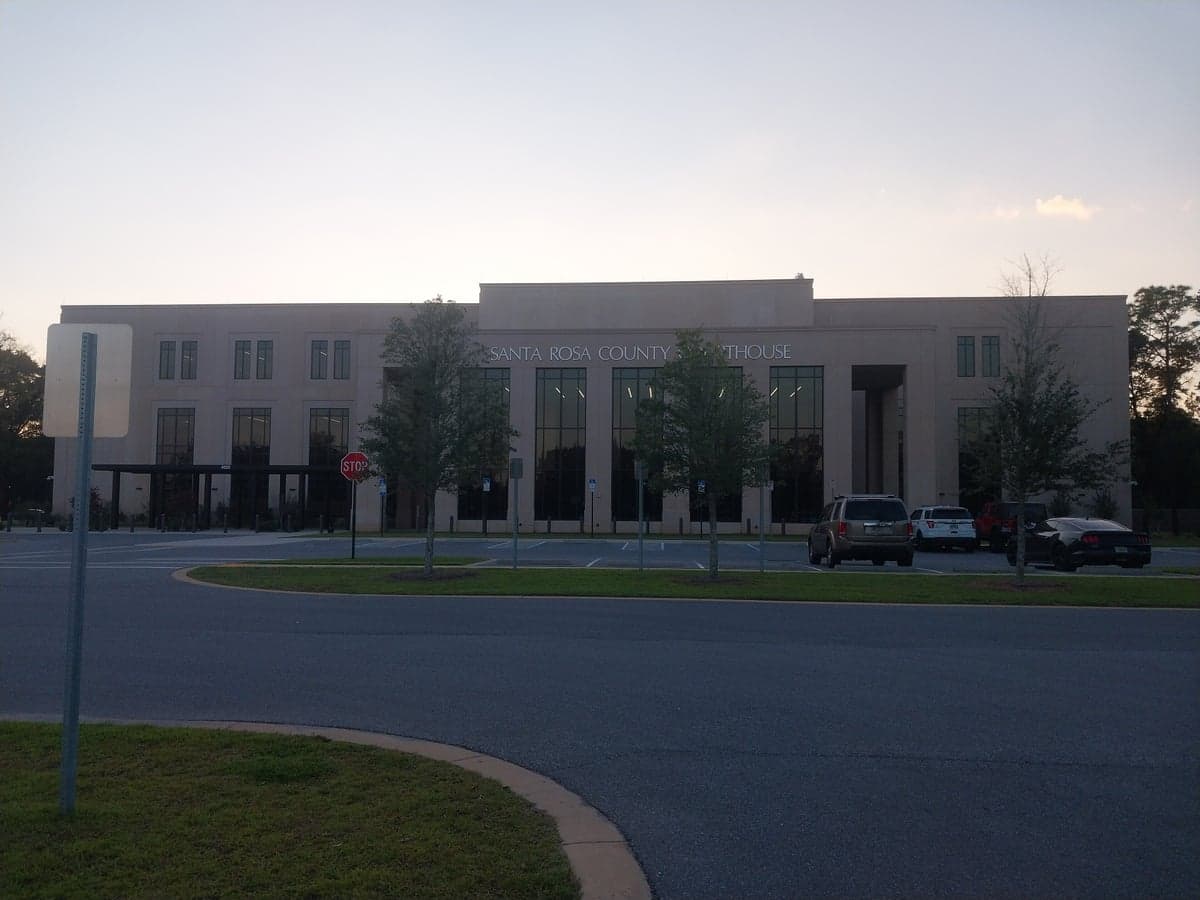
Photo: Wikipedia
Strategic Assessment of Milton, FL
Meaningful friction. Expect exposure to either population pressure, blast zones, or natural disaster risk. Consider buying a retreat property.
What does the Strategic Assessment tell us?
Our Strategic Assessment grades tactical survivability of an area. Major population centers, military targets, fallout zones, natural disasters, and border exposure all drive risk — lower exposure means a more defensible position in a crisis.
This is heavily inspired by Joel Skousen's Strategic Relocation book. Highly recommended you checkout the book ($)What does this tell us?
Our Strategic Assessment grades tactical survivability of an area. Major population centers, military targets, fallout zones, natural disasters, and border exposure all drive risk — lower exposure means a more defensible position in a crisis.
This is heavily inspired by Joel Skousen's Strategic Relocation book. Highly recommended you checkout the book ($)Strategic Pillars
Key Distances
Regional Safe Places
Below is our recommended "safe zones" in Florida and the surrounding area based on our strategic heuristics. For most people, it's unrealistic to live in a “safe zone” full-time due to work, family or other personal reasons. They tend to be more rural. However, many of these areas are perfect for second homes and retreat properties that double as a vacation home or even a short-term rental.

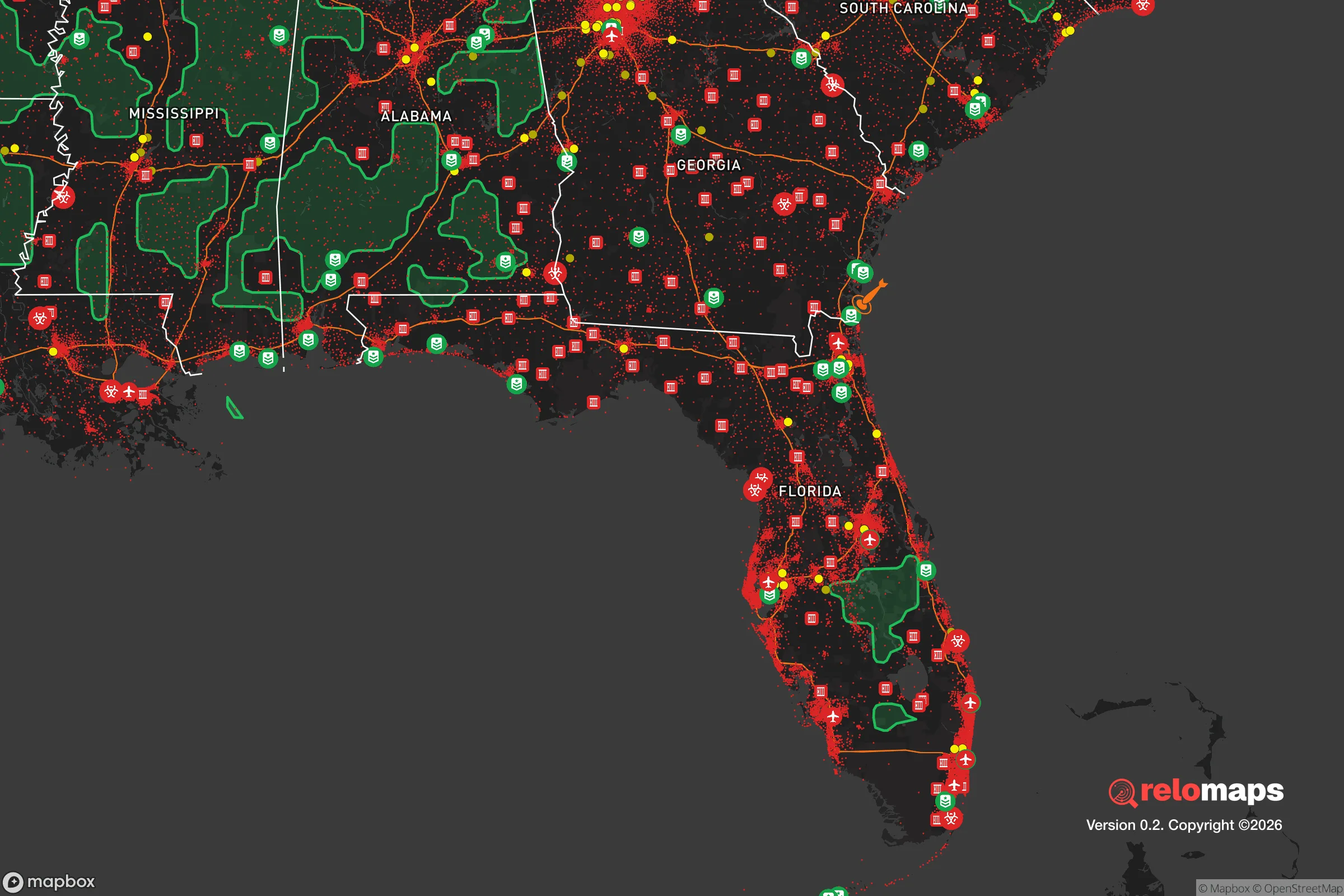


Important Note: For informational purposes only. This does not mean nothing bad ever happens in the green zones. Please use common sense. This is based on public data and modeled with AI. We tried to take a conservative approach but mistakes happen. We update this regularly as new information becomes available.
Solar Generator Recommendations
Backup power matters more here than in safer locations. We've picked three solar generators across budgets and capacity tiers — start with the budget unit if you only need a few essentials, or step up if you want to run a fridge and HVAC for days at a time.
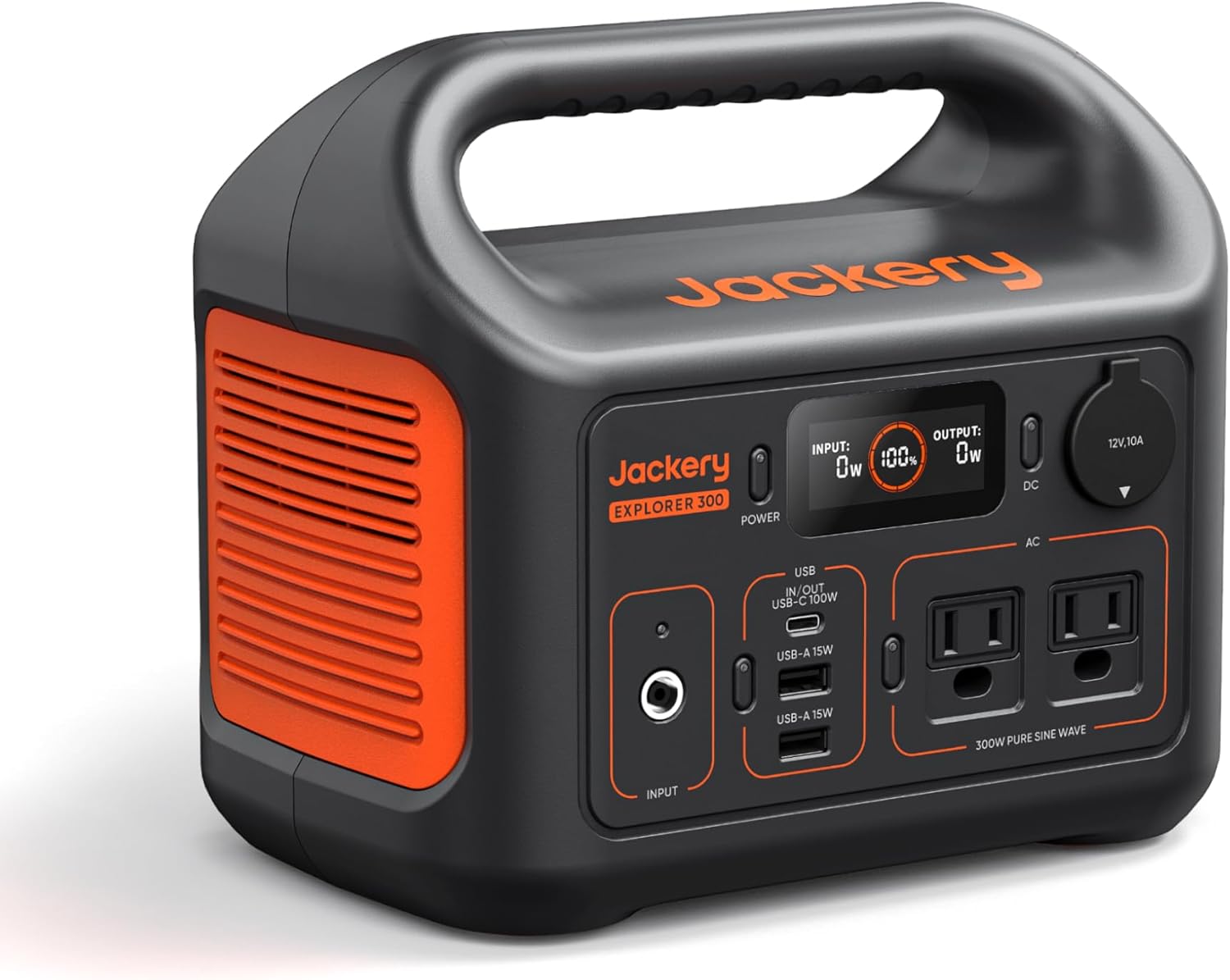
Jackery Portable Power Station Explorer 300
Budget OptionPower on the Go: Weighing only 11 lbs, it's convenient to set up and store with book-sized foldable solar panels

BLUETTI Portable Power Station AC180
Designed for both indoor and outdoor scenarios, AC180 is highly capable as it has a robost capacity and continuous output power.

EF ECOFLOW DELTA Pro Ultra Power Station
Upgraded PickEcoFlow DELTA Pro Ultra is a whole-home energy system designed to grow with your family. Integrated with the Smart Home Panel 2, it scales to meet your evolving energy needs — keeping your home powered, intelligent, and secure through every stage of life.
We earn a commission, at no additional cost to you.
Strategic Assessment Analysis
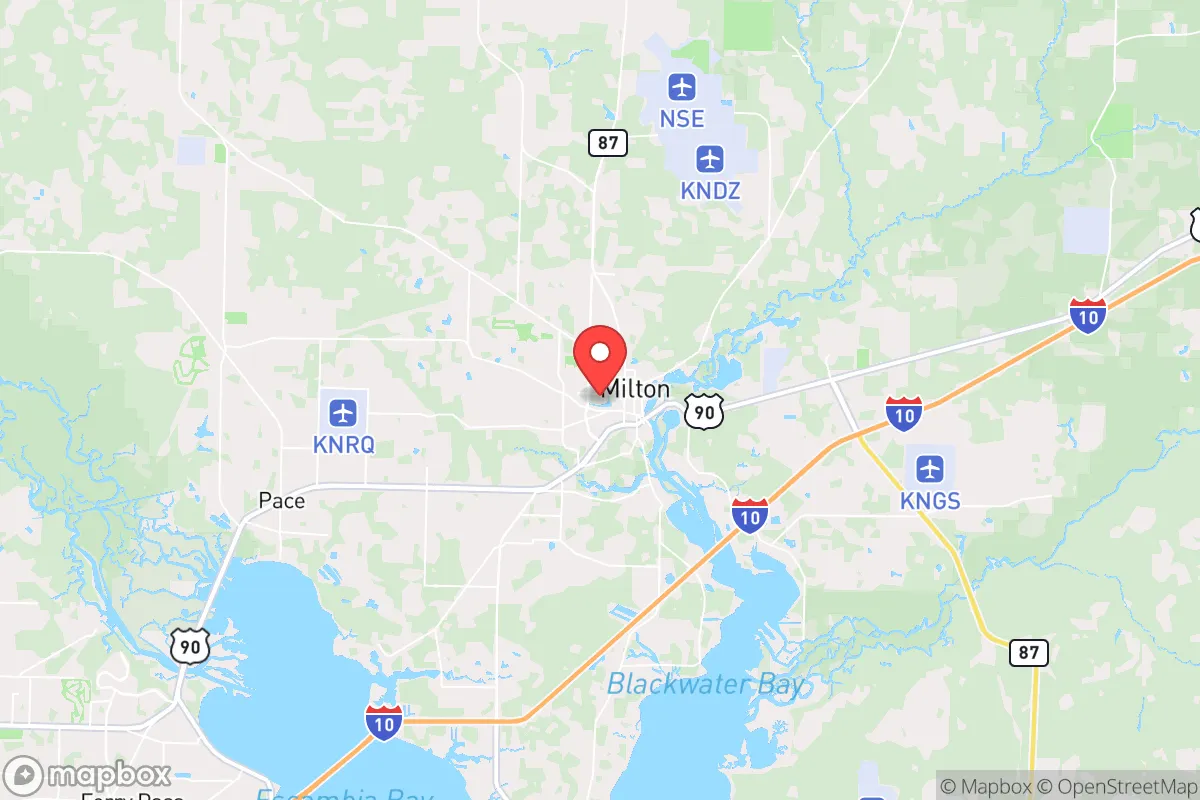
Milton, Florida, offers a compelling mix of strategic advantages and notable vulnerabilities for the disaster-conscious relocator. Situated in the Florida Panhandle along the Blackwater River, the city sits roughly 20 miles inland from the Gulf of Mexico and about 30 miles east of Pensacola, placing it within the broader Pensacola metropolitan area. This inland buffer provides some protection from direct hurricane storm surge, but the city’s proximity to major military installations—Naval Air Station Pensacola, Whiting Field, and Eglin Air Force Base—as well as the nearby Escambia County industrial corridor, introduces a unique set of man-made and geopolitical risks that a serious preparedness-minded individual must weigh against the area’s natural advantages.
Geographic position and natural advantages for self-sufficiency
Milton’s location along the Blackwater River and its proximity to the Blackwater River State Forest give it a distinct edge for those prioritizing resource independence. The river itself is a reliable freshwater source, though it requires treatment for consumption, and the surrounding forest offers ample timber, game, and foraging potential. The area’s average elevation of around 30 feet above sea level is modest but sufficient to avoid the worst of coastal flooding, and the inland position means storm surge from a Category 3 or lower hurricane is unlikely to reach the city center. The climate supports year-round growing seasons, with over 230 frost-free days per year, making extended gardening and small-scale agriculture feasible. The region’s sandy, well-drained soils in upland areas are suitable for raised-bed or container gardening, though the native soil is nutrient-poor and requires amendment. For a relocator, the combination of accessible surface water, state-managed forestland, and a mild climate provides a solid foundation for a semi-self-sufficient lifestyle, provided one secures a property with well access and sufficient acreage away from the denser subdivisions near the city limits.
Risks, exposures, and proximity to fallout-relevant landmarks
The most significant strategic drawback for Milton is its proximity to several high-value military and industrial targets. Naval Air Station Pensacola, located just 25 miles southwest, is a primary training base for naval aviation and a potential target in a conflict scenario. Whiting Field, about 15 miles north of Milton, is a major helicopter training facility, and Eglin Air Force Base, roughly 40 miles east, is a massive installation with weapons testing ranges and a large munitions storage area. In a major conventional war or nuclear exchange, these bases would be high-priority targets, and Milton lies within the blast and fallout zones of a strike on any of them. The city is also within 50 miles of the Pensacola Bay industrial complex, which includes chemical plants and a major port. Natural disaster risks are more immediate: Milton is in a high-risk zone for inland flooding from the Blackwater River during prolonged rain events, and the area experiences an average of 60 to 70 thunderstorm days per year, with frequent lightning and occasional tornadoes. The 2023 flooding from Hurricane Idalia, though a minor event locally, demonstrated that even inland areas can see rapid water rise. For the relocator, the military proximity is the single greatest man-made risk, and any serious preparedness plan must account for the possibility of evacuation or sheltering during a crisis that targets these installations.
Practical resilience for a relocator: food, water, energy, and defensibility
On the practical side, Milton offers a mixed picture. Water availability is a strong point: the Floridan Aquifer lies beneath the region, and private wells are common in rural parts of Santa Rosa County. A well-equipped property with a hand pump or solar-powered pump can provide a reliable off-grid water supply, though testing for contaminants—especially from nearby agricultural runoff and septic systems—is essential. Food resilience is moderate: the area has a growing local farming community, with the Milton Farmers Market and several u-pick operations, but the region is not a major agricultural producer. Most grocery stores rely on supply chains from Pensacola and Mobile, meaning a disruption could empty shelves within 48 to 72 hours. Gardening is viable, but the sandy soil and high humidity require careful planning for pest management and irrigation. Energy resilience is a challenge: the grid is vulnerable to hurricane-related outages, with some areas experiencing multi-day blackouts after storms. Solar is a strong option given the region’s average of 220 sunny days per year, but permitting in Santa Rosa County is straightforward, and many rural properties already have backup generators. Defensibility is a concern: Milton’s suburban sprawl and lack of natural chokepoints make it difficult to secure a large area. The best strategy is to choose a property with a single access road, good sightlines, and a defensible perimeter—ideally on a few acres with a creek or river as a natural barrier. The local culture is generally gun-friendly, with a strong hunting tradition, and the Santa Rosa County Sheriff’s Office has a reputation for quick response times in rural areas, but in a prolonged crisis, law enforcement resources would be stretched thin.
Overall, Milton presents a viable but not ideal option for the disaster-conscious relocator. Its natural advantages—inland location, freshwater access, forest resources, and mild climate—are real and can support a resilient lifestyle with proper planning. However, the proximity to multiple high-value military targets introduces a level of strategic risk that cannot be ignored. For someone willing to invest in a well-equipped rural property, develop a robust food and water storage plan, and maintain a low profile, Milton offers a reasonable balance of accessibility and self-sufficiency. But for those seeking a truly remote, low-risk location far from major infrastructure and potential fallout zones, the Florida Panhandle—and Milton specifically—may fall short. The key is to treat the area as a moderate-risk zone that requires active preparation rather than a safe haven, and to ensure your property and plans account for both the natural and man-made threats that define this corner of the Gulf Coast.

* Values derived from national, state, county, city and local statistics and may differ in a specific area. Last updated: 2026-11-08T01:59:48.000Z
Narrative content on this page is AI-generated and may contain mistakes. Verify any details that matter before acting on them.
ReloMaps may earn a commission from affiliate links at no extra cost to you.

