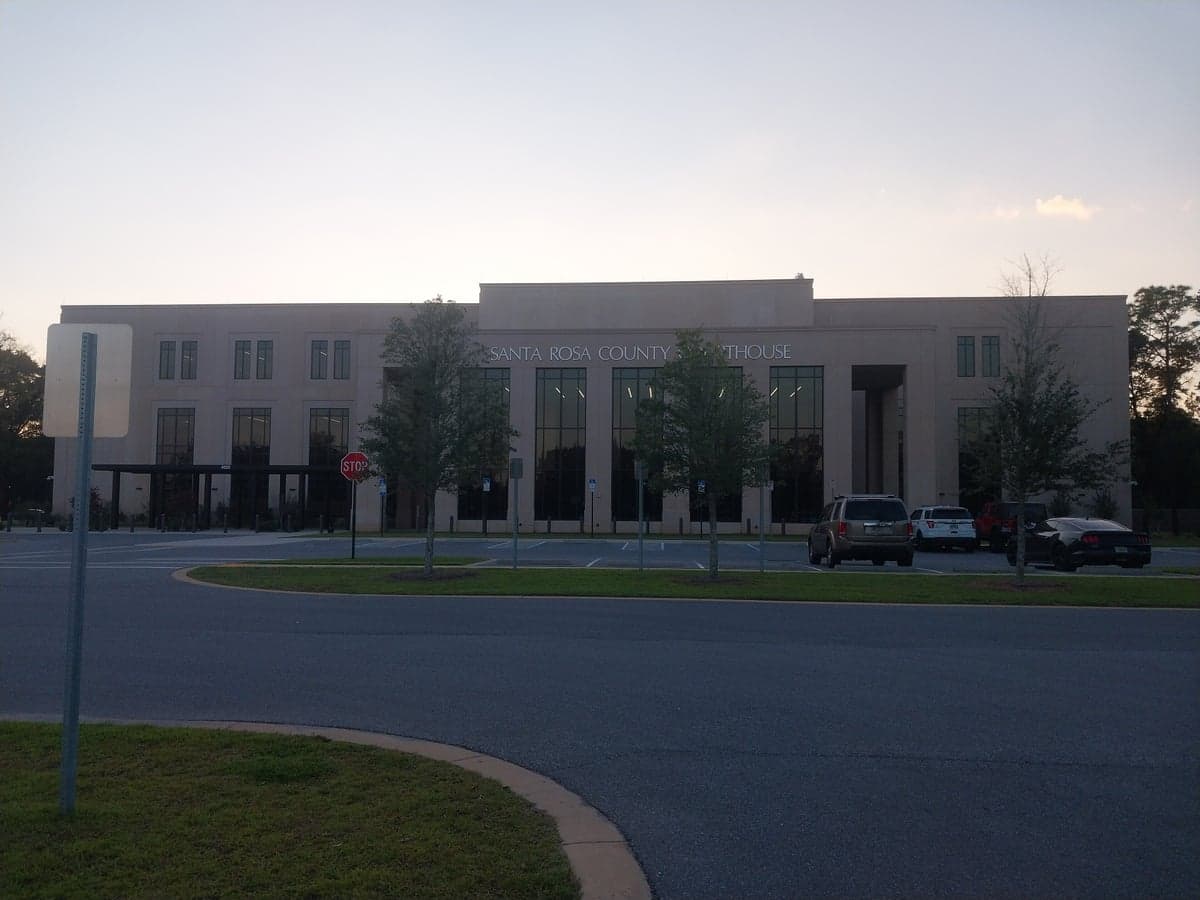
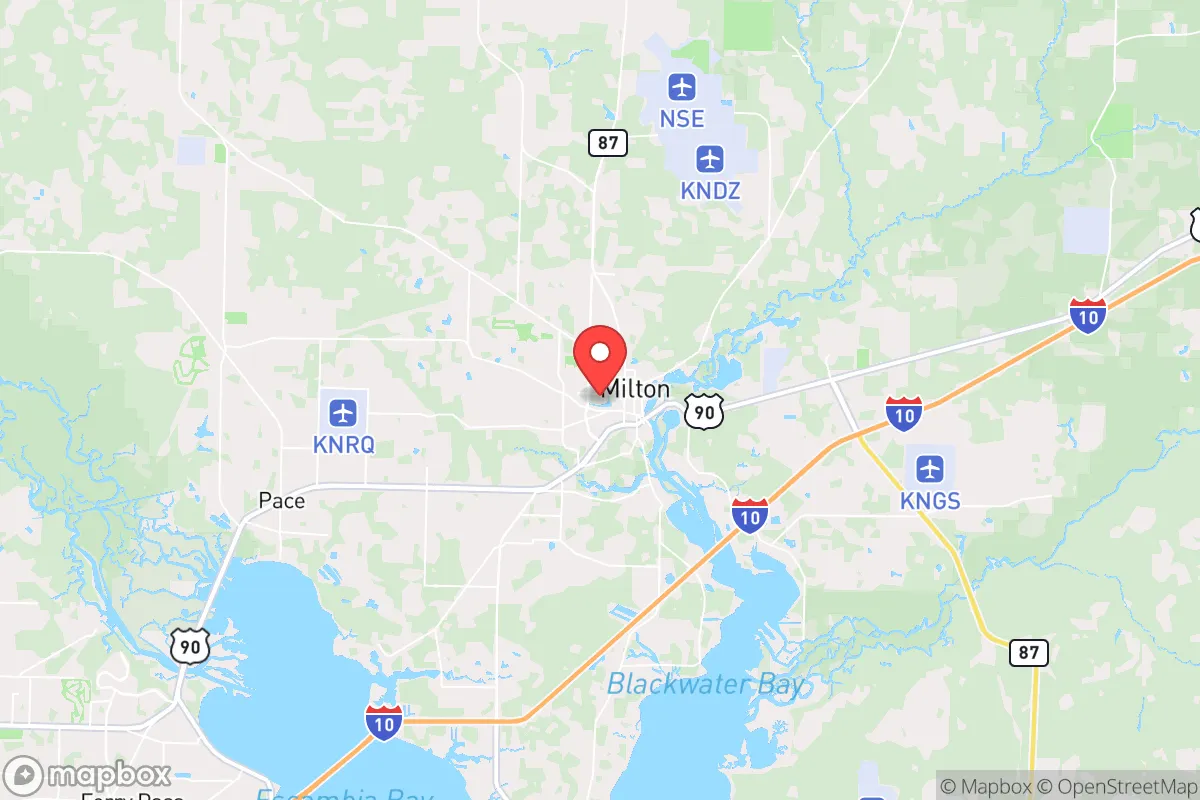
Photo: Wikipedia
Demographics of Milton, FL
Affluence Level in Milton, FL
A middle-class area roughly in line with national averages across income, home values, education, and employment.
People of Milton, FL
The people of Milton, Florida, today form a small, predominantly white community of roughly 10,500 residents, characterized by a strong military and working-class identity rooted in nearby Whiting Field Naval Air Station and local timber and manufacturing industries. With 84.3% of the population identifying as white and a foreign-born share of just 1.5%, Milton remains one of the least ethnically diverse cities in the Florida Panhandle, though a modest Hispanic presence (8.9%) and a small Black population (2.4%) add layers to its demographic fabric. The city’s identity is distinctly Southern and conservative, shaped by generations of families who have lived in Santa Rosa County for decades, and its low college attainment rate (21.9%) reflects a workforce oriented toward trades, military service, and blue-collar employment rather than white-collar professions.
How the city was settled and grew
Milton was originally settled in the early 19th century as a trading post along the Blackwater River, drawing its first permanent residents from the British-American frontier—primarily Scots-Irish and English families migrating from Georgia and the Carolinas. The city was formally incorporated in 1844, and its early growth was driven by the timber and naval stores industries, with the river serving as a highway for shipping lumber and turpentine. The historic Bagdad Village district, just across the river, became a hub for mill workers and their families, many of whom were of Scots-Irish descent and formed the backbone of the area’s Protestant, agrarian culture. A second wave of settlement came in the late 19th and early 20th centuries, when the railroad arrived and Milton became a shipping point for cotton and timber. This period saw the development of Historic Downtown Milton, where merchants, lawyers, and railroad workers built modest homes and storefronts, creating a tight-knit commercial core that remains the city’s symbolic heart. By the mid-20th century, Milton’s population was nearly entirely white and native-born, with a small Black community concentrated in the East Milton area, historically separated by the railroad tracks and the river.
Modern era (post-1965)
The post-1965 era brought significant demographic change to Milton, driven primarily by the expansion of Whiting Field Naval Air Station, which opened in 1943 but grew substantially after the Vietnam War. The base drew military families from across the United States, many of whom settled in newer subdivisions like Berrydale and Milton Heights, areas that saw rapid construction of ranch-style homes and townhouses in the 1970s and 1980s. These military transplants were overwhelmingly white and came from other parts of the South and Midwest, reinforcing the city’s existing cultural character. The Hispanic population, now 8.9%, began to grow in the 1990s and 2000s, largely through domestic migration from Texas and other Gulf states rather than direct immigration, with many Hispanic families settling in the West Milton corridor along Highway 90, where affordable housing and proximity to agricultural and construction jobs drew them. The Black population, however, has remained small and stable at 2.4%, with most Black residents living in the historic East Milton neighborhood, which has seen little new development or in-migration. The Asian population, at 1.1%, is almost entirely composed of East and Southeast Asian families (Vietnamese and Filipino) connected to the naval base, with no measurable Indian-subcontinent presence (0.0%). This period also saw a steady outflow of college-educated young adults, who tend to leave for Pensacola or larger cities, keeping Milton’s college attainment rate low at 21.9%.
The future
Milton’s population is projected to grow modestly over the next decade, driven by continued expansion at Whiting Field and spillover development from the Pensacola metropolitan area. The city’s demographic profile is likely to remain predominantly white, with the Hispanic share slowly increasing as families from Texas and other Southern states continue to move into West Milton and newer subdivisions like East Bay near the Blackwater River. The Black and Asian populations are expected to remain small, as Milton lacks the economic diversity or urban amenities that attract larger minority communities. The city’s cultural identity is becoming slightly more suburban and less rural, with new residents—many of them military retirees and commuters to Pensacola—pushing for more retail and infrastructure, while longtime families in Bagdad Village and Historic Downtown resist rapid change. Over the next 10-20 years, Milton will likely become a more dispersed, car-dependent community, with population growth concentrated along the Highway 90 corridor and near the base, while the historic core remains stable but aging.
For someone moving in now, Milton offers a stable, low-diversity community with a strong military and conservative identity, where the cost of living is low and the pace of life is slow. The city is not becoming more cosmopolitan or diverse; rather, it is slowly suburbanizing while retaining its core character as a white, working-class, Southern town. New arrivals should expect a place where family ties and church networks matter, where change comes gradually, and where the population’s future is tied more to the base and regional sprawl than to immigration or urban revival.

* Values derived from national, state, county, city and local statistics and may differ in a specific area. Last updated: 2026-11-08T01:59:48.000Z
Narrative content on this page is AI-generated and may contain mistakes. Verify any details that matter before acting on them.
ReloMaps may earn a commission from affiliate links at no extra cost to you.

