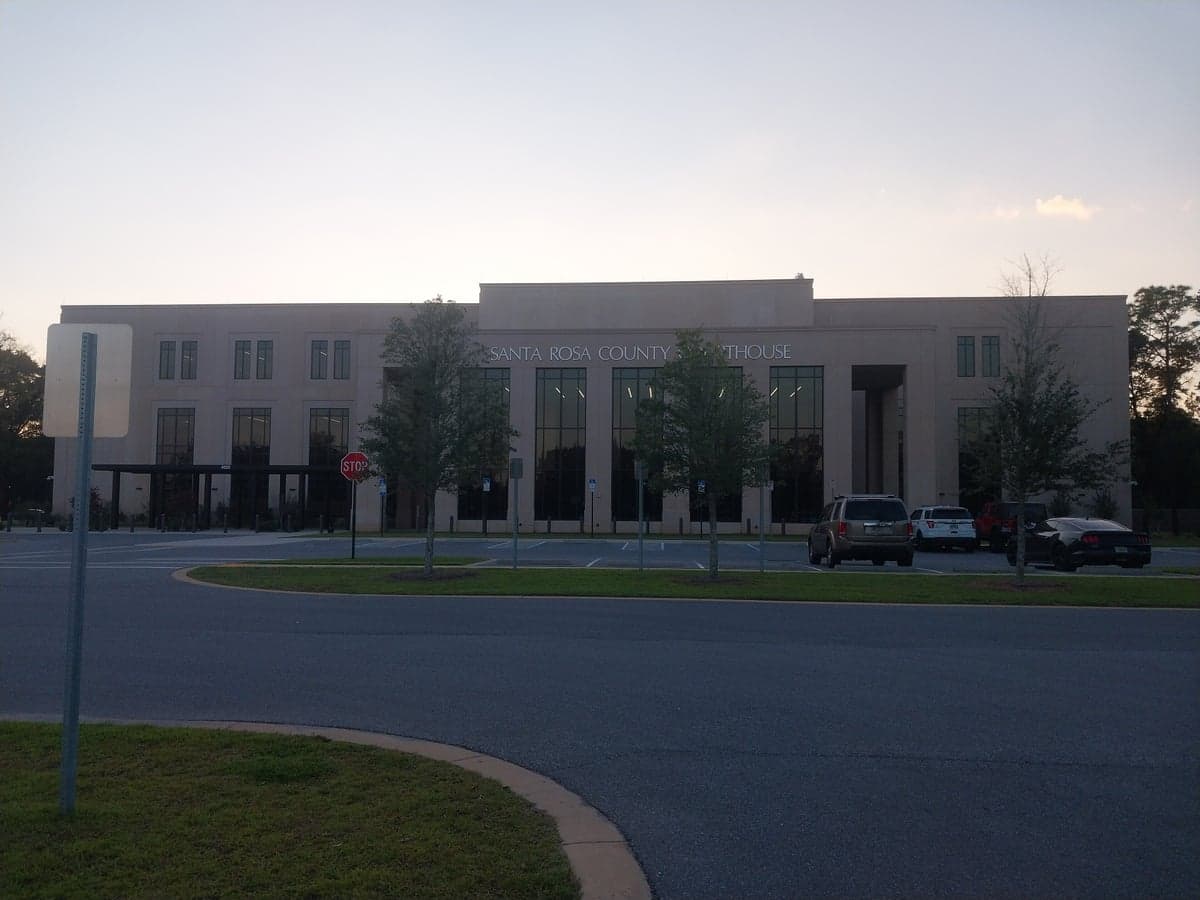
Photo: Wikipedia
Personal Sovereignty in Milton, FL
Viable for self-reliance. Generally workable, though some barriers may limit total independence.
What does Personal Sovereignty tell us?
Personal Sovereignty measures your capacity for self-reliance and independence with minimal government friction. Higher scores mean fewer barriers between you and the way you want to live... but it assumes you have the space you need and good neighbors.
What does this tell us?
Personal Sovereignty measures your capacity for self-reliance and independence with minimal government friction. Higher scores mean fewer barriers between you and the way you want to live... but it assumes you have the space you need and good neighbors.
State Policy
Energy independence: Importer (12% of energy produced in-state)
Personal Liberty
Homesteading

Personal Liberty Analysis
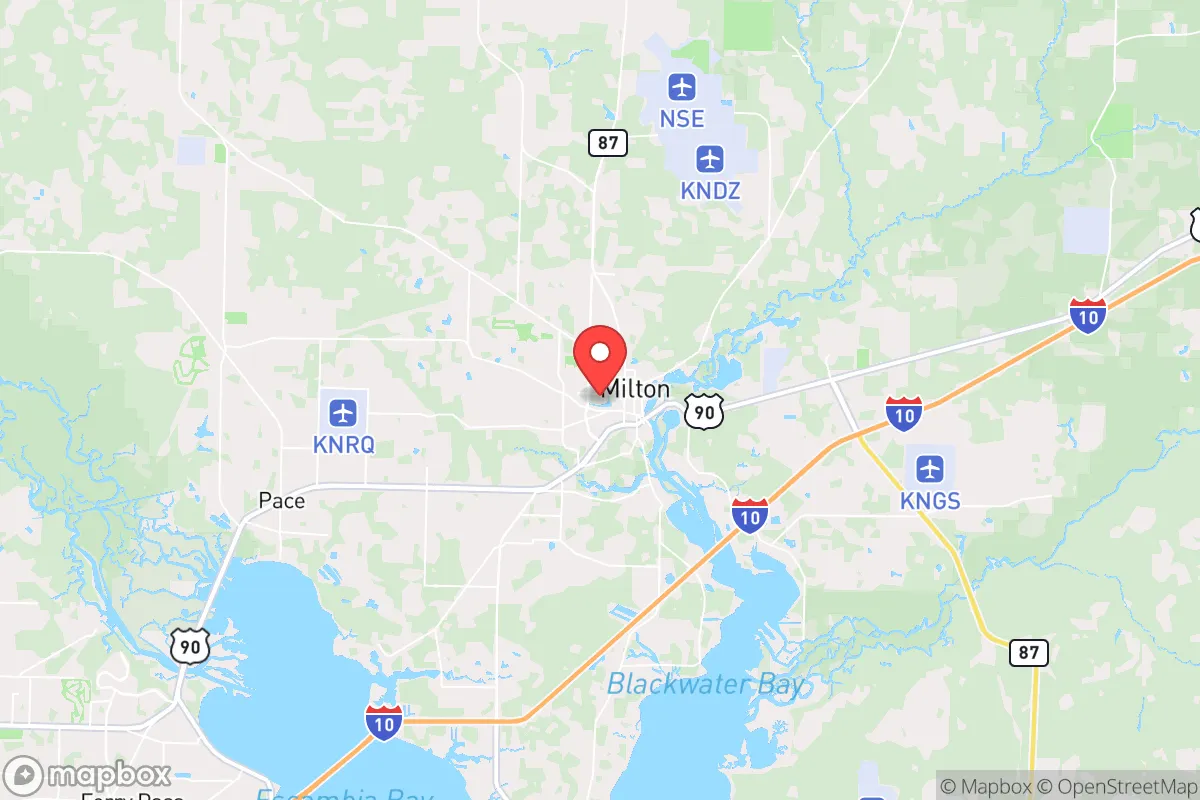
Milton, Florida, situated in Santa Rosa County just northeast of Pensacola, offers a personal sovereignty environment that is among the most favorable in the Florida Panhandle, driven by a combination of state-level preemption laws, a low local tax burden, and a culture that prizes self-reliance. The area’s autonomy profile is defined by Florida’s strong constitutional protections for gun rights, a regulatory climate that generally defers to property owners, and a legal framework that supports parental authority and medical choice. For individuals and families who prioritize independence from government overreach, Milton represents a strategic balance of rural freedom with access to the legal and economic infrastructure of a growing county.
Tax burden and regulatory posture: How light is the government footprint?
Milton’s tax environment is notably light, anchored by Florida’s absence of a state income tax, which immediately frees residents from the single largest tax most Americans pay. Santa Rosa County’s combined sales tax rate is 7.5% (6% state, 1.5% local), which is moderate for Florida but competitive nationally. Property taxes are a key advantage: the county’s millage rate for 2025 is approximately 4.5 mills for the general fund, with total effective rates (including school and special districts) typically ranging from 6.5 to 8.5 mills depending on the specific area. This is significantly lower than the national average of roughly 10 mills. Florida’s Save Our Homes amendment caps annual assessed value increases at 3% for homesteaded properties, providing long-term predictability for homeowners. The regulatory posture in Santa Rosa County is generally permissive. The county does not impose countywide zoning on agricultural or rural residential parcels outside city limits, meaning many properties are governed only by state building codes and basic health regulations. Milton’s city limits have standard zoning for subdivisions and commercial areas, but the surrounding unincorporated areas—where most new development occurs—operate under a relatively light touch. There is no countywide rental registration or inspection program, and business licensing requirements are minimal for home-based enterprises. Florida’s strong preemption laws prevent local governments from enacting ordinances stricter than state law on matters like firearms, short-term rentals, and occupational licensing, which further limits regulatory creep at the county level.
Self-defense and gun law specifics: What are the legal protections?
Florida is a “stand your ground” state with a strong castle doctrine, and Milton residents benefit from the full scope of these protections. No permit is required to openly carry a firearm (though a concealed carry permit is needed for concealed carry unless the individual qualifies under permitless carry provisions effective July 2023). Florida’s permitless carry law allows any law-abiding adult 21 or older to carry a concealed firearm without a license, though a permit remains useful for reciprocity in other states and for purchasing firearms without a background check delay. The state’s preemption statute (Florida Statute 790.33) is among the strongest in the nation, explicitly prohibiting local governments from enacting any ordinance that regulates firearms, ammunition, or accessories. This means Milton and Santa Rosa County cannot impose waiting periods, magazine capacity limits, or local gun registries. The county sheriff’s office is known for issuing concealed carry permits efficiently, with typical processing times under 90 days. For home defense, the castle doctrine provides a legal presumption that a person using deadly force against an intruder in their home, occupied vehicle, or occupied dwelling acted reasonably, with no duty to retreat. Stand your ground extends this to any place where a person has a legal right to be. There are no state-level red flag laws in Florida, though local law enforcement can petition for risk protection orders under a 2018 statute that was not repealed. In practice, Santa Rosa County has a low rate of such petitions. The legal environment strongly favors the defensive use of force, making Milton a high-sovereignty area for self-defense.
Self-reliance and homesteading viability: Lot sizes, zoning, and off-grid feasibility
Santa Rosa County’s land use regulations are conducive to self-reliance, particularly in the unincorporated areas surrounding Milton. Minimum lot sizes in the county’s agricultural and rural residential zones are typically 1 to 5 acres, with many parcels available in the 2- to 10-acre range. The county does not require connection to municipal water or sewer on parcels of 1 acre or more; wells and septic systems are standard. Off-grid feasibility is high: Florida law does not prohibit solar panel installation, and net metering is available through Gulf Power (now part of Florida Power & Light). However, the county does require a building permit for solar arrays, and the system must meet state electrical codes. Rainwater collection is legal and unregulated for non-potable uses, though potable use requires a permit from the county health department. Zoning for accessory dwelling units (ADUs) is permitted in most residential zones, allowing for multigenerational living or rental income. There are no countywide restrictions on keeping chickens, goats, or other small livestock on parcels of 1 acre or more, though city limits may have more restrictive ordinances. The county does not have a homestead exemption for personal property (like tools or vehicles) beyond the standard state exemption of $1,000, but Florida’s homestead protection for real property is robust: up to 160 acres in a county or half an acre in a city is fully protected from creditors. For those seeking to build a self-sufficient homestead, the regulatory barriers are low, with the main requirements being standard septic and well permits, which are processed in 2-4 weeks.
Personal liberties: Parental rights, medical autonomy, speech, and property
Florida has been at the forefront of parental rights legislation, and Milton residents benefit from these protections. The state’s Parental Bill of Rights (Florida Statute 1014) explicitly affirms that parents have the fundamental right to direct the upbringing, education, and health care of their minor children. This includes the right to opt children out of any school curriculum or activity, and to access all educational and medical records. Santa Rosa County School District has a conservative school board that generally defers to parental authority. Medical autonomy is supported by Florida’s lack of a state-level vaccine mandate for adults and the 2023 law prohibiting COVID-19 vaccine mandates by private employers (with some exceptions for healthcare). The state does not have a right-to-die law, but it does protect the right to refuse medical treatment. Speech protections are robust: Florida’s constitution provides stronger free speech protections than the U.S. Constitution in some areas, and the state has preempted local governments from regulating speech on public sidewalks and parks. Property rights are strongly protected under Florida’s Private Property Rights Protection Act (the “Bert Harris Act”), which allows property owners to seek compensation when a government regulation reduces property value by more than 50%. This is a powerful tool against regulatory takings. The county’s comprehensive plan is updated every 7 years, and public hearings are well-attended by residents who actively shape land use decisions. Overall, Milton’s legal environment is designed to maximize individual discretion in family, medical, and property matters, with minimal interference from local government.
Compared to other regions in the Southeast, Milton offers a notably high degree of personal sovereignty. The combination of no state income tax, strong gun preemption, permissive land use regulations, and robust parental rights places it in the top tier of Florida counties for autonomy. While it lacks the extreme libertarian ethos of some rural Western counties, it provides a practical, legally protected environment for individuals and families who want to live with minimal government interference. For a relocation researcher, Milton represents a stable, predictable jurisdiction where personal responsibility is the default, and the legal system supports rather than hinders self-reliance.

* Values derived from national, state, county, city and local statistics and may differ in a specific area. Last updated: 2026-11-08T01:59:48.000Z
Narrative content on this page is AI-generated and may contain mistakes. Verify any details that matter before acting on them.
ReloMaps may earn a commission from affiliate links at no extra cost to you.

