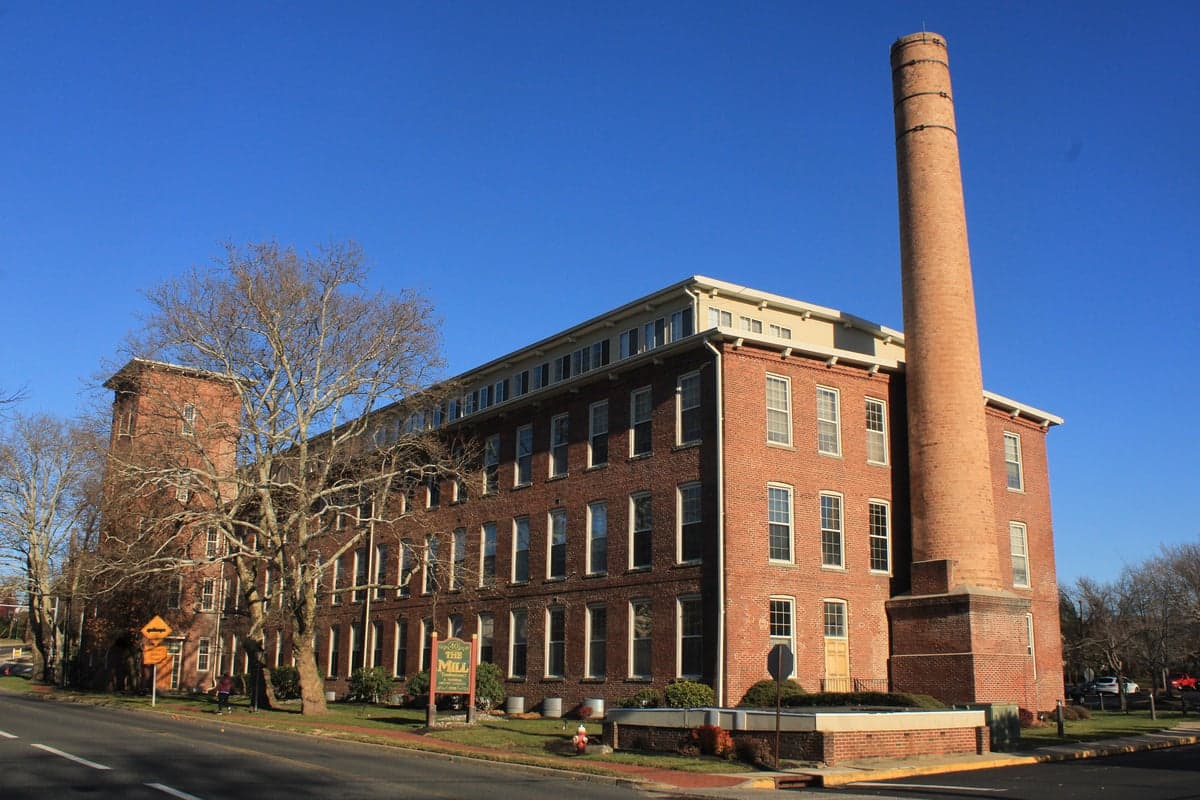
Photo: Wikipedia
Strategic Assessment of Milltown, NJ
High tactical risk. This location is likely close to major population centers, strategic targets, or sits in a high-disaster corridor. A retreat property and careful exit planning is required.
What does the Strategic Assessment tell us?
Our Strategic Assessment grades tactical survivability of an area. Major population centers, military targets, fallout zones, natural disasters, and border exposure all drive risk — lower exposure means a more defensible position in a crisis.
This is heavily inspired by Joel Skousen's Strategic Relocation book. Highly recommended you checkout the book ($)What does this tell us?
Our Strategic Assessment grades tactical survivability of an area. Major population centers, military targets, fallout zones, natural disasters, and border exposure all drive risk — lower exposure means a more defensible position in a crisis.
This is heavily inspired by Joel Skousen's Strategic Relocation book. Highly recommended you checkout the book ($)Strategic Pillars
Key Distances
Regional Safe Places
Below is our recommended "safe zones" in New Jersey and the surrounding area based on our strategic heuristics. For most people, it's unrealistic to live in a “safe zone” full-time due to work, family or other personal reasons. They tend to be more rural. However, many of these areas are perfect for second homes and retreat properties that double as a vacation home or even a short-term rental.
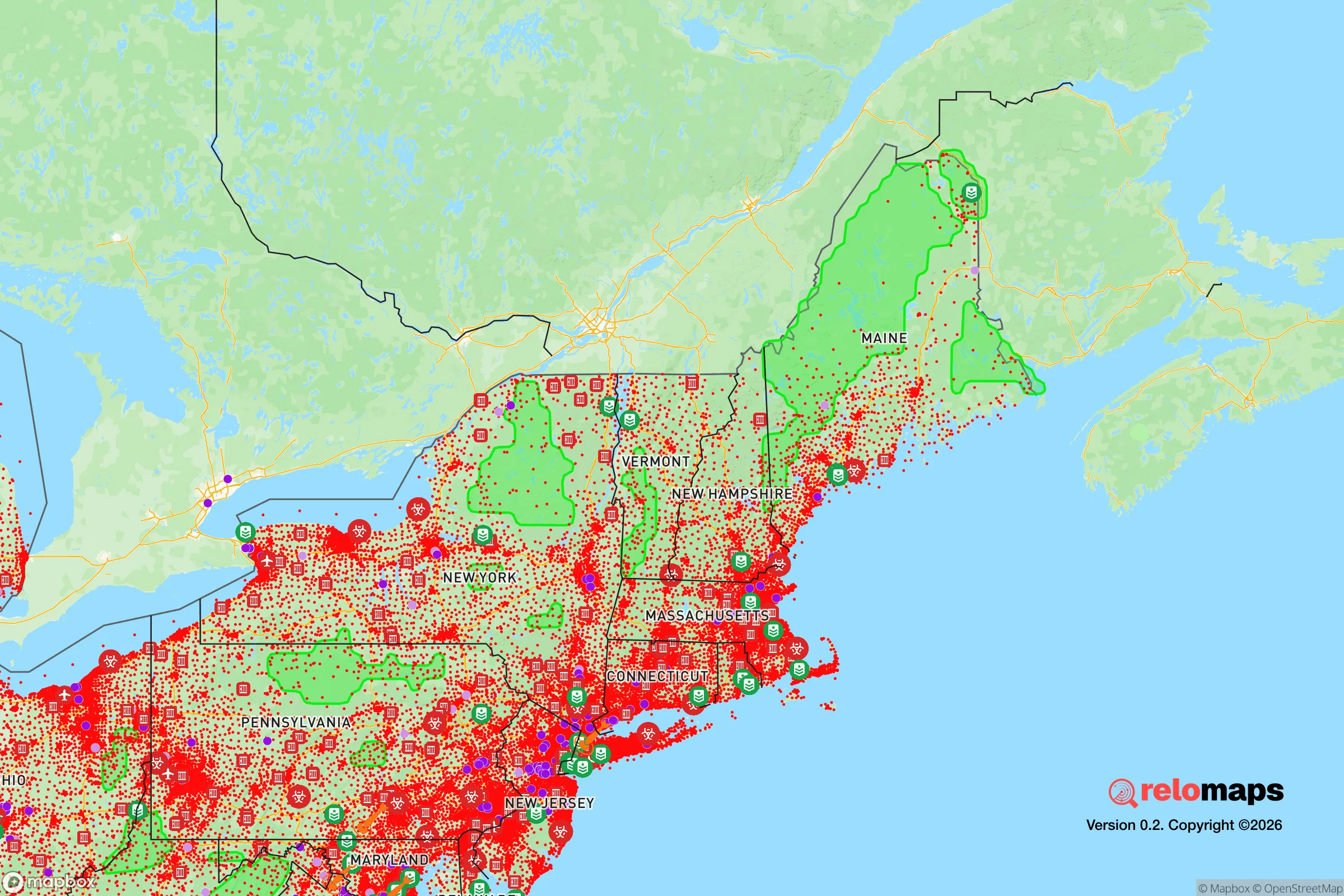
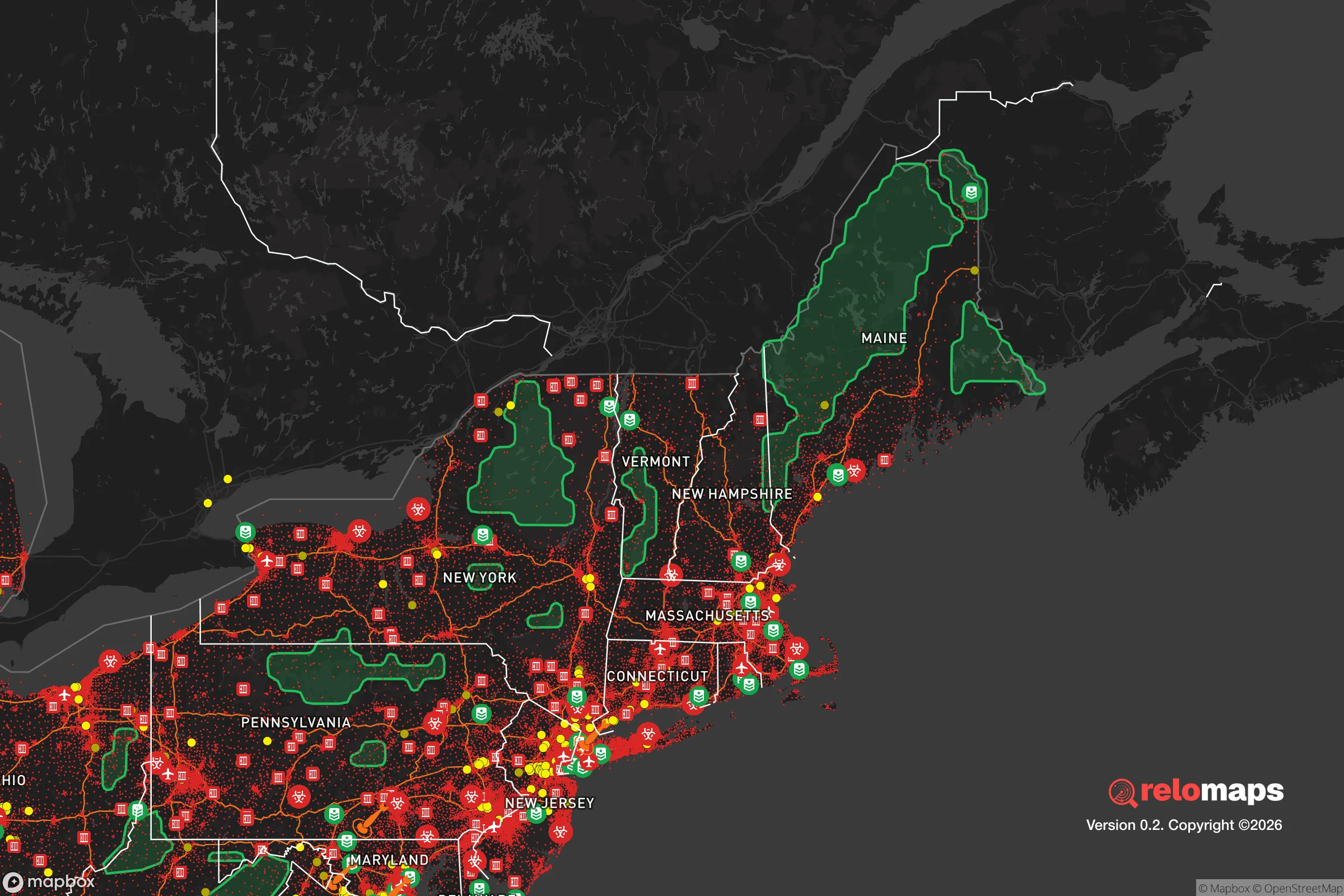


Important Note: For informational purposes only. This does not mean nothing bad ever happens in the green zones. Please use common sense. This is based on public data and modeled with AI. We tried to take a conservative approach but mistakes happen. We update this regularly as new information becomes available.
Solar Generator Recommendations
Backup power matters more here than in safer locations. We've picked three solar generators across budgets and capacity tiers — start with the budget unit if you only need a few essentials, or step up if you want to run a fridge and HVAC for days at a time.
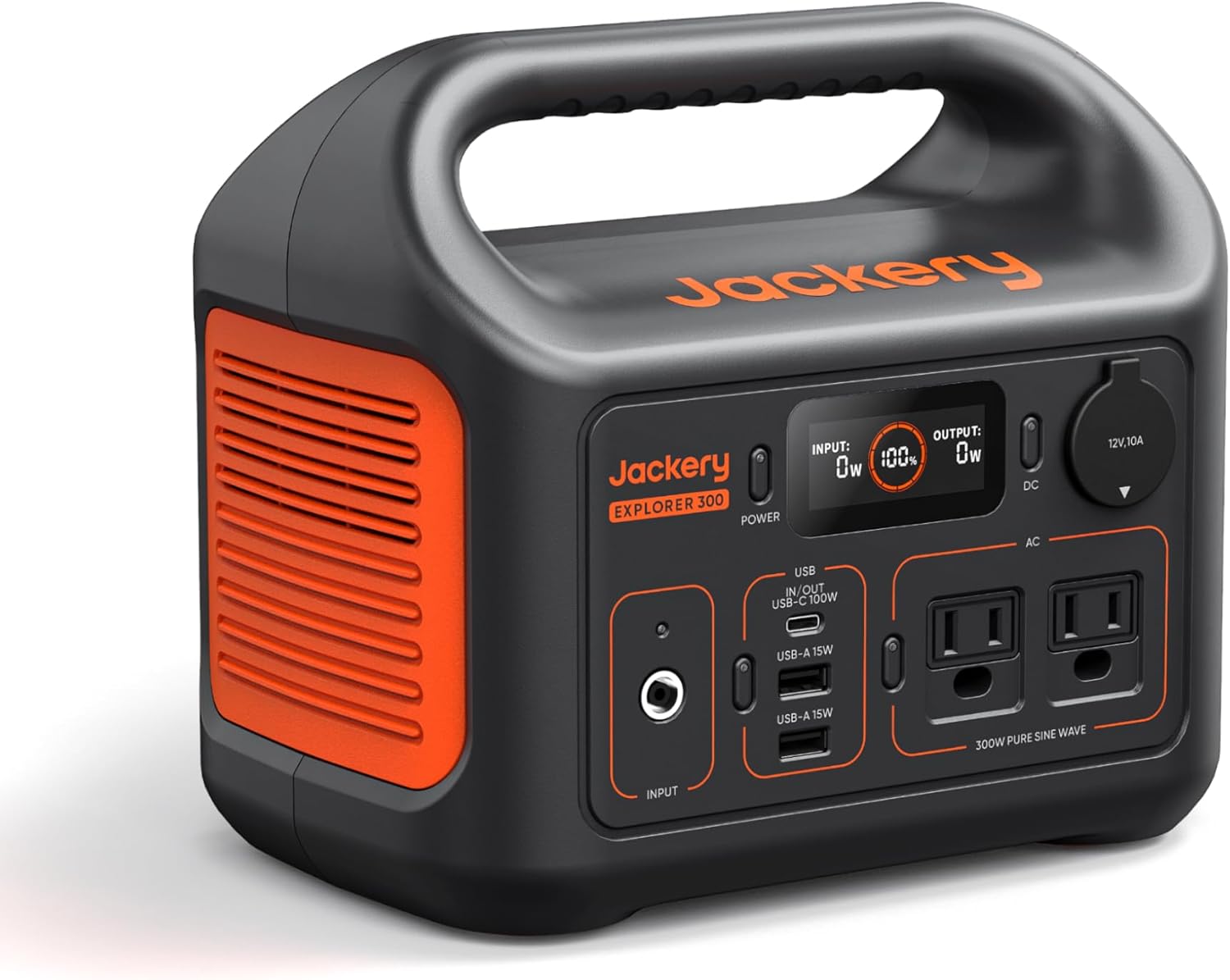
Jackery Portable Power Station Explorer 300
Budget OptionPower on the Go: Weighing only 11 lbs, it's convenient to set up and store with book-sized foldable solar panels

BLUETTI Portable Power Station AC180
Designed for both indoor and outdoor scenarios, AC180 is highly capable as it has a robost capacity and continuous output power.

EF ECOFLOW DELTA Pro Ultra Power Station
Upgraded PickEcoFlow DELTA Pro Ultra is a whole-home energy system designed to grow with your family. Integrated with the Smart Home Panel 2, it scales to meet your evolving energy needs — keeping your home powered, intelligent, and secure through every stage of life.
We earn a commission, at no additional cost to you.
Strategic Assessment Analysis
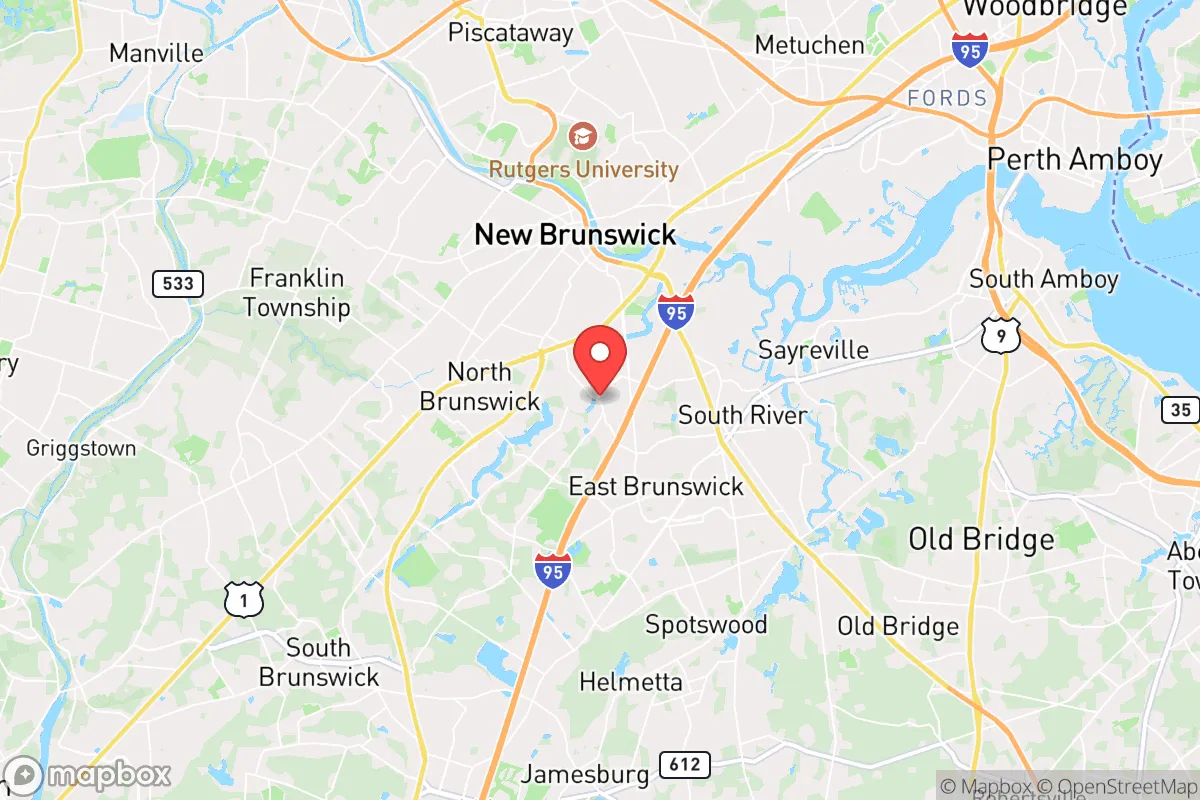
Milltown, New Jersey, occupies a strategic position in central Middlesex County that offers a mixed resilience profile for relocators prioritizing disaster readiness and self-sufficiency. Its location roughly 40 miles southwest of New York City and 20 miles northeast of Trenton places it within the dense Northeast Corridor, which brings both advantages in resource access and significant exposure to cascading risks from major urban centers. For a household thinking seriously about preparedness, Milltown’s small-town character—population around 7,000—provides a tighter community fabric than nearby suburbs, but its proximity to critical infrastructure and population-dense targets demands careful evaluation of geographic, man-made, and practical resilience factors.
Geographic position and natural advantages for preparedness
Milltown sits on the Raritan River, just south of where the Lawrence Brook joins it, giving the area a reliable surface water source—a meaningful asset for long-term water independence if properly treated. The surrounding terrain is predominantly flat to gently rolling, part of the Piedmont region, which limits natural defensibility but also reduces risks from landslides or severe topographic isolation. The area lies outside the 100-year floodplain for the most part, though properties immediately adjacent to the Raritan River or Lawrence Brook face periodic flood risk during heavy rain events, as seen during Hurricane Irene in 2011 and Tropical Storm Ida in 2021. Soils in the region are generally well-drained loams and sandy loams, suitable for small-scale food production, though suburban development has reduced available growing space. The climate is humid continental, with hot summers and cold winters, supporting a growing season of roughly 170–180 days—adequate for most temperate vegetables and fruits. Milltown is not in a designated earthquake hazard zone, and tornado activity is below the national average, with most severe weather coming from nor’easters and occasional thunderstorms. The area’s tree canopy is moderate, offering some windbreak and shade benefits but also presenting debris risks during ice storms or high winds. For a relocator, the natural advantages here are modest but real: water access, arable soil, and a climate that supports year-round food storage and seasonal growing, all within a setting that avoids the most extreme natural disaster exposures found in coastal or mountain regions.
Risks, exposures, and proximity to fallout-relevant landmarks
The most significant risk factor for Milltown is its position within the New York–Philadelphia–Newark metropolitan corridor, one of the most densely populated and economically critical regions in the United States. Milltown lies roughly 40 miles from Midtown Manhattan and about 20 miles from Newark, placing it within the moderate-to-heavy fallout zone for a ground-level nuclear detonation at either city. For a surface burst at a major urban target, prevailing westerly winds would carry fallout across central New Jersey, and Milltown’s location east-northeast of Philadelphia and south-southwest of New York means it could be downwind of multiple potential targets depending on weather patterns. The area is also within 15 miles of the Port of Newark and Elizabeth Marine Terminal, a critical logistics hub that would be a high-priority target in a conflict scenario. Additionally, Milltown is roughly 10 miles from the Raritan River’s industrial corridor, which includes chemical storage facilities, oil terminals, and pharmaceutical plants—any of which could become secondary hazards from conventional or terrorist attacks. On the natural hazard side, the area faces moderate risk from inland flooding during extreme precipitation events, and the aging stormwater infrastructure in older parts of town can be overwhelmed during heavy rains. Power outages are a recurring concern, with the region experiencing several multi-day outages in the past decade due to storms, including Superstorm Sandy in 2012 and Isaias in 2020. For a relocator, the man-made risks—proximity to high-value targets, industrial hazards, and dense urban populations—are the primary concern, outweighing natural disaster exposures. The area’s resilience is heavily dependent on regional infrastructure that could be compromised in a major event, making self-sufficiency planning essential rather than optional.
Practical resilience for a relocator: food, water, energy, and defensibility
For a household focused on practical resilience, Milltown offers a mixed picture. Water access is a genuine advantage: the Raritan River and Lawrence Brook provide surface water sources, and the area’s groundwater table is generally high, meaning wells are feasible for properties outside the municipal water system, though most homes in Milltown are on public supply. A household with a drilled well and a hand pump or solar-powered pump could maintain water independence, but those on municipal water would need to store at least two weeks’ supply—roughly 14 gallons per person—given the risk of regional infrastructure failure. Food resilience is more challenging. Milltown’s residential lots are typically small, with most homes on quarter-acre or smaller parcels, limiting space for substantial gardening. However, the town has several community garden plots, and the surrounding agricultural areas of Middlesex County—particularly toward Cranbury and Monroe—offer opportunities for leasing garden space or joining CSAs. Local farmers’ markets operate seasonally, and the area’s proximity to wholesale food distributors in the Northeast Corridor means that, under normal conditions, food access is excellent. For long-term self-sufficiency, a relocator would need to prioritize intensive gardening techniques, food preservation (canning, dehydrating), and bulk storage of staples. Energy resilience is a weak point. The grid in central New Jersey is reliable under normal conditions but vulnerable to storm-related outages, and natural gas service—common for heating and cooking—can be disrupted by earthquakes or infrastructure failures. Solar panels with battery storage are a viable option, as the area receives about 4.5 peak sun hours per day, but homeowners’ associations and local zoning may impose restrictions. Backup generators, preferably dual-fuel models, are a practical investment for short-to-medium outages. Defensibility is limited by the area’s flat terrain, dense suburban layout, and multiple road access points. Milltown is bordered by Route 18 and the Raritan River, with several bridges and major roads providing egress, but these same routes would be choke points during an evacuation. The town’s police department is small, and mutual aid agreements with surrounding municipalities would be strained during a regional crisis. For a relocator, the practical resilience picture is one where individual preparedness—water storage, food production, backup power, and community networking—can compensate for the area’s structural vulnerabilities, but it requires deliberate investment and planning.
The overall strategic picture for Milltown is that of a location with genuine but limited natural advantages, offset by significant man-made risks from its position within the Northeast Corridor. For a relocator who values proximity to employment and services while maintaining a small-town feel, Milltown offers a reasonable base for a preparedness-oriented household—provided the risks are acknowledged and mitigated through individual action. The area’s water access, moderate climate, and community resources provide a foundation, but the density of nearby targets, reliance on regional infrastructure, and limited defensibility mean that self-sufficiency is not a default state but an active project. A household that invests in water independence, food production capacity, backup energy, and strong local networks can achieve a meaningful level of resilience here, but those seeking a more inherently secure position—away from major urban corridors and critical infrastructure—would likely need to look farther west or north into less densely populated parts of New Jersey or Pennsylvania. Milltown is a viable option for the prepared relocator, not a sanctuary for the unprepared.

* Values derived from national, state, county, city and local statistics and may differ in a specific area. Last updated: 2026-11-13T09:20:28.000Z
Narrative content on this page is AI-generated and may contain mistakes. Verify any details that matter before acting on them.
ReloMaps may earn a commission from affiliate links at no extra cost to you.

