Photo: Wikipedia
Demographics of Milltown, NJ
Affluence Level in Milltown, NJ
A middle-class area roughly in line with national averages across income, home values, education, and employment.
People of Milltown, NJ
Milltown, New Jersey, is a small, densely settled borough of 6,994 residents that retains a distinctly blue-collar, family-oriented character rooted in its industrial past. The population is predominantly White (77.5%) with a growing Hispanic community (10.5%) and smaller Black (4.6%) and East/Southeast Asian (3.0%) populations, reflecting a modest but steady diversification over the past two decades. With 43.2% of adults holding a college degree, Milltown is more educated than the national average but remains a place where multi-generational families and a strong sense of local identity define daily life. The borough’s human history is a story of successive waves — German and Irish laborers, Eastern European factory workers, and more recently Hispanic and Asian families — each of whom settled in distinct pockets that still shape the community’s geography.
How the city was settled and grew
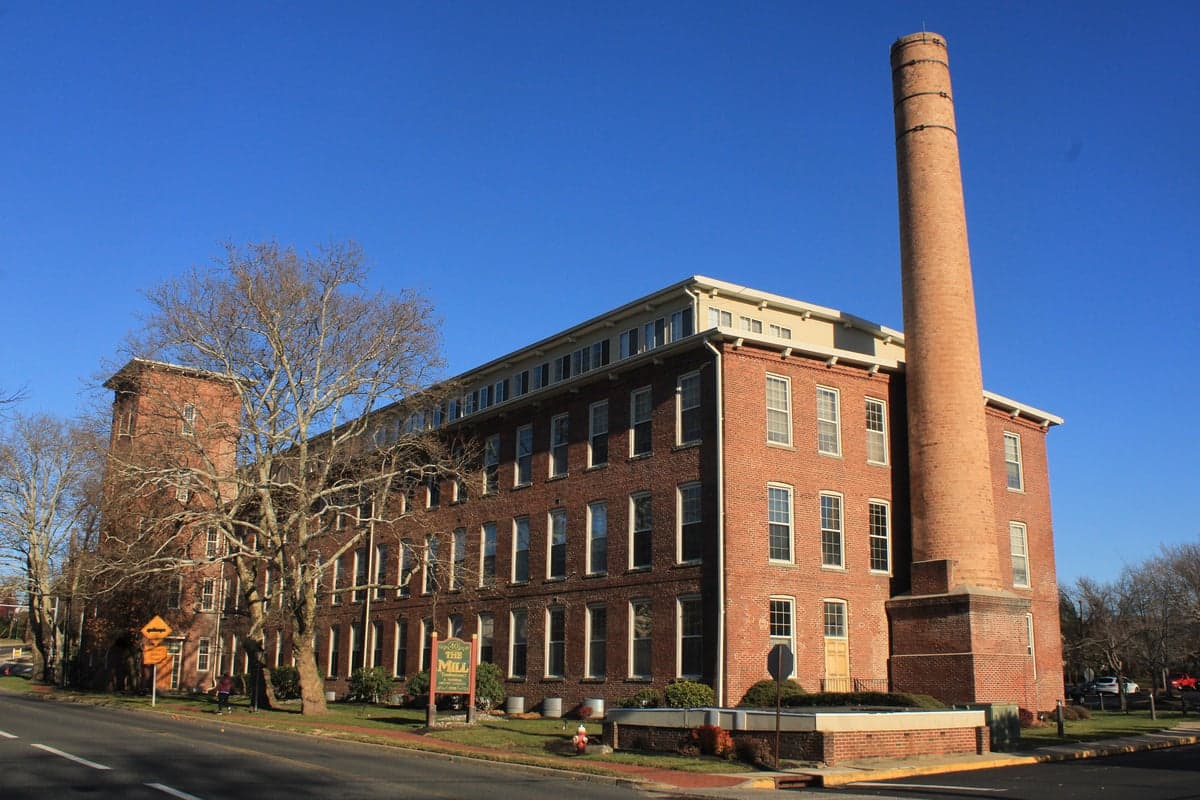
Milltown’s original population was drawn by the mills and factories that lined the Lawrence Brook and Raritan River in the early 19th century. The borough’s name itself comes from the gristmills and sawmills that powered the local economy, but the real population boom arrived with the rubber and textile industries after the Civil War. German and Irish immigrants built the first working-class neighborhoods along Main Street and Washington Avenue, where small rowhouses and two-family homes still stand today. By the early 1900s, a wave of Polish and Hungarian immigrants arrived to work in the mills, settling in the area around Riva Avenue and South Main Street, a district that became known informally as “the Flats” for its low-lying, flood-prone terrain. These Eastern European families established the Catholic parishes — notably St. Paul’s Church — that anchored community life for generations. Milltown incorporated as a borough in 1889, and its population grew steadily through the 1920s, topping 4,000 by 1930. The post-World War II era brought a second wave of domestic migration: returning veterans and their families moved into new single-family homes in the North Milltown section, particularly around Joyce Kilmer Avenue and Bevier Road, where larger lots and newer construction attracted upwardly mobile second- and third-generation descendants of the original immigrant groups.
Modern era (post-1965)
After the 1965 Immigration and Nationality Act, Milltown began a slow demographic shift that accelerated in the 1990s. Hispanic families — primarily of Puerto Rican and Dominican origin — began moving into the older housing stock along South Main Street and Riva Avenue, the same neighborhoods that had housed Eastern European immigrants a century earlier. This area, sometimes called Lower Milltown by locals, saw a visible change in storefronts and church congregations, with Spanish-language services appearing at St. Paul’s and several storefront evangelical churches opening on Main Street. The East/Southeast Asian population, while small at 3.0%, is concentrated in the newer subdivisions off Bevier Road and Joyce Kilmer Avenue, where professional families — many employed in the pharmaceutical and tech sectors along the Route 1 corridor — bought homes in the 2000s and 2010s. The Indian-subcontinent population remains negligible at 0.4%, with no distinct neighborhood concentration. Milltown’s Black population (4.6%) is dispersed across the borough, with no single majority-Black block, reflecting a pattern of gradual individual moves rather than chain migration. The foreign-born share of 9.1% is below the New Jersey state average of roughly 23%, indicating that Milltown remains a predominantly native-born community where newcomers are still a distinct minority.
The future
Milltown’s population is projected to remain stable or grow slowly, with the most significant change being the continued growth of the Hispanic share, which rose from roughly 6% in 2010 to 10.5% in the most recent estimates. This growth is concentrated in the older, more affordable housing stock of Lower Milltown and along Riva Avenue, where multi-generational households are common and home prices remain below the Middlesex County median. The East/Southeast Asian population is likely to grow modestly as well, driven by proximity to the Route 1 tech corridor and the Princeton-Johnson & Johnson employment axis, with new arrivals tending to buy in the North Milltown subdivisions rather than the historic core. The White population, while still the majority, is aging — many of the Polish and Hungarian descendants who grew up in the Flats have moved to larger homes in neighboring Monroe or South Brunswick, leaving behind a housing stock that is increasingly turning over to younger, more diverse families. The borough’s cultural identity is evolving from a tight-knit, ethnically European mill town into a more multi-ethnic, still-family-oriented suburb where the old parish boundaries are slowly giving way to newer community institutions.
For someone moving in now, Milltown offers a stable, safe, and increasingly diverse community where the cost of entry is lower than in nearby New Brunswick or Highland Park, but where the social fabric is still shaped by long-time residents and a strong sense of local history. The borough is becoming more Hispanic and more Asian, but at a gradual pace that preserves its essential character as a small, family-centered town. New arrivals will find a place where the old mill-town identity is still visible in the architecture and the street names, but where the people — like the population itself — are slowly changing.

* Values derived from national, state, county, city and local statistics and may differ in a specific area. Last updated: 2026-11-13T09:20:28.000Z
Narrative content on this page is AI-generated and may contain mistakes. Verify any details that matter before acting on them.
ReloMaps may earn a commission from affiliate links at no extra cost to you.

