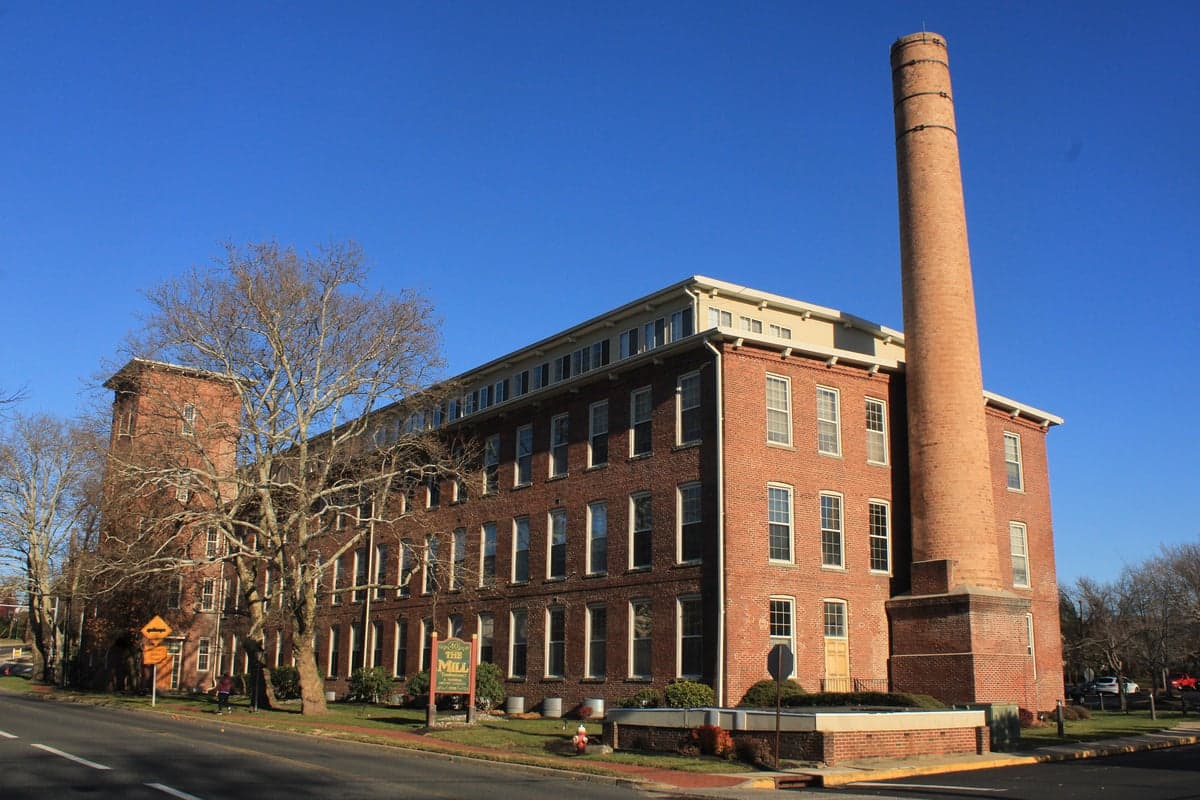
Photo: Wikipedia
Personal Sovereignty in Milltown, NJ
Viable for self-reliance. Generally workable, though some barriers may limit total independence.
What does Personal Sovereignty tell us?
Personal Sovereignty measures your capacity for self-reliance and independence with minimal government friction. Higher scores mean fewer barriers between you and the way you want to live... but it assumes you have the space you need and good neighbors.
What does this tell us?
Personal Sovereignty measures your capacity for self-reliance and independence with minimal government friction. Higher scores mean fewer barriers between you and the way you want to live... but it assumes you have the space you need and good neighbors.
State Policy
Energy independence: Importer (17% of energy produced in-state)
Personal Liberty
Homesteading

Personal Liberty Analysis
Milltown, New Jersey, operates within a state framework that is among the most regulatory and tax-intensive in the nation, which directly shapes the personal sovereignty available to its residents. For individuals and families who prioritize autonomy, the environment is one of managed freedom within a dense web of state-level mandates, local ordinances, and high fixed costs. While the borough itself is a small, established community in Middlesex County, the practical sovereignty a resident experiences is largely defined by New Jersey's posture on taxation, self-defense, property use, and personal liberties, rather than any uniquely local laissez-faire culture.
Tax burden and regulatory posture for residents and property owners
The most immediate constraint on personal sovereignty in Milltown is the financial and regulatory overhead of living in New Jersey. The state consistently ranks among the highest in the nation for combined property, income, and sales tax burdens. Milltown's effective property tax rate is substantial, driven by school and municipal levies, and the state's income tax rates are progressive, with top brackets exceeding 10%. This creates a high baseline cost for simply owning a home and earning income, which directly reduces the disposable income a family can allocate toward self-directed goals like savings, investment, or self-reliance projects. Beyond taxes, New Jersey's regulatory posture is heavy-touch across the board. The state imposes some of the strictest environmental regulations in the country, which affects everything from home renovations to land use. The New Jersey Department of Environmental Protection (NJDEP) has broad authority over property modifications, including stormwater management, tree removal, and shoreline activity, even on private land. For a homeowner in Milltown, any significant construction or landscaping project will likely require multiple permits and inspections at both the borough and state level. This regulatory density means that personal initiative on one's own property is often mediated by bureaucratic approval, a significant departure from areas with a more permissive, low-code environment.
Self-defense and gun law specifics in Milltown and New Jersey
For those prioritizing the right to self-defense, New Jersey's legal framework is among the most restrictive in the United States, and Milltown residents are fully subject to it. The state requires a Firearms Purchaser Identification Card (FPID) to purchase any long gun or handgun ammunition, and a separate Permit to Purchase a Handgun for each handgun transaction, each requiring background checks, fingerprinting, and references. Concealed carry is governed by the state's "justifiable need" standard, which, even after the Bruen decision, remains implemented through a rigorous permitting process that includes a multi-hour safety course, range qualification, and a thorough background investigation by local police. In practice, obtaining a carry permit in Middlesex County is a lengthy and uncertain process. Magazine capacity is limited to 10 rounds, and certain firearm features are banned under the state's assault weapons law. The legal environment strongly disincentivizes firearm ownership for self-defense due to the time, cost, and administrative hurdles involved. For a family moving from a more permissive state, the adjustment is significant: what is a constitutional right elsewhere is a heavily regulated privilege here, and the legal consequences for even technical violations can be severe.
Self-reliance and homesteading viability: lot sizes, zoning, and off-grid feasibility
Milltown is a densely developed suburban borough, and the feasibility of self-reliance or homesteading activities is extremely limited. Typical residential lot sizes are small, often a quarter-acre or less, and the borough's zoning code is designed for standard suburban residential use. Keeping livestock such as chickens or goats is generally prohibited or subject to strict limits, and large-scale gardening is constrained by lot size and neighborhood norms. The concept of "off-grid" living is effectively non-existent within the borough. New Jersey's building codes require connection to municipal water and sewer systems where available, and the state's energy regulations make solar net-metering possible but not a path to full independence. Rainwater collection for potable use is heavily regulated by the NJDEP. For a family seeking to grow a significant portion of their own food, generate their own power, or reduce reliance on municipal utilities, Milltown and its immediate suburban context offer very little room for such pursuits. The regulatory and physical environment is oriented toward consumption and compliance, not self-sufficiency. Those serious about homesteading would need to look to more rural areas of Hunterdon or Warren Counties, where larger parcels and more permissive zoning exist, though still within New Jersey's broader regulatory framework.
Personal liberties: parental rights, medical autonomy, speech, and property
On the spectrum of personal liberties, New Jersey leans toward a collective, state-directed approach in several key areas. Parental rights in education are more limited than in many other states. New Jersey mandates curriculum standards that include comprehensive health and sex education, and parents do not have a broad opt-out right for specific content, only for instruction on family life education. The state also has strong anti-discrimination laws that protect LGBTQ+ students, which can sometimes conflict with parental preferences regarding school policies. Medical autonomy is similarly constrained. New Jersey has strict vaccine mandates for school attendance, with limited philosophical or religious exemptions. During public health emergencies, the state has demonstrated a willingness to impose broad mandates. On speech and assembly, New Jersey generally protects First Amendment rights, but local ordinances in Milltown and surrounding areas may impose time, place, and manner restrictions on public gatherings. Property rights are the most constrained area. The combination of high property taxes, strict environmental regulations, and a robust eminent domain framework means that a property owner's control over their land is significantly limited compared to states with stronger property rights protections. The state's Mount Laurel Doctrine also mandates that municipalities provide their "fair share" of affordable housing, which can override local zoning decisions and affect property values and development patterns.
Overall, personal sovereignty in Milltown is best understood as a trade-off: residents gain access to strong public services, infrastructure, and a highly regulated social safety net, but they surrender a significant degree of individual autonomy in taxation, self-defense, property use, and personal decision-making. For a reader who prioritizes maximum personal freedom and self-reliance, Milltown and New Jersey as a whole represent a low-sovereignty environment compared to states in the South, Midwest, or Mountain West. The practical reality is that daily life involves navigating a dense regulatory landscape, high fixed costs, and limited scope for independent action outside of state-approved channels. This is not a judgment of the area's quality, but a factual assessment of the autonomy environment for a relocation decision.

* Values derived from national, state, county, city and local statistics and may differ in a specific area. Last updated: 2026-11-13T09:20:28.000Z
Narrative content on this page is AI-generated and may contain mistakes. Verify any details that matter before acting on them.
ReloMaps may earn a commission from affiliate links at no extra cost to you.

