 Popular
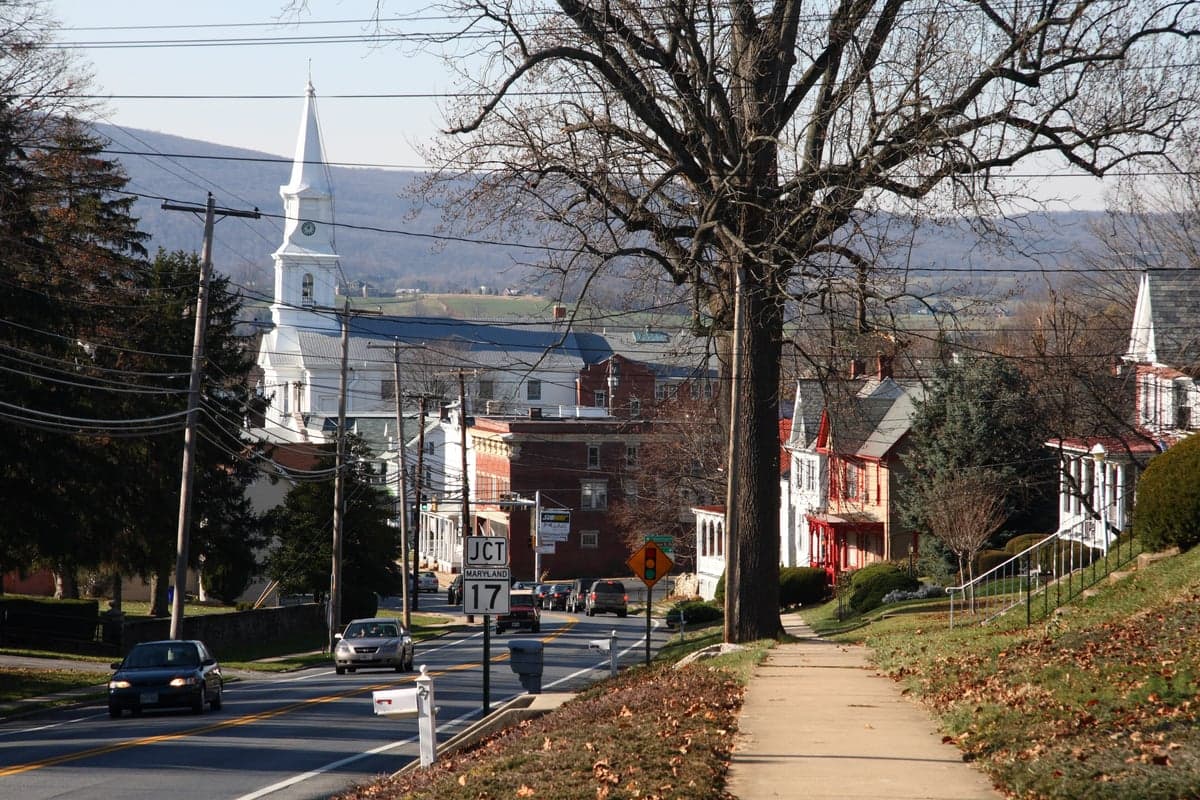
Photo: Wikipedia
Quality of Life in Middletown, MD
A high quality of life with strong walkability, manageable living costs, healthy neighborhood signals, and solid amenity access.
What does Quality of Life tell us?
Quality of Life blends cost of living, nearby amenities, socioeconomic signals, and neighborhood character. City-level scores represent the whole municipality; individual neighborhoods can differ.
What does this tell us?
Quality of Life blends cost of living, nearby amenities, socioeconomic signals, and neighborhood character. City-level scores represent the whole municipality; individual neighborhoods can differ.
Cost of Living
65% above national average
The Real Cost of Living in Middletown, MD for 2026
| Tier | Individual | Family (4) |
|---|---|---|
| Survival | $27k | $51k |
| Comfortable | $106k | $156k |
| Luxury | $222k+ | $343k+ |
| Elite (Top 5%) | $261k+ | $404k+ |
102%
The Area Signal
A metric tracking the socioeconomic signals of the area.
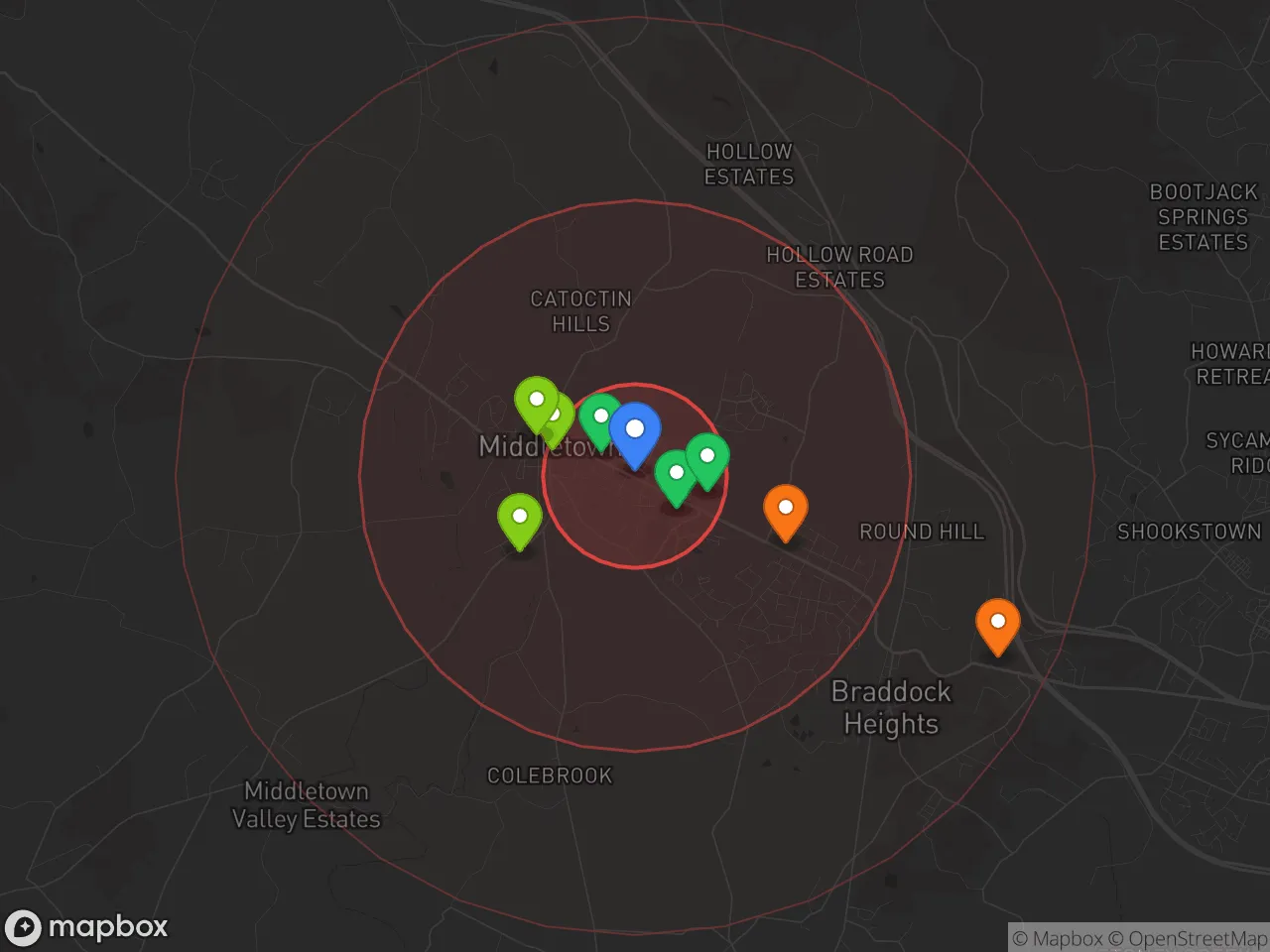
Hobbies
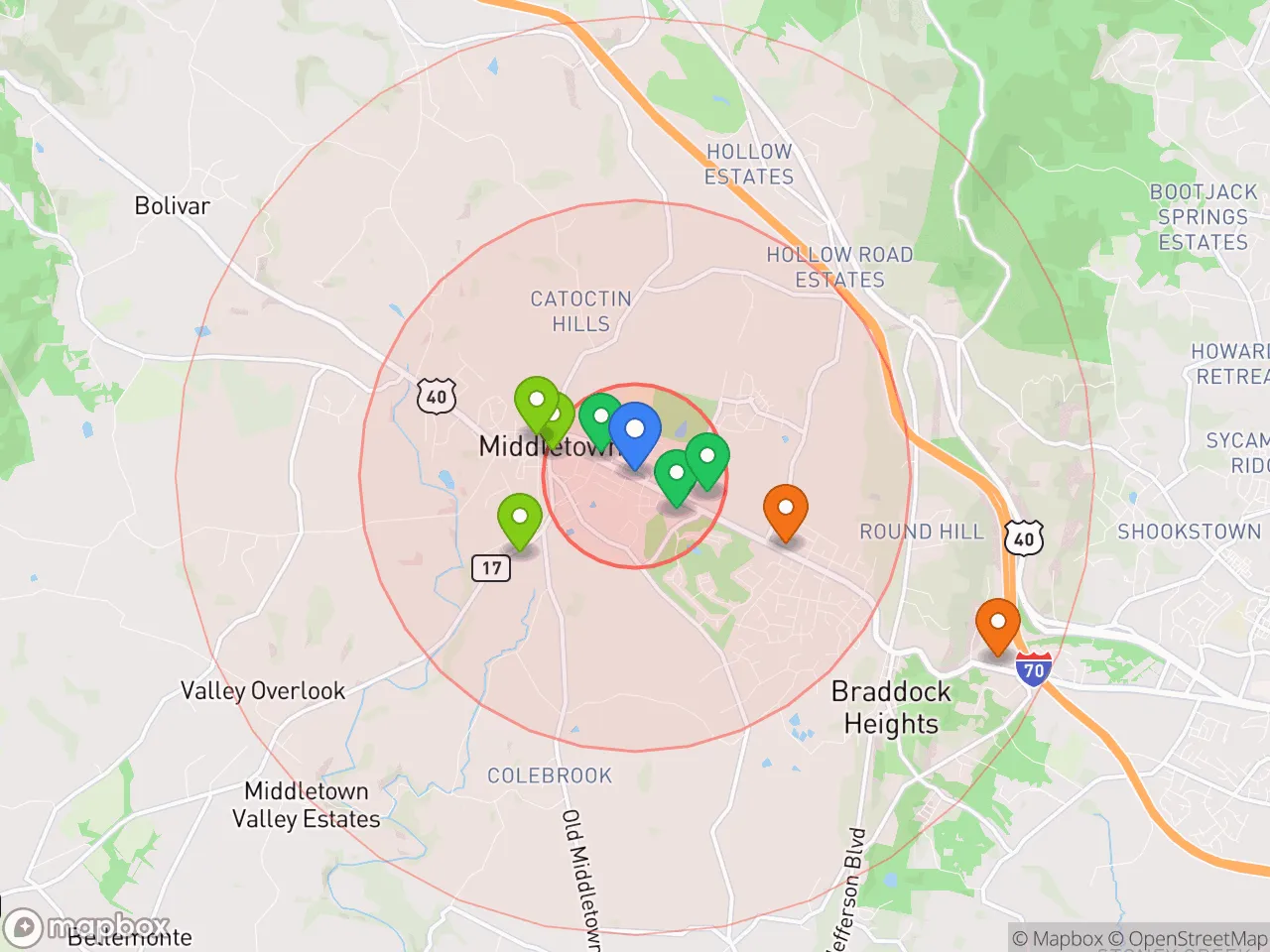
Explore the areaGroceries
8 within 10 miles
Gas
20 within 10 miles
Hospital
5 within 20 miles
Airport
IAD — Washington Dulles International
Post Office
USPS — Middletown, MD
Critical Amenities
Quality-of-Life Analysis
Middletown, Maryland, is an affluent Frederick County town where the cost of living index sits at 165—65 percent above the national average—reflecting a community of professionals, federal employees, and families who prioritize top-rated schools and small-town character over urban affordability. The median home value of $545,100 and median rent of $1,695 place it among the pricier options in the region, yet the town’s low crime rates, strong civic engagement, and proximity to both Washington, D.C., and Baltimore attract residents willing to pay a premium for a slower, safer pace of life.
Cost of living and housing affordability compared to Frederick and Hagerstown
With a cost-of-living index of 165, Middletown is significantly more expensive than the U.S. average and notably pricier than nearby Hagerstown (index ~90) but roughly on par with central Frederick. The median home value of $545,100 is about $100,000 higher than the Frederick County median, driven by limited inventory, historic housing stock, and consistent demand from D.C.-area commuters. Renters face a median of $1,695 per month, which is competitive with Frederick City but well above Hagerstown’s typical $1,100–$1,300 range. The average commute of 31.4 minutes—longer than the national average of 26 minutes—reflects the trade-off many residents accept: a longer drive to jobs in Frederick, Germantown, or the I-270 corridor in exchange for a quieter, more spacious home in a historic town setting. Property taxes in Frederick County hover around 1.06 percent of assessed value, adding roughly $5,800 annually on a median-priced home, which is moderate for the D.C. metro but high compared to rural Maryland counties.
Schools, local amenities, and the daily rhythm of life in Middletown
Middletown’s daily life revolves around its walkable historic district, community events like the Middletown Heritage Festival, and the highly regarded Frederick County Public Schools system. Middletown High School consistently ranks among the top 20 percent of Maryland high schools, with strong test scores and a 93 percent graduation rate, which is a primary draw for families. Local amenities include the Middletown Public Library, a handful of locally owned restaurants and shops along Main Street, and easy access to the Appalachian Trail and South Mountain State Park for hiking and cycling. The town lacks a major grocery store within its limits—most residents drive 10 minutes to the Giant or Weis in Frederick—and nightlife is minimal, with most dining and entertainment options concentrated in Frederick City, 15 minutes east. The daily rhythm is quiet and family-oriented: kids walk to school, neighbors gather at the town park, and weekend traffic is light except during seasonal festivals. Commuters typically leave by 6:30–7:00 a.m. to beat the worst of I-270 congestion, returning by 6:00 p.m. to a town that largely shuts down after 9 p.m.
Middletown is best suited for families and professionals who value excellent public schools, low crime, and a tight-knit historic community, and who can absorb the high housing costs and long commute. Retirees and remote workers also thrive here, especially those who want proximity to Frederick’s medical facilities and D.C.’s cultural offerings without living in a dense suburb. Singles and young renters on a tighter budget may find the limited rental stock and high cost-to-amenity ratio frustrating, and the lack of nightlife or walkable commercial districts can feel isolating. For those who prioritize safety, school quality, and small-town identity over convenience and affordability, Middletown remains one of Maryland’s most desirable small towns.

Crime in Middletown, MD
Higher crime rates than 58% of comparable U.S. locations.
Violent CrimeViolent Crime Analysis
Property CrimeProperty Crime Analysis
Crime Analysis
Middletown, Maryland, presents a mixed safety profile for prospective residents. The town’s violent crime rate of 364.1 per 100,000 residents is notably higher than the national average, while its property crime rate of 1,849.2 per 100,000 sits slightly below the national benchmark. However, as a small town within commuting distance of the Washington, D.C. and Baltimore metro areas, Middletown is subject to the broader regional crime trends and justice system policies that can elevate risk for residents.
Crime in context
Middletown’s violent crime rate is roughly 1.5 times the national average of about 230 per 100,000, placing it in a higher-risk category for a community of its size. The property crime rate, while lower than the national figure of approximately 1,950 per 100,000, still represents a tangible threat to households. These figures are influenced by the town’s location within the larger Frederick County and its proximity to the liberal-leaning justice systems of major metro areas. Progressive prosecutorial policies in nearby jurisdictions, which often prioritize diversion and reduced sentencing, can result in repeat offenders cycling back onto the streets, directly impacting smaller communities like Middletown that share regional law enforcement resources and face spillover crime from larger urban centers.
What residents experience
For those living in Middletown, the elevated violent crime rate means that incidents such as aggravated assault and robbery are not abstract statistics but real, if infrequent, occurrences. The property crime rate, while near the national average, translates into a tangible risk of burglary, theft, and vehicle break-ins. Residents should be aware that the town’s relative quiet can be deceptive; the influence of progressive criminal justice reforms in the broader metro area—including lenient bail policies and soft-on-crime sentencing guidelines—can embolden offenders who view suburban towns as softer targets. This dynamic creates a situation where property crime can spike unpredictably as criminals travel from high-crime urban cores into surrounding communities.
Neighborhood-level variation
Safety in Middletown is not uniform. The historic core and newer subdivisions on the town’s outskirts tend to experience lower crime rates, benefiting from stronger neighborhood watch presence and less foot traffic from transients. In contrast, areas near major commuter routes and the town’s commercial corridors see higher rates of property crime, particularly theft from vehicles. While no neighborhood is immune to the regional crime pressures, homes closer to the town’s police station and main thoroughfares generally report fewer incidents. Prospective residents should prioritize properties with good street lighting and active community engagement, as these factors provide a meaningful buffer against the broader metro-area crime trends that affect even small towns like Middletown.
* Values derived from national, state, county, city and local statistics and may differ in a specific area. Last updated: 2026-10-10T16:28:18.000Z
Narrative content on this page is AI-generated and may contain mistakes. Verify any details that matter before acting on them.
ReloMaps may earn a commission from affiliate links at no extra cost to you.

