 Popular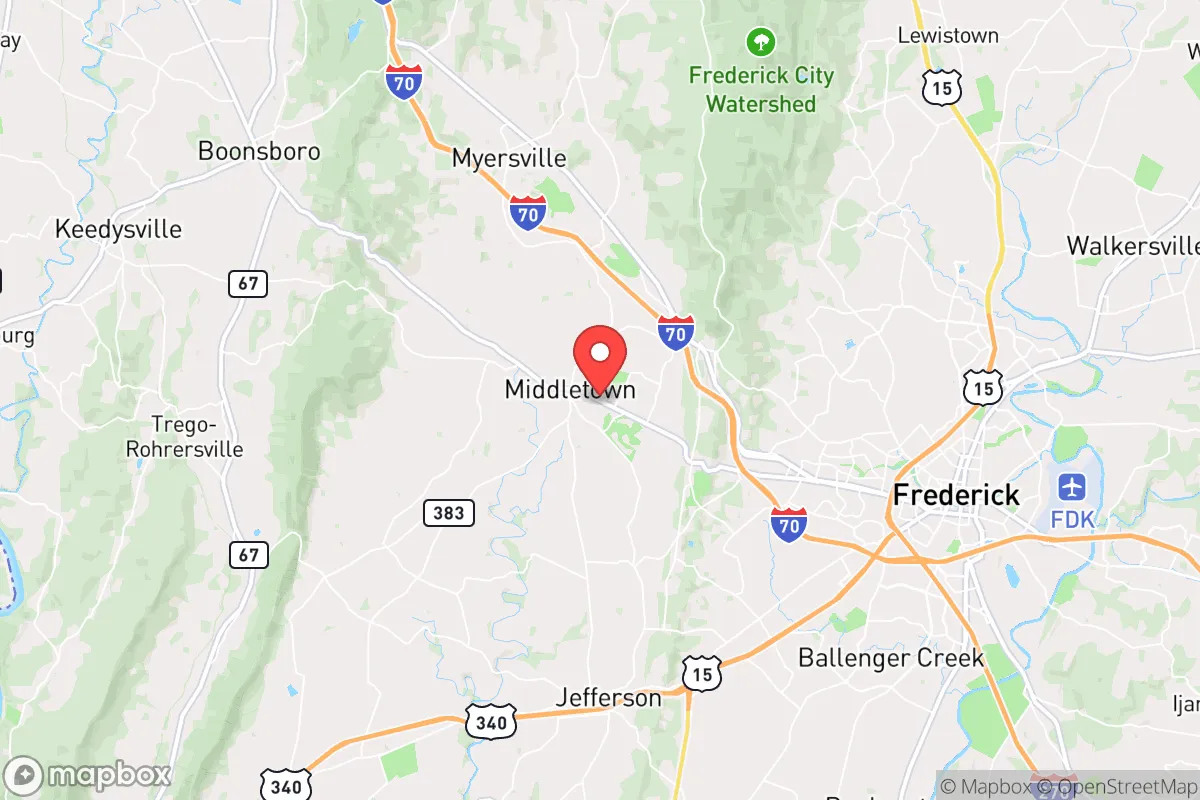
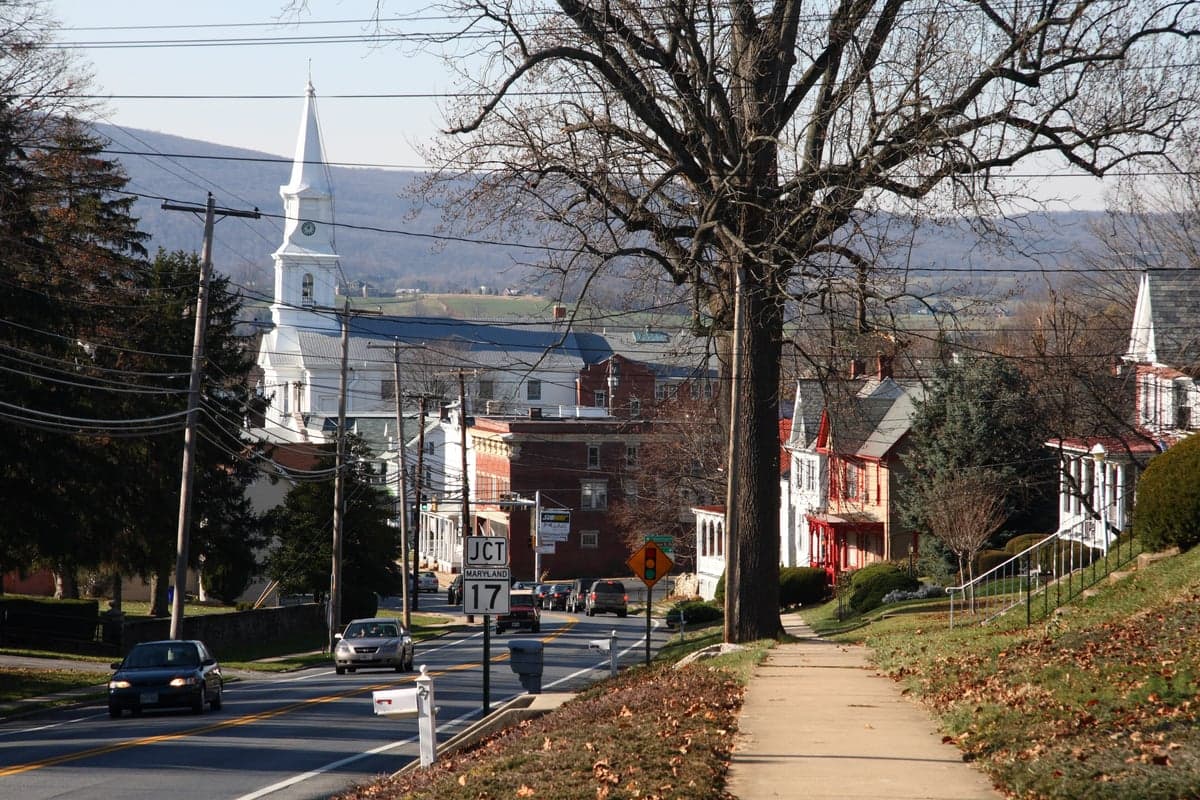
Photo: Wikipedia
Personal Sovereignty in Middletown, MD
Viable for self-reliance. Generally workable, though some barriers may limit total independence.
What does Personal Sovereignty tell us?
Personal Sovereignty measures your capacity for self-reliance and independence with minimal government friction. Higher scores mean fewer barriers between you and the way you want to live... but it assumes you have the space you need and good neighbors.
What does this tell us?
Personal Sovereignty measures your capacity for self-reliance and independence with minimal government friction. Higher scores mean fewer barriers between you and the way you want to live... but it assumes you have the space you need and good neighbors.
State Policy
Energy independence: Importer (8% of energy produced in-state)
Personal Liberty
Homesteading

Personal Liberty Analysis
Middletown, Maryland offers a nuanced personal sovereignty environment that balances small-town autonomy with the realities of a state known for its regulatory density. While Maryland as a whole leans toward progressive governance, Middletown’s location in Frederick County—a more politically mixed area—provides residents with a degree of local control and community-level independence that is harder to find closer to the Washington, D.C. or Baltimore metro areas. For individuals and families who prioritize personal freedom, the key is understanding where state-level constraints end and local flexibility begins.
Tax burden and regulatory posture in Frederick County
Maryland’s tax burden is among the highest in the nation, and residents of Middletown are not exempt from that reality. The state imposes a progressive income tax with rates ranging from 2% to 5.75%, and Frederick County adds a local income tax of 2.96%, bringing the combined top marginal rate to roughly 8.71%. Property taxes in Middletown are moderate for the region: the town’s property tax rate is approximately $0.24 per $100 of assessed value, with Frederick County adding roughly $1.06 per $100, totaling around $1.30 per $100. While this is lower than in Montgomery or Howard counties, it is still higher than in many parts of the South or Midwest. The regulatory posture in Middletown is generally business-friendly at the local level, but state-level regulations—particularly around environmental permitting, land use, and business licensing—add layers of compliance that can feel heavy for entrepreneurs or those accustomed to less oversight. For a relocation audience that values low tax burdens, Maryland’s overall fiscal climate is a significant factor to weigh, though Middletown’s position in Frederick County offers a relative reprieve compared to the state’s highest-tax jurisdictions.
Self-defense and gun law specifics in Maryland
Maryland’s firearm laws are among the most restrictive in the country, and this directly impacts personal sovereignty for those who prioritize self-defense. The state requires a Handgun Qualification License (HQL) to purchase a handgun, which involves a background check, fingerprinting, and a four-hour training course. Additionally, Maryland has a “may issue” concealed carry permit system, though the 2022 Supreme Court decision in New York State Rifle & Pistol Association v. Bruen forced the state to loosen its requirements. As of 2024, Maryland’s carry permit process is still more burdensome than in “shall issue” states, requiring a live-fire qualification, references, and a demonstrated “good and substantial reason” that goes beyond general self-defense. The state also bans certain “assault weapons” and limits magazine capacity to 10 rounds. For residents of Middletown, local law enforcement in Frederick County is generally professional and not hostile to lawful gun owners, but the legal framework is undeniably restrictive. Anyone relocating from a more permissive state should expect a significant adjustment in both the process and the limitations on firearm ownership and carry.
Self-reliance and homesteading viability in Middletown
Middletown’s zoning and lot size regulations offer moderate opportunities for self-reliance, but with clear limits. The town itself is a historic, walkable community with standard residential lots typically ranging from a quarter-acre to half an acre, which constrains large-scale gardening or livestock keeping. However, the surrounding unincorporated areas of Frederick County—particularly along the rural routes leading to Burkittsville, Jefferson, and the Catoctin Mountains—offer agricultural zoning with minimum lot sizes of 2 to 5 acres, where chickens, goats, and even small-scale farming are feasible. Off-grid living is legally challenging in Maryland: the state requires connection to the electrical grid for new construction in most areas, and well and septic systems are permitted but subject to strict health department regulations. Solar panels are allowed and even incentivized, but full energy independence is difficult due to net metering caps and permitting requirements. Rainwater collection is legal but limited to non-potable uses. For those seeking a homesteading lifestyle, the rural parts of Frederick County provide more latitude than Middletown proper, but the regulatory environment is still heavier than in states like West Virginia or Pennsylvania, which are just a short drive away.
Personal liberties: parental rights, medical autonomy, speech, and property
Maryland’s legal landscape on personal liberties is mixed, with strong protections for some rights and notable constraints on others. Parental rights in education have become a flashpoint: Maryland law requires school boards to adopt policies that affirm LGBTQ+ students’ identities, and parents do not have a blanket opt-out for curriculum materials they find objectionable, though local school boards in Frederick County have shown some responsiveness to parent input. Medical autonomy is limited by state mandates: Maryland has a vaccine requirement for school attendance (with medical and religious exemptions available), and the state’s health exchange and insurance regulations are robust, which can feel intrusive to those who prefer minimal government involvement in healthcare decisions. Free speech is broadly protected, though Maryland has a “false light” privacy tort and anti-SLAPP laws that are weaker than in some other states, which could be a concern for activists or journalists. Property rights are generally respected, but Maryland’s strong environmental regulations—including the Critical Area Law for properties near the Chesapeake Bay watershed—can restrict land use in ways that surprise newcomers. Frederick County’s planning and zoning department is known for being thorough and process-oriented, so any significant property modification requires patience and paperwork.
Overall, personal sovereignty in Middletown is best described as moderate with significant trade-offs. The town itself offers a safe, community-oriented environment where local governance is responsive and the pace of life is slower than in the D.C. suburbs. However, the state-level tax burden, gun laws, and regulatory density mean that those seeking maximum autonomy—particularly in self-defense, homesteading, or low-tax living—will find more freedom in nearby states like West Virginia or Pennsylvania. For families who value a strong sense of community, good schools, and are willing to navigate Maryland’s regulatory framework, Middletown provides a solid balance of personal liberty and civic structure. The key is going in with eyes open: this is not a jurisdiction that prizes individual sovereignty above all else, but it is one where a determined resident can carve out a meaningful degree of independence within the existing legal boundaries.

* Values derived from national, state, county, city and local statistics and may differ in a specific area. Last updated: 2026-10-10T16:28:18.000Z
Narrative content on this page is AI-generated and may contain mistakes. Verify any details that matter before acting on them.
ReloMaps may earn a commission from affiliate links at no extra cost to you.

