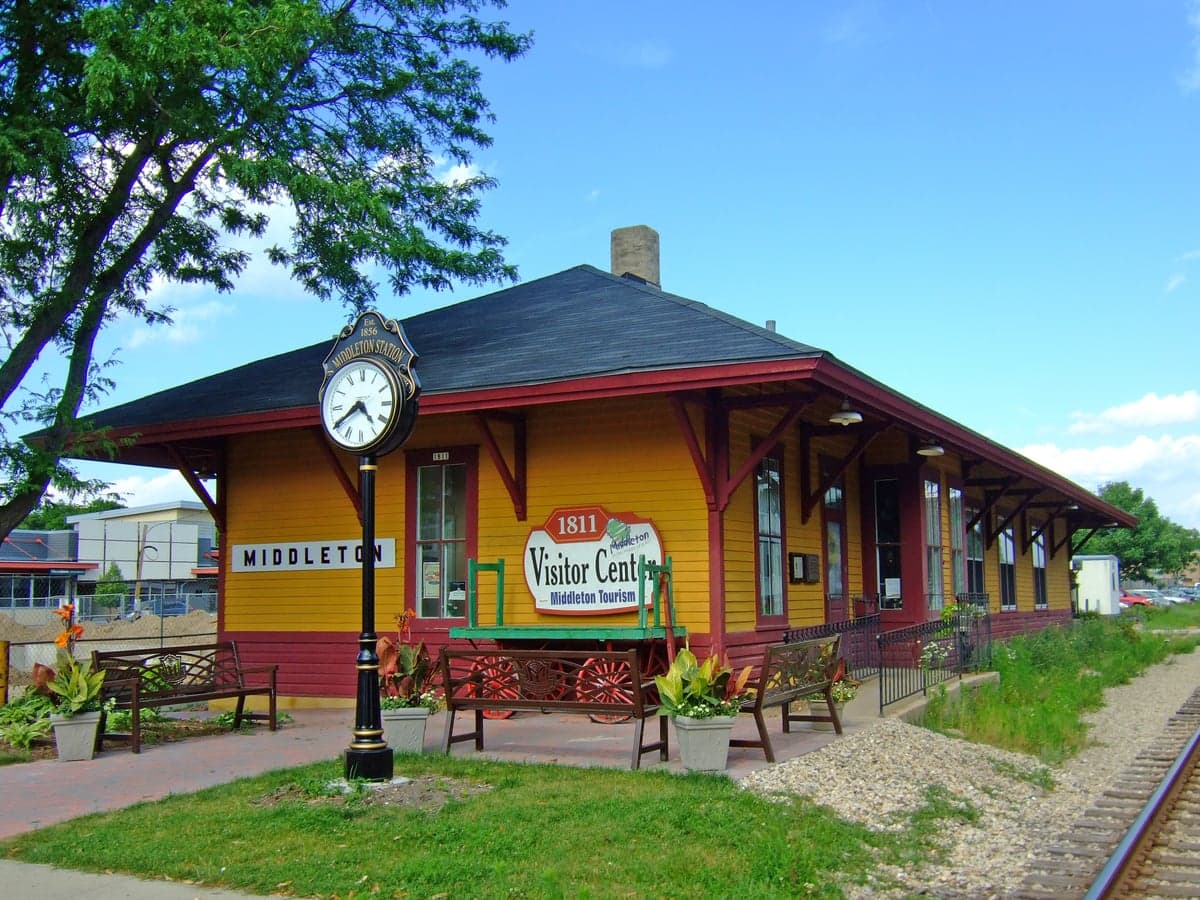
Photo: Wikipedia
Political ClimatePolitical Climate in Middleton, WI
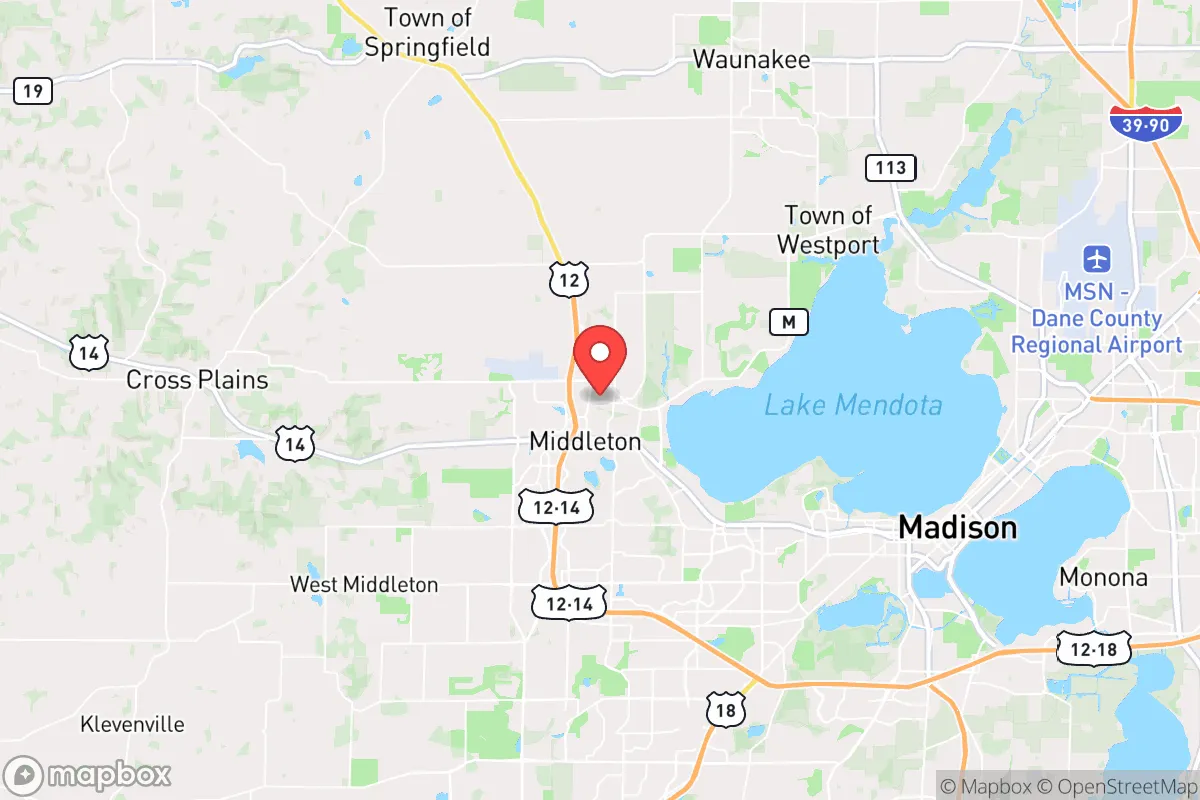
District shown is the primary district for this city’s centroid. Cities may span multiple districts.
Local Political AnalysisPolitical Analysis of Middleton, WI
Middleton leans heavily Democratic, with a Cook PVI of D+21, meaning it votes about 21 points more Democrat than the national average. This isn't a recent shift—it's been trending this way for a while, and the local government has embraced progressive policies that many of us who remember the old Middleton find concerning. You see it in everything from zoning decisions to school board meetings, where the focus seems to be on expanding government programs rather than protecting individual freedoms.
How it compares
Drive just a few miles outside Middleton, and the political landscape changes dramatically. Towns like Cross Plains and Waunakee lean more conservative, with many residents pushing back against the tax hikes and regulatory overreach that have become common in Middleton. Even Madison, which is famously liberal, has pockets of resistance, but Middleton has become a sort of progressive stronghold within Dane County. The contrast is stark: while surrounding areas still value local control and personal responsibility, Middleton's leaders seem eager to adopt state-level mandates on everything from energy use to housing density, often without much public debate.
What this means for residents
For those of us who value limited government, living in Middleton means constantly watching your back. The city council has passed ordinances that feel like they're micromanaging daily life—things like strict rental regulations, mandated green building codes, and even restrictions on how you can use your own property. Property taxes have climbed steadily to fund these new programs, and there's a growing sense that your voice doesn't matter as much as the agenda of a few vocal activists. If you're a small business owner or a homeowner who just wants to be left alone, you'll find yourself fighting an uphill battle against a bureaucracy that seems to think it knows better than you do.
Longtime residents will tell you that Middleton used to be a place where neighbors helped neighbors without the government getting involved. Now, there's a push for more public services, more regulations, and more oversight. The school district, for example, has shifted toward progressive curriculum changes that some parents feel undermine traditional values and parental rights. It's not the same Middleton I grew up in, and I worry that the next few years will only accelerate this trend. If you're considering a move here, just know that the political climate is heavily tilted toward one side, and if you value personal freedoms and limited government, you might find yourself feeling like an outsider in your own community.

State Political ClimatePolitical Climate in Wisconsin
State Political AnalysisPolitical Environment in the State
Wisconsin has long been a classic swing state, but over the past decade it has shifted into a deeply polarized battleground where the political climate depends almost entirely on which part of the state you’re standing in. The state’s overall partisan lean is a razor-thin 50-50 split, with Republicans holding a narrow edge in statewide elections since 2016, but the real story is the widening chasm between the reliably conservative rural and exurban areas and the increasingly progressive urban cores. For a conservative-leaning individual or family considering relocation, Wisconsin offers a mixed bag: low taxes and strong gun rights in most of the state, but a growing progressive influence in the cities that drives statewide policy battles.
Urban vs. rural divide
The political map of Wisconsin is a textbook example of the urban-rural divide. The Democratic stronghold is Milwaukee County, which alone delivers roughly 25% of the statewide Democratic vote, with the city of Milwaukee itself voting over 80% Democrat in recent presidential elections. Dane County, home to Madison and the University of Wisconsin, is the other major blue anchor, consistently voting 75%+ Democrat. These two counties, plus a handful of smaller college towns like Eau Claire and La Crosse, form the progressive base. In contrast, the rest of the state is overwhelmingly red. The WOW counties—Waukesha, Ozaukee, and Washington—just west and north of Milwaukee, are among the most reliably Republican suburban areas in the nation, routinely voting 60-65% Republican. Further north, the rural Northwoods counties like Vilas, Oneida, and Lincoln are deeply conservative, as are the western driftless region counties like Crawford and Vernon. The key swing counties that decide statewide elections are the suburban and exurban ring around Milwaukee (Waukesha, Washington, Ozaukee) and the Green Bay area (Brown County), which have been trending slightly rightward since 2020. The 2024 election saw Donald Trump win Wisconsin by roughly 30,000 votes, flipping Brown County back to red after it went for Biden in 2020.
Policy environment
Wisconsin’s policy environment is a tale of two realities. The state has a flat income tax rate of 4.4% (down from 7.65% in 2011), and property taxes are below the national average, making it a relatively low-tax state for most residents. The state legislature, under Republican control since 2011, has passed right-to-work legislation, eliminated the state’s prevailing wage law, and maintained a strong regulatory climate for businesses. However, the governor’s mansion has been held by Democrat Tony Evers since 2019, creating a constant tug-of-war. Evers has vetoed Republican bills to expand school choice, restrict abortion, and tighten election laws. On education, Wisconsin has a robust school choice program—the Milwaukee Parental Choice Program is one of the oldest and largest in the nation—but Evers has blocked efforts to expand it further. Healthcare is a mixed bag: the state expanded Medicaid under the Affordable Care Act, but private insurance markets remain competitive. Election laws are a flashpoint: Wisconsin has no-excuse absentee voting and same-day voter registration, which Republicans have tried to tighten but have been blocked by the governor. The state also has a conservative-leaning Supreme Court, though a 2023 election flipped it to a 4-3 liberal majority, which has already led to the overturning of the state’s 1849 abortion ban and the redrawing of legislative maps.
Trajectory & freedom
Wisconsin’s trajectory on personal freedom is a mixed picture. On the positive side for conservatives, the state has a strong tradition of gun rights: it is a shall-issue state for concealed carry, has no state-level assault weapons ban, and has preemption laws that prevent local governments from enacting stricter gun ordinances. The state also has a parental rights law that requires schools to notify parents about curriculum changes and allows them to opt their children out of certain instruction. However, the trend is concerning. The 2023 Supreme Court decision overturning the abortion ban, while popular with progressives, represents a significant expansion of state power over a deeply personal issue. The new legislative maps, drawn by the court and set to take effect in 2024, are expected to give Democrats a much stronger chance at winning the state assembly, which could lead to a wave of progressive legislation on taxes, energy regulation, and education. The state has also seen a push for “green energy” mandates, with Evers pushing for a 100% carbon-free electricity goal by 2050, which would likely raise energy costs. On medical freedom, Wisconsin has no state-level vaccine mandate, but local health departments in Milwaukee and Madison have imposed mask and vaccine requirements in the past, which could return in a future health crisis.
Civil unrest & political movements
Wisconsin has been a hotbed of political activism, both left and right. The 2011 Act 10 protests in Madison, which drew over 100,000 people to the state capitol to oppose collective bargaining restrictions, were a defining moment for the state’s progressive movement. More recently, the 2020 Kenosha unrest following the Jacob Blake shooting saw riots, arson, and the killing of two protesters by Kyle Rittenhouse, which became a national flashpoint for gun rights and self-defense debates. The state has a strong grassroots conservative movement, particularly in the WOW counties and the Northwoods, where groups like the Wisconsin Family Action and the Wisconsin Gun Owners lobby heavily. Immigration politics are relatively quiet compared to border states, but there is a growing tension in rural areas over the influx of migrant labor in the dairy industry. Election integrity remains a major issue: the 2020 election saw widespread use of private funding for election administration in Milwaukee and Green Bay, which Republicans have tried to ban. The 2024 election saw a record number of absentee ballots, and while no widespread fraud was found, the perception of vulnerability remains high among conservatives. A new resident in a rural area would notice a strong sense of community and self-reliance, while in Madison or Milwaukee, they would encounter frequent protests and a highly visible activist culture.
Projection
Over the next 5-10 years, Wisconsin is likely to become more competitive at the state level, but the direction of policy will depend on who controls the legislature and the governor’s office. The new legislative maps, combined with demographic trends—Milwaukee and Dane counties are growing slowly, while the WOW counties and the Northwoods are aging—could tip the balance toward Democrats in state government. If Democrats gain full control, expect a push for higher taxes on the wealthy, a state-level carbon tax, expanded Medicaid, and stricter gun laws. However, the state’s rural and exurban areas are likely to remain deeply conservative, and the in-migration of retirees from Illinois and Minnesota into the Northwoods and western Wisconsin is actually bringing more conservative voters. The wild card is the state Supreme Court: with a liberal majority until at least 2028, the court could continue to strike down conservative laws and uphold progressive ones. For a conservative moving in now, the safest bet is to choose a county like Waukesha, Washington, or Ozaukee, where local governance will remain conservative regardless of state-level shifts. The state’s overall trajectory is toward a more polarized, high-stakes political environment, but the fundamental freedoms—low taxes, gun rights, school choice—are likely to persist in the areas where most conservatives live.
Bottom line for a new resident: Wisconsin offers a high quality of life for conservatives who choose their location carefully. The rural and suburban areas are safe, affordable, and politically aligned with traditional values, while the urban centers are increasingly progressive and politically volatile. If you’re moving for work or family, prioritize a county with a strong Republican base—Waukesha, Washington, Ozaukee, or any of the Northwoods counties—and you’ll enjoy low taxes, good schools, and a community that values freedom. But be prepared for a state-level political environment that is constantly contested, with the potential for significant policy shifts depending on who wins the next few elections.
* Values derived from national, state, county, city and local statistics and may differ in a specific area. Last updated: 2026-04-21T10:16:22.000Z
Narrative content on this page is AI-generated and may contain mistakes. Verify any details that matter before acting on them.
ReloMaps may earn a commission from affiliate links at no extra cost to you.

