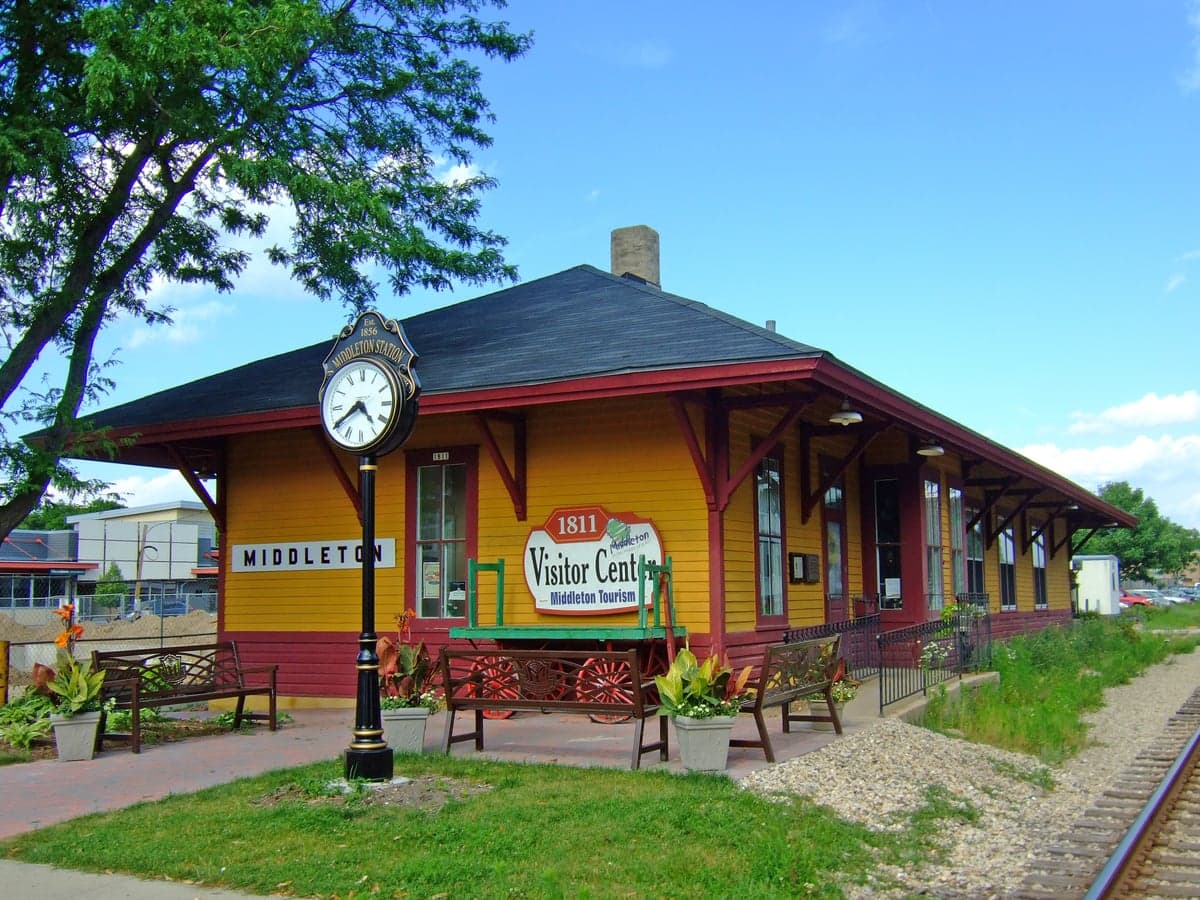
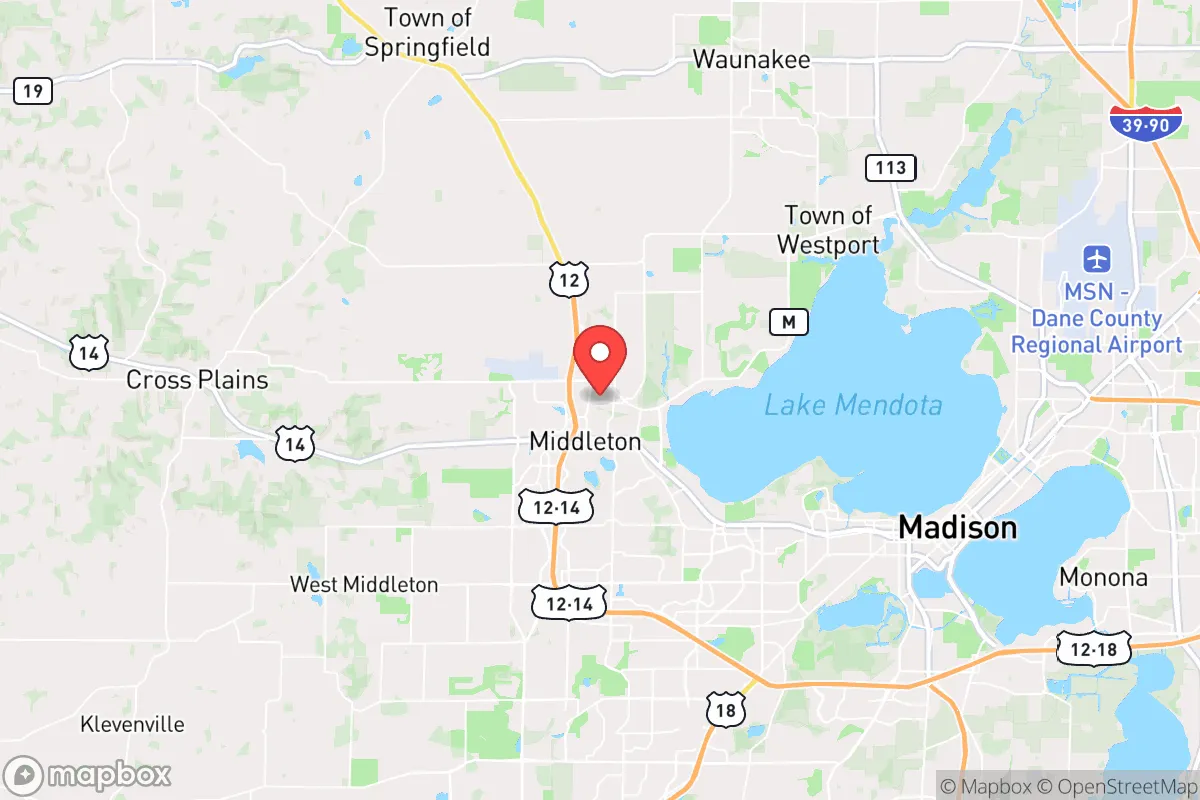
Photo: Wikipedia
Personal Sovereignty in Middleton, WI
Moderate friction. Expect trade-offs in some aspect of personal liberty and independence.
What does Personal Sovereignty tell us?
Personal Sovereignty measures your capacity for self-reliance and independence with minimal government friction. Higher scores mean fewer barriers between you and the way you want to live... but it assumes you have the space you need and good neighbors.
What does this tell us?
Personal Sovereignty measures your capacity for self-reliance and independence with minimal government friction. Higher scores mean fewer barriers between you and the way you want to live... but it assumes you have the space you need and good neighbors.
State Policy
Energy independence: Importer (15% of energy produced in-state)
Personal Liberty
Homesteading

Personal Liberty Analysis
Middleton, Wisconsin offers a mixed bag for those prioritizing personal sovereignty, sitting in a state that balances a strong tradition of local control with an increasingly assertive state government. While Wisconsin’s constitutional protections for self-defense and property rights are solid, the state’s tax burden and regulatory environment create headwinds for those seeking maximum autonomy. For the survivalist or prepper, Middleton provides a suburban base with decent access to rural resources, but it requires careful navigation of state-level overreach and local ordinances that can constrain independent living.
Tax burden and regulatory posture: how much the state takes and controls
Wisconsin’s tax burden is a significant factor for anyone valuing financial sovereignty. The state imposes a progressive income tax with rates ranging from 3.54% to 7.65% on the highest earners, which is above the national median. Property taxes in Dane County, where Middleton sits, are among the highest in the state, averaging around 2.1% of assessed home value — a real bite for homesteaders or those holding land for self-sufficiency. Sales tax is 5% statewide, with an additional 0.5% county tax in Dane, bringing the total to 5.5%. While not crippling, this combined tax load reduces disposable income that could otherwise fund preps, land purchases, or off-grid investments. On the regulatory side, Wisconsin is not a particularly business-friendly state for small-scale operations. The Department of Natural Resources (DNR) enforces strict environmental regulations that can complicate things like rainwater collection, septic system installation, or even clearing brush for firebreaks. Local zoning in Middleton is suburban-oriented, with most residential lots under a quarter-acre, limiting the ability to raise livestock or store large quantities of supplies without neighbor complaints. The state’s regulatory posture leans toward oversight rather than laissez-faire, meaning any attempt to operate a home-based business, build a workshop, or install solar panels will likely require permits and inspections — a bureaucratic hurdle for those seeking true independence.
Self-defense and gun law specifics: what you can carry and where
Wisconsin is a shall-issue state for concealed carry, meaning permits are granted to any law-abiding adult who completes a training course and passes a background check. Open carry is legal without a permit, though local ordinances in Middleton and Dane County may restrict it in certain public buildings or parks. The state preempts local gun laws, so Middleton cannot enact its own bans on firearms — a critical protection for Second Amendment advocates. However, there are notable restrictions. Wisconsin has a red flag law (Extreme Risk Protection Order) that allows family members or law enforcement to petition a court to temporarily seize firearms from someone deemed a risk. This is a point of concern for those wary of government overreach, as the process relies on subjective assessments and can be abused. Additionally, the state requires a 48-hour waiting period for handgun purchases, and private sales are subject to background checks through a federally licensed dealer. Magazine capacity is not restricted, and there is no state-level assault weapons ban, though local sentiment in Dane County is generally anti-gun, meaning you may face social friction for exercising your rights. For the prepper, the legal framework is workable but not ideal — you can defend your home and carry, but the red flag law and waiting periods are clear encroachments on personal autonomy. Stand-your-ground laws are not explicitly codified in Wisconsin, but the castle doctrine applies, meaning you have no duty to retreat in your home or vehicle if you are lawfully present.
Self-reliance and homesteading viability: lot sizes, zoning, and off-grid feasibility
Middleton’s suburban character makes traditional homesteading difficult within city limits. Most residential lots are 0.15 to 0.25 acres, too small for significant food production or livestock beyond a few chickens (which are allowed with a permit, but no roosters). Zoning codes restrict outbuildings like barns or large sheds, and homeowners associations (HOAs) in many subdivisions impose additional rules on gardens, clotheslines, and vehicle storage. For off-grid living, the challenges are steep. The city requires connection to municipal water and sewer in most areas, making well-and-septic setups nearly impossible. Solar panels are permitted but must meet utility interconnection standards, and battery storage for full off-grid independence is not explicitly banned but can trigger building code reviews. Rainwater collection is legal in Wisconsin, but the DNR regulates it for potable use, requiring treatment systems and permits. For serious self-reliance, you’ll need to look outside Middleton’s urban growth boundary — towns like Cross Plains, Black Earth, or Mazomanie offer larger parcels (1-5 acres) with fewer restrictions, though they still fall under Dane County’s zoning and environmental rules. The state’s right-to-farm laws provide some protection for agricultural activities, but they are weaker in suburban-adjacent areas where nuisance complaints from neighbors can lead to enforcement. If your goal is a bug-out location or a homestead, Middleton itself is not the answer — it’s a bedroom community with a veneer of convenience, not a bastion of self-sufficiency.
Personal liberties: parental rights, medical autonomy, speech, and property
Wisconsin has a mixed record on personal liberties. Parental rights are relatively strong — the state does not have a universal vaccine mandate for schoolchildren, and parents can opt out of sex education or certain health services with written notice. However, the state’s child welfare system has broad authority to investigate neglect or educational neglect, which can be a concern for unschooling or alternative education approaches. Medical autonomy is under pressure. Wisconsin does not have a state-level right-to-try law for experimental treatments, and the medical board enforces strict protocols that can limit access to off-label or alternative therapies. COVID-era mandates were enforced locally, with Dane County being one of the most restrictive in the state, including mask mandates and business closures that many viewed as government overreach. For the prepper, this means stocking up on medical supplies and building relationships with like-minded practitioners is wise. Free speech is protected under the First Amendment, and Wisconsin has no state-level hate speech laws that criminalize political expression, though local ordinances in Madison and Middleton can restrict public demonstrations or leafleting in certain areas. Property rights are generally respected, but eminent domain is used for infrastructure projects, and the DNR can restrict land use for environmental reasons — for example, wetland designations can prevent building or farming on your own land. The state’s castle doctrine protects your home as a sanctuary, but the regulatory environment means you don’t have full control over what you do on your property.
Overall, Middleton offers a moderate level of personal sovereignty compared to other areas in the Upper Midwest. It is more restrictive than rural Wisconsin counties like Iowa or Sauk, where zoning is looser and taxes are lower, but it is far less oppressive than nearby Madison, which has a reputation for progressive overreach. For the survivalist or prepper, Middleton can serve as a base for employment and community while maintaining a low profile, but the real autonomy lies in the surrounding countryside. If you value maximum control over your life, finances, and property, you’ll want to look at land in the Driftless Region west of Middleton, where the state’s reach is thinner and the culture leans more libertarian. Here in Middleton, you can live comfortably and legally, but you’ll always be aware that the government is watching — and taxing — every step of the way.

* Values derived from national, state, county, city and local statistics and may differ in a specific area. Last updated: 2026-04-21T10:16:22.000Z
Narrative content on this page is AI-generated and may contain mistakes. Verify any details that matter before acting on them.
ReloMaps may earn a commission from affiliate links at no extra cost to you.

