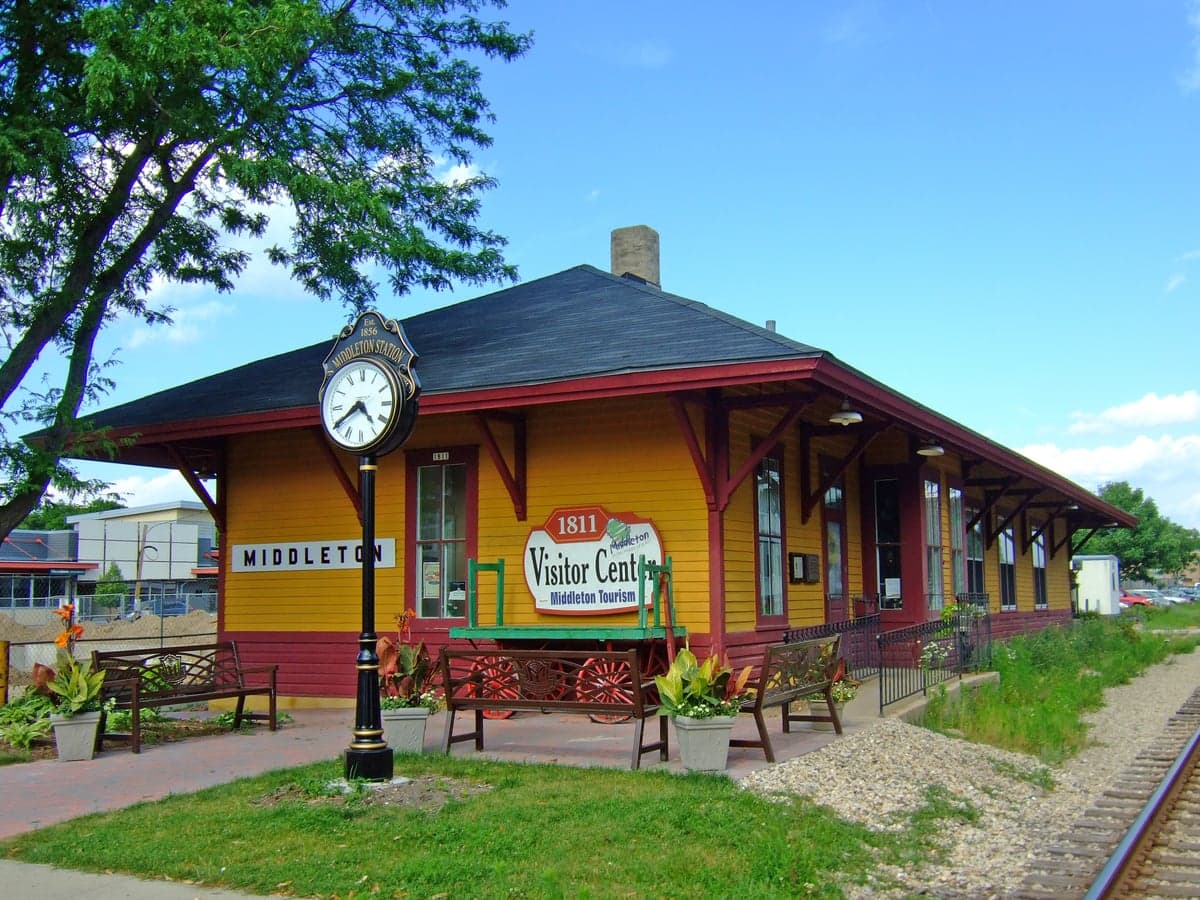
Photo: Wikipedia
Strategic Assessment of Middleton, WI
Multiple tactical vulnerabilities. Population density, target proximity, or disaster risk are likely compounding. A retreat property and exit planning is required.
What does the Strategic Assessment tell us?
Our Strategic Assessment grades tactical survivability of an area. Major population centers, military targets, fallout zones, natural disasters, and border exposure all drive risk — lower exposure means a more defensible position in a crisis.
This is heavily inspired by Joel Skousen's Strategic Relocation book. Highly recommended you checkout the book ($)What does this tell us?
Our Strategic Assessment grades tactical survivability of an area. Major population centers, military targets, fallout zones, natural disasters, and border exposure all drive risk — lower exposure means a more defensible position in a crisis.
This is heavily inspired by Joel Skousen's Strategic Relocation book. Highly recommended you checkout the book ($)Strategic Pillars

Key Distances
Regional Safe Places
Below is our recommended "safe zones" in Wisconsin and the surrounding area based on our strategic heuristics. For most people, it's unrealistic to live in a “safe zone” full-time due to work, family or other personal reasons. They tend to be more rural. However, many of these areas are perfect for second homes and retreat properties that double as a vacation home or even a short-term rental.
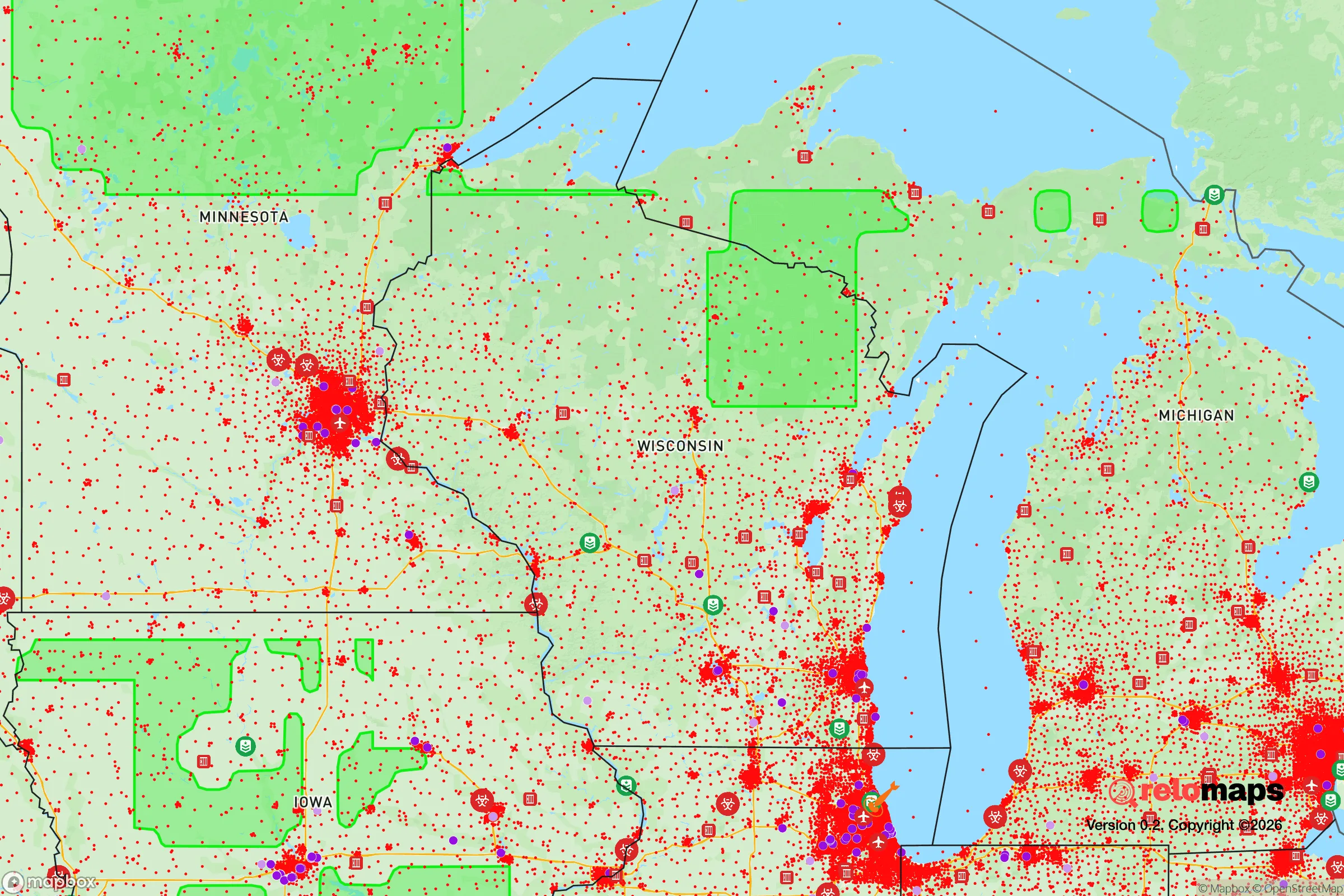
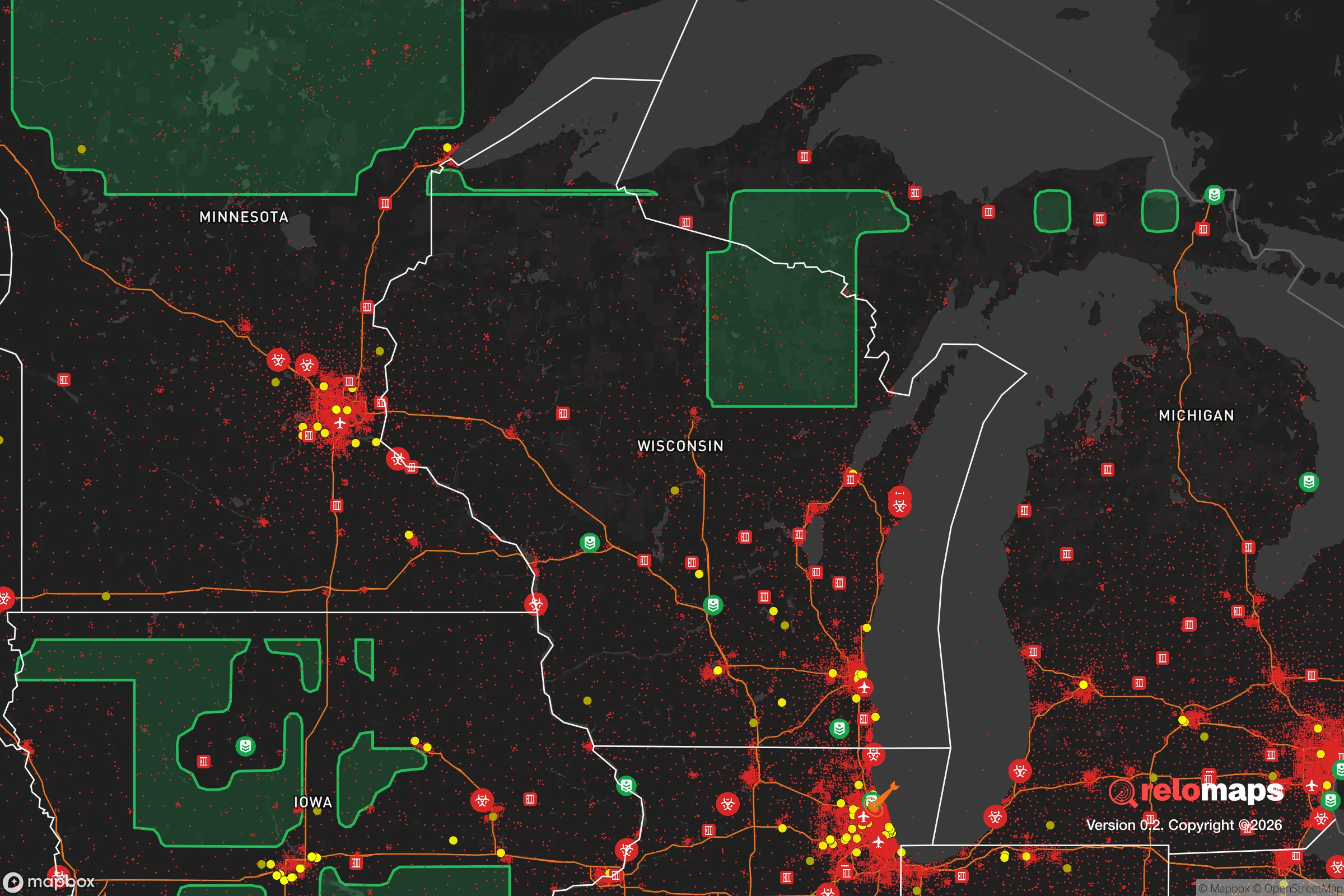


Important Note: For informational purposes only. This does not mean nothing bad ever happens in the green zones. Please use common sense. This is based on public data and modeled with AI. We tried to take a conservative approach but mistakes happen. We update this regularly as new information becomes available.
Solar Generator Recommendations
Backup power matters more here than in safer locations. We've picked three solar generators across budgets and capacity tiers — start with the budget unit if you only need a few essentials, or step up if you want to run a fridge and HVAC for days at a time.

Jackery Portable Power Station Explorer 300
Budget OptionPower on the Go: Weighing only 11 lbs, it's convenient to set up and store with book-sized foldable solar panels

BLUETTI Portable Power Station AC180
Designed for both indoor and outdoor scenarios, AC180 is highly capable as it has a robost capacity and continuous output power.

EF ECOFLOW DELTA Pro Ultra Power Station
Upgraded PickEcoFlow DELTA Pro Ultra is a whole-home energy system designed to grow with your family. Integrated with the Smart Home Panel 2, it scales to meet your evolving energy needs — keeping your home powered, intelligent, and secure through every stage of life.
We earn a commission, at no additional cost to you.
Strategic Assessment Analysis
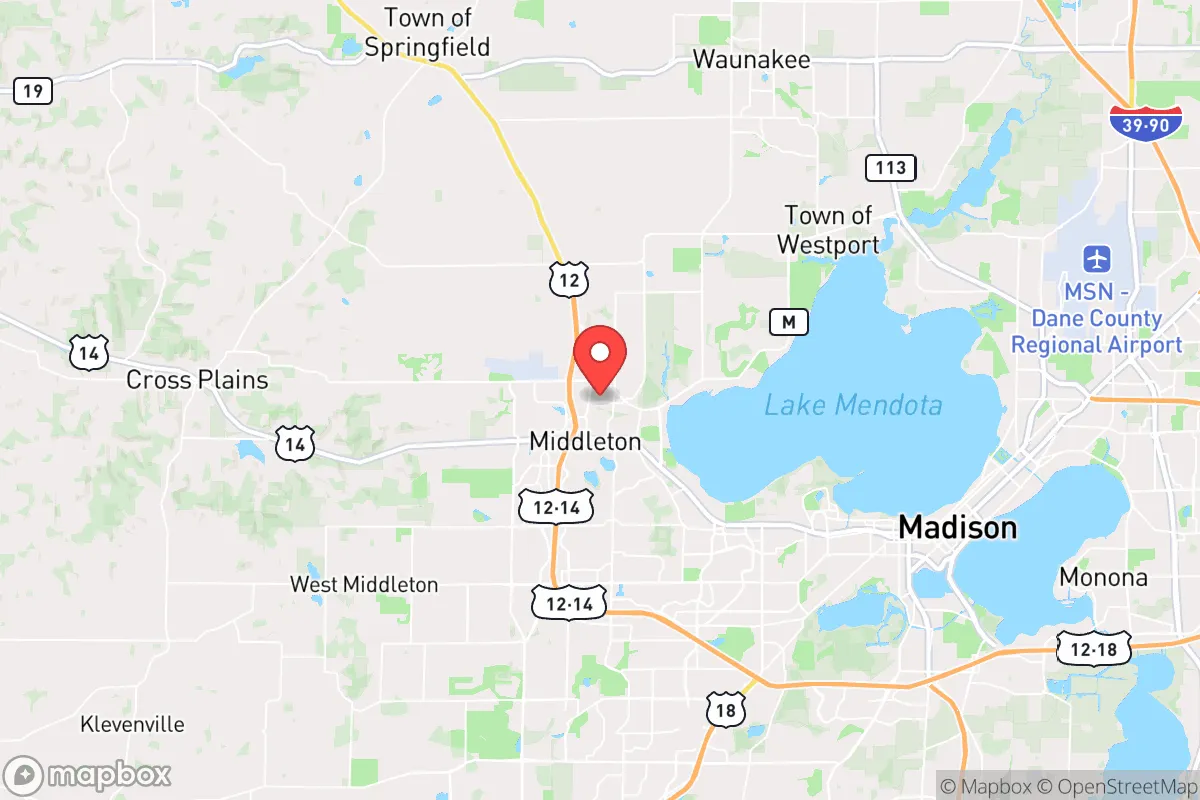
Middleton, Wisconsin, often flies under the radar in strategic relocation circles, but its geographic and infrastructural profile offers a surprisingly resilient base for those prioritizing preparedness. Situated just west of Madison, Middleton benefits from the economic and medical resources of a state capital without being swallowed by its urban core—a critical distinction when considering post-event logistics. The city’s position along the Wisconsin River corridor and its proximity to major interstate arteries (I-94 and I-39/90) provide both a buffer zone and a viable escape route, making it a defensible staging ground rather than a primary target.
Geographic position and natural advantages for long-term security
Middleton sits on the western edge of Dane County, a location that offers a blend of agricultural self-sufficiency and topographical diversity. The area is part of the Driftless Region, meaning the terrain is more rugged and wooded than the flat farmlands to the south—this provides natural cover and reduces the risk of widespread flooding compared to river-bottom communities. The nearby Wisconsin River and Lake Mendota offer reliable freshwater sources, though surface water requires treatment in a grid-down scenario. The city’s elevation (roughly 950 feet above sea level) and distance from major fault lines or hurricane zones mean natural disaster risks are limited to occasional tornadoes and winter storms, both of which are manageable with proper planning. For a relocator, the key advantage is the 15- to 20-mile buffer from Madison’s downtown, which reduces exposure to the civil unrest or infrastructure failures that could follow a mass casualty event in the capital.
Risks, exposures, and proximity to fallout-relevant landmarks
No strategic assessment is complete without acknowledging the liabilities. Middleton’s primary risk stems from its proximity to Madison, which hosts the state capitol, the University of Wisconsin–Madison campus, and a major medical complex (UW Health). In a scenario involving civil unrest or a coordinated attack, these are high-probability targets. The Dane County Regional Airport, located about 12 miles east, could become a choke point or a secondary target. Additionally, the interstate corridors that make Middleton accessible also make it a potential funnel for displaced populations from Milwaukee (80 miles east) and Chicago (150 miles southeast). The city itself has no major military installations or heavy industrial facilities that would draw a direct strike, but the Columbia Generating Station (a natural gas plant) and the University of Wisconsin–Madison’s research reactors are within a 20-mile radius—both are low-yield risks but worth noting for fallout planning. The real exposure is human: Dane County’s population of roughly 560,000 could surge with refugees from the east, straining local resources. A relocator should plan for a 72-hour self-sufficiency window and have a secondary retreat option north or west, toward the less-dense areas of Sauk or Iowa counties.
Practical resilience for a relocator: food, water, energy, and defensibility
Middleton’s practical resilience is a mixed bag, but the positives outweigh the negatives for a prepared individual. The city is surrounded by active farmland—corn, soy, and dairy operations—meaning local food production is robust. The Dane County Farmers’ Market (one of the largest in the country) operates seasonally, but year-round access to bulk grains, canned goods, and livestock feed is available through co-ops and rural suppliers within a 30-minute drive. Water is the stronger suit: the city draws from a deep sandstone aquifer, and many homes in the outer subdivisions have private wells, which are less vulnerable to municipal system failures. For energy, Middleton is served by Alliant Energy, which relies on a mix of coal, natural gas, and renewables. In a prolonged outage, the city’s grid is moderately resilient, but a backup solar array with battery storage is a wise investment—especially given Wisconsin’s net metering policies. Defensibility is where Middleton shines for a suburban setting. The neighborhoods west of Highway 12 (like the Pheasant Branch area) feature cul-de-sacs, wooded lots, and limited ingress points, making them easier to secure than the grid-like streets closer to the interstate. The presence of the Middleton Police Department and a well-funded county sheriff’s office (Dane County) provides a layer of security, but in a prolonged crisis, law enforcement will be stretched thin. A relocator should prioritize a property with a basement (for tornado and fallout shelter), a wood-burning stove, and at least a half-acre for gardening or livestock. The local building codes are moderate, and zoning allows for backyard chickens and small-scale agriculture in most residential areas—a practical advantage for long-term self-sufficiency.
The overall strategic picture for Middleton is one of calculated viability. It is not a remote bunker location, nor is it a high-risk urban core—it sits in a middle ground that rewards preparation. For a conservative-leaning relocator concerned with civic unrest, mass casualty events, and systemic collapse, Middleton offers a defensible base with strong local resources, a manageable population density, and a buffer from the most obvious targets. The trade-off is proximity to Madison’s risks, but that same proximity provides access to top-tier medical care, hardware stores, and supply chains that a more isolated location would lack. The key is to treat Middleton as a staging area rather than a final redoubt: build your network, stock your supplies, and have a plan for a westward or northward retreat if the situation deteriorates. In a world where the unthinkable becomes the expected, this city gives you a fighting chance without forcing you to live off-grid tomorrow.

* Values derived from national, state, county, city and local statistics and may differ in a specific area. Last updated: 2026-04-21T10:16:22.000Z
Narrative content on this page is AI-generated and may contain mistakes. Verify any details that matter before acting on them.
ReloMaps may earn a commission from affiliate links at no extra cost to you.

