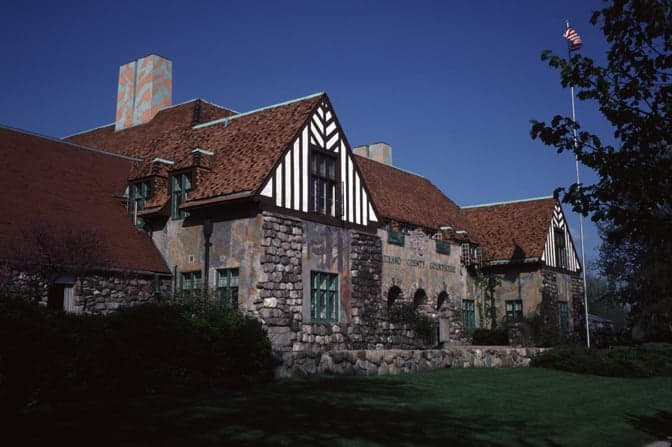
Photo: Wikipedia
Strategic Assessment of Midland County
Workable tactical position. Some exposure to population density or targets, but generally defensible in a crisis.
What does the Strategic Assessment tell us?
Our Strategic Assessment grades tactical survivability of an area. Major population centers, military targets, fallout zones, natural disasters, and border exposure all drive risk — lower exposure means a more defensible position in a crisis.
This is heavily inspired by Joel Skousen's Strategic Relocation book. Highly recommended you checkout the book ($)What does this tell us?
Our Strategic Assessment grades tactical survivability of an area. Major population centers, military targets, fallout zones, natural disasters, and border exposure all drive risk — lower exposure means a more defensible position in a crisis.
This is heavily inspired by Joel Skousen's Strategic Relocation book. Highly recommended you checkout the book ($)Strategic Pillars

Key Distances
Strategic Assessment Analysis
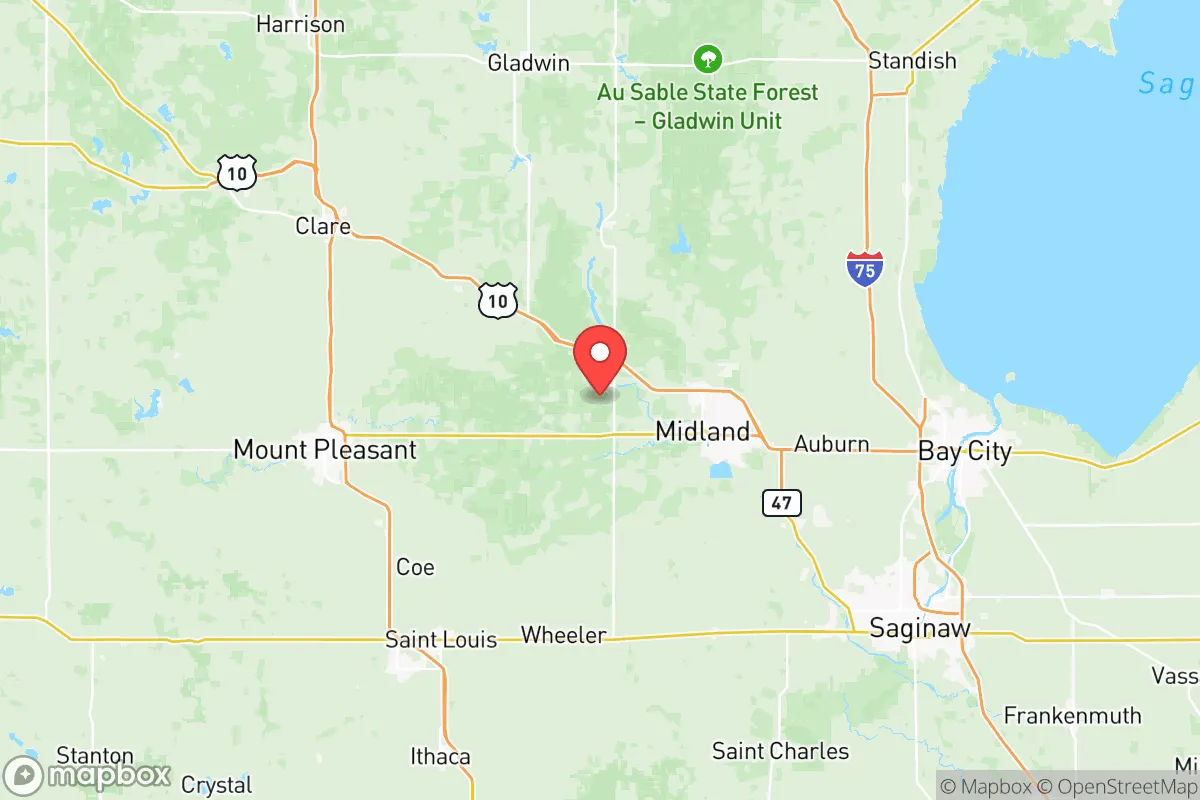
Midland County, Michigan, offers a compelling mix of industrial resilience and geographic insulation that appeals to relocation-minded readers prioritizing stability and self-sufficiency. Situated in the heart of the Lower Peninsula, the county is anchored by the city of Midland and benefits from a diversified economy built around Dow Inc. and Dow Corning, which provide a stable employment base less susceptible to boom-and-bust cycles than regions reliant on a single sector. Its location along US-10 and proximity to M-20 place it within a two-hour drive of major metro areas like Detroit, Grand Rapids, and Lansing, yet the county itself remains low-density and rural enough to avoid the congestion and vulnerability of urban centers. For a conservative-leaning audience thinking about disaster readiness, Midland County presents a balanced profile: close enough to access resources, far enough to mitigate fallout from major metropolitan targets.
Geographic position and natural advantages for long-term stability
Midland County sits on the edge of the Saginaw Bay watershed, with the Tittabawassee and Chippewa Rivers running through its core, providing abundant freshwater access — a critical asset for long-term resilience. The county's terrain is mostly flat to gently rolling, with extensive hardwood forests and agricultural land that support hunting, foraging, and small-scale farming. Unlike areas in the western US prone to wildfire or drought, Midland County enjoys a temperate climate with reliable rainfall, reducing the risk of crop failure or water scarcity. The city of Midland itself is laid out on a grid with clear evacuation routes via US-10 and M-20, while smaller communities like Sanford and Coleman offer even lower population densities for those seeking deeper rural buffer. The region's position away from major fault lines and hurricane zones further lowers its natural disaster profile, making it a stable choice for families looking to avoid climate-driven displacement.
Risks, exposures, and proximity to fallout-relevant landmarks
No location is without risk, and Midland County's industrial backbone introduces specific vulnerabilities. The Dow Chemical complex in Midland is a major chemical manufacturing site, which could be a target in a conflict scenario or a source of hazardous material incidents during natural disasters — as seen in the 2020 dam failures that flooded parts of the county. Additionally, the county lies roughly 90 miles from the Detroit metropolitan area, a likely high-value target in a national security crisis, and about 70 miles from the Saginaw Bay shoreline, which could see secondary effects from naval or port disruptions. The nearby Wurtsmith Air Force Base (now a former base in Oscoda, about 60 miles northeast) and the Selfridge Air National Guard Base (about 80 miles southeast) are military landmarks that could draw attention in a conflict. For a relocator, these risks are manageable with proper planning — maintaining a 50-mile buffer from major cities and avoiding downwind zones from industrial sites — but they should be factored into any strategic assessment. The county's lack of major military bases or nuclear power plants within its borders is a relative positive, though the Fermi 2 nuclear plant near Monroe is about 120 miles south, outside the most dangerous fallout radius but worth noting for long-term monitoring.
Practical resilience for a relocator: food, water, energy, and defensibility
Midland County scores well on practical self-sufficiency metrics. The region's agricultural output includes corn, soybeans, and livestock, with local farmers' markets and CSAs operating in Midland and surrounding towns like Sanford and Hope. Freshwater access is excellent: the Tittabawassee River and numerous inland lakes provide reliable sources for filtration and irrigation, and the county sits atop the Michigan Basin aquifer, which offers deep groundwater reserves. Energy infrastructure is robust, with Consumers Energy and DTE maintaining natural gas and electric grids, and the presence of Dow's industrial facilities means backup power generation and fuel storage are locally available. For off-grid capability, the area's forested terrain supports wood heating, and solar potential is moderate but viable with battery storage. Defensibility is aided by the county's dispersed population — roughly 84,000 residents across 528 square miles — and its network of rural roads and state land, which provide multiple egress routes and natural cover. The Midland County Emergency Management office runs active preparedness programs, and the community has a demonstrated history of responding to floods and industrial incidents, indicating a functional local governance structure for crisis coordination.
Overall, Midland County presents a strong strategic option for relocators who value industrial stability, freshwater abundance, and a moderate climate without the high risks of coastal or metropolitan living. Its proximity to Detroit and industrial sites introduces manageable vulnerabilities, but the county's low population density, diversified economy, and natural resources offer a solid foundation for long-term resilience. For families and individuals willing to invest in basic preparedness — water filtration, backup power, and a rural buffer — Midland County balances access to modern infrastructure with the space and resources needed for self-sufficient living in an uncertain future.

* Values derived from national, state, county, city and local statistics and may differ in a specific area. Last updated: 2026-06-17T04:35:57.000Z
Narrative content on this page is AI-generated and may contain mistakes. Verify any details that matter before acting on them.
ReloMaps may earn a commission from affiliate links at no extra cost to you.

