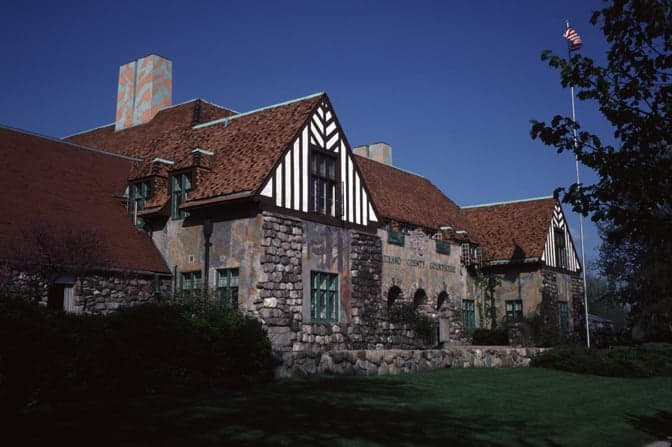
Photo: Wikipedia
Quality of Life in Midland County
A livable area that tracks near national norms for affordability, walkability, and neighborhood health.
What does Quality of Life tell us?
Quality of Life measures an area by evaluating factors like cost of living, nearby amenities, country club access, airport proximity, socioeconomic signals and neighborhood character. For large states, this is a general average — quality of life can vary dramatically between metro areas, suburbs, and rural communities within the same state.
What does this tell us?
Quality of Life measures an area by evaluating factors like cost of living, nearby amenities, country club access, airport proximity, socioeconomic signals and neighborhood character. For large states, this is a general average — quality of life can vary dramatically between metro areas, suburbs, and rural communities within the same state.
Cost of Living
24% below national average
147%
The Real Cost of Living in Midland County for 2026
| Tier | Individual | Family (4) |
|---|---|---|
| Survival | $16k | $29k |
| Comfortable | $36k | $53k |
| Luxury | $138k+ | $214k+ |
| Elite (Top 5%) | $162k+ | $251k+ |
Quality-of-Life Analysis
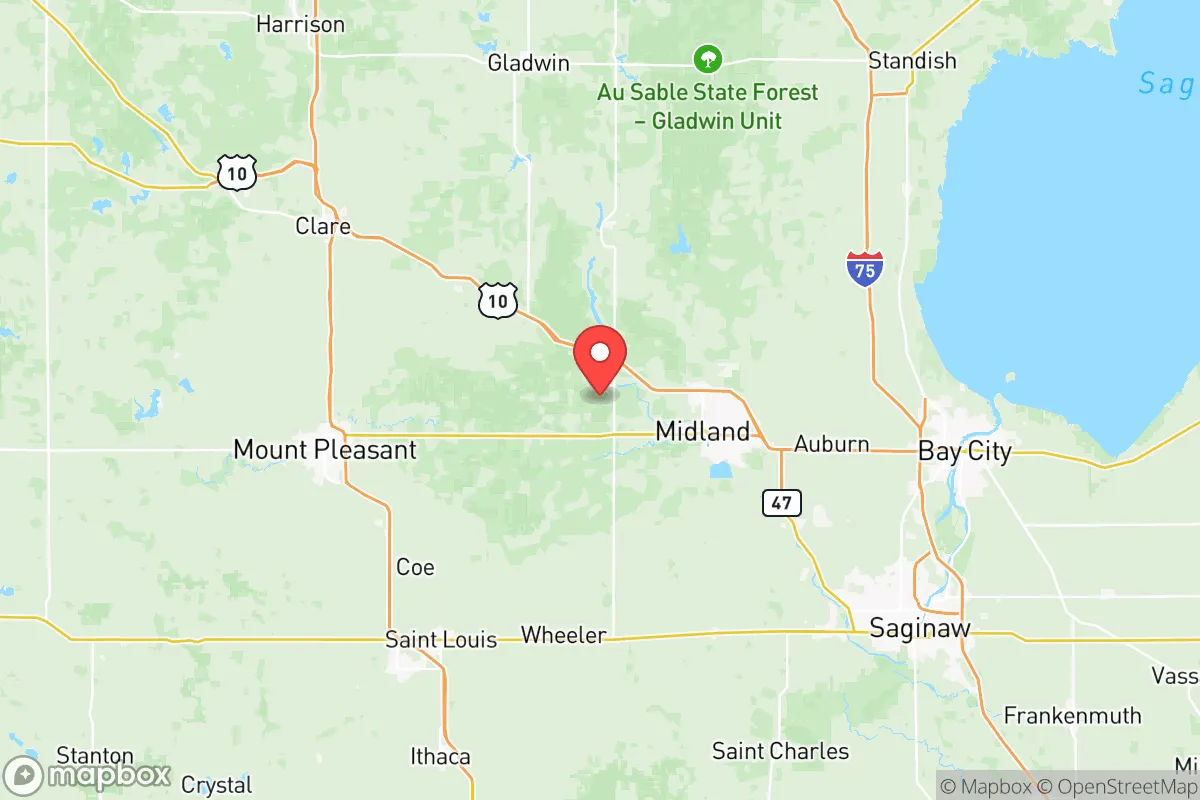
Midland County, Michigan offers a broad quality-of-life spectrum that ranges from the walkable, amenity-rich city of Midland to quiet agricultural towns and deep-river rural pockets, attracting everyone from Dow Inc. professionals to hobby farmers and remote workers seeking affordable land. The county’s cost of living index sits at 76 (well below the U.S. average of 100), with a median home value of $184,300 and median rent of $974, making it one of the more affordable places in the Great Lakes Bay Region. The average commute of just over 24 minutes means even residents in the most rural townships can reach Midland’s employment core without a long drive. The character of daily life shifts noticeably as one moves from the county seat outward to villages like Sanford, Coleman, and Hope, each offering a distinct trade-off between convenience, space, and community scale.
Largest town(s) & population centers
Midland is the county’s dominant population center and economic engine, home to roughly 42,000 residents and the global headquarters of Dow Inc. and Dow Chemical. Daily life here centers on a compact downtown with the Midland Center for the Arts, the Dow Diamond minor-league ballpark, and a network of riverfront parks along the Tittabawassee and Chippewa rivers. The city offers the region’s widest range of grocery stores, medical services through MyMichigan Health, and public schools that consistently rank among Michigan’s top districts. Housing in Midland proper is the county’s most expensive, though still affordable by national standards: median home values hover around $200,000–$220,000 in desirable neighborhoods like the Jefferson Avenue historic district or near Emerson Park. Renters pay a median of $974, with newer apartment complexes near the US-10 corridor commanding higher prices. The city draws professionals employed by Dow, DuPont, and Corteva Agriscience, as well as retirees who want walkable access to the Dow Gardens and the Tridge pedestrian bridge.
Smaller towns & rural pockets
Outside Midland, the county’s smaller communities offer a slower pace and more land for the dollar. Sanford (population ~850), located along the Tittabawassee River and Sanford Lake, is a tight-knit village popular with boaters and anglers; it was heavily impacted by the 2020 dam failures but has since rebuilt much of its lakefront recreation. Coleman (population ~1,200) sits in the county’s northern farm belt and serves as a service hub for surrounding agricultural areas, with a small downtown, a local grocery, and Coleman Community Schools. Hope (population ~1,300) is an unincorporated community in western Midland County that feels distinctly rural, with grain elevators, a post office, and little else in the way of retail. The county’s rural townships—Jasper Township, Porter Township, and Mills Township—are characterized by large-lot homes, working farms, and unpaved roads. Residents in these pockets typically drive 20–30 minutes to Midland for groceries, healthcare, and employment, but gain privacy, lower property taxes, and the ability to own acreage for under $150,000.
Cost & lifestyle range
The cost spread across Midland County is meaningful but not extreme. At the higher end, Midland’s northeast side and the Pinecrest area feature newer subdivisions with homes in the $250,000–$350,000 range, along with quick access to US-10 and the Dow campus. At the lower end, Coleman and rural Jasper Township offer median home values closer to $120,000–$140,000, with some fixer-uppers available below $100,000. Rent follows a similar gradient: a one-bedroom in Midland averages $900–$1,100, while the same unit in Coleman or Sanford might rent for $700–$850. Lifestyle differences are equally pronounced. Midland residents have walkable access to the Dow Gardens, the Midland Farmers Market, and dozens of restaurants, plus the Midland Mall and big-box retail along Eastman Avenue. Rural residents trade those amenities for larger lots, lower noise, and direct access to the Pere Marquette Rail Trail or the Chippewa River for kayaking. The county’s property tax rates are relatively uniform, but rural townships often have lower millage rates than the city of Midland, further widening the cost gap.
Midland County best suits people who want a clear choice between urban-suburban convenience and genuine rural living within a single county. Professionals and families who prioritize schools, walkability, and cultural amenities will gravitate to Midland city, while those seeking affordable acreage, quiet roads, and a slower rhythm will find a natural fit in Coleman, Hope, or the outlying townships. The county’s low cost of living and short average commute mean that neither choice requires sacrificing financial stability or access to the region’s primary employer base.

Crime in Midland County
Crime rates similar to the national median for U.S. locations.
Violent CrimeViolent Crime Analysis
Property CrimeProperty Crime Analysis
Crime Analysis
Midland County, Michigan, presents a mixed safety profile where property crime rates significantly exceed national averages while violent crime remains slightly below the U.S. norm, creating distinct risk patterns for residents. The county's overall crime rate of 1,663.3 per 100,000 residents (combining violent and property offenses) places it in a moderate-risk tier among Michigan's 83 counties, though outcomes vary sharply between the city of Midland and its surrounding townships. Understanding these local dynamics is essential for anyone evaluating relocation to the region, as neighborhood-level data reveals substantial differences in daily safety experience.
Crime in context
Midland County's violent crime rate of 414.4 per 100,000 sits roughly 12% below the national average of approximately 470 per 100,000, but property crime at 1,248.9 per 100,000 runs about 15% higher than the U.S. rate of roughly 1,085 per 100,000. Compared to Michigan's statewide averages, the county's violent crime rate is slightly elevated — the state rate hovers near 390 per 100,000 — while property crime aligns closely with the Michigan median. These figures place Midland County in a middle tier: safer than high-crime urban counties like Wayne (Detroit) or Genesee (Flint), but notably more dangerous than low-crime rural counties such as Missaukee or Osceola to the north. The disparity between violent and property crime rates suggests that while serious personal crimes are relatively contained, theft and burglary pose a more routine concern for households across the county.
What residents experience
For most residents, the primary safety concern is property crime rather than violent confrontation. The city of Midland, the county's population center and home to Dow Inc. and Dow Chemical, concentrates the majority of reported incidents. Aggravated assault accounts for roughly 60% of violent crimes locally, with robbery and rape occurring at lower frequencies. Property crime in Midland city manifests as vehicle break-ins, package theft, and residential burglary, particularly in areas near major thoroughfares like US-10 and M-20. The Midland County Sheriff's Office and Midland Police Department maintain a cooperative jurisdiction, though response times in outlying areas — including Lee Township, Larkin Township, and Homer Township — can extend beyond 15 minutes compared to under 8 minutes within city limits. Residents in these townships report lower overall incident rates but express greater concern about response delays for emergencies.
Judicial philosophy in Midland County's 42nd Circuit Court, under Judge Michael J. Beale, follows a moderately conservative approach to sentencing, with conviction rates for felony property crimes exceeding 85%. This contrasts with more progressive prosecutorial policies seen in neighboring Saginaw County, where diversion programs and reduced sentencing for nonviolent offenders have drawn criticism from public safety advocates. The Midland County Prosecutor's Office maintains a conviction-focused strategy that prioritizes victim restitution and incarceration for repeat property offenders, a stance that aligns with the county's relatively stable violent crime trends. However, the city of Midland itself has seen a 7% increase in reported larcenies since 2022, a pattern local law enforcement attributes to regional drug trafficking routes along the US-10 corridor connecting Midland to Bay City and Saginaw.
Neighborhood-level variation
Safety conditions in Midland County are not uniform. The city of Midland's downtown core and near-east side, including areas around the Midland Mall and Saginaw Road corridor, report the highest concentration of property crimes and disorderly conduct calls. Conversely, Sanford, Hope, and Edenville — smaller communities in the county's northern and western reaches — consistently report violent crime rates below 200 per 100,000, roughly half the county average. Coleman, in the county's northwest, experiences periodic spikes in drug-related property crime but maintains a low violent crime profile. For prospective residents, choosing a township outside the city of Midland's immediate jurisdiction typically yields a materially safer daily environment, though at the cost of longer emergency response times and fewer street-level policing resources.
* Values derived from national, state, county, city and local statistics and may differ in a specific area. Last updated: 2026-06-17T04:35:57.000Z
Narrative content on this page is AI-generated and may contain mistakes. Verify any details that matter before acting on them.
ReloMaps may earn a commission from affiliate links at no extra cost to you.

