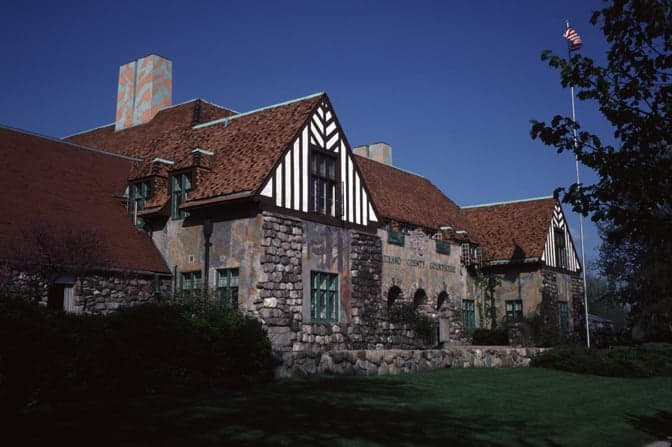
Photo: Wikipedia
Personal Sovereignty in Midland County
Strong independent fundamentals that actively favor personal liberty and low regulation.
What does Personal Sovereignty tell us?
Personal Sovereignty measures your capacity for self-reliance and independence with minimal government friction. Higher scores mean fewer barriers between you and the way you want to live... but it assumes you have the space you need and good neighbors.
What does this tell us?
Personal Sovereignty measures your capacity for self-reliance and independence with minimal government friction. Higher scores mean fewer barriers between you and the way you want to live... but it assumes you have the space you need and good neighbors.
State Policy
Energy independence: Importer (20% of energy produced in-state)
Personal Liberty
Homesteading

Personal Liberty Analysis
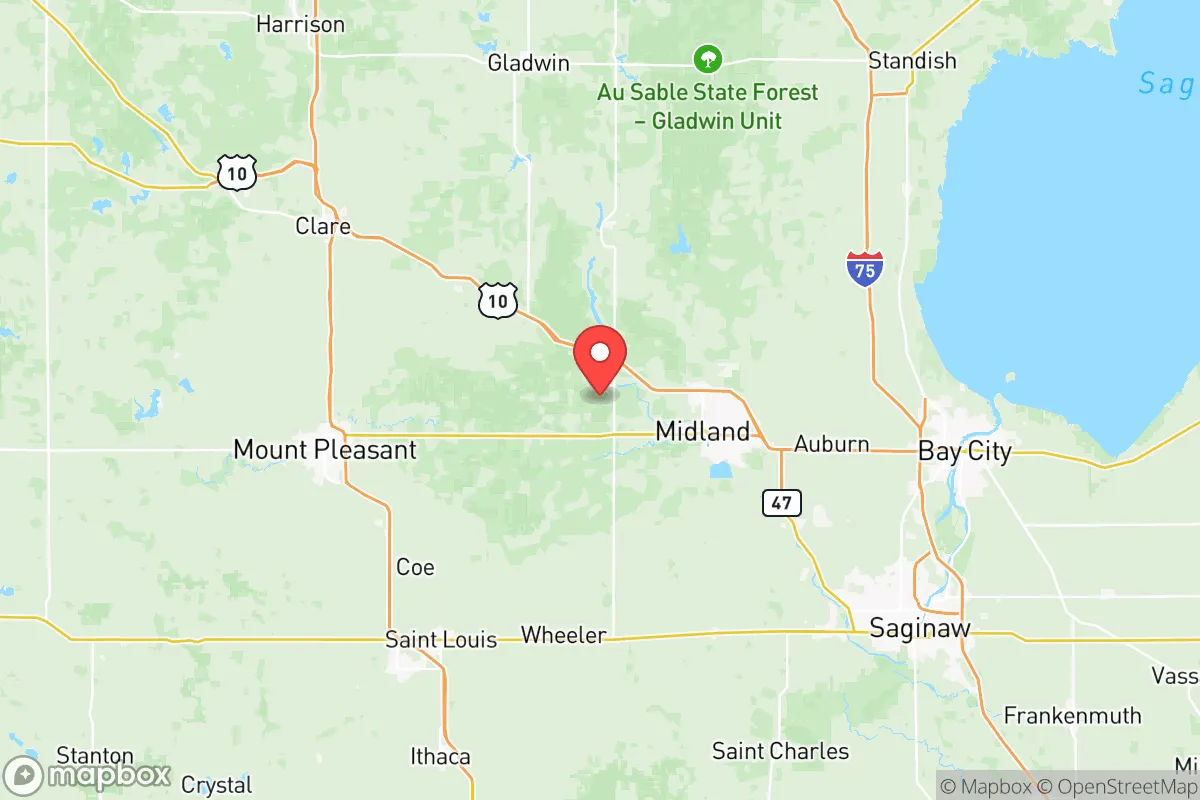
Midland County, Michigan, offers a notably high degree of personal sovereignty relative to much of the Lower Peninsula, driven by a conservative-leaning local governance culture, a relatively low tax burden, and permissive state-level laws on self-defense and property rights. The county’s regulatory environment is generally light-touch, particularly outside the city limits of Midland itself, where zoning and land-use rules are minimal. For individuals and families prioritizing autonomy, the area presents a strategic balance: access to urban amenities in Midland and nearby Bay City and Saginaw, combined with the freedom to live, build, and defend oneself with fewer bureaucratic hurdles than in more densely populated regions like Oakland or Washtenaw counties.
Tax burden and regulatory posture in Midland County
Midland County’s tax burden is moderate by Michigan standards, but notably lighter than in many downstate counties. The county’s general property tax rate is approximately 5.5 mills, and the average effective property tax rate hovers around 1.3% of home value, which is below the state average of 1.5%. The city of Midland imposes its own income tax of 1.5% for residents and 0.75% for non-residents working in the city, but the surrounding townships—such as Larkin Township, Homer Township, and Lee Township—have no city income tax, making them more attractive for those seeking to minimize tax exposure. Michigan’s state income tax is a flat 4.25%, and the state’s sales tax is 6%. Regulatory posture is generally business-friendly; the county has no countywide zoning, leaving land-use decisions to individual townships. This results in a patchwork of rules, but most rural townships impose minimal restrictions on building, farming, and home-based businesses. The city of Midland has more structured zoning and building codes, but even there, permitting processes are straightforward compared to larger metro areas. For a relocation research audience, the key takeaway is that Midland County offers a low-friction environment for property owners and entrepreneurs, especially in its unincorporated areas and smaller townships.
Self-defense and gun law specifics in Midland County
Michigan is a shall-issue state for concealed pistol licenses (CPL), and Midland County’s gun culture is robust and legally permissive. The county sheriff’s office processes CPL applications efficiently, with typical turnaround times of 30-45 days. Open carry is legal without a permit for anyone 18 or older who can legally possess a firearm, and concealed carry is legal with a CPL. Michigan does not require registration of firearms, and there is no state-level assault weapons ban or magazine capacity restriction. The county has a strong hunting tradition, with public land access in the Midland State Game Area and nearby Sanford Lake area. Self-defense laws in Michigan include a Castle Doctrine (no duty to retreat in one’s home or occupied vehicle) and a Stand Your Ground provision (no duty to retreat in any place where the individual is lawfully present). Local gun ranges, such as the Midland County Sportsmen’s Club and Bay City Gun Club, are active and well-maintained. For those prioritizing Second Amendment rights, Midland County is a favorable environment, with no local ordinances that restrict firearm possession beyond state law. The city of Midland itself is gun-friendly, with no additional local restrictions, though discharging firearms is prohibited within city limits except at designated ranges.
Self-reliance and homesteading viability in Midland County
Homesteading and off-grid living are viable in Midland County, particularly in its rural townships. Minimum lot sizes vary by township: Jasper Township and Porter Township require a minimum of 2 acres for residential building, while Edenville Township and Mills Township allow building on 1-acre lots. Many townships have no minimum lot size at all, making small-scale homesteading accessible. Zoning is generally permissive for agricultural uses, including keeping chickens, goats, and even larger livestock on residential parcels. Off-grid living is legally feasible; Michigan has no state law requiring connection to the electrical grid, and many rural properties use well water and septic systems. Solar panels and rainwater collection are allowed, though rainwater collection is limited to 2,500 gallons per property under state law. The county’s soil quality is good for gardening, with sandy loam prevalent in the southern part of the county and heavier clay soils in the north. The growing season is about 140 days, suitable for cool-season crops. For those seeking self-reliance, the Sanford Lake and Wixom Lake areas offer waterfront homesteading opportunities, while the northern townships near the Gladwin County line provide more remote, wooded parcels with lower land prices. The county’s agricultural extension office through Michigan State University offers resources for small-scale farming and food preservation.
Personal liberties in Midland County: parental rights, medical autonomy, speech, and property
Midland County’s political culture supports a broad interpretation of personal liberties. Parental rights are respected in the local school districts, including Midland Public Schools, Bullock Creek School District, and Coleman Community Schools, all of which have transparent curricula and active parent involvement. Michigan law requires parental notification for any medical treatment of minors, and the county’s health department does not offer reproductive health services to minors without parental consent. Medical autonomy is generally respected; Michigan is a licensure state for alternative medicine, but the county has a growing network of naturopathic and chiropractic practitioners. Vaccine mandates are not enforced at the county level, and school vaccine exemptions are available for medical, religious, and philosophical reasons. Free speech is protected under state and federal law, and the county has no local ordinances restricting political speech or assembly. Property rights are strong; Michigan’s property tax system includes a Proposal A cap (annual increases limited to the lesser of 5% or inflation), and the county has no transfer tax on real estate sales. Eminent domain is rarely used for private development. For those concerned about government overreach, Midland County’s local officials are generally responsive to constituent concerns, and the county commission has a conservative majority that prioritizes limited government.
Overall, Midland County ranks among the more sovereignty-friendly areas in Michigan, particularly for those who value gun rights, low taxes, and the ability to live self-sufficiently. Compared to counties in Southeast Michigan or the Grand Rapids area, Midland offers a lighter regulatory touch and a more permissive environment for homesteading and off-grid living. The county’s mix of rural townships and a small city with essential services provides a strategic balance for families and individuals seeking personal freedom without complete isolation. For a relocation research audience with a conservative leaning, Midland County represents a strong option for maintaining autonomy while remaining within reach of employment centers and healthcare infrastructure.

* Values derived from national, state, county, city and local statistics and may differ in a specific area. Last updated: 2026-06-17T04:35:57.000Z
Narrative content on this page is AI-generated and may contain mistakes. Verify any details that matter before acting on them.
ReloMaps may earn a commission from affiliate links at no extra cost to you.

