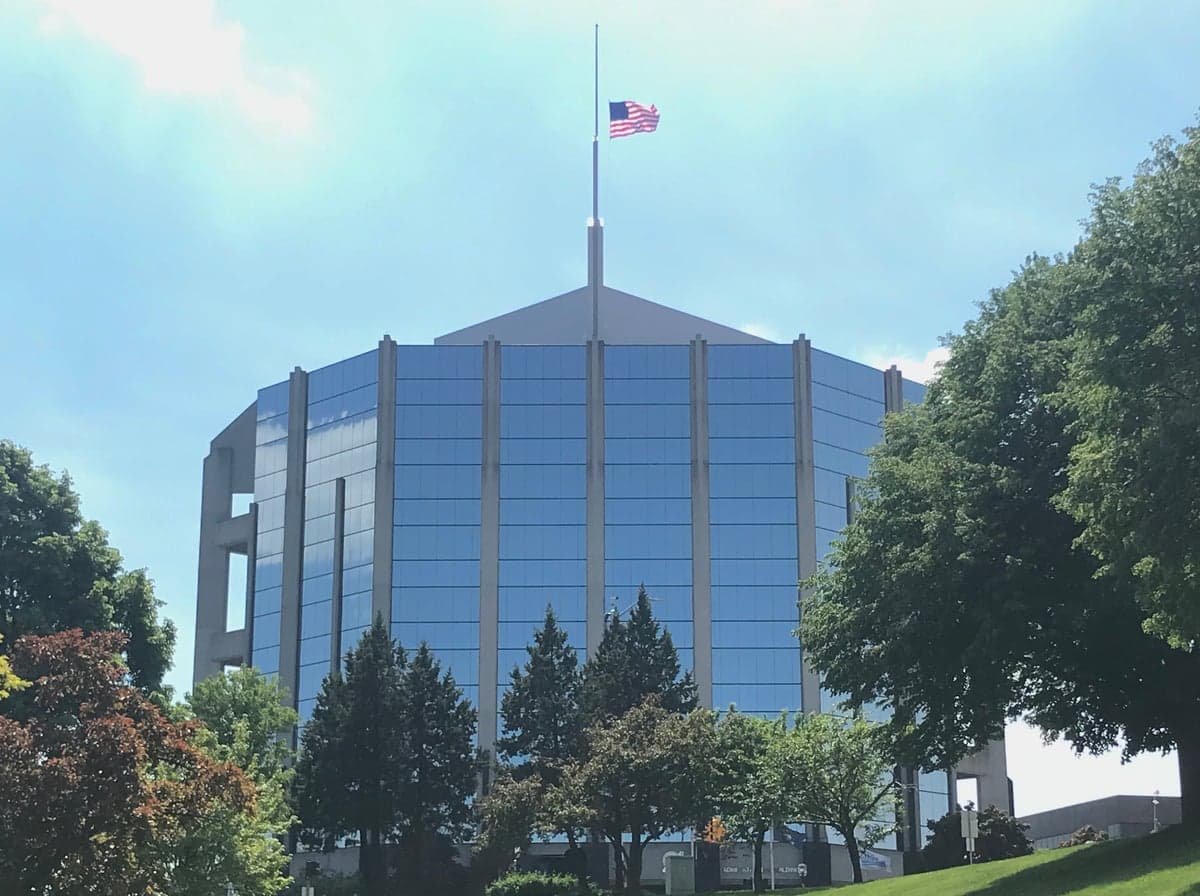
Photo: Wikipedia
Political ClimatePolitical Climate in Macomb County
Showing district-level results — no local-only data available.
Local Political AnalysisPolitical Analysis of Macomb County
Macomb County has been a political bellwether for decades, but its current lean is unmistakably Republican. With a Cook Partisan Voting Index of R+16, the county is far more conservative than the state of Michigan as a whole, which sits at EVEN. This isn't a new development—it's the culmination of a long, steady shift that began in the 1990s, when the county's traditionally blue-collar, union-heavy base started splitting tickets and eventually moving en masse to the GOP. The 2024 election cemented this: Donald Trump won Macomb by roughly 16 points, mirroring the PVI, while the state overall remained a toss-up.
How it compares
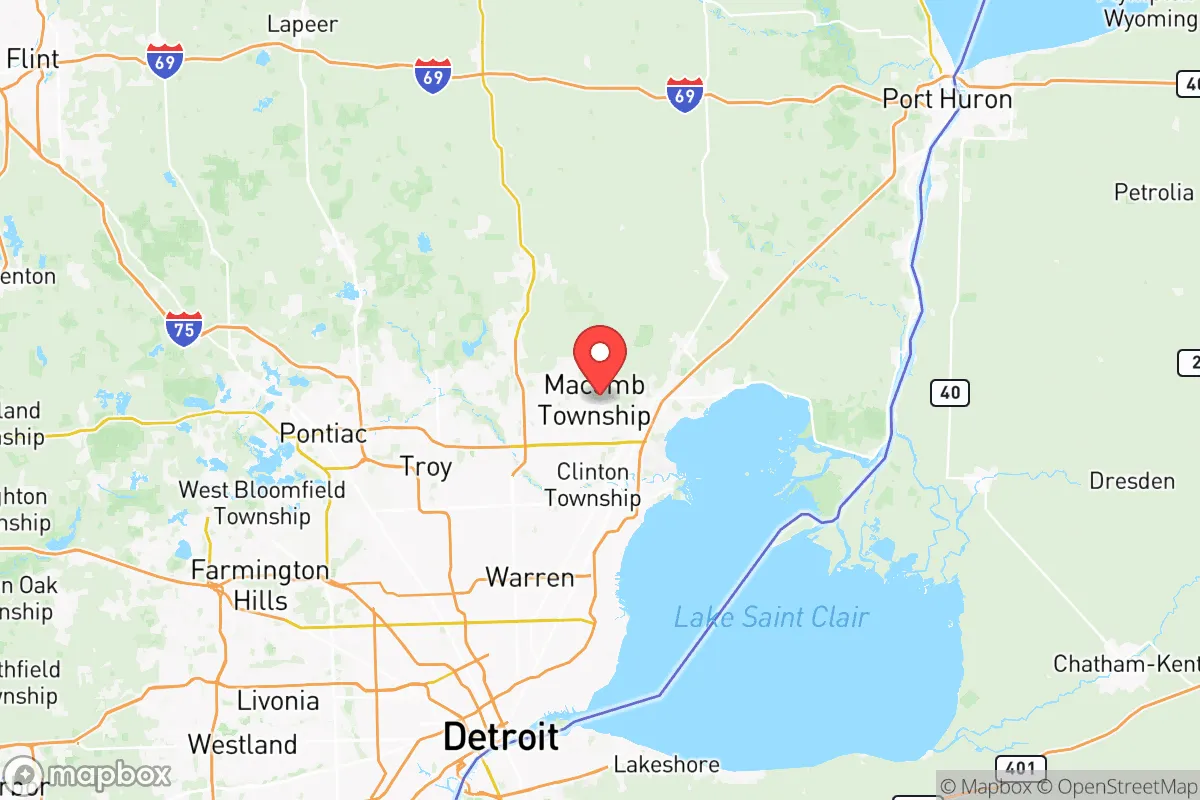
The gap between Macomb and Michigan is stark. The state's EVEN rating means it's a true swing state, capable of flipping between parties every cycle. Macomb, by contrast, is now a safe Republican stronghold. But it wasn't always this way. In 2008, Barack Obama carried Macomb by 8 points. By 2016, Trump won it by 12. That 20-point swing in eight years tells you everything about the county's trajectory. The real action is inside the county itself. Sterling Heights and Warren, the two largest cities, are the swing precincts—they voted for Obama in 2012, then flipped to Trump in 2016 and stayed red. Meanwhile, St. Clair Shores and Macomb Township are reliably conservative, often voting 60%+ Republican. On the flip side, Mount Clemens and parts of Clinton Township near the lake still lean blue, driven by younger voters and a small but active Democratic base. The county's political geography is a patchwork: the farther north and east you go, the redder it gets; the closer to Detroit's border, the more purple.
What this means for residents
For conservatives, Macomb is a comfortable place to live politically. Local offices—county commission, sheriff, prosecutor—are all held by Republicans. The county's GOP machine is well-organized, and conservative voters can expect their views to be reflected in local policy, from tax rates to law enforcement priorities. For liberals, it's a different story. You'll find like-minded people in Mount Clemens or the lakefront neighborhoods, but you're in the minority. That said, the county's Republican tilt doesn't mean it's a monolith. The party here is more pragmatic than ideological—think pro-union, pro-business, and skeptical of both far-left and far-right extremes. The local Democratic Party is small but vocal, and they do win occasional races, especially in judicial elections and school board seats. The practical effect is that most residents, regardless of party, feel their voice matters in local elections, even if the national outcome is a foregone conclusion.
Culturally, Macomb's politics show up in everyday life. You'll see more Trump flags and "Blue Lives Matter" signs than in Wayne or Oakland counties. The local news and talk radio lean conservative, and the county's strong union history means even Republican voters are protective of worker rights—a nuance that often surprises outsiders. Policy-wise, the county has been aggressive in opposing state-level mandates from Lansing, especially on gun rights and COVID restrictions. The county commission regularly passes resolutions pushing back on Democratic governors, which resonates with the base. For newcomers, the key takeaway is this: Macomb is a place where conservative values dominate, but the political culture is more about practicality than purity. It's a county that swung hard right and isn't looking back, but it still remembers its union roots.

State Political ClimatePolitical Climate in Michigan
State Political AnalysisPolitical Environment in the State
Michigan is a true battleground state, with a Cook PVI of EVEN that perfectly captures its 50/50 split. Over the past 20 years, the state has swung from reliably blue (voting for Kerry in 2004) to narrowly red (Trump in 2016) and back to blue (Biden in 2020), with razor-thin margins deciding every major race. The dominant coalitions are a shrinking unionized, urban base in Detroit and Ann Arbor versus a growing, energized conservative coalition in the exurbs, western Michigan, and the rural Upper Peninsula. The trajectory is a slow, grinding rightward shift in the suburbs and small cities, even as the Detroit metro core holds firm.
Urban vs. rural divide
The political map of Michigan is a story of three distinct regions. Wayne County (Detroit) and Washtenaw County (Ann Arbor) are the Democratic strongholds, delivering margins of 60-70% that are essential for any statewide Democrat. In 2020, Detroit alone gave Biden a 320,000-vote margin. Meanwhile, the western side of the state — Kent County (Grand Rapids) and Ottawa County (Holland) — has historically been a Republican bastion, though Grand Rapids itself is now trending purple as young professionals and refugees from the coasts move in. The true battlegrounds are the suburban "collar counties" like Macomb, Oakland, and Livingston. Macomb County, home to Warren and Sterling Heights, flipped from Obama to Trump and back to Biden, making it the single most watched county in the state. The rural Upper Peninsula and northern Lower Peninsula (places like Traverse City, Alpena, and Escanaba) lean red but are low-population, limiting their statewide impact.
Policy environment
Michigan’s policy environment is a mixed bag that reflects its divided nature. The state income tax is a flat 4.25%, with no state-level sales tax on groceries or prescription drugs. Property taxes are relatively high, averaging about 1.5% of assessed value, but are capped by Proposal A (1994) so they only rise with inflation or upon sale. The regulatory posture is moderate: Michigan is a right-to-work state (though that law was repealed in 2023 by the Democratic trifecta), and it has no statewide zoning preemption, meaning local governments control land use. Education policy is decentralized, with over 500 school districts and a robust charter school sector, but funding per pupil is below the national average. Healthcare is dominated by the Big Three insurers (Blue Cross, Priority Health, McLaren), and the state expanded Medicaid under the Affordable Care Act. Election laws are relatively accessible: no-excuse absentee voting was passed in 2018, and same-day voter registration is available. However, voter ID is required at the polls, with a signed affidavit as an alternative.
Recent policy direction
The 2023-2024 Democratic trifecta (Governor Whitmer, House, Senate) enacted a flurry of legislation that shifted the state leftward on several fronts. Gun laws: universal background checks and safe storage requirements were passed, along with a "red flag" law allowing temporary seizure of firearms from individuals deemed a risk. Self-defense law remains a "stand your ground" framework, but the new red flag law is a flashpoint. Parental and education rights: the state repealed the 1931 law banning abortion (codifying it via Proposal 3 in 2022), and passed a "transgender bill of rights" that prohibits discrimination based on gender identity in schools and workplaces. Speech and privacy: no major changes, though local school boards have seen heated debates over library books and curriculum. Medical and bodily autonomy: abortion is fully legal up to viability, and the state expanded Medicaid coverage for doula services. Property rights: no major changes, but the new administration has signaled interest in increasing the corporate income tax (currently 6%). Voting and ballot access: the 2022 ballot initiative (Proposal 2) enshrined nine days of early voting, drop boxes, and military/overseas voting protections into the state constitution. The net effect: a clear leftward tilt on social and cultural issues, while economic policy remains more centrist.
Civil unrest & political movements
Michigan has been a national flashpoint for political movements. The 2020 Whitmer kidnapping plot (involving militia members targeting the governor) remains the most extreme example, but the state has a long history of organized activism. On the right, the Michigan Conservative Coalition and local "Moms for Liberty" chapters have been active in school board races, particularly in Macomb and Livingston counties. On the left, the Michigan Democratic Party is heavily influenced by the United Auto Workers (UAW) and the "Squad"-aligned progressive caucus. Immigration politics are relatively quiet — Michigan is not a border state, and sanctuary policies are limited to a few cities like Ann Arbor and Detroit. Election integrity controversies were intense after 2020, with Republican-led audits in Antrim County (where a software error briefly flipped results) and ongoing lawsuits over ballot drop boxes. The 2024 election saw record turnout and minimal disruption, but the distrust remains. Visible flashpoints for a new resident: you'll see "Let's Go Brandon" flags in rural areas and "In This House We Believe" signs in Ann Arbor — the cultural divide is on full display.
Projection
Over the next 5-10 years, Michigan is likely to remain a toss-up, but with a subtle rightward drift in the suburbs. In-migration from Illinois and California is accelerating, particularly to the Grand Rapids area and the lakeshore towns (Holland, Saugatuck, Traverse City). These newcomers tend to be moderate Republicans or independents, diluting the hard-left influence of Detroit. Meanwhile, the Detroit population is stabilizing after decades of decline, but the city's Democratic margin is shrinking as older union voters die off. The wild card is the Upper Peninsula and northern Michigan, which are growing slowly but becoming more conservative as retirees from downstate move north. The 2024 election results (Trump won Michigan by 1.5 points) suggest the state is still a coin flip. A new resident moving in now should expect a decade of continued partisan gridlock at the state level, with occasional bursts of one-party rule (like 2023-2024) that produce sharp policy swings. The practical effect: your vote will matter more here than in almost any other state.
For a new resident, the bottom line is that Michigan offers a genuine battleground experience. If you're conservative, you'll find strong communities in Grand Rapids, Macomb County, and the rural north, but you'll need to engage in local politics to protect your priorities. If you're liberal, you'll feel at home in Ann Arbor, Detroit, and the lakeshore arts towns, but you'll face constant electoral competition. The state's moderate tax burden and decent schools make it a practical choice for families, but the cultural wars are real and visible. Come prepared to vote, because your ballot will be one of the most consequential in the country.
* Values derived from national, state, county, city and local statistics and may differ in a specific area. Last updated: 2026-06-16T09:31:32.000Z
Narrative content on this page is AI-generated and may contain mistakes. Verify any details that matter before acting on them.
ReloMaps may earn a commission from affiliate links at no extra cost to you.

