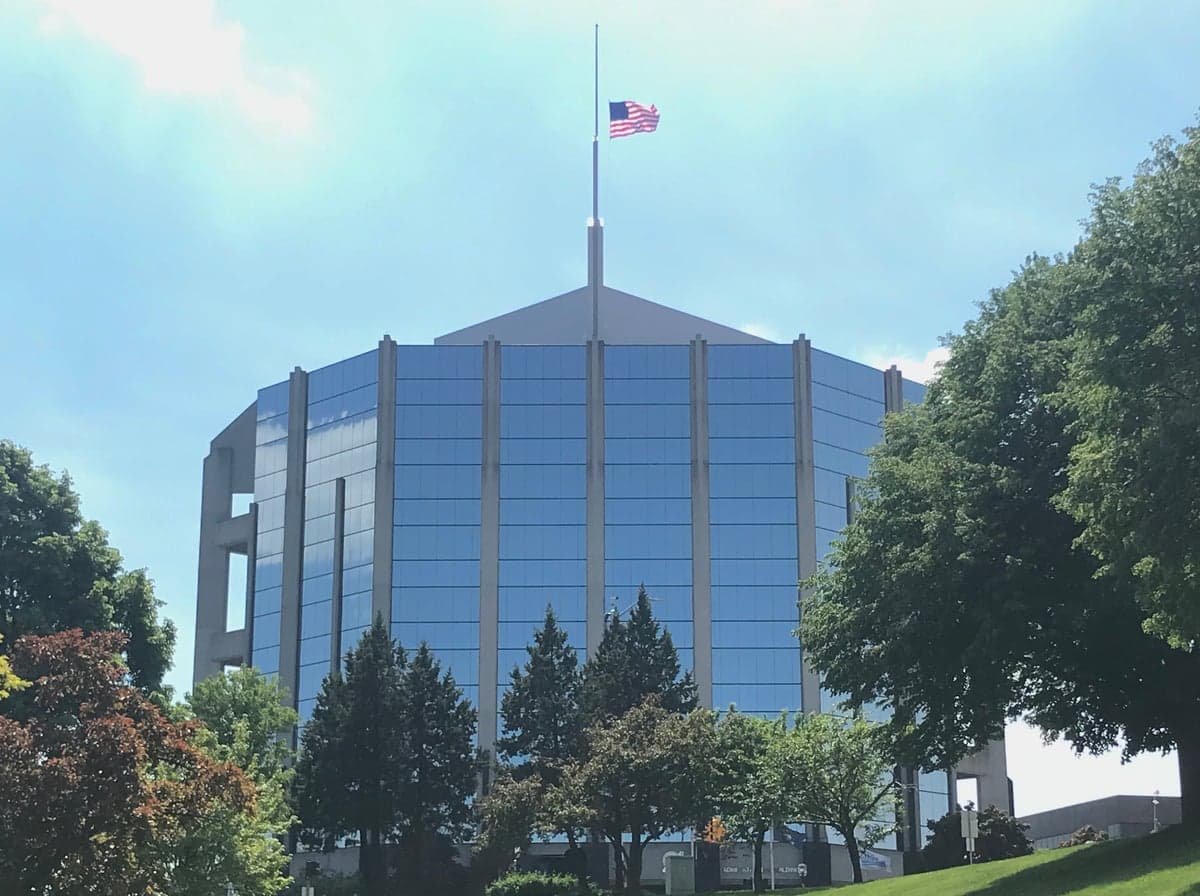
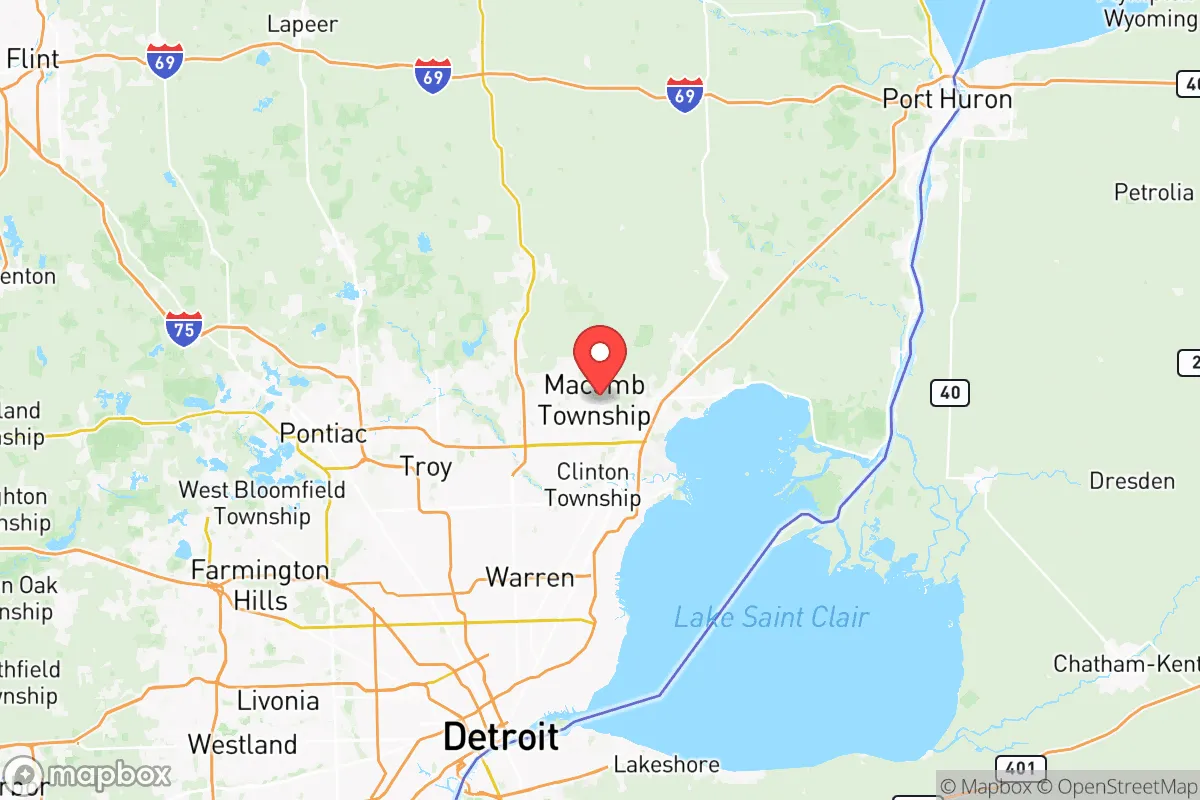
Photo: Wikipedia
Personal Sovereignty in Macomb County
Strong independent fundamentals that actively favor personal liberty and low regulation.
What does Personal Sovereignty tell us?
Personal Sovereignty measures your capacity for self-reliance and independence with minimal government friction. Higher scores mean fewer barriers between you and the way you want to live... but it assumes you have the space you need and good neighbors.
What does this tell us?
Personal Sovereignty measures your capacity for self-reliance and independence with minimal government friction. Higher scores mean fewer barriers between you and the way you want to live... but it assumes you have the space you need and good neighbors.
State Policy
Energy independence: Importer (20% of energy produced in-state)
Personal Liberty
Homesteading

Personal Liberty Analysis
Macomb County offers a notably high degree of personal sovereignty relative to much of Southeast Michigan, blending a blue-collar, self-reliant ethos with a regulatory environment that is generally lighter than neighboring Wayne County but more structured than rural northern Michigan. The county's political leanings have shifted rightward in recent years, with communities like Armada, Richmond, and Washington Township reflecting a strong conservative, pro-liberty culture, while Mount Clemens and Warren maintain a more mixed but still pragmatic approach to governance. For individuals and families prioritizing autonomy, Macomb County presents a strategic middle ground—close to Detroit's economic opportunities but with a noticeably lower tax burden and a more permissive stance on self-defense and property rights than its urban neighbor to the south.
Tax burden and regulatory posture: how Macomb County compares to surrounding areas
Macomb County's tax environment is a key draw for those seeking fiscal sovereignty. The county's property tax rate averages around 1.8% of assessed value, which is competitive for Southeast Michigan and significantly lower than Wayne County's typical 2.0%+ rates. The State Equalized Value (SEV) system, which caps annual assessment increases at 5% or the rate of inflation (whichever is lower) under Proposal A, provides predictability for long-term homeowners. Income tax is a non-factor for most residents, as Michigan's flat 4.25% state income tax applies uniformly, and Macomb County does not levy a county-level income tax—unlike Wayne County's 0.5% tax on non-residents working in Detroit. Regulatory posture varies by municipality: Chesterfield Township and Macomb Township are known for more business-friendly zoning and permitting processes, while St. Clair Shores has a denser, more code-heavy environment typical of older lakefront suburbs. The county's overall regulatory approach is pragmatic rather than heavy-handed, with building codes and environmental regulations enforced but not aggressively expanded beyond state minimums. For a family or individual seeking to minimize government intrusion into daily financial decisions, Macomb County's tax structure and regulatory baseline are favorable compared to the higher-cost, more restrictive environments found in Oakland County's affluent enclaves or Wayne County's urban core.
Self-defense and gun law specifics: what residents need to know
Michigan is a "shall-issue" state for concealed pistol licenses (CPL), and Macomb County's gun culture is robust and legally permissive. The county sheriff's office in Mount Clemens processes CPL applications efficiently, with typical turnaround times of 45-60 days. Open carry is legal without a permit for anyone 18 or older who can legally possess a firearm, though local ordinances in Warren and Sterling Heights restrict open carry in certain public buildings and parks. Stand-your-ground laws apply statewide, meaning no duty to retreat exists in any place where a person has a legal right to be. Castle doctrine protections extend to occupied vehicles and workplaces, not just homes. Magazine capacity is unrestricted, and there is no state-level assault weapons ban. However, the 2024 passage of universal background checks for all firearm sales (including private transfers) and a 5-day waiting period for handgun purchases has tightened the legal landscape slightly. For self-defense-minded residents, Armada and Richmond are the most gun-friendly communities, with multiple shooting ranges and gun shops, and a local culture that strongly supports Second Amendment rights. In contrast, Mount Clemens has a more mixed political climate, but enforcement of gun laws remains consistent with state statutes. Overall, Macomb County offers a strong legal framework for personal self-defense, with the caveat that recent state-level changes require attention to compliance.
Self-reliance and homesteading viability: lot sizes, zoning, and off-grid feasibility
Homesteading and off-grid living are viable in Macomb County's northern and eastern townships, but the southern and western suburbs are more restrictive. Armada Township and Richmond Township offer the best opportunities, with minimum lot sizes of 2-5 acres in agricultural zoning districts. These areas permit chickens, goats, and even small livestock without special permits, and many properties have existing wells and septic systems. Off-grid solar is legal statewide, but net metering policies require connection to the grid for battery storage incentives—fully off-grid systems are allowed but must comply with local building codes. Rainwater collection is unrestricted for non-potable uses. In contrast, Macomb Township and Chesterfield Township have suburban zoning with minimum lot sizes of 0.5-1 acre, where chickens are often allowed but larger livestock and extensive outbuildings require conditional use permits. St. Clair Shores and Warren are largely urban, with lot sizes under 0.25 acres and strict prohibitions on livestock and non-standard structures. For families seeking a self-reliant lifestyle with garden space, small animals, and reduced reliance on municipal utilities, the northern tier of Macomb County—particularly around Armada and Richmond—offers the most permissive zoning and practical land availability. The county's soil quality is generally good for vegetable gardening, and growing seasons average 160-170 frost-free days.
Personal liberties: parental rights, medical autonomy, speech, and property
Macomb County's legal environment supports a broad range of personal liberties, with notable strengths in parental rights and property freedom. Michigan law grants parents broad authority over their children's education, medical decisions, and religious upbringing. Homeschooling is legal with minimal state oversight—parents need only submit a simple intent form to the local school district and provide instruction in core subjects. The county has a strong network of homeschool co-ops and private religious schools, particularly in Washington Township and Macomb Township. Medical autonomy is generally respected, with no state-level vaccine mandates for adults and a 2024 law prohibiting discrimination against unvaccinated individuals in healthcare access. However, Michigan's vaccine requirements for school entry remain in place, with medical and religious exemptions available. Free speech protections are robust, with no local ordinances restricting political signage or public assembly beyond standard time-place-manner regulations. Property rights are well-protected, with Michigan's "right to farm" act shielding agricultural operations from nuisance lawsuits in areas zoned for farming. Eminent domain is rarely used for private development, and property tax appeals are straightforward through the Michigan Tax Tribunal. For a reader prioritizing personal autonomy, Macomb County's legal framework is generally permissive, with the main constraints coming from state-level regulations rather than local overreach.
Overall, Macomb County ranks as a strong choice for personal sovereignty in Southeast Michigan, offering a balanced environment that avoids the extremes of both urban overregulation and rural under-service. Compared to Oakland County's higher taxes and more restrictive zoning, or Wayne County's denser regulatory climate, Macomb provides a pragmatic middle path—especially in its northern townships. For families and individuals who value self-defense rights, fiscal independence, and the ability to live with minimal government interference, Macomb County's combination of state-level protections and local permissiveness makes it a strategically sound relocation option within the region.

* Values derived from national, state, county, city and local statistics and may differ in a specific area. Last updated: 2026-06-16T09:31:32.000Z
Narrative content on this page is AI-generated and may contain mistakes. Verify any details that matter before acting on them.
ReloMaps may earn a commission from affiliate links at no extra cost to you.

