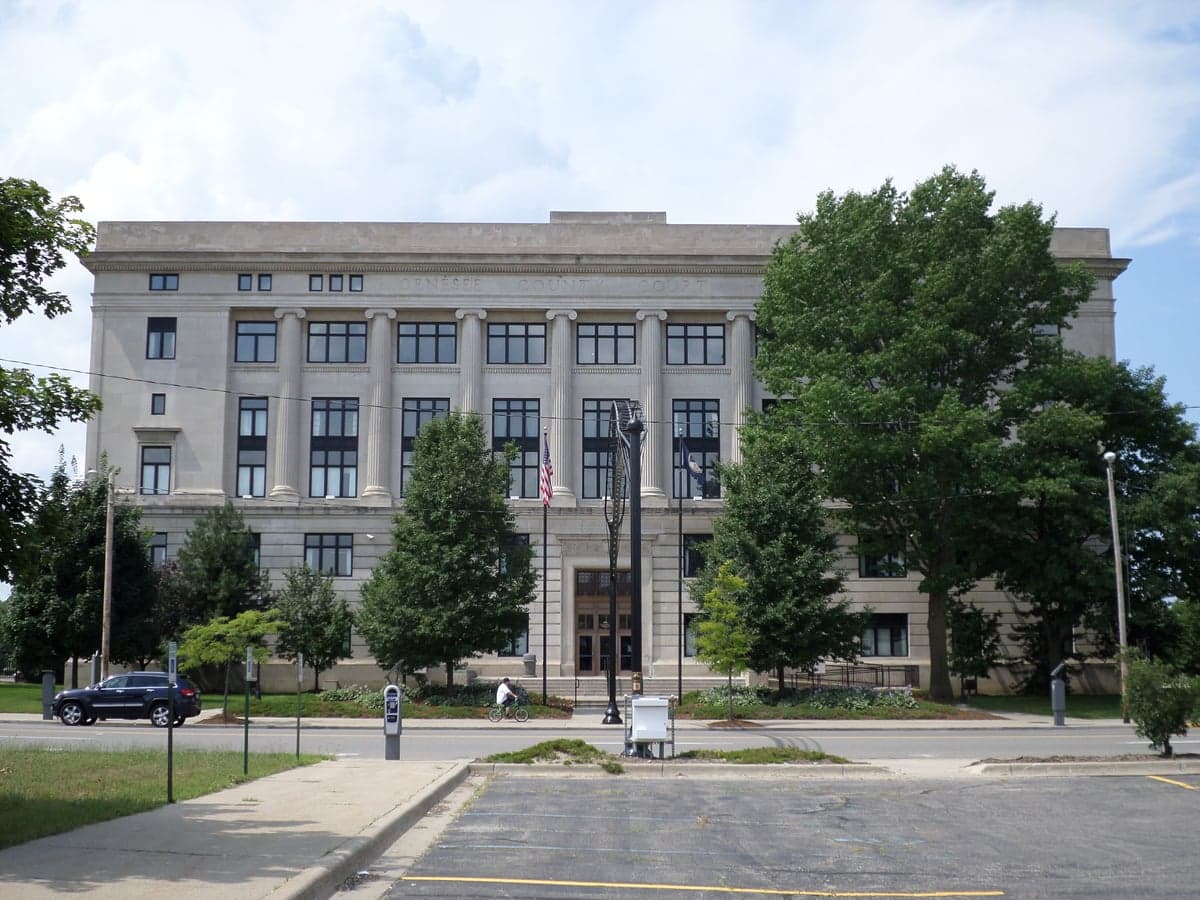
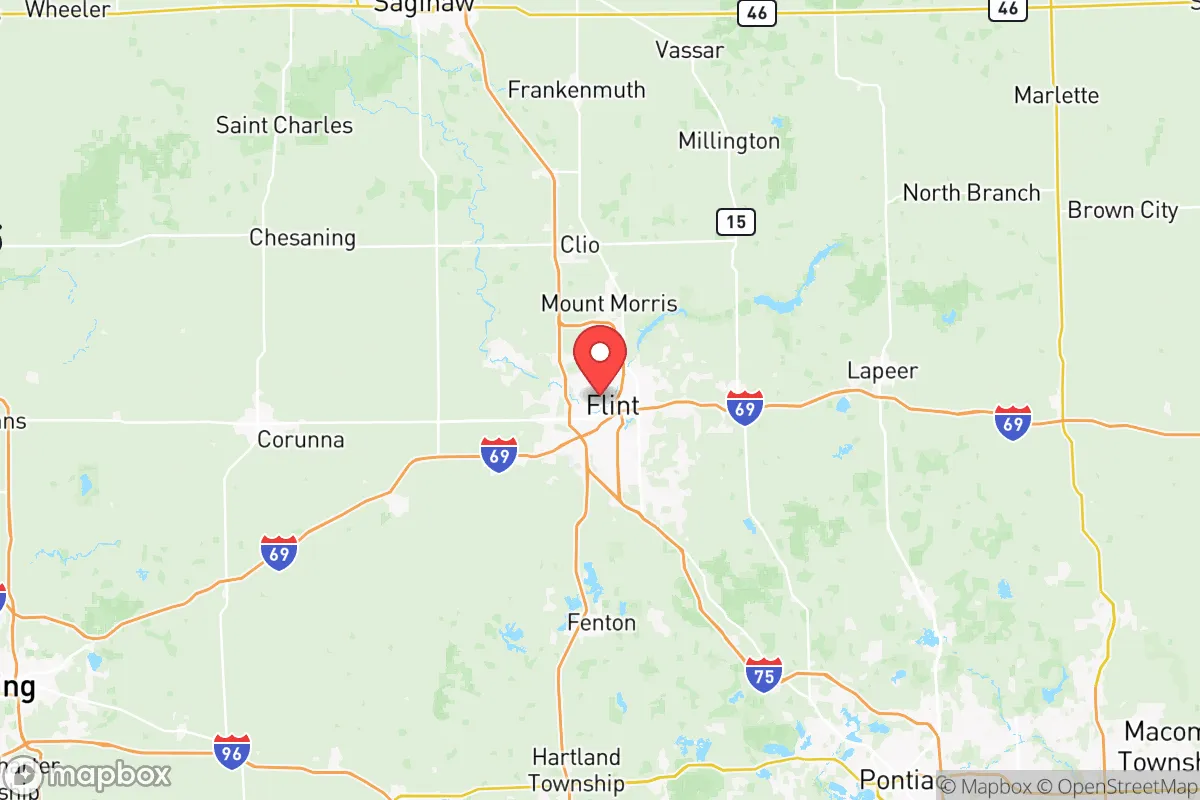
Photo: Wikipedia
Personal Sovereignty in Genesee County
Strong independent fundamentals that actively favor personal liberty and low regulation.
What does Personal Sovereignty tell us?
Personal Sovereignty measures your capacity for self-reliance and independence with minimal government friction. Higher scores mean fewer barriers between you and the way you want to live... but it assumes you have the space you need and good neighbors.
What does this tell us?
Personal Sovereignty measures your capacity for self-reliance and independence with minimal government friction. Higher scores mean fewer barriers between you and the way you want to live... but it assumes you have the space you need and good neighbors.
State Policy
Energy independence: Importer (20% of energy produced in-state)
Personal Liberty
Homesteading

Personal Liberty Analysis
Genesee County, Michigan, offers a mixed but generally favorable environment for personal sovereignty, where state-level preemption on key issues like gun rights and property use provides a baseline of autonomy that local municipalities can either amplify or constrain. The county’s regulatory posture leans toward the permissive side for rural and suburban areas, while the city of Flint and its immediate suburbs impose a heavier touch. For a conservative-leaning individual or family prioritizing self-reliance, the key is choosing the right township—places like Grand Blanc Township, Davison Township, and Fenton offer far more breathing room than the city limits of Flint or even the more densely regulated Burton.
Tax burden and regulatory posture across Genesee County
Michigan’s state-level tax structure is moderate, with a flat 4.25% individual income tax and a 6% sales tax, but Genesee County’s local tax burden varies significantly by municipality. The county-wide property tax rate averages around 35 mills (including school and county levies), but this can climb to over 50 mills in Flint proper due to special assessments and higher city millage. In contrast, townships like Flushing and Gaines maintain lower overall rates, often under 30 mills, because they rely less on municipal services. Regulatory posture is similarly split: Flint enforces strict rental registration, zoning overlays, and business licensing, while townships like Mundy and Vienna operate with minimal zoning interference, allowing home-based businesses and agricultural uses by right. The county’s planning department generally defers to local control, meaning a resident in rural Atlas Township faces far fewer permitting hurdles than someone in Flint’s central business district. For a reader seeking low-tax, low-regulation living, the clear strategy is to target townships outside the urban core—especially those with agricultural or rural-residential zoning that explicitly permits accessory structures, livestock, and home occupations without conditional use permits.
Self-defense rights and gun law specifics in Genesee County
Michigan is a shall-issue state for concealed pistol licenses (CPL), and Genesee County’s gun culture is robust, with the county clerk’s office processing CPL applications efficiently—typically within the 45-day statutory window. The county sheriff’s office, particularly under current leadership, has publicly supported Second Amendment rights, and there are no local ordinances that exceed state preemption on firearm regulations. This means that open carry is legal throughout the county without a permit, and concealed carry with a CPL is permitted in most public spaces, though private property owners (including businesses in Flint and Grand Blanc) can post no-gun signs. Stand-your-ground laws apply statewide, and Genesee County prosecutors have historically been restrained in charging self-defense cases, though the Flint-based prosecutor’s office under David Leyton (prior to 2024) was viewed as more aggressive than the current administration. For practical self-defense, the county has several well-regarded gun ranges and training facilities, including the Flint Rifle & Pistol Club and Williams Gun Sight Company in Davison. The key distinction for a relocation decision: while the legal framework is uniform, the social environment in Flint leans more anti-gun (with some businesses and public buildings posting restrictions), whereas townships like Davison and Fenton are overwhelmingly gun-friendly, with few posted restrictions and a culture of everyday carry.
Self-reliance and homesteading viability: lot sizes, zoning, and off-grid feasibility
Genesee County offers substantial homesteading opportunities, but viability depends heavily on township zoning. Minimum lot sizes in agricultural zones (A-1) are typically 5 to 10 acres in townships like Atlas, Gaines, and Mundy, allowing for livestock, gardens, and even small-scale farming operations. In contrast, residential zones in Flint Township and Burton often require 1-acre minimums and prohibit livestock beyond chickens (with strict coop setbacks). Off-grid feasibility is mixed: Michigan law requires connection to a public sewer system if within 200 feet of a main line, but in rural townships, septic systems are standard and well water is common. Solar panels are permitted statewide, but some townships (notably Flint Township and Grand Blanc Township) have aesthetic restrictions on ground-mounted arrays. Rainwater collection is legal without a permit for non-potable uses, and composting toilets are allowed in areas without sewer access. The most homestead-friendly areas are the northern and western townships—Vienna, Thetford, and Forest—where zoning is minimal, building permits are straightforward, and the county health department’s septic and well inspections are the primary regulatory hurdles. For a family wanting to raise animals, grow food, and reduce utility dependence, these townships offer the best balance of affordability and regulatory freedom, with land prices averaging $5,000–$10,000 per acre compared to $20,000+ in the Flint suburbs.
Personal liberties: parental rights, medical autonomy, speech, and property
Michigan’s state-level framework provides strong protections for parental rights in education, including a 2023 law requiring school districts to notify parents of any changes to a student’s health or well-being services. Genesee County school districts vary in implementation: Davison Community Schools and Fenton Area Public Schools have been proactive in posting curriculum materials and allowing parental opt-outs, while Flint Community Schools have faced criticism for limited transparency. Medical autonomy is more constrained: Michigan’s vaccine mandate for school attendance (with religious and medical exemptions) remains in place, and the state’s 2022 repeal of the 1931 abortion ban means reproductive healthcare access is legally protected, though local providers are concentrated in Flint. Speech protections are robust, with no local hate speech ordinances or content-based restrictions beyond standard defamation law. Property rights are strong under Michigan’s Right to Farm Act, which shields agricultural operations from nuisance lawsuits in townships with agricultural zoning—a key advantage for homesteaders in Atlas and Gaines. However, the county’s planning commission has occasionally used zoning amendments to restrict short-term rentals (Airbnb) in residential areas, particularly in Grand Blanc Township and Flushing, so those seeking rental income should verify current ordinances. Overall, personal liberties are strongest in the rural townships and weakest in Flint’s urban core, where noise ordinances, business licensing, and property maintenance codes are more strictly enforced.
Compared to other Michigan counties, Genesee offers a middle ground on personal sovereignty—less restrictive than Washtenaw or Oakland counties (which have stricter zoning and higher taxes), but more regulated than rural northern counties like Lapeer or Tuscola. For a conservative-leaning individual or family, the optimal strategy is to locate in a township like Davison, Fenton, or Atlas, where state-level freedoms are amplified by local permissiveness, and to avoid Flint and its immediate suburbs where regulatory density is higher. The county’s overall sovereignty environment is solidly above average for the state, provided you choose your municipality carefully—the difference between a 10-acre homestead with chickens and solar panels and a 1/4-acre lot with HOA restrictions is just a few miles of road.

* Values derived from national, state, county, city and local statistics and may differ in a specific area. Last updated: 2026-07-14T10:18:19.000Z
Narrative content on this page is AI-generated and may contain mistakes. Verify any details that matter before acting on them.
ReloMaps may earn a commission from affiliate links at no extra cost to you.

