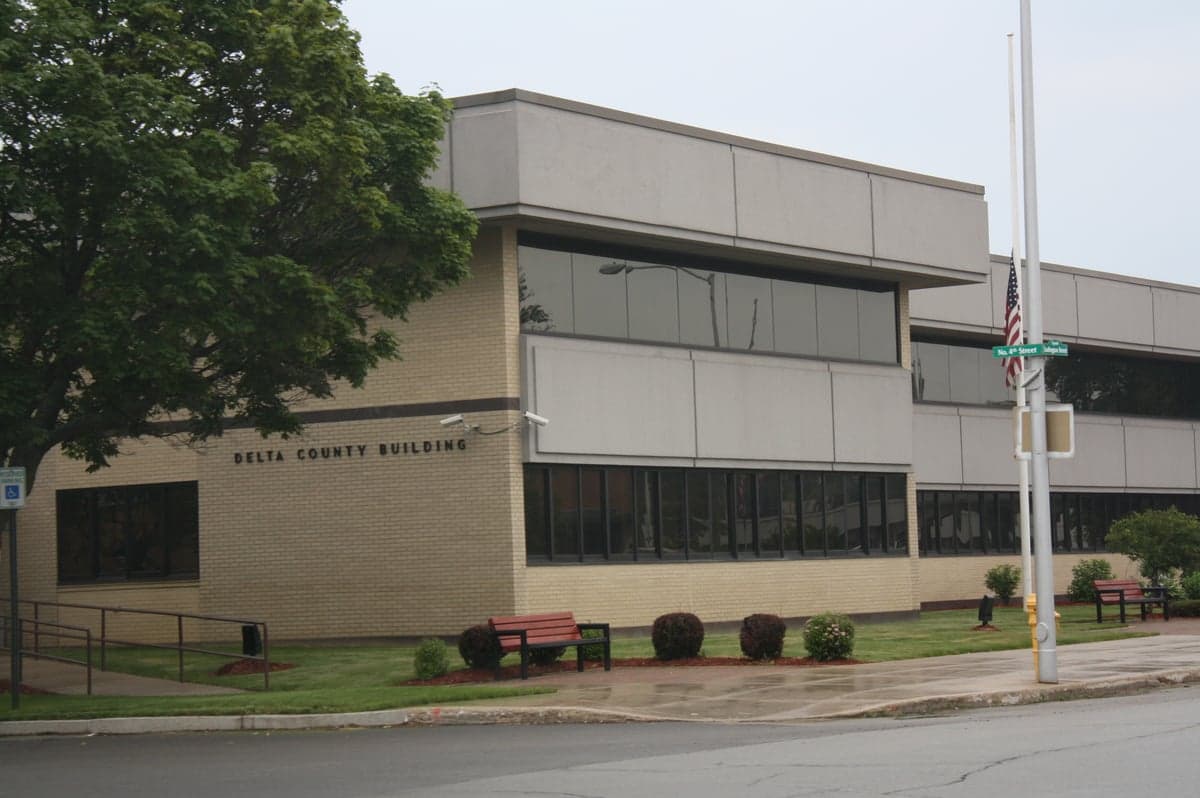
Photo: Wikipedia
Strategic Assessment of Delta County
Workable tactical position. Some exposure to population density or targets, but generally defensible in a crisis.
What does the Strategic Assessment tell us?
Our Strategic Assessment grades tactical survivability of an area. Major population centers, military targets, fallout zones, natural disasters, and border exposure all drive risk — lower exposure means a more defensible position in a crisis.
This is heavily inspired by Joel Skousen's Strategic Relocation book. Highly recommended you checkout the book ($)What does this tell us?
Our Strategic Assessment grades tactical survivability of an area. Major population centers, military targets, fallout zones, natural disasters, and border exposure all drive risk — lower exposure means a more defensible position in a crisis.
This is heavily inspired by Joel Skousen's Strategic Relocation book. Highly recommended you checkout the book ($)Strategic Pillars
Key Distances
Strategic Assessment Analysis
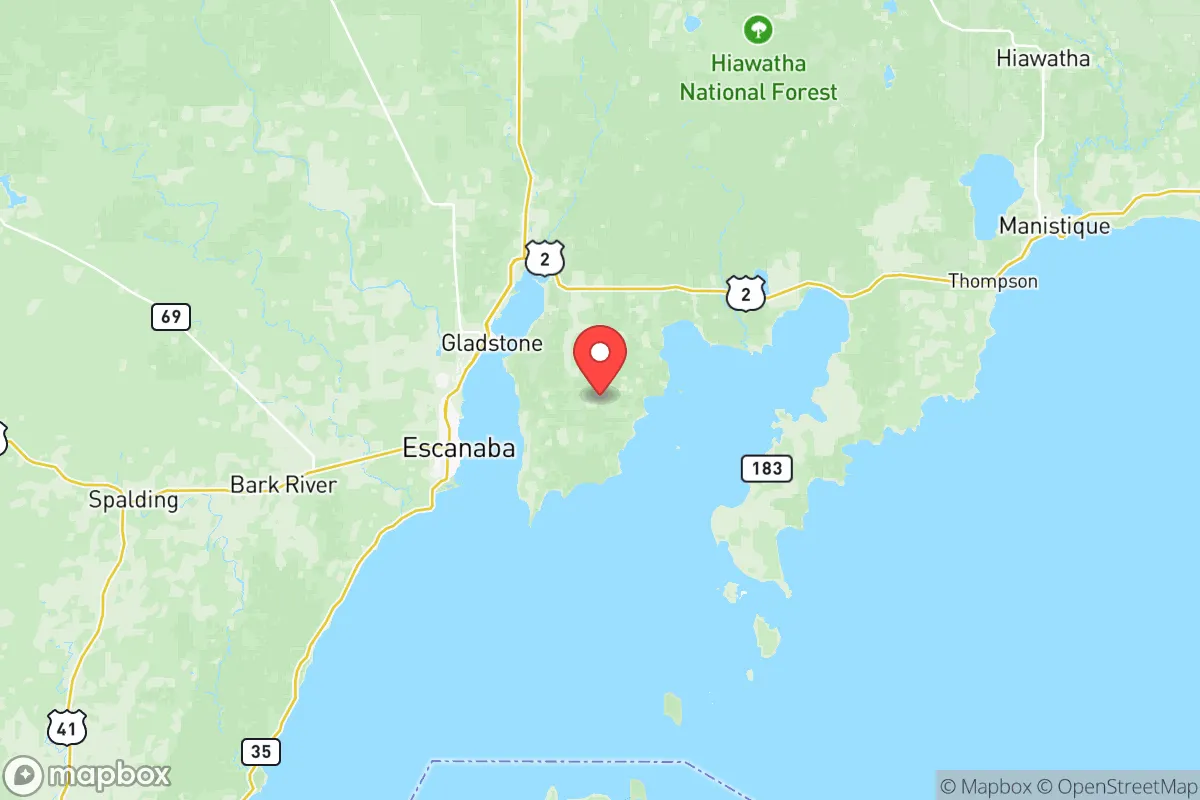
Delta County, Michigan offers a compelling strategic position for relocators prioritizing resilience and self-sufficiency, balancing relative isolation with access to critical infrastructure. Located on the Upper Peninsula’s southern shore, the county is anchored by the city of Escanaba and the smaller communities of Gladstone and Rapid River, with Lake Michigan forming its southern boundary. This geography provides a natural buffer from the dense population centers and industrial corridors of the Lower Peninsula and the Midwest, while still maintaining practical connections to regional hubs like Green Bay, Wisconsin, and Marquette, Michigan. For a reader evaluating long-term stability and disaster preparedness, Delta County presents a mix of genuine advantages and specific vulnerabilities worth examining closely.
Geographic position and natural advantages for long-term stability
Delta County’s location is defined by its access to the Great Lakes and its position within the sparsely populated Upper Peninsula. The county sits along the Little Bay de Noc, a sheltered arm of Lake Michigan, which provides a moderating effect on climate and a reliable freshwater source. Escanaba, the county seat and largest city (population roughly 12,000), is the only deepwater port on the Upper Peninsula’s southern shore, handling bulk commodities like limestone, iron ore, and coal through the Escanaba Harbor. This port is a strategic asset—it connects the region to Great Lakes shipping lanes without the congestion of larger ports like Duluth or Chicago. The surrounding terrain is a mix of hardwood forests, low hills, and wetlands, offering natural cover and defensible positions, though it lacks the dramatic elevation changes found further north in the Huron Mountains. The county’s population density is low—roughly 37,000 residents spread over 1,200 square miles—meaning most relocators can find significant acreage without close neighbors. The Hiawatha National Forest covers large portions of the county, providing public land for foraging, hunting, and timber, though private ownership is the norm for residential parcels. Winters are long and snowy, with average snowfall exceeding 50 inches, which acts as a natural barrier to casual travel and reinforces the area’s isolation during cold months.
Risks, exposures, and proximity to fallout-relevant landmarks
Delta County’s primary risks are natural rather than man-made, which is a net positive for resilience-minded relocators. The county sits in a low-seismic-activity zone, with no active fault lines nearby. Tornado risk is lower than in the Great Plains or even the Lower Peninsula, though severe thunderstorms and straight-line winds occur. The most significant natural hazard is wildfire—the surrounding forests, particularly in the Hiawatha National Forest and state-managed lands, have experienced periodic burns, and dry summers can elevate risk. Flooding is localized, primarily along the Escanaba River and smaller creeks, but the Lake Michigan shoreline is not prone to storm surge like coastal areas. Regarding man-made risks, Delta County is far from major fallout-relevant landmarks. The nearest nuclear power plant is the Palisades Nuclear Plant in Covert, Michigan, roughly 120 miles south across Lake Michigan—well outside the typical 50-mile emergency planning zone. There are no major military bases, refineries, or chemical plants within the county. The closest significant industrial target is the oil refining and petrochemical complex in the Sault Ste. Marie area, about 70 miles northeast, or the larger industrial corridor around Green Bay, Wisconsin, 80 miles southwest. The Escanaba Harbor itself handles bulk commodities, not hazardous materials, making it a low-priority target. The county’s position on the Upper Peninsula means it is not downwind of major population centers like Chicago or Detroit, reducing fallout exposure from a distant event. The primary vulnerability is economic rather than strategic: the county’s economy relies heavily on government services, healthcare, and tourism, with limited manufacturing diversity. A prolonged disruption to national supply chains would hit harder here than in more self-sufficient regions.
Practical resilience for a relocator: food, water, energy, and defensibility
For a relocator focused on self-sufficiency, Delta County offers strong fundamentals with some notable gaps. Water is abundant and accessible—Lake Michigan provides an essentially unlimited freshwater source, and the county’s groundwater is generally clean and shallow, with many properties having private wells. The Escanaba River and numerous inland lakes (like Lake Antoine and Ford River) offer secondary sources. Food production is feasible but requires effort. The growing season is short (roughly 100–120 frost-free days), limiting crops to cold-hardy varieties like potatoes, root vegetables, and some grains. Soils are sandy and acidic in many areas, requiring amendment for serious agriculture. However, the surrounding forests are rich in game—white-tailed deer, black bear, and small game are plentiful—and Lake Michigan and inland waters provide consistent fishing for walleye, perch, and whitefish. Foraging for mushrooms, berries, and maple syrup is viable. Local food infrastructure is modest: Escanaba has a year-round farmers market, and there are a few small-scale farms and orchards, but the county is not a net food producer. Energy reliability is a mixed picture. The grid is served by Upper Peninsula Power Company (UPPCO), which has a history of outages during winter storms. Many rural properties rely on propane or fuel oil for heating, which creates supply-chain dependency. Solar potential is moderate—winter cloud cover and short daylight hours reduce output, but summer days are long. Wood heating is common and practical, given the abundant timber. Defensibility is a strong point. The county’s low population density, forested terrain, and limited road network (primarily US-2 and US-41) make it easy to secure a property against casual intrusion. The Lake Michigan shoreline provides a natural barrier to the south, while the interior offers numerous choke points. The nearest significant law enforcement presence is the Delta County Sheriff’s Office in Escanaba, with state police posts in Gladstone and Manistique. Response times in rural areas can exceed 30 minutes, reinforcing the need for self-reliance. Medical facilities are limited: OSF St. Francis Hospital in Escanaba is a critical-access hospital with basic emergency services, but serious trauma care requires a 90-minute drive to Marquette or a 2-hour drive to Green Bay.
The overall strategic picture for Delta County is one of moderate resilience with clear trade-offs. Its geographic isolation, abundant freshwater, and low exposure to man-made risks make it a strong candidate for relocators seeking a buffer from national-scale disruptions. The county’s small population and limited infrastructure mean that self-sufficiency in food, energy, and medical care is not optional—it is a requirement. For a single individual or family willing to invest in wood heating, well water, and gardening skills, Delta County offers a defensible, low-target location with access to a major freshwater resource. The trade-off is a harsh winter climate, a short growing season, and economic dependence on external systems. For the reader who values quiet, security, and a direct relationship with the land over convenience and connectivity, Delta County warrants serious consideration. It is not a survivalist’s paradise, but it is a practical, grounded option for those who understand that resilience is built, not bought.

* Values derived from national, state, county, city and local statistics and may differ in a specific area. Last updated: 2026-11-15T22:54:34.000Z
Narrative content on this page is AI-generated and may contain mistakes. Verify any details that matter before acting on them.
ReloMaps may earn a commission from affiliate links at no extra cost to you.

