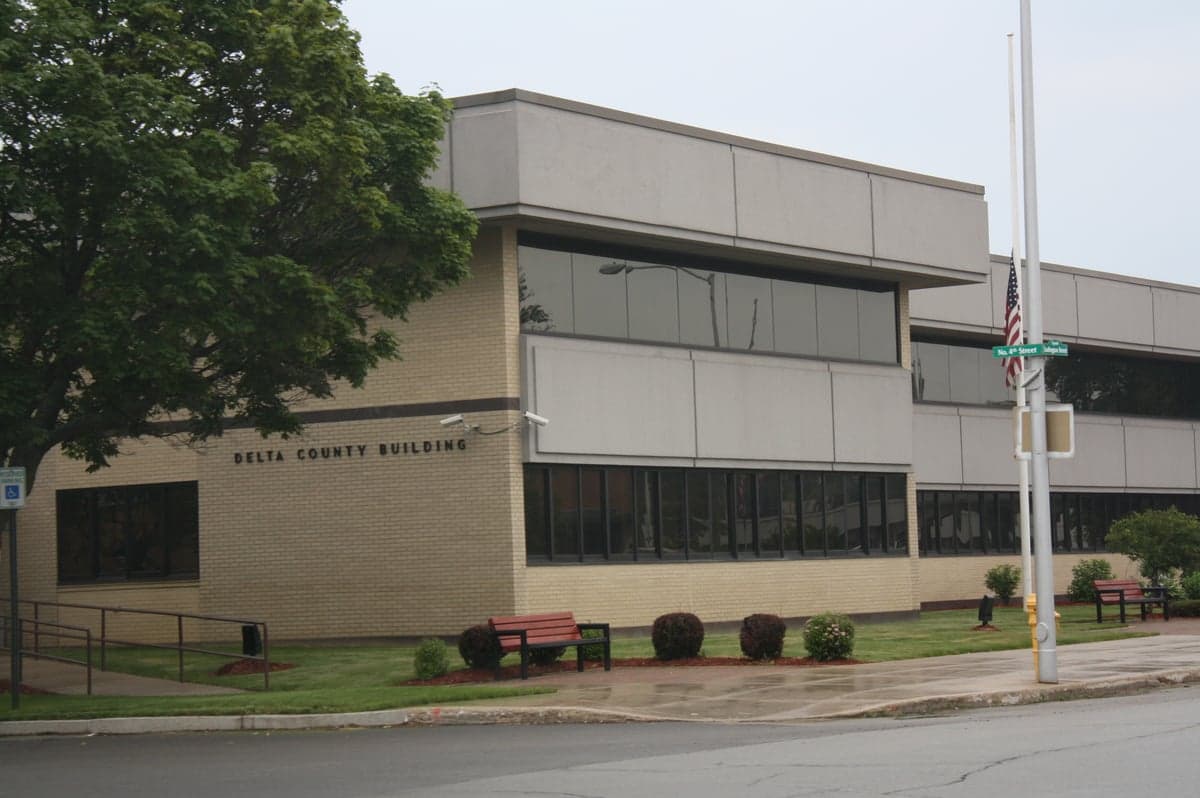
Photo: Wikipedia
Demographics of Delta County
Affluence Level in Delta County
A below-average socioeconomic profile. Incomes, home values, and educational attainment trail the U.S., with higher poverty and unemployment.
People of Delta County
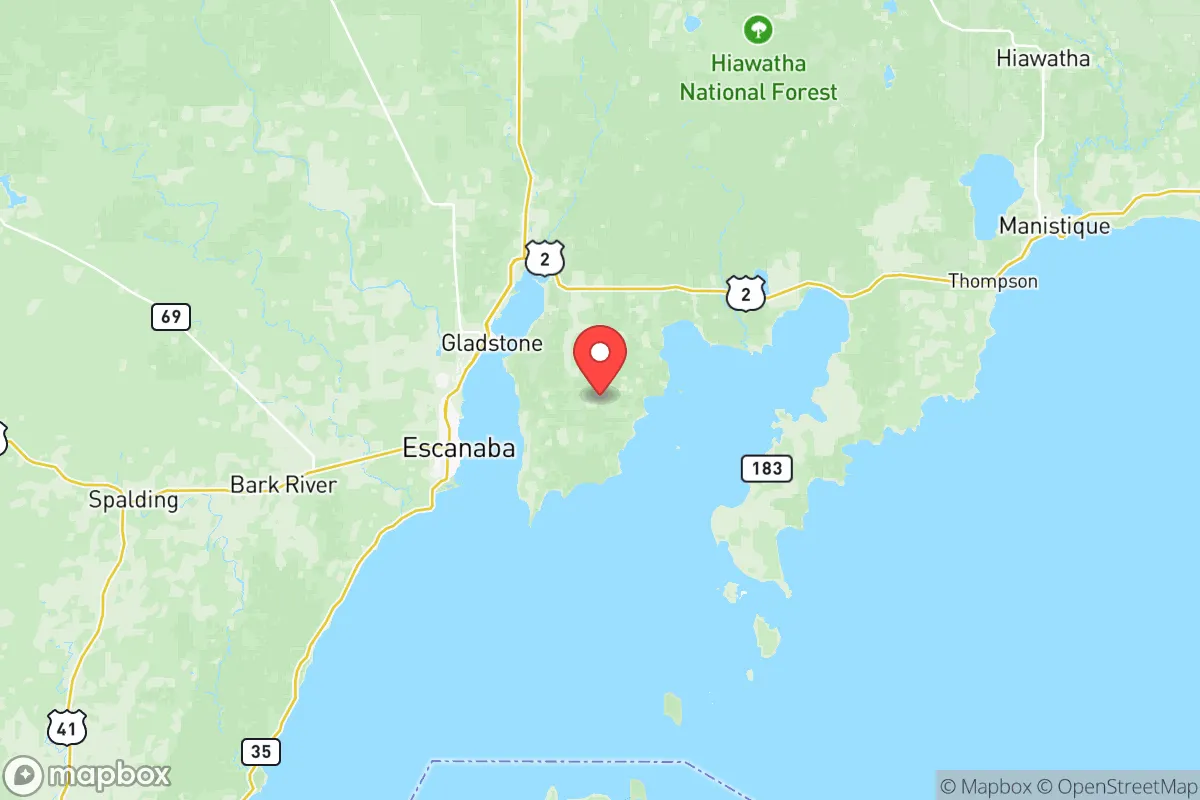
Delta County, Michigan, is a predominantly white, rural community of 36,829 residents, characterized by its deep Finnish and Scandinavian heritage, a strong working-class identity tied to the Hiawatha National Forest and Lake Michigan shoreline, and a notably low foreign-born population of just 0.2%. The county’s people are concentrated in the small cities of Escanaba and Gladstone, with a scattering of unincorporated villages like Rapid River and Nahma, and they maintain a distinct Upper Peninsula (UP) culture that values self-reliance, outdoor recreation, and conservative social values. With 90.3% of residents identifying as white and only 1.5% Hispanic, Delta County remains one of Michigan’s least ethnically diverse counties, a demographic reality rooted in its settlement history and economic trajectory.
Settlement & growth (pre-1960)
Long before European arrival, the area now known as Delta County was inhabited by the Ojibwe (Chippewa) people, who lived in seasonal villages along the Bay de Noc and the Escanaba River. The Ojibwe ceded the land to the United States in the 1836 Treaty of Washington, opening it to white settlement. French and British fur traders had passed through earlier, but they left no permanent settlements.
The first major wave of American settlers arrived in the 1850s and 1860s, drawn by the promise of timber and iron ore. Yankees from New York and New England founded the county seat of Escanaba in 1863 as a shipping port for iron ore from the Marquette Range. The railroad arrived in 1864, turning Escanaba into a boomtown. By the 1870s, the lumber industry was in full swing, and sawmills sprang up along the Escanaba River, attracting workers from Canada and the eastern United States. The village of Gladstone, founded in 1877 as a railroad town, grew rapidly as a center for sawmilling and later for paper production.
The defining demographic event for Delta County was the arrival of Finnish immigrants, beginning in the 1880s and peaking around 1900-1910. Finns were recruited to work in the copper and iron mines of the UP, but many also took up farming on the cutover timberlands. They established tight-knit communities in Rapid River, Nahma, and the rural townships of Bark River and Masonville. Finnish-language newspapers, Lutheran churches, and cooperative stores dotted the landscape. By 1910, Delta County had one of the highest concentrations of Finnish-born residents in the United States. Swedish and Norwegian immigrants also arrived in smaller numbers, settling alongside the Finns in the same rural townships.
A smaller but notable wave of Italian and Polish immigrants came to work in the iron ore docks and railroads of Escanaba in the 1900s-1910s. They formed ethnic enclaves in the city’s south side, near the waterfront. The county’s black population, never large, was concentrated among railroad workers and domestic servants in Escanaba. The 1930s and 1940s saw a slowdown in immigration, as the Depression and World War II curtailed movement. After the war, the timber and paper industries mechanized, reducing the need for labor, and the county’s population peaked at around 38,000 in 1960 before beginning a slow decline.
Modern era (post-1965)
The 1965 Hart-Cellar Act had almost no impact on Delta County. Unlike urban centers that saw waves of immigration from Asia, Latin America, and Africa, Delta County’s foreign-born population remained negligible—just 0.2% today. The county’s demographic story since 1965 is one of domestic out-migration and aging, not new arrivals.
From the 1970s through the 1990s, young adults left Delta County in search of jobs in the lower peninsula, particularly in Grand Rapids and Lansing, and in Sun Belt states like Florida and Arizona. The decline of the paper mill in Escanaba (which shed hundreds of jobs in the 1980s) and the closure of the Nahma sawmill in 1991 accelerated this exodus. The county’s population dropped from 38,000 in 1960 to 36,829 in 2024. The population that remained aged significantly: the median age is now 48.2, well above the state average of 40.0.
The small Hispanic population (1.5%) is largely composed of Mexican-American families who moved to the area in the 1990s and 2000s for work in agriculture (cherry orchards and potato farms in the Bark River area) and in the seasonal tourism industry along the Lake Michigan shoreline. They are dispersed, with no single ethnic enclave, though a small concentration exists in Escanaba’s west side. The Asian population (0.3%) consists almost entirely of a few Hmong families who resettled in Gladstone in the 1980s as part of a refugee program, plus a handful of Filipino healthcare workers at OSF St. Francis Hospital in Escanaba. The Indian-subcontinent population is effectively zero (0.0%).
Suburbanization has been minimal. The only notable growth corridor is the stretch of US-2 between Escanaba and Gladstone, where a few subdivisions and strip malls have appeared since the 1990s. Most new housing is built on former farmland in Escanaba Township and Gladstone Township, but the pace is slow. The county remains overwhelmingly rural, with 90.3% of the population white and only 20.0% holding a college degree—a figure that reflects the working-class, blue-collar character of the region.
The future
Delta County is projected to continue its slow population decline, with the Michigan Department of Technology, Management & Budget forecasting a loss of roughly 2,000 residents by 2040. The county is becoming less diverse, not more: the white share of the population has actually increased slightly since 2000 (from 89% to 90.3%) as younger, more diverse residents leave and the older, whiter population remains. The Hispanic share is expected to grow modestly, perhaps reaching 2.5-3% by 2040, driven by continued agricultural and service-sector employment, but this will not fundamentally alter the county’s ethnic composition.
The biggest demographic shift is aging. The county’s median age is projected to rise to 52 by 2040, as the large baby-boom cohort ages in place and few young families move in. The school-age population is shrinking: Escanaba Area Public Schools have lost 15% of enrollment since 2010. New residents are almost entirely retirees from the lower peninsula and Wisconsin, drawn by low property taxes and lakefront property in Ford River and Bark River. These newcomers tend to be white, older, and more politically conservative than the existing population.
Culturally, the county’s Finnish heritage is fading. Finnish-language use has virtually disappeared, and the last Finnish-language church service in Rapid River ended in 2015. The county’s identity is increasingly defined by its natural amenities—hunting, fishing, snowmobiling—rather than its ethnic roots. The small, scattered communities of Nahma, Rapid River, and Bark River are becoming bedroom communities for Escanaba and Gladstone, with little new economic development.
For someone moving in now, Delta County offers a stable, safe, and affordable rural lifestyle with a strong sense of community, but it is a place where the population is shrinking and aging, and where ethnic diversity is virtually absent. The county is becoming a quieter, older version of itself—a destination for retirees and outdoor enthusiasts, not for young families seeking economic opportunity or cultural variety.

* Values derived from national, state, county, city and local statistics and may differ in a specific area. Last updated: 2026-11-15T22:54:34.000Z
Narrative content on this page is AI-generated and may contain mistakes. Verify any details that matter before acting on them.
ReloMaps may earn a commission from affiliate links at no extra cost to you.

