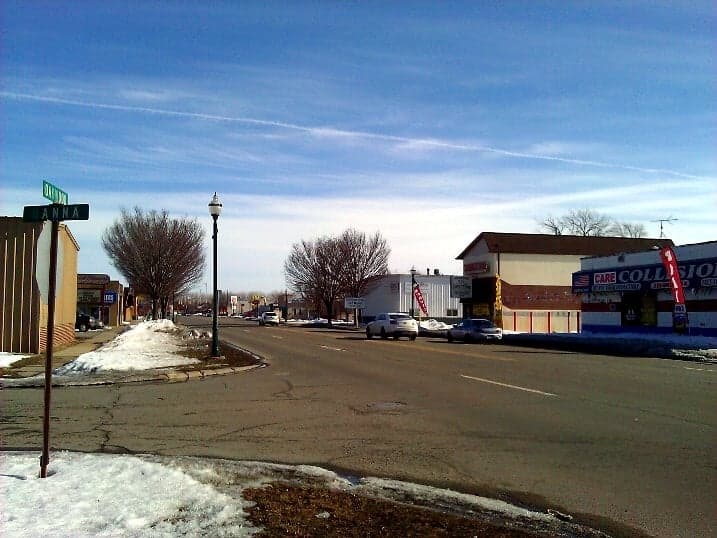
Photo: Wikipedia
Political ClimatePolitical Climate in Melvindale, MI
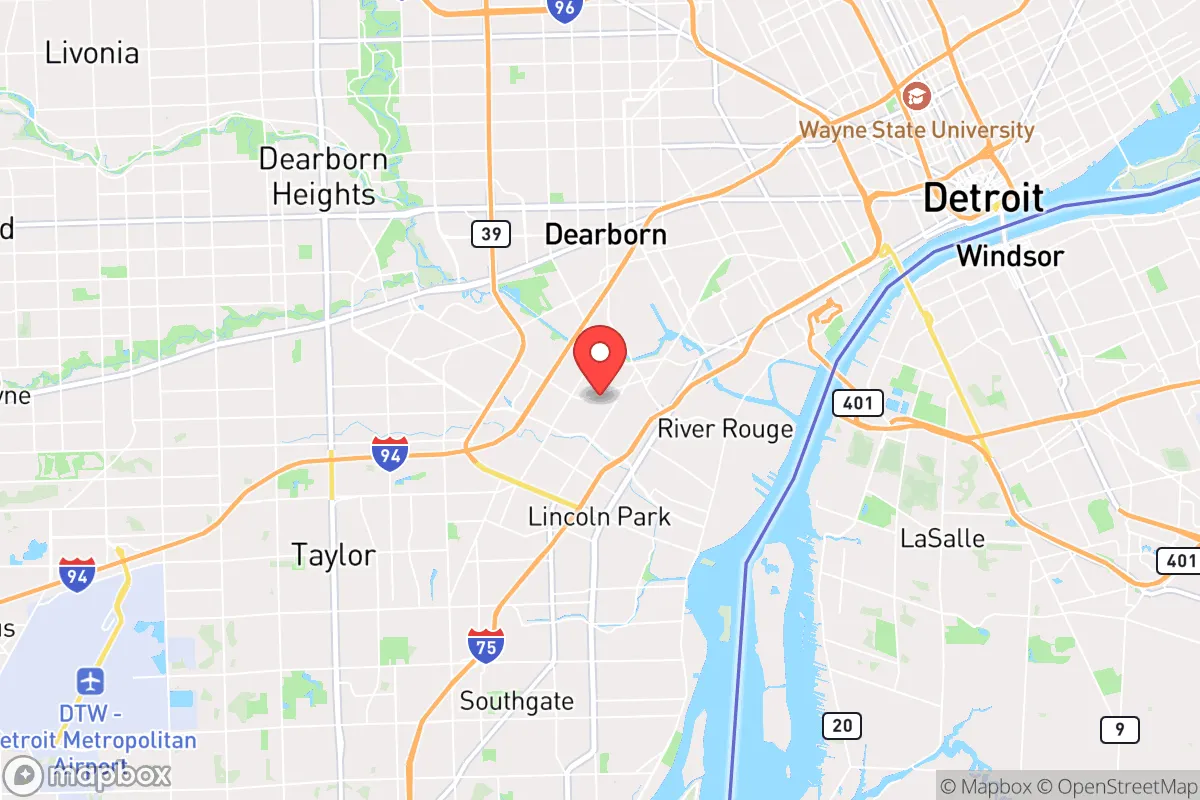
District shown is the primary district for this city’s centroid. Cities may span multiple districts.
Local Political AnalysisPolitical Analysis of Melvindale, MI
Melvindale is one of the most reliably Democratic strongholds in Michigan, carrying a Cook Partisan Voting Index (PVI) of D+22. That means the city votes about 22 points more Democratic than the national average, a stark contrast to the state of Michigan as a whole, which sits at exactly EVEN. In practice, this isn't a swing town—it's a blue anchor in a state that flips between parties. You won't find much political hand-wringing here on election night; the local outcome is a foregone conclusion, even when statewide races are decided by razor-thin margins.
How it compares
To understand Melvindale's politics, you have to look at its neighbors. Drive five minutes north to Allen Park or Dearborn, and you're still in reliably Democratic territory, though Dearborn's politics are shaped heavily by its large Arab American population and its own unique local issues. Head south or west into Taylor or Romulus, and you'll find more working-class, union-heavy Democratic voters, but with a slightly more moderate streak. The real contrast comes when you go further west to communities like Brownstown or downriver to Wyandotte, where the electorate is more evenly split. Melvindale sits in the heart of Wayne County, the state's Democratic engine, and its D+22 rating reflects a community that has voted blue consistently for decades. The state of Michigan, meanwhile, is a true battleground—it went for Trump in 2016, Biden in 2020, and remains a toss-up in 2026. That means Melvindale's voters are part of the coalition that decides the state, but they're not representative of the state's overall split.
What this means for residents
For liberal residents, Melvindale is a comfortable place to live politically. Local elections are dominated by Democrats, and the city's policies tend to align with progressive priorities on labor, social services, and public education. You'll find strong union support here—the UAW has deep roots—and local government tends to be responsive to working-class concerns. For conservative residents, the reality is different. You're in the minority, and you'll likely feel it in local elections and community conversations. That said, Melvindale isn't a place where politics dominates daily life. People here are more focused on the cost of living, the quality of the schools, and the condition of the roads than on national political debates. The political lean is baked into the culture, but it's not aggressive or exclusionary. Most folks just want the potholes fixed and the trash picked up on time.
One cultural distinction worth noting: Melvindale's politics are deeply tied to its industrial and union heritage. This isn't a college-town progressive enclave; it's a blue-collar, union-heavy community where Democratic loyalty is as much about economic identity as it is about social issues. That means you'll find less of the cultural-warrior energy you might see in more affluent liberal suburbs. The politics here are practical, not performative. Looking ahead, the trajectory is stable. Melvindale will remain a D+22 kind of place for the foreseeable future, barring a major demographic shift. The city's population is aging and slowly shrinking, but its political character is deeply entrenched. For anyone moving here, the takeaway is simple: if you're a Democrat, you'll feel at home. If you're a Republican, you'll be in the minority, but you won't be ostracized. The real political action in Michigan happens at the state level, and Melvindale's voters will continue to play their part in that drama, reliably and predictably.

State Political ClimatePolitical Climate in Michigan
State Political AnalysisPolitical Environment in the State
Michigan is the ultimate swing state in 2026, with a Cook PVI of EVEN that perfectly captures its knife-edge balance. Over the past 20 years, the state has lurched from reliably blue (voting for Obama twice by double digits) to a genuine battleground where Trump won it in 2016 by 0.2%, Biden reclaimed it in 2020 by 2.8%, and the 2024 race was again decided by less than a point. The dominant coalition is a three-way tug-of-war: the heavily unionized, diverse Detroit metro area pulls left; the conservative, rural Upper Peninsula and northern Lower Peninsula pull right; and the fast-growing, politically mixed suburbs of Grand Rapids, Lansing, and Traverse City decide every election. For a conservative relocator, Michigan offers a state where your vote genuinely counts, but where policy outcomes swing wildly depending on which party holds the trifecta in Lansing.
Urban vs. rural divide
The political map of Michigan is a story of three distinct regions. Wayne County (Detroit) and Washtenaw County (Ann Arbor) are the Democratic strongholds, delivering margins of 60-70% for Democrats. Detroit itself is a majority-Black city with deep union roots, while Ann Arbor is a classic college-town liberal enclave. In contrast, the entire Upper Peninsula (Gogebic, Marquette, Chippewa counties) and the northern Lower Peninsula (Emmet, Grand Traverse, Leelanau counties) are reliably Republican, often voting +20 to +30 points for the GOP. The real battleground is the suburban ring: Oakland County (north of Detroit) flipped from red to purple to blue over the past decade, while Kent County (Grand Rapids) has shifted from deep red to a competitive lean-Republican. Macomb County (east of Detroit) is the iconic "Reagan Democrat" territory that swung hard for Trump in 2016 and 2024. For a conservative, living in Grand Rapids or Traverse City means being in a red-leaning area with strong community institutions, while living in Detroit or Ann Arbor means being a political minority in a blue city.
Policy environment
Michigan's policy environment is a mixed bag for conservatives. The state has a flat income tax of 4.25%, which was reduced from 4.35% in 2023 via a trigger law, but a Democratic legislature and governor (Gretchen Whitmer) have pushed to repeal the trigger. Property taxes are moderate, with an average effective rate of 1.3%, but the Headlee Amendment caps annual assessment increases at the rate of inflation, which is a boon for long-term homeowners. Sales tax is 6%. On education, Michigan has a universal school choice program via charter schools and inter-district open enrollment, but no voucher system. The state's Right-to-Work law was repealed in 2023, a major loss for conservatives that has re-empowered unions in manufacturing and construction. Election laws are relatively accessible: no-excuse absentee voting was approved by voters in 2018, and same-day voter registration is available. For a conservative, the tax structure is competitive, but the regulatory posture—especially on energy (Michigan has a 100% clean energy standard by 2040) and labor—leans left.
Recent policy direction
The last three years (2023-2026) have seen a dramatic leftward shift under a Democratic trifecta. Gun laws were tightened significantly: universal background checks, safe storage requirements, and a red-flag law (extreme risk protection order) were all passed in 2023. Self-defense law remains "stand your ground" in the home only, not in public. On education, the state banned corporal punishment in all schools and expanded LGBTQ+ anti-discrimination protections. Parental rights in education were weakened: the state repealed a 1990s-era law requiring schools to notify parents of sex education content, and a 2024 law allows students to use chosen names and pronouns without parental consent. On bodily autonomy, Michigan codified abortion rights into the state constitution via Proposal 3 in 2022, and a 2024 law removed the 24-hour waiting period and mandatory ultrasound. Property rights saw a mixed bag: the state banned local zoning that excludes multi-family housing (a YIMBY win), but also expanded eminent domain for renewable energy projects. Voting access was expanded: nine days of early in-person voting, automatic voter registration, and pre-canvassing of absentee ballots were all enacted. For a conservative, the direction is clearly toward more regulation on guns, less parental control in schools, and more abortion access—but the tax trigger and property tax caps remain bright spots.
Civil unrest & political movements
Michigan has been a flashpoint for political activism on both sides. The 2020 Whitmer kidnapping plot and the armed protests at the state capitol over COVID-19 lockdowns (the "Operation Gridlock" protests) put Michigan on the national map for right-wing militancy. On the left, the 2023 Detroit auto strike (UAW) was the largest in decades, and the "Stand Up Michigan" movement has organized mass protests against the state's clean energy mandates. Immigration politics are relatively quiet compared to border states, but Detroit and Ann Arbor are sanctuary cities, meaning local police do not cooperate with ICE detainers. Election integrity remains a live issue: the 2020 election in Michigan was subject to multiple audits and lawsuits, and a 2024 law created a permanent "election integrity unit" within the Secretary of State's office. A new resident will notice the ubiquitous political yard signs in swing suburbs like Macomb and Kent counties, and the frequent presence of canvassers at grocery stores. The state has a robust culture of grassroots activism on both sides, with well-funded groups like the Michigan Freedom Fund (right) and Progress Michigan (left) running constant ad campaigns.
Projection
Over the next 5-10 years, Michigan is likely to remain a true swing state, but with a slight rightward drift driven by demographic shifts. The Detroit metro area is losing population (down 8% since 2010), while the Grand Rapids and Traverse City areas are growing rapidly (up 12% and 15% respectively). These growing areas are more conservative-leaning, which could shift the statewide balance. However, the suburbanization of Oakland County (more diverse, more educated voters) is a countervailing trend that keeps the state competitive. In-migration from Illinois and California is modest but noticeable in the western part of the state. The wild card is the 2026 gubernatorial election: if a Republican wins the governor's office, expect a rollback of the 2023-2025 Democratic agenda (especially on guns and energy). If Democrats hold, expect further leftward movement on healthcare (a public option is being debated) and taxes (a graduated income tax is on the table). For a conservative moving in now, expect to live in a state where your vote is decisive, but where policy outcomes will flip-flop every few years. The practical takeaway: if you want stable conservative governance, look to the western side of the state (Grand Rapids, Traverse City); if you want to be in the fight, move to Macomb or Kent County.
Bottom line for a new resident: Michigan is not a red state or a blue state—it's a purple state where your vote matters more than almost anywhere else. Conservatives will find a competitive tax environment and strong property rights, but will face headwinds on gun policy, education, and labor. Liberals will find a state that has moved left quickly on abortion and voting access, but will face a persistent conservative counter-mobilization. The best advice: pick your county carefully, because the political experience in Detroit vs. Grand Rapids vs. Traverse City is night and day.
* Values derived from national, state, county, city and local statistics and may differ in a specific area. Last updated: 2026-10-18T18:13:52.000Z
Narrative content on this page is AI-generated and may contain mistakes. Verify any details that matter before acting on them.
ReloMaps may earn a commission from affiliate links at no extra cost to you.

