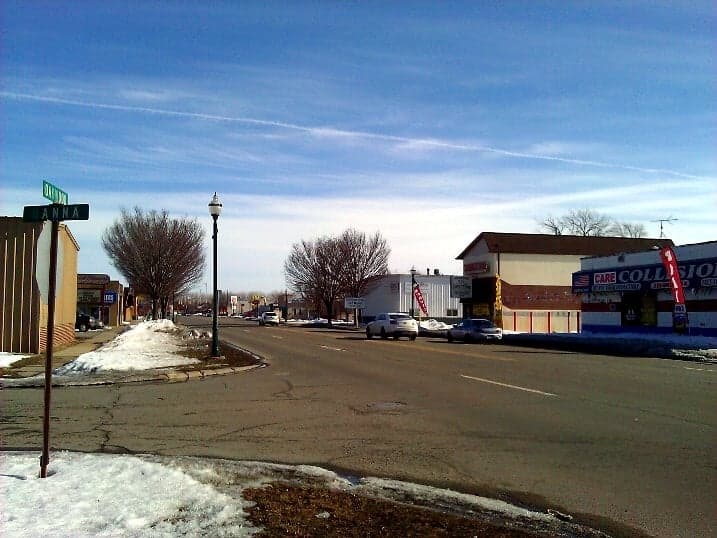
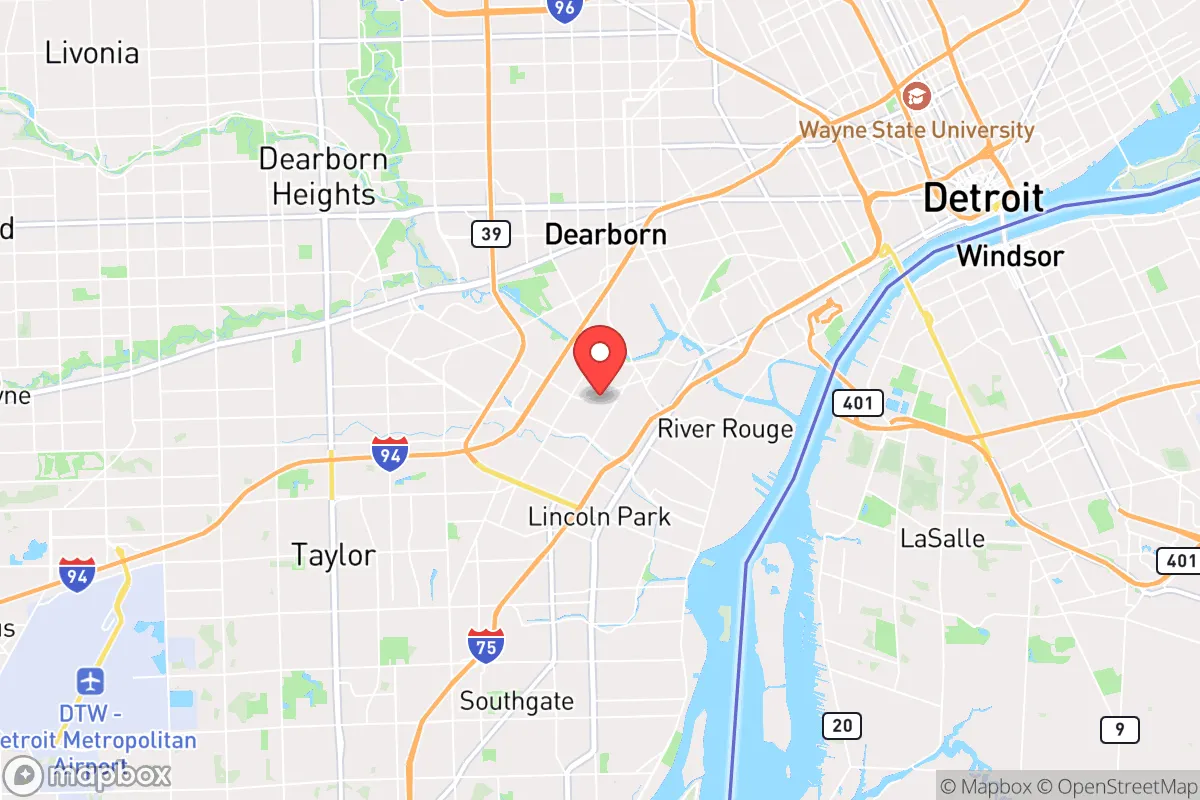
Photo: Wikipedia
Personal Sovereignty in Melvindale, MI
Strong independent fundamentals that actively favor personal liberty and low regulation.
What does Personal Sovereignty tell us?
Personal Sovereignty measures your capacity for self-reliance and independence with minimal government friction. Higher scores mean fewer barriers between you and the way you want to live... but it assumes you have the space you need and good neighbors.
What does this tell us?
Personal Sovereignty measures your capacity for self-reliance and independence with minimal government friction. Higher scores mean fewer barriers between you and the way you want to live... but it assumes you have the space you need and good neighbors.
State Policy
Energy independence: Importer (20% of energy produced in-state)
Personal Liberty
Homesteading

Personal Liberty Analysis
Melvindale, Michigan, presents a mixed picture for personal sovereignty, where state-level policies often override local autonomy in ways that matter to freedom-oriented residents. As a small, densely developed city in Wayne County, Melvindale’s regulatory environment is shaped by Michigan’s generally permissive gun laws and relatively low property taxes, but also by a higher state income tax and a local government structure that imposes its own set of rules on housing and land use. For a single individual or family prioritizing independence, the key trade-off is between the state’s strong self-defense protections and the practical constraints of living in a fully built-out, older suburb with limited room for self-reliant lifestyles.
Tax burden and regulatory posture in Melvindale
Michigan’s tax structure is moderate compared to high-tax states like California or New York, but it carries a notable bite for residents who value keeping more of their earnings. The state levies a flat 4.25% individual income tax on all wages and business income, which is neither the lowest nor the highest nationally but represents a fixed cost that cannot be avoided through local moves. Property taxes in Melvindale are governed by Michigan’s Proposal A (1994), which caps annual increases on assessed value at the lower of 5% or inflation, but the city’s total millage rate of roughly 68 mills (including school, county, and city levies) is above the state median, translating to about $3,400 annually on a $100,000 home. This is a heavier burden than in outstate rural areas, though still far less than in many coastal suburbs. On the regulatory side, Melvindale operates under Michigan’s home rule, but the city’s zoning code is detailed and restrictive: minimum lot sizes of 5,000 square feet, strict setback requirements, and a ban on keeping livestock or poultry within city limits. The city also enforces a rental inspection ordinance and requires permits for most exterior modifications, reflecting a moderately heavy-touch local government that prioritizes neighborhood uniformity over individual discretion. For a resident seeking to minimize government interaction, this means navigating a permitting process for even minor projects like fence installation or shed construction.
Self-defense and gun law specifics in Michigan
Michigan is a shall-issue state for concealed pistol licenses (CPL), meaning that if a resident meets basic criteria—age 21, no felony record, completion of an 8-hour safety course—the county gun board must issue the permit. Melvindale residents apply through the Wayne County Clerk’s office, which processes applications within the statutory 45-day window. The state also permits open carry of handguns without a license, though local ordinances in Melvindale do not further restrict this. Crucially, Michigan has stand-your-ground and castle doctrine protections codified in MCL 780.972, which remove any duty to retreat before using deadly force if a person is in a place they have a legal right to be and reasonably believes force is necessary to prevent imminent death, great bodily harm, or sexual assault. This applies in the home, vehicle, and any public space. However, Michigan law requires a CPL to carry a concealed pistol in a vehicle (unless unloaded and in a case), and the state maintains a list of prohibited places—schools, sports arenas, bars, and hospitals—even for license holders. For a freedom-oriented resident, the legal framework is favorable for self-defense, but the practical reality in Melvindale is that the city’s dense, urban layout means encounters with strangers are more frequent than in rural areas, and the proximity to Detroit (with its higher crime rates) may increase the perceived need for armed self-defense. The city itself has a violent crime rate roughly 1.5 times the national average, though property crime is closer to the median, making a CPL a common choice among residents who prioritize personal security.
Self-reliance and homesteading viability in Melvindale
For those seeking a homesteading or off-grid lifestyle, Melvindale is a poor fit. The city’s average lot size is just 0.12 acres, typical of early 20th-century streetcar suburbs, leaving minimal space for gardening, rainwater collection, or alternative energy systems. Zoning explicitly prohibits keeping chickens, goats, or bees, and the city’s building code requires connection to municipal water and sewer—no private wells or septic systems are permitted. Solar panels are allowed but must comply with the city’s historic district guidelines in certain neighborhoods, and the permitting process can take 4-6 weeks. The city also enforces a grass height limit of 8 inches and prohibits front-yard vegetable gardens visible from the street, which effectively rules out any serious food production. For a resident committed to self-reliance, the best option within Melvindale is a backyard raised-bed garden (up to 100 square feet without a permit) and a small greenhouse, but even this requires careful navigation of the zoning code. The broader Wayne County area offers more viable homesteading opportunities in townships like Brownstown or Romulus, where lot sizes of 1-5 acres are common and agricultural zoning permits livestock. Within Melvindale, the practical reality is that self-reliance must focus on financial independence—reducing debt, building emergency savings, and investing in skills—rather than land-based autonomy.
Personal liberties: parental rights, medical autonomy, speech, and property
Michigan’s legal environment for personal liberties is a patchwork. On parental rights, the state has no explicit “parental bill of rights” law, but Michigan courts have historically recognized parental authority over education, healthcare, and upbringing under the 14th Amendment. Parents can homeschool without state approval, though they must submit an intent to homeschool form and teach subjects including reading, math, and civics. The state does not require standardized testing for homeschoolers, which is a lighter touch than in many states. On medical autonomy, Michigan has no vaccine mandate for adults, but school vaccine requirements are strict—children must receive all CDC-recommended vaccines unless a medical or religious exemption is granted (philosophical exemptions were eliminated in 2015). The state also legalized recreational marijuana in 2018, allowing adults 21+ to possess up to 2.5 ounces and grow up to 12 plants at home, though Melvindale’s local ordinance bans commercial dispensaries within city limits. Free speech is protected under the First Amendment, and Michigan has no state-level “hate speech” law that criminalizes expression, though local governments can regulate signs and public assemblies. Melvindale requires a permit for any public demonstration of more than 25 people, which is a moderate restriction. On property rights, Michigan’s eminent domain laws are governed by the Public Act 87 of 1980, which requires just compensation and a public purpose, but the state’s Supreme Court has upheld takings for economic development in some cases. For a Melvindale homeowner, the most immediate property-rights issue is the city’s rental registration and inspection program, which requires landlords to pay an annual fee and submit to inspections every three years—a burden that affects those who rent out a basement apartment or a second property.
Overall, personal sovereignty in Melvindale is constrained by the realities of a dense, older suburb within a state that balances moderate taxes with a relatively permissive self-defense regime. The city’s regulatory posture is heavier than in rural Michigan or many Sunbelt states, particularly on land use and housing modifications, but lighter than in coastal blue states on gun rights and homeschooling. For a freedom-oriented individual or family, the strongest draw is Michigan’s stand-your-ground law and the ability to carry a concealed pistol without a local permit overlay. The weakest areas are the limited homesteading potential and the local zoning code’s restrictions on self-reliant activities. Compared to a city like Allen Park or Dearborn, Melvindale is roughly average in regulatory burden; compared to a rural township in the Upper Peninsula, it is significantly more restrictive. The best strategy for a resident who values autonomy is to engage with local government—attend city council meetings, apply for zoning variances, and build relationships with neighbors—while recognizing that the fundamental trade-off of suburban living is convenience and services in exchange for personal latitude. For those unwilling to make that trade, the outlying townships of Wayne County or the more permissive counties in western Michigan offer a lighter regulatory touch.

* Values derived from national, state, county, city and local statistics and may differ in a specific area. Last updated: 2026-10-18T18:13:52.000Z
Narrative content on this page is AI-generated and may contain mistakes. Verify any details that matter before acting on them.
ReloMaps may earn a commission from affiliate links at no extra cost to you.

