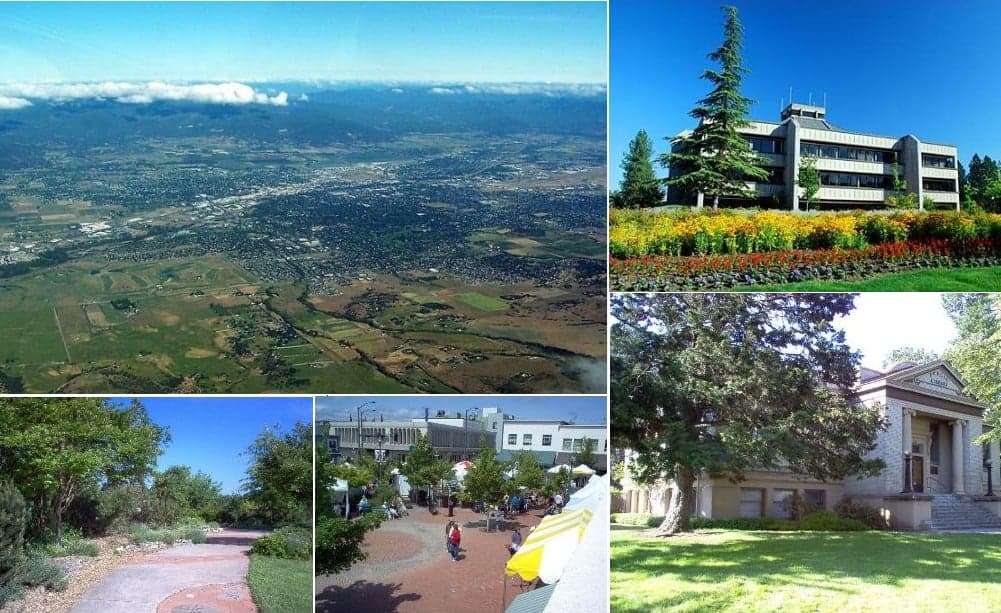
Photo: Wikipedia
Political ClimatePolitical Climate in Medford, OR
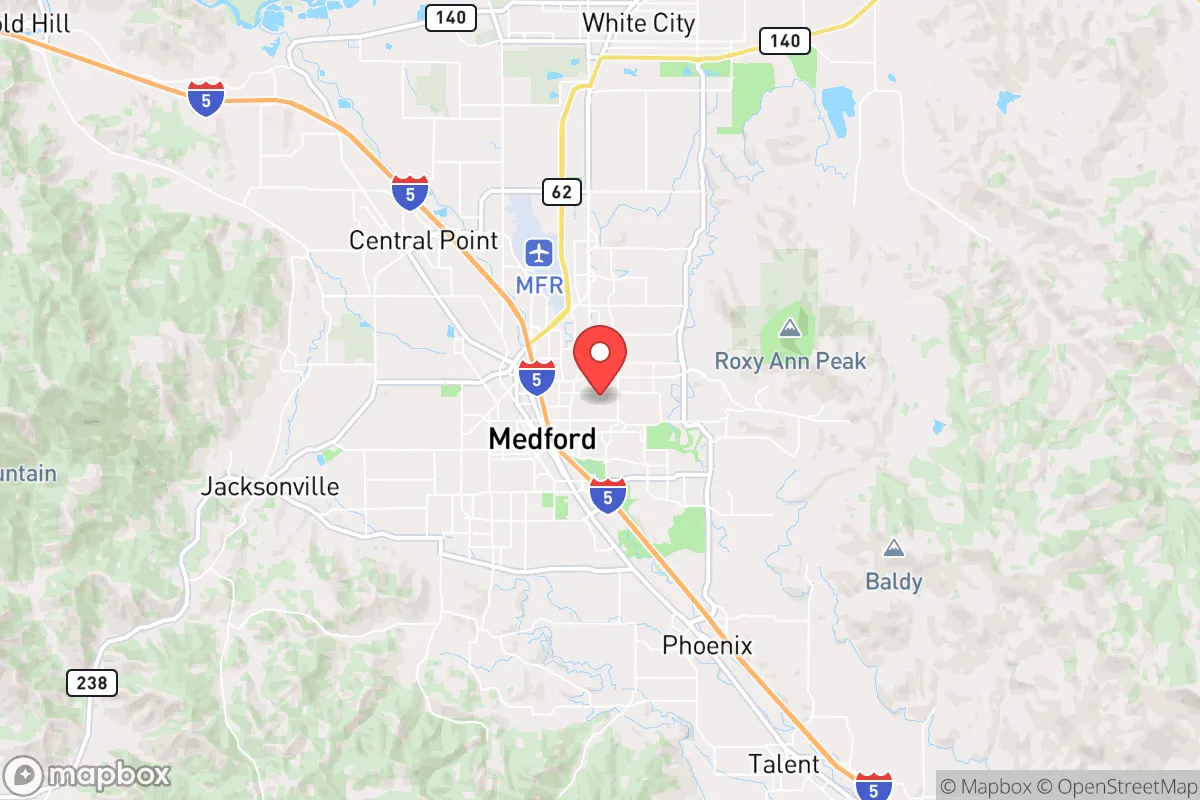
District shown is the primary district for this city’s centroid. Cities may span multiple districts.
Local Political AnalysisPolitical Analysis of Medford, OR
Medford sits in a deep red island within a blue state, carrying a Cook PVI of R+14 while the state of Oregon as a whole is D+8. That 22-point gap isn't just a statistic — it shapes nearly every conversation about local governance, from land use to public safety. The Rogue Valley has been reliably conservative for decades, but the tilt has hardened in recent years as the more liberal Portland metro area pulls the state left and Jackson County pulls back right. If you're moving here, the political reality is that Medford votes like a small Texas town, but lives under Oregon state laws written in Salem.
How it compares
Drive 30 miles north to Grants Pass and you'll find an even redder vibe (Josephine County leans R+16), but the real contrast is with the Willamette Valley. Eugene, about 170 miles north, is D+16 — a mirror image of Medford's lean. Bend, to the northeast, has swung from red to purple as Californians and tech workers moved in, but Medford's growth has been more locally driven, preserving its conservative character. The practical effect: Medford's city council and county commission are reliably Republican, and local ballot measures on tax limits or property rights tend to pass easily. Meanwhile, statewide measures on gun control, minimum wage hikes, and environmental regulations often pass over strong local opposition. Medford residents routinely vote 60-40 or 70-30 for Republican candidates, yet live under a Democratic governor and a legislature that tilts left. That tension is the defining political feature of life here.
What this means for residents
For conservative residents, Medford feels like home politically — your neighbors share your views, local officials listen, and the local news covers issues like water rights and timber policy with a sympathetic ear. The downside is a constant sense of being overruled by Salem. State land-use planning laws, which limit sprawl and protect farmland, are a perennial sore point; locals often feel Portland-centric rules don't fit the Rogue Valley's economy or geography. For liberal residents, the experience is reversed. You'll find like-minded people in Ashland (15 miles south, D+12) or pockets of Medford's downtown, but the broader county can feel unwelcoming. Progressive candidates rarely win countywide races, and social issues like LGBTQ+ nondiscrimination ordinances have faced pushback. That said, Ashland's liberal influence keeps the cultural scene vibrant — the Oregon Shakespeare Festival, Lithia Park, and a strong local food movement are within easy reach. The practical trade-off: conservatives get local control but lose statewide fights; liberals get statewide wins but face local headwinds.
Culturally, the divide shows up in everyday choices. Medford's gun culture is visible — you'll see "Come and Take It" stickers on trucks and local gun shows are well-attended. The city's largest employer, Asante Health System, tends to stay apolitical, but the local Chamber of Commerce and many small business owners lean right. On the policy front, Medford was one of the first Oregon cities to push back on statewide homeless camping laws, passing its own restrictions that differ from Portland's approach. The trajectory I see: as more remote workers and retirees arrive from California and the Pacific Northwest, the county's PVI may soften from R+14 to R+10 or R+8 over the next decade, but it's unlikely to flip. The Rogue Valley's identity is too tied to its rural, resource-based roots. For newcomers, the key is knowing that Medford offers a conservative community with liberal amenities a short drive away — a balance that works well if you're flexible, and grates if you're not.

State Political ClimatePolitical Climate in Oregon
State Political AnalysisPolitical Environment in the State
Oregon is a reliably Democratic state with a Cook PVI of D+8, but that top-line number masks a deeply fractured political reality. The state has shifted leftward over the past 20 years, driven by explosive growth in the Portland metro area and the influx of out-of-state transplants, while rural and eastern counties have hardened into some of the most conservative territory in the Pacific Northwest. For a conservative relocator, Oregon offers a mixed bag: a state government that consistently passes progressive legislation, but also vast regions where local culture and politics feel more like Idaho than the Willamette Valley.
Urban vs. rural divide
The political map of Oregon is essentially a battle between the wet, populous west and the dry, sparse east. The Portland metro area—Multnomah, Washington, and Clackamas counties—generates roughly half the state’s population and votes overwhelmingly Democratic. Multnomah County alone delivered a 40-point margin for Biden in 2020. The Willamette Valley cities of Salem and Eugene are also solidly blue, with Eugene’s Lane County voting D+15. In contrast, the rest of the state is deeply red. Central Oregon around Bend (Deschutes County) is a notable swing area—it voted for Trump in 2016 and 2020, but by shrinking margins as Californians move in. Southern Oregon’s Medford and Grants Pass (Jackson and Josephine counties) are reliably Republican, with Trump winning Jackson by 10 points in 2020. The eastern counties—Baker, Malheur, Harney—are among the most conservative in the nation, often voting 70-80% Republican. The divide isn’t just electoral; it’s cultural. Rural Oregonians feel ignored by Salem and Portland, and the state’s land-use laws, which restrict development outside urban growth boundaries, are a constant source of friction.
Policy environment
Oregon’s state-level policy leans heavily progressive. There is no state sales tax, but property taxes are moderate and income taxes are high—the top marginal rate is 9.9%, one of the highest in the nation. The regulatory environment is business-friendly in name but burdensome in practice, especially for industries like timber and agriculture. Education policy is dominated by the teachers’ unions; the state has a chronic underfunding problem, with per-pupil spending below the national average despite high tax rates. Healthcare is heavily regulated, and Oregon was the first state to implement a Medicaid expansion via a managed-care model. Election laws are among the most accessible in the country: Oregon was the first state to conduct all elections by mail (1998), and automatic voter registration is the norm. Ballot initiatives are a powerful tool here—voters have legalized recreational marijuana, physician-assisted suicide (Death with Dignity Act), and, in 2020, decriminalized small amounts of hard drugs (Measure 110, which is now being walked back due to public backlash). For conservatives, the policy environment feels like a constant uphill battle, but the initiative process does allow for occasional wins, like the 2004 ban on same-sex marriage (later overturned) and periodic property tax caps.
Recent policy direction
The last five years have seen Oregon lurch further left on several fronts, with notable pushback. Gun and self-defense law: In 2023, the state passed a strict gun control package (SB 348) that bans large-capacity magazines and requires a permit to purchase, with a waiting period. This was upheld by a federal judge after a legal challenge. Parental and education rights: The state has moved to expand LGBTQ+ curriculum in schools and protect transgender students’ rights, which has sparked fierce battles in school boards, particularly in Canby and Newberg. Speech and privacy: Oregon has a strong shield law for journalists, but there’s no broad anti-SLAPP law, which can chill speech. Medical and bodily autonomy: Abortion remains fully legal with no gestational limits, and the state has a “sanctuary” law for providers. Property rights: Oregon’s land-use system, established in the 1970s, is among the most restrictive in the nation, limiting rural development and creating tension with property owners. Taxation: A 2023 corporate activity tax (CAT) increase was passed to fund education, but it’s unpopular with small businesses. Voting and ballot access: The state has no voter ID law, and same-day voter registration is allowed. The net effect is a state that is increasingly activist on social and environmental issues, but with a growing rural backlash that has led to talk of secession—the “Greater Idaho” movement, which proposes moving 13 eastern Oregon counties into Idaho, has gained real traction, with several counties voting in favor of exploring the idea.
Civil unrest & political movements
Oregon has a history of political volatility. The 2020 protests in Portland, which lasted for months and involved nightly clashes between demonstrators and federal law enforcement, made national headlines and cemented the city’s reputation as a flashpoint. The protests were driven by a mix of antifa, Black Lives Matter, and anarchist groups, and they polarized the state. On the right, the “Patriot Prayer” group and other militia-adjacent organizations have held counter-rallies, and there have been sporadic incidents of intimidation. The Greater Idaho movement is the most organized rural pushback, with 11 counties voting to support the idea of joining Idaho. It’s unlikely to succeed—it would require approval from both state legislatures and Congress—but it reflects deep alienation. Immigration politics are less heated than in border states, but Oregon is a “sanctuary state” (since 1987), meaning local law enforcement cannot cooperate with federal immigration authorities. Election integrity is a live issue: in 2020, Trump’s campaign challenged Oregon’s mail-in system, but no widespread fraud was found. A new resident will notice the political divide most in the built environment—Portland’s downtown has a visible homeless crisis and boarded-up storefronts, while rural towns like Prineville or La Grande feel like a different country entirely.
Projection
Over the next 5-10 years, Oregon’s political trajectory points toward continued polarization. The Portland metro area will keep growing, driven by tech and remote workers from California, solidifying the Democratic majority. However, the rural exodus is real—eastern Oregon counties are losing population, and the “Greater Idaho” movement will likely gain more symbolic victories but no actual change. The state’s housing crisis, driven by restrictive land-use laws and a shortage of supply, will remain a top issue, and it may force some moderation on property rights. The drug decriminalization experiment (Measure 110) is being rolled back after public outcry over open-air drug use and overdoses, which could signal a shift toward more pragmatic governance. For a conservative moving in, the expectation should be that the state government will remain firmly in Democratic hands, but that local control in rural areas will allow for a conservative lifestyle. The key battleground will be the suburbs—places like Beaverton and Hillsboro are trending left, while Oregon City and Wilsonville are more mixed. The next decade will likely see more ballot initiatives on taxes, education, and land use, as the legislature and the electorate continue to clash.
Bottom line for a new resident: If you’re a conservative, Oregon is a state where you can find a strong community and a lower cost of living than California, but you will be living under a state government that is actively hostile to many of your values. You’ll pay high income taxes, deal with restrictive gun laws, and see progressive policies in schools and healthcare. Your best bet is to settle in a red county—Bend, Medford, or Grants Pass—where local politics align with your views, and accept that state-level elections will rarely go your way. For liberals, Oregon is a paradise of progressive policy, but the homelessness crisis and drug issues in Portland and Eugene are real problems that the state hasn’t solved. Either way, come prepared for a state that is beautiful, expensive, and politically intense.
* Values derived from national, state, county, city and local statistics and may differ in a specific area. Last updated: 2026-06-14T13:55:25.000Z
Narrative content on this page is AI-generated and may contain mistakes. Verify any details that matter before acting on them.
ReloMaps may earn a commission from affiliate links at no extra cost to you.

