Political ClimatePolitical Climate in McKinleyville, CA
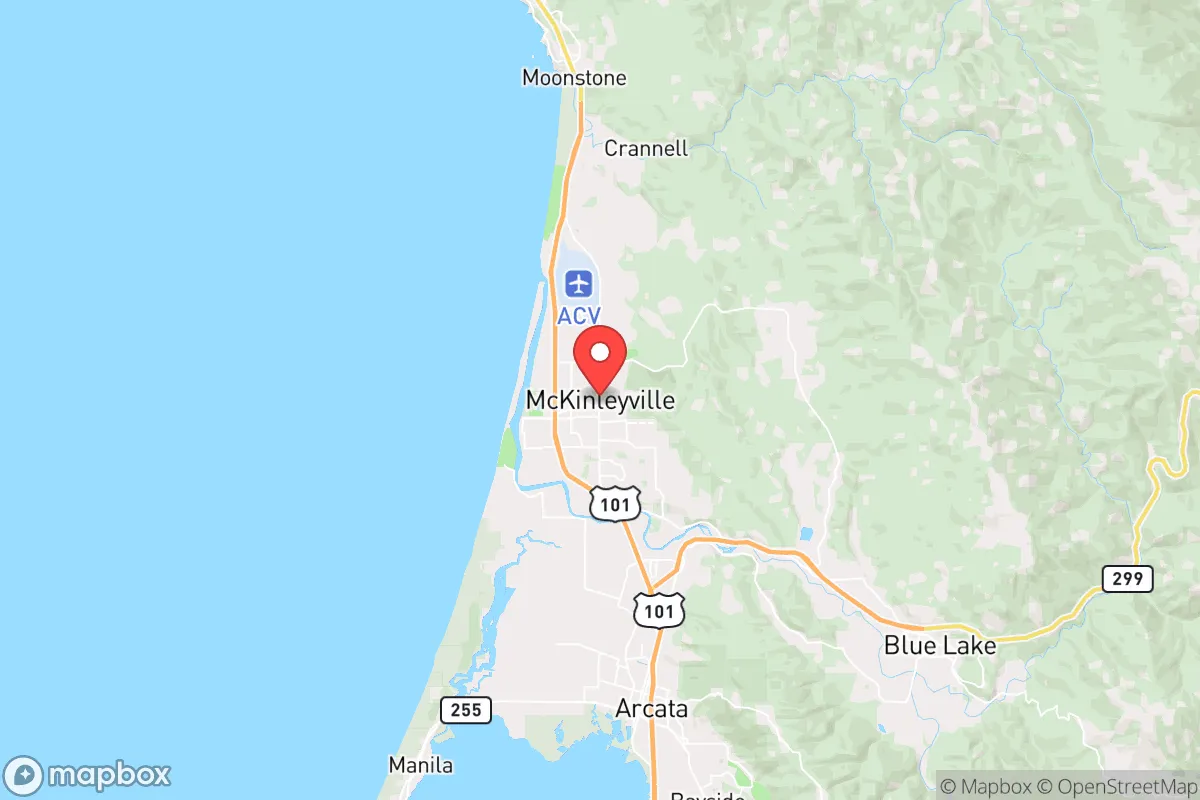
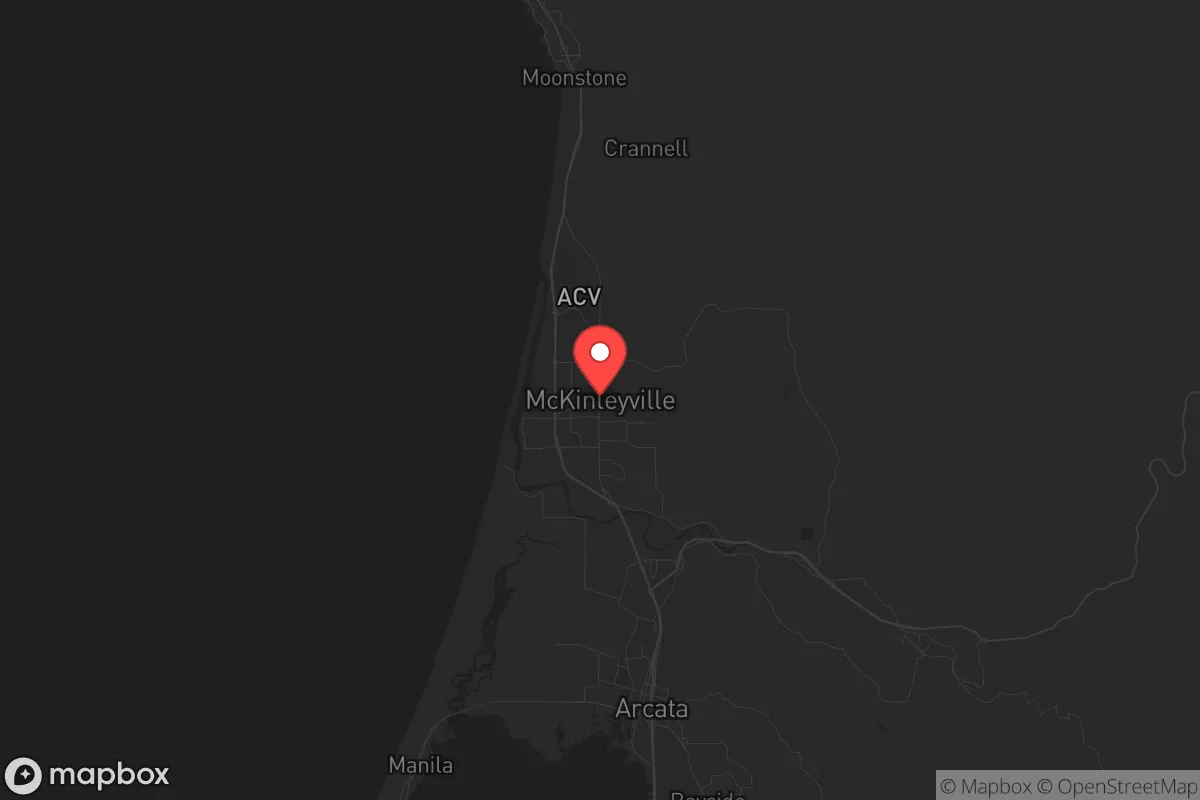
District shown is the primary district for this city’s centroid. Cities may span multiple districts.
Local Political AnalysisPolitical Analysis of McKinleyville, CA
McKinleyville is a reliably blue dot in a reliably blue state, but its politics feel more like a small-town progressive consensus than the coastal urban intensity you’d find in San Francisco or Los Angeles. The area’s Cook PVI of D+24 means Democrats hold a commanding 24-point advantage over Republicans in federal elections, making it one of the more liberal parts of Humboldt County. That said, the political reality here is shaped as much by local issues—timber, fishing, housing, and the opioid crisis—as by national party labels. Over the past decade, McKinleyville has shifted leftward alongside the rest of Humboldt County, but the shift has been gradual, not dramatic; you won’t see the kind of activist-driven gentrification of politics that’s reshaped places like Arcata just a few miles south.
How it compares
Compared to California as a whole, McKinleyville is more consistently Democratic than the state average, which itself leans D+13 or so. The difference is that California’s political landscape is a patchwork of deep-blue coastal metros, purple inland valleys, and red rural counties—think Bakersfield or Redding. McKinleyville sits in a region where the blue vote is both deep and broad, but it’s surrounded by communities that break the stereotype. Just 15 miles north, Trinidad is a tiny, artsy enclave that votes even more liberal, while 20 miles east, the unincorporated areas of Willow Creek and Hoopa lean conservative, reflecting the rural, resource-economy mindset of interior Humboldt. The contrast is stark: drive 30 minutes east and you’ll hear more talk about property rights and logging regulations; drive 30 minutes south to Eureka and you’ll find a more mixed political scene, with a working-class base that sometimes votes Republican in local races. In McKinleyville itself, the political vibe is less about protest signs and more about community meetings on affordable housing and coastal access—issues that transcend party lines but still tilt left in practice.
What this means for residents
For liberal residents, McKinleyville offers a comfortable environment where progressive values on environmental protection, social services, and public education are the norm. You’ll find strong support for renewable energy projects, local food systems, and public transit expansions. For conservative residents, the reality is more nuanced: you’re not likely to face overt hostility, but you’ll be in the minority on most local boards and in most public forums. That said, the area’s small-town character means personal relationships often override political labels—your neighbor might be a registered Green who helps you fix your fence. The practical impact of the D+24 lean shows up in policy: the county’s land-use regulations are stricter than in redder parts of California, and local taxes tend to support social programs and environmental initiatives. But because McKinleyville isn’t a wealthy enclave, there’s also a pragmatic streak—residents across the spectrum push back on policies that raise housing costs or limit economic opportunity.
One cultural distinction that sets McKinleyville apart from much of California is its relative isolation from the state’s major political machinery. You don’t see the same level of partisan organizing or big-money campaign ads that dominate races in the Central Valley or Southern California. Instead, local politics revolve around the Humboldt County Board of Supervisors, the McKinleyville Community Services District, and school board elections—bodies where a single seat can shift policy on everything from cannabis cultivation to timber harvest plans. The trajectory here is likely to stay blue, but with a growing emphasis on local control and quality-of-life issues that sometimes put McKinleyville at odds with state-level Democratic priorities, especially around housing density and coastal development. For anyone moving here, the takeaway is simple: you’ll find a community that votes blue but thinks locally, where the politics are serious but not strident, and where the biggest divides are often about how to manage the region’s natural resources, not national culture wars.

State Political ClimatePolitical Climate in California
State Political AnalysisPolitical Environment in the State
California is a deeply blue state, with Democrats holding every statewide office and supermajorities in both legislative chambers, but that monolithic label hides a far more complex reality. The state hasn't voted Republican for president since 1988, and in 2024, Kamala Harris carried it by roughly 20 points. However, the 10-20 year trajectory shows a slow but steady rightward shift in many inland areas, even as the coastal metros harden their progressive lean. For a conservative-leaning relocator, the practical takeaway is that you're moving to a state where your vote for president or U.S. Senate won't matter, but your local elections—especially in the Central Valley, Inland Empire, and certain mountain counties—can be genuinely competitive.
Urban vs. rural divide
The political map of California is a study in extremes. The entire coast from Santa Barbara north through San Francisco and up to the Oregon border is solidly Democratic, with San Francisco and Los Angeles County delivering margins of 70-80% for Democratic candidates. The Bay Area, including San Jose and Oakland, is the engine of the state's progressive politics, driving everything from rent control to sanctuary city policies. In contrast, the Central Valley—cities like Bakersfield, Fresno, and Visalia—votes reliably Republican, often by 15-20 point margins. The Inland Empire, anchored by Riverside and San Bernardino, has been a fascinating battleground: it was historically more conservative but has shifted left as Los Angeles exurbs fill with younger, more diverse voters. Orange County, once the heart of California conservatism, flipped to Biden in 2020 and has stayed blue in subsequent elections, though its northern cities like Fullerton and Yorba Linda still have strong Republican pockets. The rural north—counties like Shasta, Siskiyou, and Modoc—votes as red as any place in Texas, with some precincts going 80% Republican. The practical divide means that a conservative moving to Bakersfield will find a very different political environment than one moving to San Francisco.
Policy environment
California's policy environment is defined by high taxes, heavy regulation, and a robust social safety net. The state has a progressive income tax with a top marginal rate of 13.3% (the highest in the nation), a state sales tax that can exceed 10% in some cities, and some of the highest gas taxes in the country. Property taxes are capped at 1% of assessed value plus inflation under Proposition 13, which is a major selling point for long-term homeowners but does nothing for renters. The regulatory posture is aggressive: California has its own environmental review process (CEQA) that can delay or kill development, its own strict emissions standards that effectively set national policy, and some of the nation's toughest labor and employment laws. Education policy is dominated by the California Teachers Association, with per-pupil spending above the national average but outcomes that lag, particularly in urban districts. Healthcare is heavily regulated, with the state running its own insurance exchange (Covered California) and moving toward a single-payer model, though it hasn't passed yet. Election laws are among the most accessible in the country: universal mail-in voting, same-day registration, and no-excuse absentee ballots are the norm.
Recent policy direction
The last five years have seen California accelerate its progressive agenda across nearly every dimension a relocator might care about. On gun and self-defense law, the state passed SB 2 in 2023, which effectively bans concealed carry in most public places, and continues to enforce some of the nation's strictest assault weapon and magazine capacity bans. Parental and education rights have been a flashpoint: AB 1955 (2024) prohibits school districts from requiring parental notification when a child changes their gender identity, effectively overriding local school board policies. On speech and privacy, the state has strong anti-SLAPP laws protecting free expression, but also passed the California Age-Appropriate Design Code (2022), which imposes strict data privacy requirements on online services used by minors—critics call it a censorship tool. Medical and bodily autonomy is fully protected: abortion is codified as a fundamental right under Proposition 1 (2022), and the state has become a sanctuary for out-of-state patients seeking gender-affirming care. Property rights have been eroded by rent control expansion (AB 1482 caps annual rent increases at 5% plus inflation) and a 2024 ballot measure that allows local governments to impose rent control on single-family homes. Taxation saw a modest increase in 2024 with a new wealth tax proposal that failed, but the state's high earners continue to shoulder the burden. Voting and ballot access remains extremely easy, with no voter ID requirement and automatic voter registration through the DMV.
Civil unrest & political movements
California has a long history of political activism, and recent years have been no exception. The 2020 George Floyd protests in Los Angeles, Oakland, and San Francisco were among the largest and most destructive in the nation, with widespread looting and property damage. The state's sanctuary policies—SB 54 (2017) limits local law enforcement cooperation with federal immigration authorities—remain a major flashpoint, with the Trump administration suing the state repeatedly. The secession movement, "Calexit," has fizzled after failing to get on the ballot, but a more serious movement is the "State of Jefferson" proposal in the rural north, which has gained traction in counties like Siskiyou and Modoc but lacks the legislative support to move forward. Election integrity controversies have been relatively muted compared to other states, though the 2020 and 2024 elections saw isolated incidents of ballot harvesting concerns in Los Angeles County. The most visible flashpoint for a new resident is likely to be homelessness and public safety: cities like San Francisco and Los Angeles have seen organized efforts to recall progressive district attorneys (Chesa Boudin in San Francisco was recalled in 2022; George Gascón in Los Angeles survived a recall attempt in 2024 but faces another in 2025). Immigration politics are front and center, with the state actively resisting federal enforcement and providing state-funded health coverage to undocumented residents.
Projection
Over the next 5-10 years, California's political trajectory points toward continued progressive dominance at the state level, but with growing internal friction. The demographic shifts are clear: the state's population has been flat or declining since 2020, with net out-migration to Texas, Arizona, and Nevada. Those leaving tend to be middle-income families and conservatives, while those arriving are often international immigrants and young progressives. This self-selection reinforces the state's blue lean. However, the inland areas—particularly the Central Valley and Inland Empire—are growing faster than the coast, and their voters are more moderate or conservative. This could create a more competitive state legislature in the long run, but not enough to flip statewide offices. The practical expectation for someone moving in now is that California will remain a one-party state for the foreseeable future, with policy continuing to move left on housing, healthcare, and climate. The wild card is the state's fiscal health: a recession could force cuts to the social programs that define California's identity, potentially creating a backlash.
For a conservative-leaning relocator, the bottom line is that California offers a high quality of life in many respects—great weather, strong economy, beautiful geography—but you will be living under a government whose policies you likely disagree with on taxes, guns, education, and social issues. The practical workaround is to choose your location carefully: cities like Bakersfield, Temecula, or Redding offer a more conservative environment while still giving access to California's economic opportunities. You'll pay high taxes and deal with heavy regulation, but you'll also get strong property rights protections under Prop 13, excellent public lands, and a climate that's hard to beat. Just don't expect your vote to change the state's direction anytime soon.
* Values derived from national, state, county, city and local statistics and may differ in a specific area. Last updated: 2026-09-04T20:51:47.000Z
Narrative content on this page is AI-generated and may contain mistakes. Verify any details that matter before acting on them.
ReloMaps may earn a commission from affiliate links at no extra cost to you.

