Demographics of McKinleyville, CA
Affluence Level in McKinleyville, CA
A below-average socioeconomic profile. Incomes, home values, and educational attainment trail the U.S., with higher poverty and unemployment.
People of McKinleyville, CA
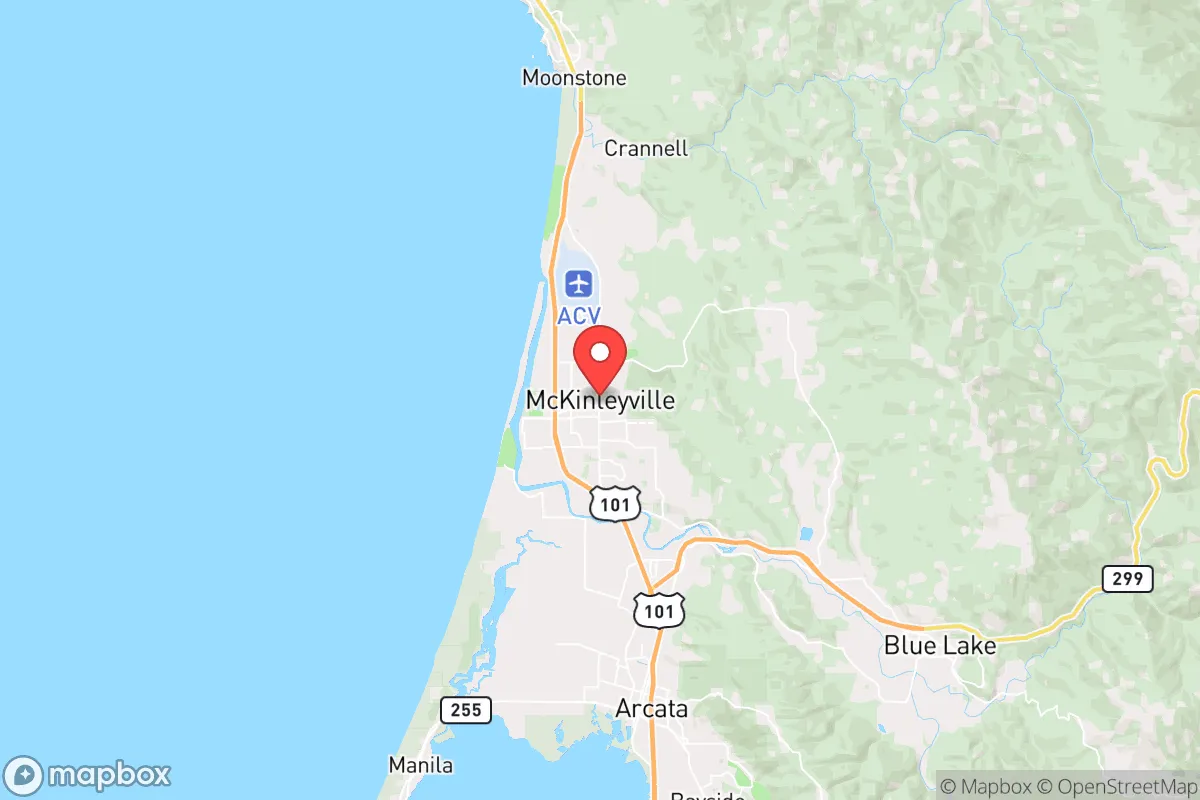
McKinleyville, California, is a community of roughly 17,152 residents that feels more like a small town than a city, with a population that is predominantly White (70.1%) and a notably low foreign-born share of just 1.0%. The area is characterized by a strong sense of local identity, a mix of long-time logging families and newer remote workers, and a political tilt that leans conservative relative to coastal Humboldt County. For those considering a move, McKinleyville offers a quieter, more affordable alternative to Arcata or Eureka, with a population that is stable but slowly diversifying.
How the city was settled and grew
McKinleyville’s human history begins not with a grand founding, but as a modest railroad stop and logging camp in the late 19th century. The area was originally inhabited by the Wiyot people, but Euro-American settlement accelerated after the 1850s, driven by the timber industry and the arrival of the railroad in 1914. The town was named after President William McKinley, and its early population was almost entirely White, drawn from other parts of the U.S. and Europe to work in the redwood forests and mills. The original settlement clustered around what is now Central Avenue, the historic commercial spine, where the first general stores and boarding houses served loggers. By the mid-20th century, McKinleyville remained a small, working-class logging community, with families living in modest homes in the Hillcrest and Pine Tree neighborhoods, areas that still contain many of the original mid-century ranch houses. The post-World War II era saw a modest influx of veterans and their families, who built homes on large lots, reinforcing the area’s rural, owner-occupied character.
Modern era (post-1965)
After the 1965 Hart-Cellar Act, McKinleyville saw very little of the immigration-driven diversification that reshaped many California cities. The foreign-born population remains at just 1.0%, one of the lowest rates in the state. Instead, the modern era has been defined by domestic in-migration from other parts of California and the Pacific Northwest. The decline of the timber industry in the 1980s and 1990s led to an economic shift, with many residents commuting to jobs in Eureka or Arcata, or working in healthcare and education. The North Bank area, along the Mad River, saw new suburban-style subdivisions built in the 1990s and 2000s, attracting families seeking larger lots and lower housing costs. The Hispanic population, now 11.9%, has grown steadily, primarily through domestic migration from agricultural areas in the Central Valley, and is concentrated in the Murray Road corridor, where newer, more affordable housing stock exists. East and Southeast Asian residents (3.3%) are a small but visible presence, often working in healthcare or running small businesses, and are dispersed across the community rather than clustered in a single neighborhood. The Black population remains very small at 0.4%, and the Indian subcontinent population is effectively zero. The college-educated share (37.3%) is notably higher than the county average, reflecting an influx of remote workers and professionals drawn by the area’s natural beauty and lower cost of living, particularly in the West End neighborhoods near the coast.
The future
McKinleyville’s population is projected to grow slowly, with the county’s overall growth rate hovering around 0.5% annually. The community is becoming slightly more diverse, driven primarily by the growth of the Hispanic population, which is expected to reach 15-18% by 2040. The White population share is declining gradually, but will remain the overwhelming majority. The foreign-born share is likely to remain very low, as the area lacks the job base and housing density to attract significant international immigration. New development is concentrated in the Dows Prairie area, where several master-planned subdivisions are under construction, targeting families and remote workers. These new neighborhoods are attracting a mix of younger families and retirees, but the cultural identity of McKinleyville is likely to remain rooted in its rural, self-reliant character. The political leanings are expected to stay moderately conservative relative to the rest of Humboldt County, though the influx of remote workers from more liberal areas may shift the balance slightly over the next decade.
For someone moving in now, McKinleyville is becoming a more stable, slightly more diverse bedroom community that offers a slower pace of life and lower housing costs than the nearby college towns. It is not a place of rapid demographic change or cultural upheaval, but rather a community where the old logging families and the new remote workers are learning to coexist. The bottom line: McKinleyville is a safe, affordable, and increasingly family-oriented choice for those who value space and quiet over urban amenities, and who are comfortable in a community that is still overwhelmingly White and native-born.

* Values derived from national, state, county, city and local statistics and may differ in a specific area. Last updated: 2026-09-04T20:51:47.000Z
Narrative content on this page is AI-generated and may contain mistakes. Verify any details that matter before acting on them.
ReloMaps may earn a commission from affiliate links at no extra cost to you.

