Photo: Wikipedia
Quality of Life in Worcester County
A livable area that tracks near national norms for affordability, walkability, and neighborhood health.
What does Quality of Life tell us?
Quality of Life measures an area by evaluating factors like cost of living, nearby amenities, country club access, airport proximity, socioeconomic signals and neighborhood character. For large states, this is a general average — quality of life can vary dramatically between metro areas, suburbs, and rural communities within the same state.
What does this tell us?
Quality of Life measures an area by evaluating factors like cost of living, nearby amenities, country club access, airport proximity, socioeconomic signals and neighborhood character. For large states, this is a general average — quality of life can vary dramatically between metro areas, suburbs, and rural communities within the same state.
Cost of Living
25% above national average
84%
The Real Cost of Living in Worcester County for 2026
| Tier | Individual | Family (4) |
|---|---|---|
| Survival | $21k | $40k |
| Comfortable | $76k | $112k |
| Luxury | $163k+ | $252k+ |
| Elite (Top 5%) | $191k+ | $297k+ |
Quality-of-Life Analysis
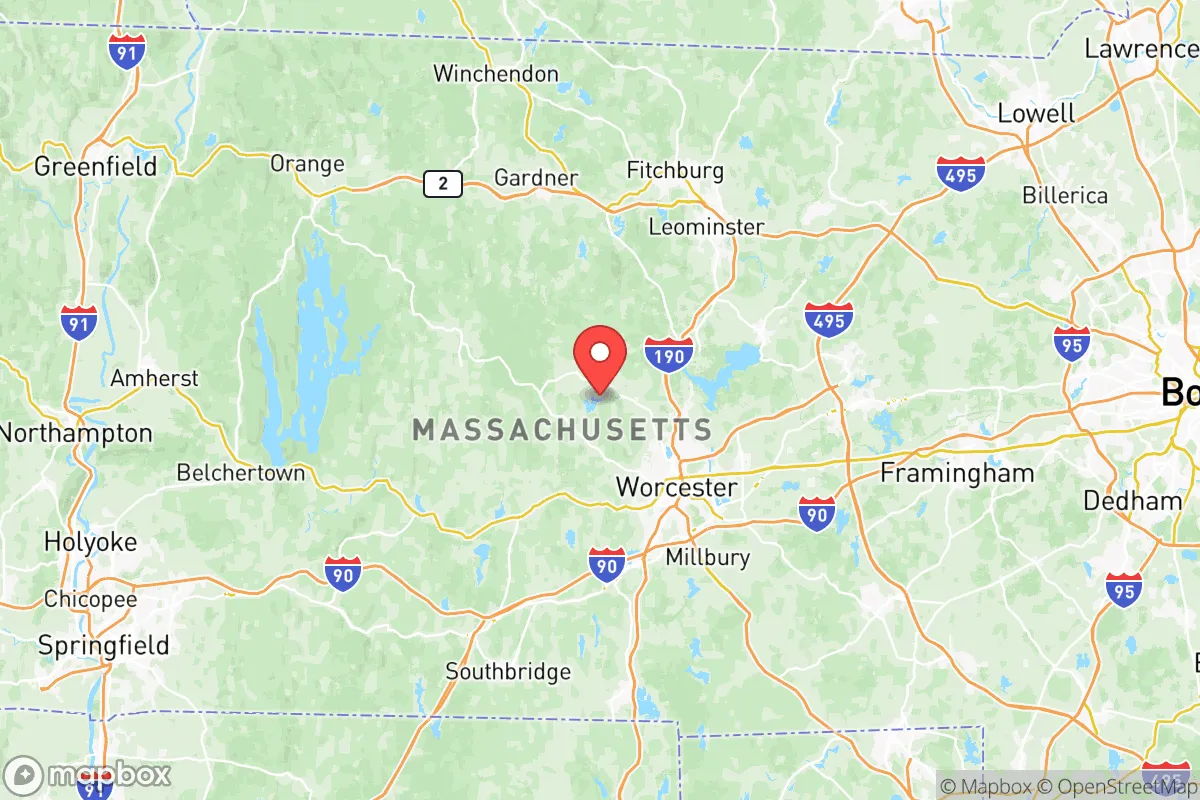
Worcester County, Massachusetts, offers a broad quality-of-life spectrum that ranges from dense, amenity-rich urban centers to quiet, forested rural towns, attracting everyone from young professionals and academics to remote workers and long-established farming families. The county’s character is defined by its central Massachusetts location, balancing proximity to Boston (about an hour east) with access to the Berkshires and New Hampshire borderlands. With a cost-of-living index of 125 (25% above the national average), a median home value of $390,700, and a median rent of $1,347, the county provides more affordable housing options than the Greater Boston area while still demanding a premium over much of the rest of the state. The average commute of roughly 29.5 minutes reflects the county’s role as a bedroom community and regional employment hub, with travel times varying significantly between its urban core and outlying towns.
Largest town(s) & population centers
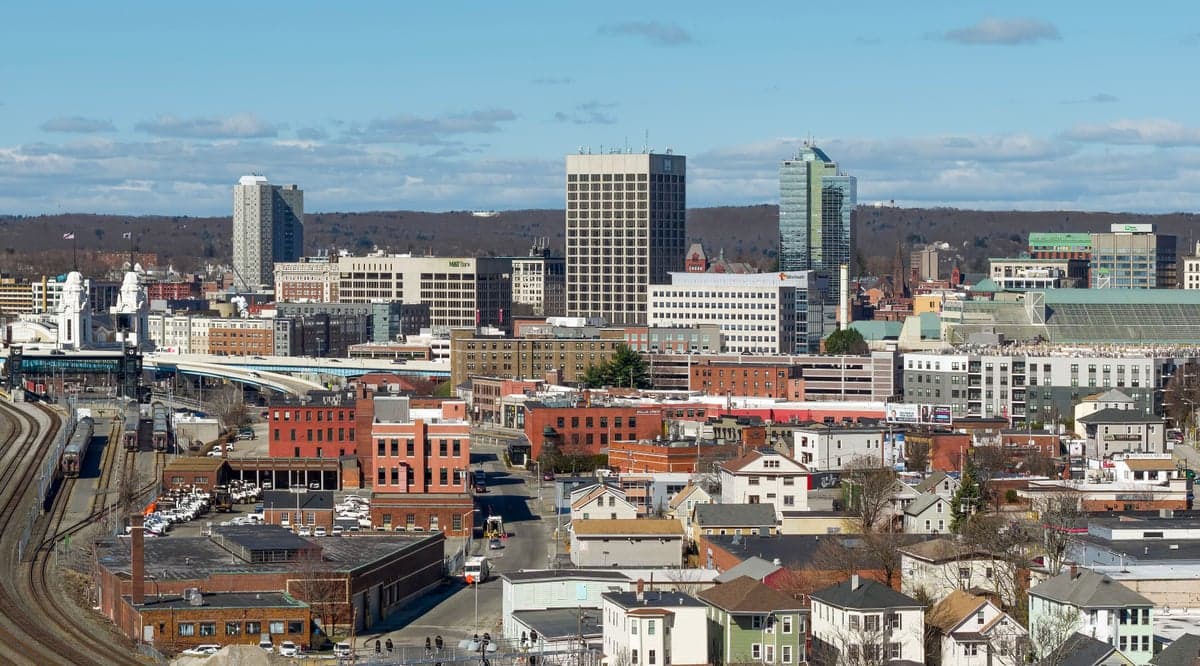
Worcester, the county seat and second-largest city in New England (population ~206,000), is the undisputed population and economic anchor. Daily life here is walkable in the downtown core, with access to the DCU Center, Worcester Art Museum, and a growing food scene anchored by the Canal District. The city is a major healthcare and education hub, home to UMass Chan Medical School, Worcester Polytechnic Institute, and Clark University. Commute times from Worcester average 25–30 minutes for local jobs, though driving to Boston can push that to 60–90 minutes via I-290 and the Mass Pike. Other significant population centers include Fitchburg (pop. ~41,000) and Leominster (pop. ~43,000), twin cities in the northern part of the county that offer more industrial and manufacturing employment, with a lower cost of living than Worcester proper. Shrewsbury (pop. ~39,000) and Marlborough (pop. ~40,000) are affluent suburbs on the eastern edge, with strong school systems and direct commuter rail access to Boston, making them popular with families and professionals who work in the metro area but want more space.
Smaller towns & rural pockets
Beyond the urbanized corridor, Worcester County contains dozens of smaller towns and genuinely rural areas. Sturbridge (pop. ~9,500) in the south is known for Old Sturbridge Village and its historic town common, offering a classic New England small-town feel with easy access to I-84 and I-90. Princeton (pop. ~3,500) sits on the slopes of Mount Wachusett, with extensive state forest land and a strong conservation ethic; it is one of the county’s most rural communities, with a median home value above $500,000 due to its scenic appeal. Petersham (pop. ~1,200) and Royalston (pop. ~1,200) are among the most sparsely populated towns, with large tracts of protected forest and minimal commercial development. North Brookfield (pop. ~4,700) and Hubbardston (pop. ~4,300) represent working-class rural towns with a mix of farms, small businesses, and commuters to Worcester. Commute times from these rural towns often exceed 35–40 minutes to reach Worcester or the I-495 belt, and public transit is virtually nonexistent, making car ownership essential.
Cost & lifestyle range
The cost-of-living spread across Worcester County is substantial. At the high end, Westborough (median home value ~$550,000) and Southborough (~$600,000) offer top-tier schools, commuter rail stations, and proximity to the Route 9 and I-495 job corridor, with a lifestyle that feels more like suburban Boston than central Massachusetts. At the moderate end, Worcester itself (median home value ~$350,000) and Fitchburg (~$280,000) provide the most affordable urban housing, with a median rent of $1,347 that is roughly $400 below the Boston metro average. Gardner (pop. ~20,000) in the north is one of the county’s most affordable towns, with median home values around $250,000, but it also has higher poverty rates and fewer amenities. Rural towns like Phillipston (pop. ~1,700) and Barre (pop. ~5,500) offer land and lower property taxes but limited shopping, dining, and healthcare options, often requiring a 20–30 minute drive to the nearest supermarket or hospital. The lifestyle range thus spans from dense, walkable urban neighborhoods in Worcester to isolated homesteads on dirt roads in the northern hill towns, with every gradation in between.
Worcester County is best suited for people who value geographic diversity and are willing to trade some convenience for space or affordability. Young professionals and academics thrive in Worcester’s revitalizing core, while families seeking strong schools gravitate to Shrewsbury, Westborough, or the Nashoba Regional district towns. Remote workers and retirees often choose the rural towns for lower housing costs and quiet surroundings, accepting longer drives for errands and entertainment. The county’s mix of urban energy, suburban comfort, and rural solitude means that almost any lifestyle preference can be accommodated, provided the buyer or renter is willing to navigate the trade-offs in commute, amenities, and community character.

Crime in Worcester County
Generally safer than 71% of comparable U.S. locations.
Violent CrimeViolent Crime Analysis
Property CrimeProperty Crime Analysis
Crime Analysis
Worcester County, Massachusetts, presents a mixed safety landscape where violent crime rates sit well below national averages but property crime remains a persistent concern, particularly in the urban core of Worcester city and its immediate suburbs. The county’s overall violent crime rate of 235.8 incidents per 100,000 residents is roughly 35% lower than the U.S. national average, while its property crime rate of 813.5 per 100,000 hovers near the national median. However, these countywide figures mask sharp disparities between the progressive, densely populated eastern half and the more conservative, rural western towns, with local prosecutorial policies in Worcester and Fitchburg drawing particular scrutiny from public safety analysts.
Crime in context
Worcester County’s violent crime rate of 235.8 per 100,000 is significantly below the Massachusetts state average of roughly 300 per 100,000 and far under the national figure of about 380 per 100,000. Property crime at 813.5 per 100,000 is slightly above the state average of 750 but still well below high-crime regions like the South or Southwest. The county’s largest city, Worcester, drives much of the crime volume: its violent crime rate of approximately 450 per 100,000 is nearly double the county average, while property crime there exceeds 1,200 per 100,000. By contrast, towns like Holden, Paxton, and Princeton report violent crime rates below 100 per 100,000, making them among the safest communities in Central Massachusetts. The Worcester County District Attorney’s Office, led by a progressive prosecutor who has emphasized diversion programs and reduced cash bail, has faced criticism from law enforcement unions for what they describe as a lenient approach to repeat offenders, particularly in property crime cases.
What residents experience
For most residents outside the urban core, daily life involves minimal exposure to violent crime. Car breaks and package thefts are the most common complaints in suburban towns like Shrewsbury and Westborough, where property crime rates hover around 500-600 per 100,000. In Worcester itself, residents report higher anxiety around theft, vandalism, and drug-related incidents, especially in neighborhoods near Main South and Great Brook Valley. The city’s Fitchburg neighbor also struggles: Fitchburg’s violent crime rate of roughly 380 per 100,000 and property crime near 1,100 per 100,000 make it the second most dangerous city in the county. The progressive policies of the Fitchburg District Court, which has implemented restorative justice programs for nonviolent offenders, have been linked by local media to a rise in shoplifting and car thefts, as repeat offenders cycle through the system with minimal consequences. Residents in these areas increasingly rely on home security systems and neighborhood watch groups, while those in safer towns like Harvard and Bolton report feeling secure enough to leave doors unlocked during the day.
Neighborhood-level variation is stark. In Worcester, the West Side (around Tatnuck Square) and Burncoat areas have crime rates roughly half those of the city’s downtown and Main South corridors. Suburban towns along the Route 495 belt—Marlborough, Hudson, and Northborough—see property crime rates in the 600-800 range but very low violent crime, making them attractive to families. Rural western towns like Barre, Hardwick, and Royalston report violent crime rates under 50 per 100,000, though property crime can spike due to isolated thefts from unoccupied homes. The county’s most significant safety concern remains the concentration of crime in Worcester and Fitchburg, where progressive judicial policies and a lack of sufficient police resources have created conditions that worry long-term residents. Anyone considering relocation should prioritize towns with conservative-leaning local governments and traditional law enforcement approaches, as these areas consistently report the lowest crime rates and highest resident satisfaction with public safety.
* Values derived from national, state, county, city and local statistics and may differ in a specific area. Last updated: 2026-07-10T00:04:39.000Z
Narrative content on this page is AI-generated and may contain mistakes. Verify any details that matter before acting on them.
ReloMaps may earn a commission from affiliate links at no extra cost to you.

