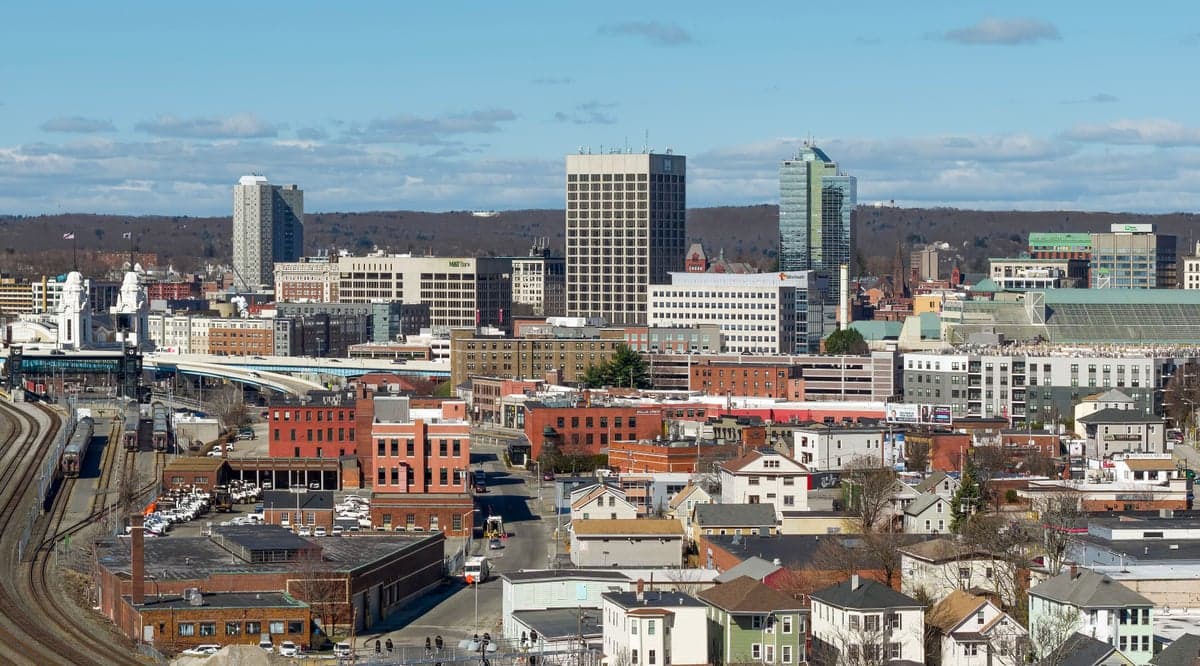
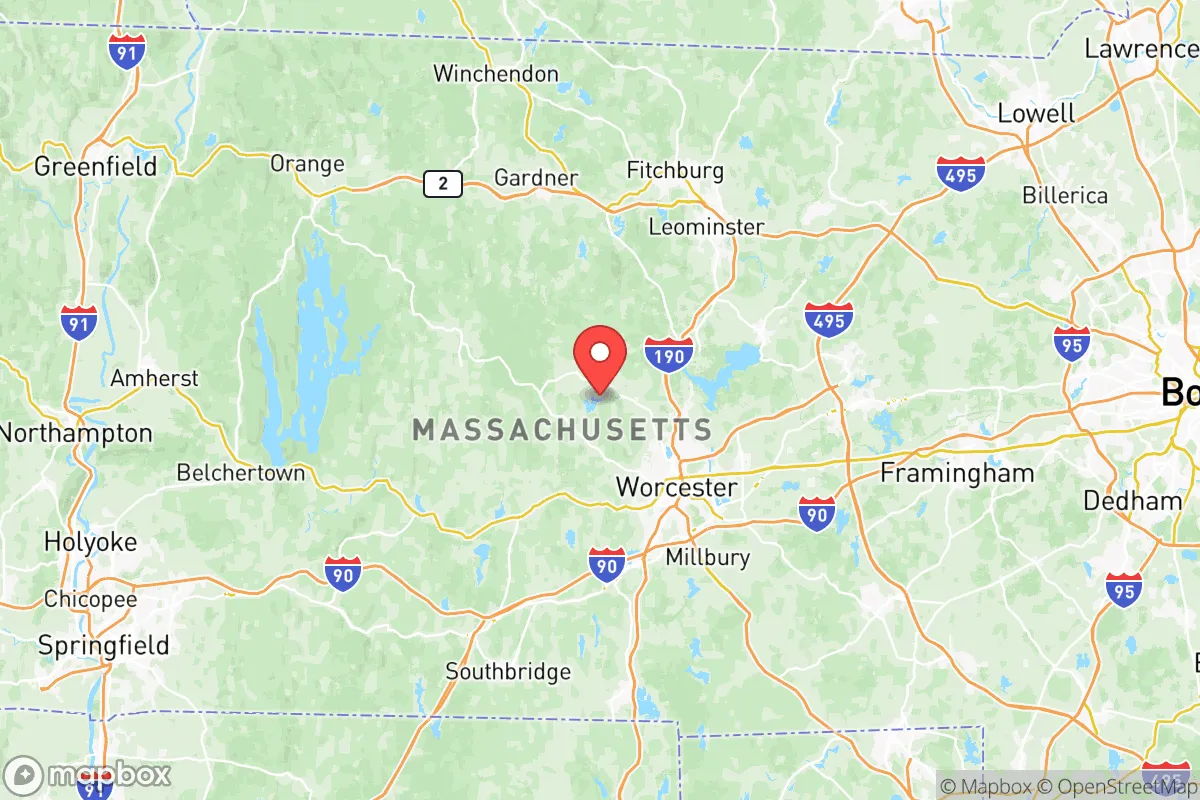
Photo: Wikipedia
Personal Sovereignty in Worcester County
Moderate friction. Expect trade-offs in some aspect of personal liberty and independence.
What does Personal Sovereignty tell us?
Personal Sovereignty measures your capacity for self-reliance and independence with minimal government friction. Higher scores mean fewer barriers between you and the way you want to live... but it assumes you have the space you need and good neighbors.
What does this tell us?
Personal Sovereignty measures your capacity for self-reliance and independence with minimal government friction. Higher scores mean fewer barriers between you and the way you want to live... but it assumes you have the space you need and good neighbors.
State Policy
Energy independence: Importer (5% of energy produced in-state)
Personal Liberty
Homesteading

Personal Liberty Analysis
Worcester County, Massachusetts presents a complex environment for personal sovereignty, where state-level progressive governance often clashes with a deeply rooted local culture of self-reliance and independence. While Massachusetts is known for its extensive regulatory framework, Worcester County—stretching from the urban core of Worcester city to the rural towns of the western hill towns—offers a spectrum of autonomy that varies significantly by municipality. For the freedom-minded individual or family, the key is understanding that your personal sovereignty in this county is less a single condition and more a negotiation between state mandates and local enforcement, with towns like Rutland, Hubbardston, and Phillipston offering notably more breathing room than the county seat of Worcester itself.
Tax burden and regulatory posture: How Worcester County compares to the rest of Massachusetts
Massachusetts carries a reputation for high taxes and dense regulation, and Worcester County is no exception to the state's framework. The state income tax is a flat 5.0% (as of 2026), and the sales tax sits at 6.25%. Property taxes in Worcester County average around 1.2% to 1.5% of assessed value, but this varies widely: Worcester city proper often sees higher rates to fund urban services, while rural towns like Oakham and New Braintree maintain lower mill rates but offer fewer services. The regulatory posture is heavily state-driven, particularly around environmental and building codes. The Massachusetts Building Code is among the strictest in the nation, and the Wetlands Protection Act heavily restricts land use near water bodies. However, local enforcement is the real variable. In towns like Winchendon, code enforcement is often complaint-driven and less proactive, whereas in Worcester or Framingham, inspections are routine and rigorous. For a reader prioritizing low regulatory friction, the western and northern towns of the county—where select boards are more libertarian-leaning—offer a noticeably lighter touch than the eastern suburbs or the urban core.
Self-defense and gun law specifics: Navigating Massachusetts' firearm framework in Worcester County
Massachusetts has some of the most restrictive gun laws in the United States, and Worcester County residents must navigate them carefully. The state requires a License to Carry (LTC) for almost all handgun possession, which involves a firearms safety course, background check, and local police chief approval. While the "may-issue" standard was effectively replaced by "shall-issue" after the Bruen decision, local chiefs in Worcester County still retain discretion over restrictions. In practice, Leominster and Fitchburg have historically been more accommodating to LTC applicants, with fewer "restricted" licenses (which limit carry to hunting and target shooting), while some smaller towns may issue unrestricted licenses more readily if the applicant demonstrates good cause. The state also bans "assault weapons" by feature, and magazine capacity is capped at 10 rounds. For self-defense at home, shotguns and handguns are common, but carrying in public requires strict adherence to the LTC conditions. The county does have a strong gun culture, particularly in the rural hill towns, with active sportsmen's clubs in Barre and Athol offering ranges and training. However, any resident must accept that Massachusetts' legal framework is fundamentally more restrictive than that of neighboring New Hampshire, and that transporting firearms across state lines requires careful legal planning.
Self-reliance and homesteading viability: Lot sizes, zoning, and off-grid feasibility in Worcester County
Homesteading and self-reliance are genuinely viable in large portions of Worcester County, but the feasibility depends heavily on which town you choose. Minimum lot sizes in rural towns like Hubbardston and Phillipston are typically 2 to 5 acres, with some areas zoned for agricultural use that allows livestock, poultry, and small-scale farming without special permits. In contrast, towns closer to the I-495 belt, such as Marlborough or Westborough, have smaller lots (often under an acre) and stricter zoning that limits accessory structures and animal husbandry. Off-grid living is legally challenging in Massachusetts. The state building code requires connection to the electrical grid for new construction, and septic systems must meet Title 5 standards, which are among the most stringent in the country. Solar panels with battery storage are permitted and increasingly common, but fully disconnecting from the grid is not straightforward. Rainwater collection is legal but regulated, and wells are common in rural areas. For a family seeking true self-reliance, the western towns of the county—Royalston, Petersham, and Hardwick—offer the best combination of affordable land, lax local enforcement, and a community culture that values independence. However, even there, the state's wetland and building codes impose limits that a homesteader in, say, rural New Hampshire or Maine would not face.
Personal liberties: Parental rights, medical autonomy, speech, and property in Worcester County
Personal liberties in Worcester County are shaped by a mix of state law and local culture. Parental rights are generally strong in the rural towns, where school committees are often conservative-leaning and curriculum transparency is a local priority. Towns like Rutland and Paxton have seen active parental involvement in school board decisions, and the state's "opt-out" provisions for sex education and certain health services are generally respected. Medical autonomy is more constrained at the state level: Massachusetts has strict vaccine mandates for school attendance and a robust public health infrastructure that can override local decisions during emergencies. The COVID-19 era saw significant friction between state mandates and local resistance in towns like Holden and Sterling, where some businesses and schools pushed back. Free speech is protected under the First Amendment, and Worcester County has a tradition of robust public discourse, though local ordinances on noise, signage, and public assembly vary. Property rights are the area of greatest tension. Massachusetts' Chapter 40B allows developers to override local zoning for affordable housing projects, which has caused friction in towns like Grafton and Shrewsbury where residents feel their property values and community character are threatened. The state's strong tenant protection laws also tilt the balance away from landlords. For a property owner, the key is understanding that while you have significant control over your land, state-level environmental and housing regulations can impose unexpected constraints.
Overall, Worcester County offers a middle ground for personal sovereignty that is more constrained than the freewheeling environments of New Hampshire or much of the South, but significantly more permissive than the urban centers of Boston or Cambridge. The county's strength lies in its diversity: a freedom-minded individual can find a town that aligns with their priorities, whether that is low property taxes in Oakham, a gun-friendly culture in Fitchburg, or homesteading viability in Phillipston. The trade-off is that you must accept the state's overarching regulatory framework, which is unlikely to change. For the reader who values personal autonomy but needs to remain within commuting distance of Boston or Providence, Worcester County's rural towns represent the best available balance of independence and access in eastern Massachusetts.

* Values derived from national, state, county, city and local statistics and may differ in a specific area. Last updated: 2026-07-10T00:04:39.000Z
Narrative content on this page is AI-generated and may contain mistakes. Verify any details that matter before acting on them.
ReloMaps may earn a commission from affiliate links at no extra cost to you.

