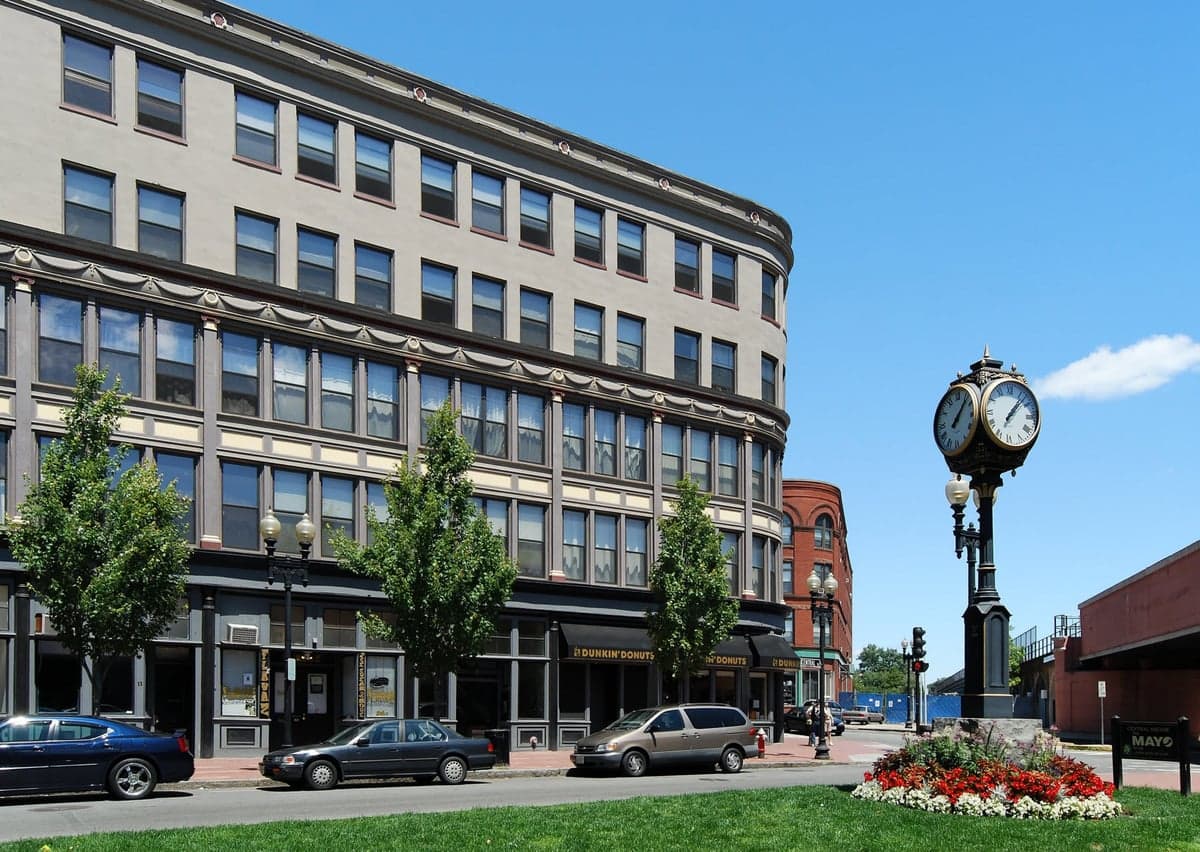
Photo: Wikipedia
Political ClimatePolitical Climate in Essex County
Showing district-level results — no local-only data available.
Local Political AnalysisPolitical Analysis of Essex County
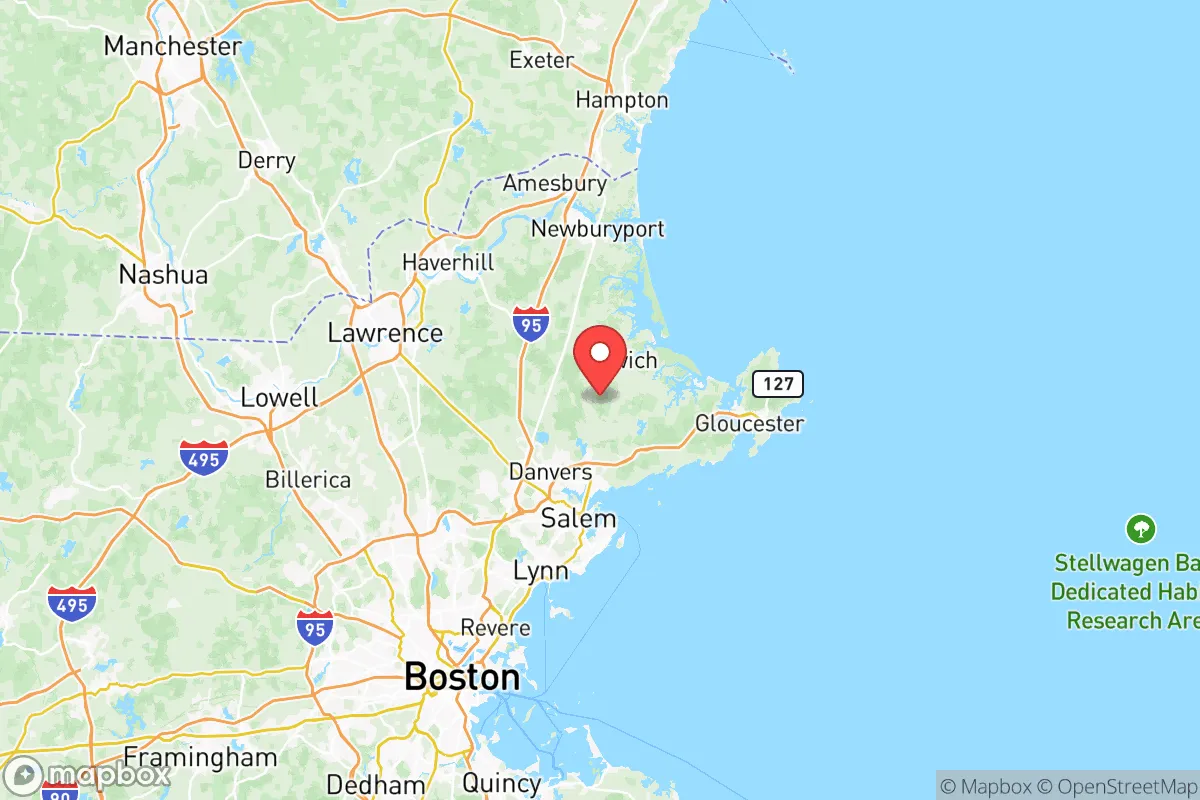
Essex County, Massachusetts, carries a Cook PVI of D+11, which is a solidly Democratic lean, but it’s not the deep-blue lock you see in the state as a whole (D+15). That four-point gap is the whole story in a nutshell: Essex County is a battleground within a blue state, where old-school, live-and-let-live Yankee independence still rubs up against the progressive wave coming out of Boston. You can feel it in the air—the county has been trending left, but it’s a slower, more grudging shift than what’s happening down in Suffolk or Middlesex counties.
How it compares
The real action is in the towns. North of Boston, places like Andover and Swampscott are reliably blue, with the kind of affluent, educated voters who back the full progressive agenda. But drive ten miles west to Methuen or Haverhill, and you’ll find working-class precincts that have been swinging toward the GOP in recent cycles—especially on issues like school choice and local zoning control. The biggest red flag for anyone worried about government overreach is Salem and Lynn, where city councils have pushed hard on rent control, sanctuary city policies, and even local energy mandates that go beyond state law. Meanwhile, Newburyport and Ipswich are classic swing towns: they vote blue for president, but they’ll flip for a Republican sheriff or state rep who promises to keep the state’s hands off their historic districts and small businesses. The county’s overall D+11 masks a real split—the rural and exurban precincts are far more skeptical of the progressive agenda than the coastal and commuter-rail towns.
What this means for residents
For a conservative-leaning resident, the trend is concerning. The state legislature in Boston keeps passing bills that preempt local control—like the 2024 MBTA Communities law that forces towns to rezone for high-density housing near transit stations, even if the locals voted it down. Essex County towns like Boxford and Georgetown fought that tooth and nail, but lost. You’re also seeing a push for statewide rent control and a “right to shelter” law that effectively mandates open-ended housing for migrants, which has strained local budgets in Lawrence and Peabody. The county’s Republican sheriffs—like Kevin Coppinger in Essex—still win re-election by running on “keep the state out of our jails,” but the margin is shrinking. If you value personal freedom—the right to build a shed without a permit, to opt your kid out of a vaccine mandate, to run a small business without a dozen new regulations—Essex County is still better than Boston proper, but the gap is closing fast.
The cultural distinction here is that Essex County has a deep-rooted, “mind your own business” ethos that goes back to the fishing and mill towns. That’s why you still see pockets of resistance: Amesbury voters rejected a plastic bag ban twice, Rockport fought a wind turbine project for years, and Gloucester has a long history of defying state fishing quotas. But the state’s progressive machinery is relentless—new energy codes, new education mandates, new tax surcharges on property transfers. If you’re looking for a place where the government still respects your right to live your life without constant interference, Essex County is a last stand, but it’s a retreating one. The old-timers will tell you it was a different place twenty years ago—more independent, less regulated. They’re not wrong, and the trend line isn’t reversing.

State Political ClimatePolitical Climate in Massachusetts
State Political AnalysisPolitical Environment in the State
Massachusetts is one of the most reliably Democratic states in the country, with a Cook Partisan Voting Index of D+15, meaning it votes about 15 points more Democratic than the national average. Over the last 20 years, the state has shifted further left, driven by the Boston metro area’s explosive growth and the exodus of moderate Republicans from the suburbs. While the state once had a tradition of electing moderate Republicans like Governors William Weld and Mitt Romney, that era is long gone—today, every statewide office is held by a Democrat, and the GOP holds zero seats in the state’s congressional delegation. For a conservative considering a move here, the political climate is a steep uphill climb, but there are pockets of resistance worth knowing about.
Urban vs. rural divide
The political map of Massachusetts is a tale of two worlds. The eastern third of the state, anchored by Boston, Cambridge, and Somerville, is deep blue—these cities routinely vote 80-90% Democratic. The western and central parts of the state, including Worcester, Springfield, and the Berkshires, are more mixed but still lean Democratic overall. The real conservative strongholds are the small towns and rural areas in the central and southeastern parts of the state, like Plymouth County and the Cape Cod region, where Trump improved his margins in 2020. For example, Fall River and New Bedford, old mill cities with large Portuguese and working-class populations, have become more competitive for Republicans in recent cycles. But even in these areas, the state’s Democratic machine—backed by union money and Boston’s tech and academic elites—keeps the overall lean solidly blue. The divide isn’t just geographic; it’s cultural. The Boston suburbs, like Newton and Lexington, are now reliably progressive, while the exurbs like Sturbridge and Southbridge still lean red.
Policy environment
Massachusetts has one of the most progressive policy environments in the nation, and it shows in the numbers. The state has a flat income tax rate of 5% (with a 4% surtax on income over $1 million passed in 2022), a sales tax of 6.25%, and property taxes that average about 1.1% of home value—but in high-demand areas like Boston and Cambridge, effective rates can be much higher. The regulatory posture is heavy: the state has strict environmental rules, a robust rent control movement (Boston passed rent stabilization in 2023), and some of the nation’s most aggressive climate mandates. Education policy is a mixed bag—Massachusetts consistently ranks #1 in K-12 outcomes, but the state’s education bureaucracy is massive, and school choice is limited compared to other states. Healthcare is dominated by the state’s 2006 universal coverage law, which served as a model for the ACA, and the state has a strong public option. Election laws are among the most liberal: no-excuse mail-in voting, same-day registration, and early voting are all permanent fixtures. For a conservative, the policy environment feels like a one-party state where dissent is tolerated but rarely rewarded.
Trajectory & freedom
Over the last decade, Massachusetts has become less free by almost any measure. The state passed one of the nation’s strictest gun control laws in 2024 (H.4885), which bans the sale of many semi-automatic rifles, requires licensing for ammunition purchases, and imposes a 10-day waiting period on all firearm transfers. Parental rights took a hit with the 2022 law that allows minors 16 and older to consent to gender-affirming care without parental notification, and the state’s sanctuary status (enacted in 2017) means local law enforcement cannot cooperate with federal immigration authorities. Medical autonomy is heavily regulated—the state has a strict certificate-of-need process for hospitals and clinics, and the 2020 law legalizing psychedelics for therapeutic use came with heavy state oversight. Property rights are constrained by the state’s Chapter 40B affordable housing law, which allows developers to bypass local zoning if a town has less than 10% affordable housing—a policy that has fueled suburban sprawl and resentment. The trend is clear: the state is doubling down on progressive governance, and the legislature has a supermajority that can override any veto from the governor.
Civil unrest & political movements
Massachusetts has a long history of political activism, but the flashpoints in recent years have been on the left. The 2020 George Floyd protests in Boston were large and occasionally violent, leading to the removal of a statue of Christopher Columbus in the North End. The state’s sanctuary policy has made it a magnet for immigration activism, with groups like the Massachusetts Immigrant and Refugee Advocacy Coalition pushing for even more protections. On the right, the Massachusetts Fiscal Alliance and the state’s small but vocal gun rights community (led by groups like GOAL) have fought losing battles in the legislature. Election integrity has been a minor flashpoint—the state’s mail-in voting system was expanded permanently in 2022, and while there have been no major fraud scandals, conservatives remain skeptical of the lack of voter ID requirements. The most visible political movement is the “Massachusetts Model” of progressive governance, which has become a national template for Democratic states. For a new resident, the political climate feels like a one-party state where the opposition is marginalized but not silenced.
Projection
Over the next 5-10 years, Massachusetts will likely become even more Democratic. The state’s population is aging and shrinking in rural areas, while the Boston metro area continues to attract young, highly educated, and overwhelmingly liberal transplants from around the world. The 2024 election saw Trump improve his vote share in some working-class towns, but the overall trend is toward a deeper blue. The state’s tax burden and regulatory environment are driving some businesses and families to lower-cost states like New Hampshire and Florida, but the influx of tech and biotech workers (especially in Cambridge and the Route 128 corridor) is more than offsetting those losses. The state’s Democratic supermajority is unlikely to be broken anytime soon, and the GOP is so weak that it struggles to field candidates for statewide office. For a conservative moving in now, the realistic expectation is that the state will continue to expand government control over healthcare, education, and housing, while individual freedoms—especially gun rights and parental rights—will continue to erode.
Bottom line for a new resident: If you’re a conservative, Massachusetts is a tough place to live politically. You’ll find like-minded people in the rural towns of central and southeastern Massachusetts, but you’ll be fighting a losing battle at the state level. The state’s tax burden, regulatory environment, and progressive social policies are baked in, and the trajectory is toward more of the same. If you value low taxes, gun rights, and local control, you’re better off looking at New Hampshire or Rhode Island. But if you have to be here for work or family, know that the political climate is hostile to conservative values, and your best bet is to find a red pocket—like Plymouth or Worcester County—and build your life around local community rather than state politics.
* Values derived from national, state, county, city and local statistics and may differ in a specific area. Last updated: 2026-05-12T05:22:43.000Z
Narrative content on this page is AI-generated and may contain mistakes. Verify any details that matter before acting on them.
ReloMaps may earn a commission from affiliate links at no extra cost to you.

