Photo: Wikipedia
Personal Sovereignty in Essex County
Viable for self-reliance. Generally workable, though some barriers may limit total independence.
What does Personal Sovereignty tell us?
Personal Sovereignty measures your capacity for self-reliance and independence with minimal government friction. Higher scores mean fewer barriers between you and the way you want to live... but it assumes you have the space you need and good neighbors.
What does this tell us?
Personal Sovereignty measures your capacity for self-reliance and independence with minimal government friction. Higher scores mean fewer barriers between you and the way you want to live... but it assumes you have the space you need and good neighbors.
State Policy
Energy independence: Importer (5% of energy produced in-state)
Personal Liberty
Homesteading

Personal Liberty Analysis
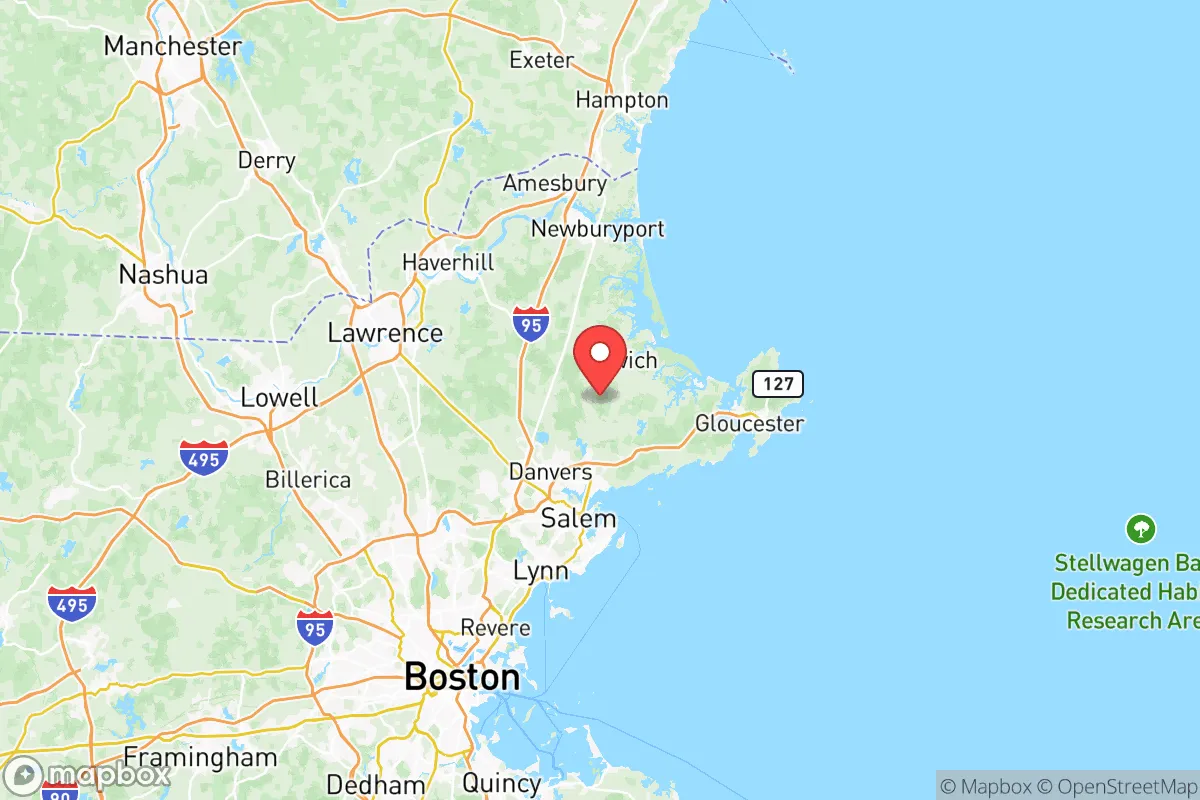
Essex County, Massachusetts presents a complex and often contradictory landscape for personal sovereignty, where deep-rooted New England traditions of self-reliance clash with one of the nation's most assertive state governments. For the strategic relocator—particularly those with a survivalist or prepper mindset—the county offers pockets of genuine autonomy, but only if you know exactly where to look and are willing to navigate a dense web of state-level restrictions. The reality is that your personal freedom in Essex County will be defined less by the county itself and more by which of its 34 cities and towns you choose to call home, as the regulatory posture shifts dramatically from the urban coastal centers to the rural interior.
Tax burden and regulatory posture: What you pay for the privilege of living here
Massachusetts carries a reputation for high taxes and heavy regulation, and Essex County does not escape that reality. The state's income tax sits at a flat 5% (with a 4% surtax on income over $1 million), and the sales tax is 6.25%. Property taxes vary wildly across the county: Andover and Boxford carry rates around $14-$16 per $1,000 of assessed value, while Lawrence and Lynn push closer to $20-$22 per $1,000, reflecting the stark divide between affluent suburbs and struggling post-industrial cities. The regulatory posture is uniformly burdensome from a state level—Massachusetts has some of the strictest environmental, building, and business licensing codes in the country. However, the local enforcement varies. In Newburyport and Salem, you'll face aggressive zoning boards and historic district commissions that can delay even minor property modifications for months. In contrast, Georgetown and Rowley maintain a more hands-off, rural approach to permitting, particularly for agricultural structures and home-based businesses. The bottom line: you are paying a premium for state services you may not want, and your ability to bypass local bureaucracy depends heavily on choosing a town with a libertarian-leaning municipal culture.
Self-defense and gun law specifics: Navigating the Commonwealth's restrictions
This is where Essex County becomes a genuine frustration for the sovereignty-minded individual. Massachusetts has some of the most restrictive gun laws in the nation, and there is no county-level exemption. You will need a License to Carry (LTC) for any handgun, and the issuing authority is your local police chief—meaning your rights depend on the temperament of one person. Methuen and Haverhill have historically been more reasonable with LTC issuance, often issuing unrestricted licenses without the "sporting purposes" restriction that plagues applicants in Cambridge or Brookline (though those are outside Essex County). The state bans "assault weapons" by name and feature, limits magazine capacity to 10 rounds, and requires a separate Firearms Identification Card (FID) for long guns. There is no constitutional carry; open carry is effectively illegal in practice. For the prepper, this means your defensive capabilities are legally capped at what the state deems acceptable. However, the culture of hunting and sport shooting remains strong in the northern and western parts of the county. North Andover and Middleton have active rod and gun clubs where like-minded individuals train and network. The key takeaway: you can own firearms here, but you will do so under a regime of constant bureaucratic oversight, and you must choose your town carefully to avoid a hostile licensing authority.
Self-reliance and homesteading viability: Lot sizes, zoning, and off-grid feasibility
For those seeking genuine self-sufficiency, Essex County offers a split reality. The eastern coastal towns—Gloucester, Rockport, Ipswich—are densely settled with small lots, strict wetlands protection, and powerful conservation commissions that make clearing land or building a root cellar a legal battle. The western and northern towns tell a different story. Boxford and Georgetown still have zoning that permits agricultural use on lots of 2-5 acres, and you can find properties with existing barns, well water, and septic systems. Off-grid living is technically possible but practically difficult: Massachusetts requires connection to the electrical grid for any habitable structure, and solar-only setups must still have a grid interconnection agreement. Rainwater collection is legal but regulated, and composting toilets require a variance in most towns. The real opportunity lies in West Newbury and Merrimac, where larger parcels (10+ acres) are still available at prices far below the county median, and the local culture is more tolerant of alternative living arrangements. For the serious prepper, the Merrimack River valley offers the best balance of water access, arable land, and relative isolation—but you will never achieve the off-grid independence possible in rural New Hampshire or Maine, just an hour north.
Personal liberties: Parental rights, medical autonomy, speech, and property
Massachusetts is a blue state with a strong progressive consensus on social issues, and this directly impacts personal sovereignty. Parental rights are under constant pressure: the state's Department of Children and Families has broad authority to investigate families, and the legal standard for intervention is lower than in many red states. Medical autonomy is severely limited—Massachusetts was one of the first states to mandate COVID-19 vaccines for school attendance, and it maintains one of the strictest vaccine schedules in the country. Religious and philosophical exemptions for school mandates are effectively nonexistent. For the parent seeking to opt out of standard medical protocols, Essex County offers no safe harbor; the state's health department will pursue compliance aggressively regardless of your town. Free speech is protected by the First Amendment, but local ordinances in Salem and Beverly have been used to restrict public assembly and leafleting in certain zones. Property rights are the strongest liberty you will find here—Massachusetts has relatively strong private property protections compared to other coastal states, and towns like Hamilton and Wenham have fought off attempts at regional zoning overrides. You can build, fence, and use your land largely as you see fit, provided you stay within the state's environmental and building codes.
Overall, Essex County offers a middling grade for personal sovereignty when compared to other regions of the country. It is far more restrictive than the rural South, the Mountain West, or even neighboring New Hampshire, where no income tax and constitutional carry create a genuinely freer environment. However, within the context of the Northeast, Essex County's northern and western towns—Georgetown, Boxford, West Newbury, Merrimac—provide a viable compromise for those who need to remain in the region for work or family but refuse to surrender all autonomy. The strategic relocator should view Essex County as a defensive play: you can preserve a meaningful degree of self-reliance, but only if you are willing to fight for it at the town meeting, the licensing board, and the ballot box. The state government will always be an adversary to your sovereignty; your only leverage is choosing a local community that shares your values and will push back.

* Values derived from national, state, county, city and local statistics and may differ in a specific area. Last updated: 2026-05-12T05:22:43.000Z
Narrative content on this page is AI-generated and may contain mistakes. Verify any details that matter before acting on them.
ReloMaps may earn a commission from affiliate links at no extra cost to you.

