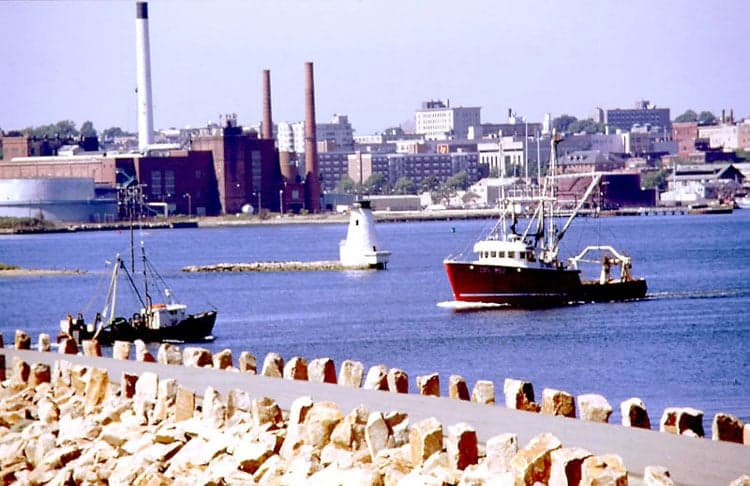
Photo: Wikipedia
Quality of Life in Bristol County
A livable area that tracks near national norms for affordability, walkability, and neighborhood health.
What does Quality of Life tell us?
Quality of Life measures an area by evaluating factors like cost of living, nearby amenities, country club access, airport proximity, socioeconomic signals and neighborhood character. For large states, this is a general average — quality of life can vary dramatically between metro areas, suburbs, and rural communities within the same state.
What does this tell us?
Quality of Life measures an area by evaluating factors like cost of living, nearby amenities, country club access, airport proximity, socioeconomic signals and neighborhood character. For large states, this is a general average — quality of life can vary dramatically between metro areas, suburbs, and rural communities within the same state.
Cost of Living
21% above national average
70%
The Real Cost of Living in Bristol County for 2026
| Tier | Individual | Family (4) |
|---|---|---|
| Survival | $19k | $35k |
| Comfortable | $82k | $120k |
| Luxury | $145k+ | $224k+ |
| Elite (Top 5%) | $170k+ | $264k+ |
Quality-of-Life Analysis
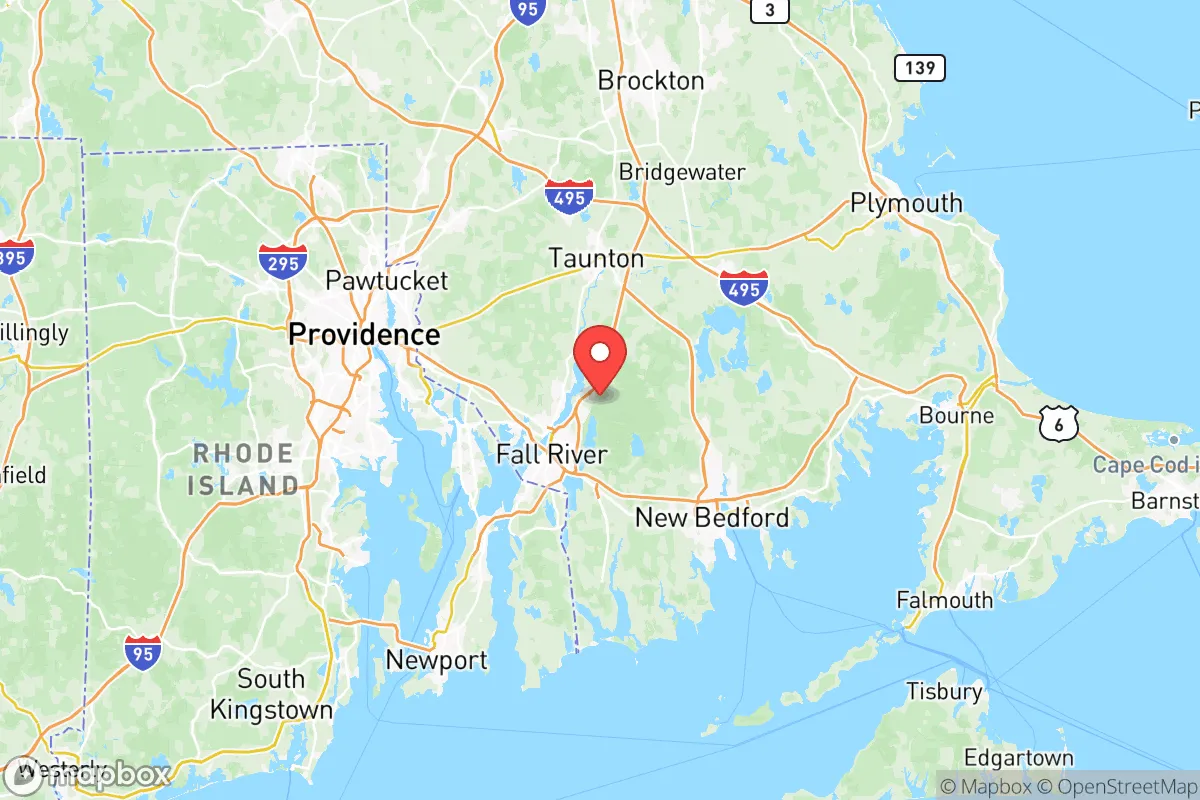
Bristol County, Massachusetts offers one of the most varied quality-of-life spectrums in the state, drawing residents from young professionals priced out of Boston to retirees seeking coastal quiet and families looking for land without losing commuter rail access. The county spans the urbanized South Coast cities of Fall River and New Bedford, the commuter-friendly towns along I-495 like Mansfield and Attleboro, and the deeply rural farmlands of Dighton, Berkley, and Freetown. With a county-wide cost-of-living index of 121 (100 = U.S. average), median home value of $421,800, median rent of $1,181, and an average commute of 28.4 minutes, the key is knowing which area delivers the trade-offs you want.
Largest town(s) & population centers
The county's three largest cities — Fall River (pop. ~94,000), New Bedford (pop. ~101,000), and Taunton (pop. ~60,000) — anchor the region with dense, walkable neighborhoods, historic mill buildings, and the strongest public transit links. Fall River and New Bedford each have their own bus systems and connect to commuter rail to Boston, though daily life is distinctly urban: multi-family homes, ethnic restaurants, and working-class roots in fishing and textiles. Taunton, the county seat, offers a more suburban downtown with city services, the Taunton River waterfront, and a mix of older single-family homes and newer subdivisions. In all three, daily life is defined by shorter car trips to grocery stores and schools, but the urban density brings older housing stock and fewer private outdoor spaces compared to the rest of the county.
Smaller towns & rural pockets
Outside the population centers, Bristol County opens into a patchwork of small towns where the rural character of southeastern Massachusetts still holds. Rehoboth, Dighton, and Berkley remain largely agricultural, with working horse farms, community gardens, and large lots of one to five acres. Homes here are often set far back from main roads; the nearest grocery store may be a ten-minute drive. Freetown and Lakeville offer access to the Freetown-Fall River State Forest and dozens of walking trails, attracting hikers and mountain bikers. Seekonk, though more suburban, still has swaths of undeveloped land along the Palmer River. Dartmouth and Westport mix coastal areas (salty air, beaches, marinas) with rural inland sections of dairy farms. These towns lack sidewalks or streetlights; daily life demands a car for every errand, but the payoff is space, privacy, and proximity to open water or woods.
Cost & lifestyle range
The cost spread across Bristol County is wide. At the lower end, Fall River and New Bedford offer median home prices around $350,000–$380,000 and rents well below the county average, making them some of the most affordable water-adjacent cities in Massachusetts. Commute times from these cities to Providence or South Coast jobs can be as low as 15–20 minutes. At the middle of the spectrum, commuter towns like Mansfield, Norton, and Sharon push median home values above $500,000 and carry longer (but still sub-30-minute) rail commutes into Boston. These towns have strong school systems, chain retail, and active downtowns. At the high end, coastal pockets in Westport Point and South Dartmouth (Padanaram) drive prices well past $700,000, with lifestyle focused on sailing, beach access, and summer tourism. Rent follows the same gradient: $1,181 median county-wide means a two-bedroom in Fall River averages about $1,100, while a similar unit in Mansfield runs closer to $1,600. The amenities range from urban museums and nightlife in New Bedford to quiet agricultural supply stores in Dighton — residents choose which trade-offs fit their budget and daily routine.
Bristol County works best for people who want a real choice in setting from a single county — a family that values 10-acre lots in Berkley, a commuter who needs the Mansfield MBTA station, or a creative professional drawn to New Bedford's artist lofts will all find a niche. The trade-off is that no single part of the county does everything well: urban centers lack ample open space, rural towns lack jobs and transit, and the commuter corridor is pricier. But for those who know the map, Bristol County offers a compelling range of lifestyles within a short drive of both Boston and Providence.

Crime in Bristol County
Generally safer than 71% of comparable U.S. locations.
Violent CrimeViolent Crime Analysis
Property CrimeProperty Crime Analysis
Crime Analysis
Bristol County, Massachusetts, presents a mixed safety profile that varies significantly by community. The county's violent crime rate stands at 235.8 incidents per 100,000 residents, while property crime occurs at a rate of 993.9 per 100,000. These figures place Bristol County above the statewide average for violent crime but below the national median, though the county's proximity to the Boston metro area and its diverse urban-rural mix create sharp contrasts between its safest and most dangerous towns.
Crime in context
Compared to Massachusetts as a whole, Bristol County's violent crime rate is roughly 15% higher, driven largely by incidents in its older industrial cities. The property crime rate, however, is about 10% lower than the state average and well below the national figure of approximately 1,950 per 100,000. The county's largest city, Fall River, and the city of New Bedford together account for a disproportionate share of reported offenses. Both cities have struggled with economic disinvestment and drug-related crime for decades. In contrast, suburban communities like Dartmouth, Seekonk, and Rehoboth report violent crime rates that are a fraction of the county average, often below 100 per 100,000. The presence of the Bristol County District Attorney's Office, which has historically taken a tough-on-crime stance, has been a point of contention; critics argue that progressive policies in neighboring counties have not been fully replicated here, but the urban centers still face systemic challenges with repeat offenders and gang activity.
What residents experience
For most residents, property crime is the more tangible concern. Larceny and motor vehicle theft are the most common offenses, particularly in commercial corridors and near highway exits. In Fall River, property crime rates exceed 1,500 per 100,000, while in Taunton, the county seat, rates hover around 1,200 per 100,000. Residents in these areas report frequent package thefts, vehicle break-ins, and occasional home burglaries. Violent crime, while less common, is concentrated in specific neighborhoods—particularly the South End of Fall River and the North End of New Bedford—where drug markets and gang rivalries drive assaults and robberies. The county's rural towns, such as Freetown and Westport, experience crime rates comparable to the safest parts of the state, with violent incidents being rare and property crime mostly limited to opportunistic theft. The Bristol County Sheriff's Office operates a robust community policing program in these areas, which residents generally view positively.
Neighborhood-level variation and judicial concerns
The most significant safety divide in Bristol County is between its urban cores and its suburban and rural periphery. Fall River and New Bedford, both post-industrial cities with significant poverty, have violent crime rates that are 3-4 times higher than the county average. In these cities, the influence of progressive district attorneys in nearby counties—such as Suffolk County (Boston)—has raised concerns among residents that lenient sentencing policies could spill over. While Bristol County's own DA has maintained a more conservative approach, the regional trend toward bail reform and reduced incarceration has led to a perception that repeat offenders cycle through the system too quickly. In contrast, towns like Attleboro and Norton benefit from lower population density and stronger property values, which correlate with fewer crimes of opportunity. For anyone considering relocation, the choice between a city like Fall River and a suburb like Seekonk represents a difference in violent crime risk of roughly 400%. Prospective residents should examine block-level crime maps for specific neighborhoods, as even within safer towns, areas near commuter rail stations or shopping plazas tend to see elevated property crime.
* Values derived from national, state, county, city and local statistics and may differ in a specific area. Last updated: 2026-06-20T18:37:32.000Z
Narrative content on this page is AI-generated and may contain mistakes. Verify any details that matter before acting on them.
ReloMaps may earn a commission from affiliate links at no extra cost to you.

