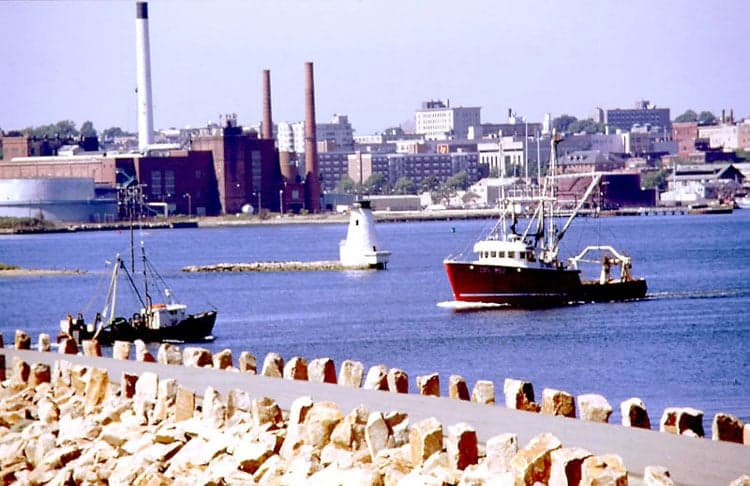
Photo: Wikipedia
Personal Sovereignty in Bristol County
Moderate friction. Expect trade-offs in some aspect of personal liberty and independence.
What does Personal Sovereignty tell us?
Personal Sovereignty measures your capacity for self-reliance and independence with minimal government friction. Higher scores mean fewer barriers between you and the way you want to live... but it assumes you have the space you need and good neighbors.
What does this tell us?
Personal Sovereignty measures your capacity for self-reliance and independence with minimal government friction. Higher scores mean fewer barriers between you and the way you want to live... but it assumes you have the space you need and good neighbors.
State Policy
Energy independence: Importer (5% of energy produced in-state)
Personal Liberty
Homesteading

Personal Liberty Analysis
Bristol County represents a study in contrasts for those prioritizing personal sovereignty. While Massachusetts imposes some of the nation's highest taxes and strongest state-level restrictions on firearms, property use, and medical autonomy, individual towns within the county range from dense, regulatory-heavy urban centers like Fall River to deeply rural communities like Freetown, Rehoboth, Westport, and Dighton where a looser local hand and larger lot sizes offer more breathing room. The county's autonomy environment is best understood not as uniformly constrained but as a spectrum where town-level zoning boards, police chiefs, and building departments wield meaningful discretion — making town selection the most important decision for a freedom-minded mover.
How tax burden and regulatory posture vary across Bristol County towns
Massachusetts levies a flat 5% personal income tax (scheduled to drop to 5% after a 2024 ballot reduction) and a 6.25% sales tax, figures that rank in the top third of all states. Property taxes in Bristol County average roughly $18.23 per $1,000 of assessed value, but the spread is wide: Fall River's rate near $17.72 is offset by low home values, while Seekonk and Attleboro exceed the county average with rates around $18.50. Regulatory posture at the state level is heavy — extensive wetlands protection, strict building codes, and a complex permitting environment for anything from solar panels to home-based businesses. However, towns like Freetown, with a rural character and minimal retail development, often process permits faster and impose fewer conditional requirements compared to the more densely regulated cities of New Bedford and Taunton. For a reader seeking light-touch government, the outermost suburbs and rural south county — including Berkley and Dighton — offer the most lenient local interpretation of state mandates.
What gun ownership and self-defense laws mean for Bristol County residents
Massachusetts law is among the most restrictive in the nation for self-defense. The state does not recognize constitutional carry; a License to Carry (LTC) is required to carry a handgun concealed or openly. LTC issuance is may-issue with a "suitable person" standard, meaning individual police chiefs retain significant discretion. In practice, chiefs in Fall River and New Bedford have been known to impose additional requirements or slower processing compared to chiefs in towns like Swansea, Seekonk, and Westport, where licensing is generally more streamlined. Magazine capacity is capped at 10 rounds, and the state bans many semiautomatic firearms by name or feature. Self-defense law is similarly constrained: Massachusetts imposes a duty to retreat in public before using deadly force, and there is no Stand Your Ground statute. For a gun-owning individual, the most pragmatic town choice is one where the local police chief’s reputation is publisher-friendly — Seekonk, Dartmouth, and Rehoboth are frequently cited by permit holders as more reasonable than the urban centers. Still, any prospective resident should expect a state-mandated safety course, a licensing fee around $100, and a background check system that can take months.
Off-grid living and homesteading viability in Bristol County's rural towns
Homesteading and off-grid feasibility depend almost entirely on town-level zoning and health board regulations. Massachusetts building code technically requires a grid connection for new construction in all towns, but many rural areas allow exceptions for solar-plus-battery systems if septic and well permits are obtained. Lot sizes vary dramatically: within Fall River and Taunton, standard lots are under a quarter-acre, while Freetown, Westport, and Rehoboth require a minimum of 1 to 2 acres and have sections zoned for agriculture where keeping chickens, goats, and even pigs is routine. Septic system rules are strict statewide — per Title 5, you need a percolation test and a modern system that can cost $10,000–$30,000 — but the permitting process is much faster in towns with a small planning staff like Dighton or Berkley than in larger cities. Off-grid water is viable via private wells (common in Rehoboth and Freetown), and solar installation without net metering is allowed but requires a building permit. There is no county-wide ban on tiny houses, but they must meet state building code; some towns, like Westport, have allowed them as accessory dwellings. For a serious homesteader, the sweet spot is southern Bristol County: towns like Dartmouth and Westport offer farmland, laxer local enforcement, and proximity to hardy soils, while avoiding the denser, more restrictive north.
Personal liberties: parental rights, medical autonomy, and free expression in Bristol County
State-level preemption governs most personal liberties in Massachusetts, leaving town governments with limited room to differentiate. Parental rights are constrained by recent state laws: Massachusetts does not require parental notification for a minor's abortion, and in 2024 the state passed a measure restricting schools from notifying parents of a student's gender identity without the student's consent — a point of active debate among Bristol County families. Medical autonomy during the COVID-19 era saw Fall River and New Bedford enforce stricter local mask/vaccine mandates than rural towns like Freetown and Westport, which declined to impose many local rules. Medical marijuana dispensaries are common in Fall River and New Bedford, but some towns (like Seekonk and Rehoboth) have banned or limited retail cannabis — a proxy for local views on personal drug freedom. Free speech is robustly protected under the First Amendment, and public protest events in downtown Taunton or Fall River have occurred without notable suppression. Property rights face the most local variation: towns with active conservation commissions (Dartmouth, Westport) enforce stringent wetlands buffer rules that can restrict building; meanwhile, Rehoboth and Berkley take a more hands-off approach. Overall, a freedom-oriented resident will find the most permissive environment for personal decisions in the rural towns that have historically resisted broad local ordinances.
Compared to other areas in the Northeast, Bristol County offers a middle ground on personal sovereignty. It is notably less restrictive than Boston or Cambridge on building and property use, and its rural towns provide a level of homesteading feasibility unseen in suburban Middlesex County. However, it remains far more constrained than counties in New Hampshire or western New York in terms of gun law and tax load. For a single individual or family willing to choose their town carefully — aiming for southern towns like Westport, Rehoboth, or Freetown — Bristol County can deliver meaningful autonomy within the broader Massachusetts framework, but it requires active navigation of state-level regulations that no local election can circumvent.

* Values derived from national, state, county, city and local statistics and may differ in a specific area. Last updated: 2026-06-20T18:37:32.000Z
Narrative content on this page is AI-generated and may contain mistakes. Verify any details that matter before acting on them.
ReloMaps may earn a commission from affiliate links at no extra cost to you.

