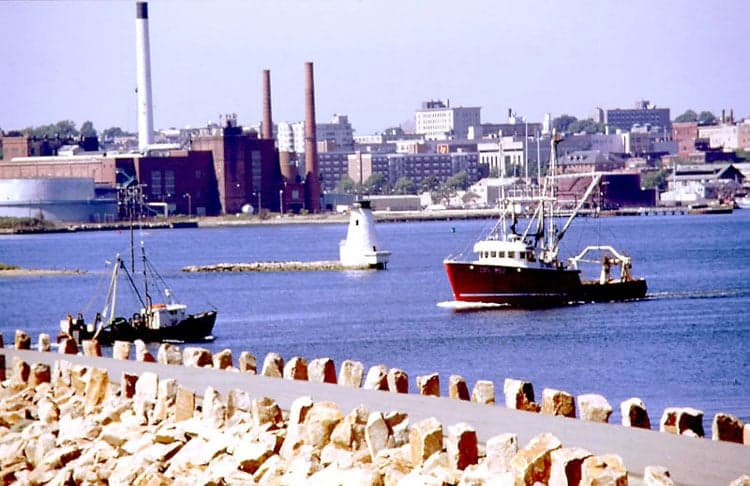
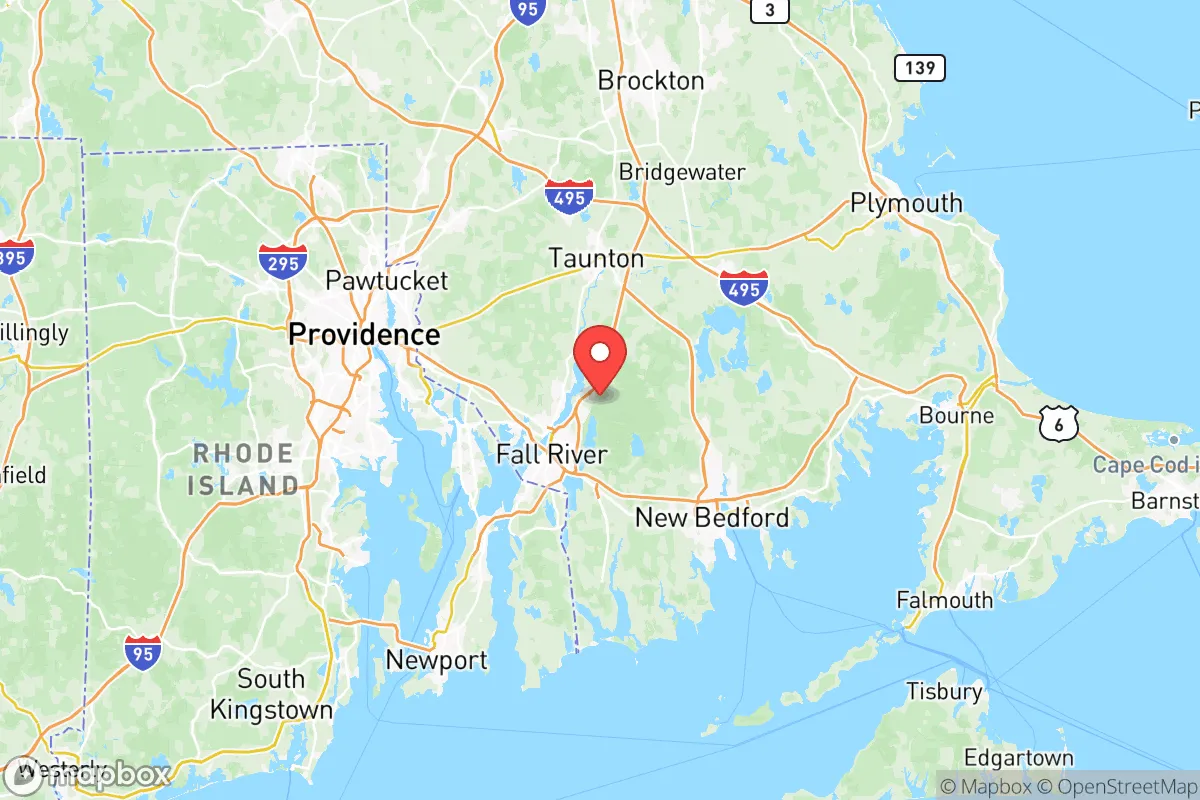
Photo: Wikipedia
Demographics of Bristol County
Affluence Level in Bristol County
A middle-class area roughly in line with national averages across income, home values, education, and employment.
People of Bristol County
Bristol County, Massachusetts, is a densely populated region of roughly 578,000 residents, characterized by a blend of historic industrial cities and suburban towns. Its population is predominantly white (76.7%) with a significant Hispanic minority (9.8%) and smaller Black (4.0%) and Asian (1.5%) communities, while the foreign-born share is a modest 5.3%. The county’s identity is shaped by its deep Portuguese and French-Canadian heritage, a strong Catholic tradition, and a working-class ethos rooted in textile mills and maritime industries, distinguishing it from the more affluent suburbs west of Boston.
Settlement & growth (pre-1960)
The original inhabitants of the area were the Wampanoag people, who lived in villages along the Taunton River and Mount Hope Bay for thousands of years before European contact. English colonists from Plymouth Colony began settling the region in the 1630s, establishing towns like Taunton (1637) and Dartmouth (1652) as agricultural outposts. The 1675-1676 King Philip’s War, led by Wampanoag sachem Metacom, devastated the native population and opened the land for rapid English expansion.
During the 18th and early 19th centuries, the county’s economy shifted from farming to shipbuilding and maritime trade, with ports in Fall River and New Bedford becoming whaling and commercial hubs. The Industrial Revolution transformed Bristol County after 1810, as textile mills sprang up along the region’s rivers. This drew a first wave of Irish immigrants in the 1830s-1850s, fleeing the Great Famine, who settled in Fall River and Taunton to work in the cotton mills. By 1850, the Irish made up over 20% of Fall River’s population.
The next major wave came from French Canada between 1860 and 1900. Tens of thousands of French-Canadians, seeking work in the expanding textile industry, moved into Fall River, New Bedford, and Taunton, forming tight-knit “Little Canadas” with their own parishes and French-language schools. By 1900, Fall River was one of the most French-Canadian cities in the United States, with over 40% of its population of French descent.
Simultaneously, Portuguese immigrants from the Azores and Madeira began arriving in the 1870s, drawn by the whaling and fishing industries in New Bedford. This community grew steadily through the early 20th century, establishing a strong presence in New Bedford and Fall River that remains culturally dominant today. Smaller numbers of Italian, Polish, and Lithuanian immigrants arrived between 1890 and 1920, settling in the mill cities and contributing to the county’s Catholic character. The Great Migration of Black Americans from the South brought a modest but notable African American population to New Bedford and Taunton between 1910 and 1950, though the county remained overwhelmingly white.
Suburbanization began slowly after World War II, with towns like Attleboro and North Attleborough growing as bedroom communities for Providence and Boston commuters. The decline of the textile industry after 1950 led to population stagnation in Fall River and New Bedford, while the county’s suburban towns absorbed growth from the broader Boston metropolitan area.
Modern era (post-1965)
The 1965 Hart-Cellar Act had a modest impact on Bristol County compared to gateway cities like Boston or New York. The foreign-born population today stands at just 5.3%, well below the national average of 13.7%. The most significant post-1965 immigration has been from Portugal and the Portuguese-speaking world, including Brazil and Cape Verde. Brazilians began arriving in significant numbers in the 1990s, settling in New Bedford and Fall River, where they joined established Portuguese communities. Cape Verdeans, who share a Portuguese colonial heritage, have also formed a visible community in New Bedford, contributing to the city’s growing diversity.
Hispanic immigration, primarily from Puerto Rico and the Dominican Republic, accelerated after 1980. Fall River and Taunton have seen the largest Hispanic population growth, with the county’s Hispanic share rising from 2.5% in 1990 to 9.8% in 2020. This community is concentrated in the older urban neighborhoods of these cities, often in housing stock originally built for mill workers. The Black population, at 4.0%, has grown slowly through both domestic migration from other parts of Massachusetts and immigration from Cape Verde and West Africa.
Domestic migration patterns have reshaped the county’s geography. The suburban towns of Attleboro, North Attleborough, and Seekonk have grown steadily as commuter suburbs for Providence, Rhode Island, and Boston, attracting families seeking lower housing costs than the core Boston metro. These towns remain overwhelmingly white and more affluent than the urban centers. Meanwhile, Fall River and New Bedford have experienced population stagnation or slight decline, as manufacturing jobs disappeared and younger residents moved to suburbs or out of state. The college-educated share of the population is 30.6%, lower than the Massachusetts average of 44%, reflecting the county’s historic industrial base and the concentration of less-skilled service and manufacturing jobs.
The future
Bristol County is slowly becoming more diverse, but the pace is gradual. The Hispanic share is projected to reach 12-14% by 2035, driven by continued migration from Puerto Rico and the Dominican Republic, as well as natural increase. The Asian population, currently 1.5%, is likely to grow modestly as Indian and East Asian professionals are drawn to the lower cost of living in Attleboro and Taunton compared to Boston. The Portuguese and French-Canadian communities, while still culturally influential, are aging and seeing younger generations move to other parts of the country.
The county’s population is projected to remain stable or grow slowly, as the urban centers continue to lose residents to suburbs and out-migration, while the suburban towns absorb modest growth. The cultural identity of Bristol County is likely to become less defined by its historic ethnic enclaves and more by a broader, multi-ethnic working-class character, particularly in Fall River and New Bedford. The suburban towns will likely remain predominantly white and more conservative, while the cities become increasingly Hispanic and multiracial.
For someone moving in now, Bristol County offers a mix of affordable housing, historic character, and proximity to Providence and Boston, but with a slower pace of demographic change than the state as a whole. The county is becoming a more diverse, suburbanized version of its industrial past, where the old ethnic identities are fading but the working-class ethos endures.

* Values derived from national, state, county, city and local statistics and may differ in a specific area. Last updated: 2026-06-20T18:37:32.000Z
Narrative content on this page is AI-generated and may contain mistakes. Verify any details that matter before acting on them.
ReloMaps may earn a commission from affiliate links at no extra cost to you.

